imran khan family
| |

Imran Khan family meetings tied to SOP compliance


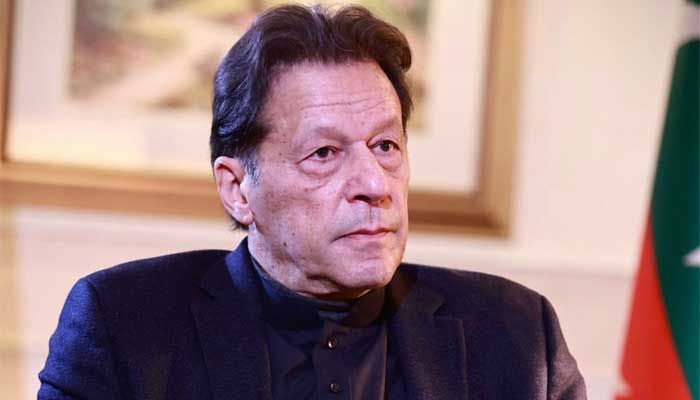
ISLAMABAD: Family meetings with Pakistan Tehreek-e-Insaf (PTI) founder and former prime minister Imran Khan, who remains in jail, will continue under an understanding that his relatives strictly follow the agreed standard operating procedures (SOPs), according to informed sources.

The key condition requires family members to avoid holding press conferences or issuing political statements after meeting Imran Khan. Authorities have reportedly linked the continuation of family visits to compliance with these conditions.

Imran Khan’s sister, Noreen Khanum, was allowed to meet him again on Tuesday, marking her second meeting with the former premier within a few days. Sources described the development as a positive sign for Imran Khan and his family after a prolonged period of restrictions on family access.

According to sources, authorities may continue easing restrictions on family meetings as long as the agreed SOPs remain in place and relatives comply with them. The understanding also requires family members who meet Imran Khan to refrain from making political comments or addressing the media after leaving the prison.

The arrangement has also surfaced during proceedings before the Supreme Court, where assurances regarding compliance with the conditions have reportedly been given. The issue had remained contentious for an extended period because some members of Imran Khan’s family previously spoke to the media after meeting him. Statements attributed to the PTI founder also appeared on his social media accounts following some of these meetings.

Sources said several of those statements contained strong criticism of the establishment, increasing tensions over whether family meetings should continue without additional restrictions. Authorities subsequently placed greater emphasis on ensuring that prison visits did not become a channel for political messaging.

Under the current understanding, the authorities are expected to maintain the relaxed approach if the family continues to follow the agreed rules. In practical terms, relatives will be expected to avoid post-meeting press conferences, while politically controversial statements attributed to Imran Khan will also need to remain off the public platform following family visits.

The development could provide some relief to Imran Khan and his family by allowing more regular contact while reducing the possibility of family meetings becoming a source of renewed political confrontation. It may also establish a framework under which the former prime minister can maintain direct contact with his relatives without triggering a return to the earlier restrictions.

However, sources stressed that the continuation of the current arrangement depends largely on compliance with the agreed SOPs. Any violation could potentially lead to the authorities reconsidering the relaxed conditions surrounding family meetings.

Similar Posts

  • | |

    Married woman found dead in Rawalpindi apartment

    A 45-year-old woman was found dead inside an apartment in Rawalpindi’s Lalkurti area, with her hands tied behind her back and a wire around her neck. The woman, identified as Hina Javed, was discovered in the bathroom of a second-floor apartment at Askari Apartments on Thursday morning. According to the police complaint, the incident came to light after Hina’s father-in-law contacted her brother, Fahad Javed Malik, and informed him that an emergency had occurred at the residence. Malik and other family members then reached the apartment and found Hina dead. The family told police that Hina’s hands had been tied with cloth and that her mouth was gagged. A wire was also found around her neck and connected to the bathroom shower. Police collected evidence from the scene as part of the investigation. Hina’s relatives have accused her husband, Faisal Asghar Imam, his domestic worker Zeeshan Arshad and his father, Asghar Ali Fayyaz, of being involved in the alleged killing. Police have not yet established the responsibility of any suspect, and the allegations remain part of the ongoing investigation. Hina had married Faisal in November 2025. Her brother told police that she had previously complained about domestic violence and alleged that she had faced repeated physical and psychological abuse after her marriage. The family also alleged that Hina’s husband had previously subjected another wife to abuse, which they believe may be relevant to the case. Hina was employed by a semi-government organisation, while her husband had reportedly faced periods of unemployment, according to her family. Police registered a murder case under Sections 302 and 34 of the Pakistan Penal Code. Section 302 deals with murder, while Section 34 concerns acts carried out by multiple people with a common intention. The woman’s body was shifted to Benazir Bhutto Hospital for a post-mortem examination. Police said evidence from the apartment was being examined and efforts were underway to locate the suspects. Civil Lines police said the investigation was continuing and that no arrests had been made at the time of reporting. Authorities said further action would depend on the findings of the investigation and forensic examination. The complainant also alleged that Hina had faced severe physical violence and torture during her marriage. He further claimed that her husband had allegedly abused his previous wife, who later obtained a divorce. Police registered the case at Civil Lines police station under Sections 302 and 34 of the Pakistan Penal Code. The provisions relate to murder and acts allegedly committed by several people with a common intention. Authorities are investigating the circumstances surrounding Hina’s death. Police are expected to rely on forensic evidence, the post-mortem examination and statements from family members and other witnesses to determine the actual cause of death and establish responsibility. The case has once again highlighted concerns over violence against women and domestic abuse in Pakistan. Rights advocates have repeatedly called for stronger protection mechanisms and timely action when women report threats or violence within their homes.

  • | |

    IHC seeks govt response over Arshad Chaiwala’s p…

    The Islamabad High Court (IHC) has sought responses from the federal government and the Directorate General of Immigration and Passports over the reported non-renewal of the passport of Arshad Khan, popularly known as “Arshad Chaiwala.” Justice Umair Majid Malik heard the petition filed by Arshad Khan, with Barrister Umar Ejaz Gilani representing him in court. The petitioner’s counsel told the court that Arshad Khan is an entrepreneur who has promoted Pakistani culture internationally. According to the counsel, the National Database and Registration Authority (NADRA) verification board has already cleared Arshad Khan’s identity. His Computerised National Identity Card (CNIC) is also active. The court was informed that Arshad had applied for renewal of his passport on August 20, 2025. However, despite the passage of nearly a year, the renewed document had allegedly not been issued. The lawyer said Arshad had repeatedly contacted the office of the interior secretary to resolve the matter but had not received a satisfactory response. He also informed the court that a legal notice had been served on the interior secretary. Despite the notice, no response was reportedly received. Arshad has asked the high court to direct the authorities to issue his renewed passport without further delay. His petition also seeks a declaration that the continued failure to issue the passport is unlawful and violates his fundamental rights. During the hearing, Justice Umair Majid Malik observed that the court would first obtain the position of the relevant government authorities before examining the matter further. The IHC subsequently issued notices to the Director General Immigration and Passports and the federal government through the interior secretary.

  • Pak Datacom’s shift to foreign satellite raises security concerns

    Islamabad: Serious questions have been raised over Pak Datacom’s reported shift of satellite connectivity for sensitive government linked organisations from Pakistan’s PakSat network to UAE based Yahsat, with a former chief executive of the company has asked regulators to investigate whether required approvals were obtained and whether national data security safeguards were fully protected. Pak Datacom officials were contacted for their response to the allegations and questions raised in the complaint, but no reply had been received at the time of filing this story. The concerns were raised by retired Brigadier Syed Zulfiqar Ali, who described himself in the complaint as a former chief executive and shareholder of Pak Datacom. He sent a formal complaint to authorities including the Pakistan Space Activities Regulatory Board, the Pakistan Telecommunication Authority, the Director General Technical and PakSat International, with a copy also sent to the Ministry of Information Technology and Telecommunication. The complaint alleges that Pak Datacom moved VSAT services being provided to the National Bank of Pakistan and other government organisations from its local satellite arrangement to Yahsat’s YahClick service. According to the complaint, the earlier system used PakSat with network hubs located in Pakistan, while the new arrangement involves a UAE based satellite service. The complainant described the change as a possible security concern because the National Bank of Pakistan handles important government accounts. The main issue raised is whether the satellite change followed Pakistan’s regulatory requirements and if the necessary approvals were obtained. Pakistan’s Space Activities Rules state that government departments, armed forces and other government entities should use national satellite capacity and give the National Space Agency the first right of refusal. The same rules also provide an exception. If the required capacity is not available through a national satellite, services from a registered satellite operator may be used, subject to the regulatory process and an NOC from PSARB. The key unanswered questions are whether national satellite capacity was unavailable, whether Yahsat was being used as a registered satellite service under the relevant rules and whether the required approvals or NOC were obtained. The complaint asks the authorities to determine exactly these points. The complainant alleged that the move contradicted the Space Activities Rules and asked regulators to establish whether the formal procedure had been followed. The rules give PSARB powers to regulate satellite activities and ensure maximum use of national space assets. They also empower the regulator to issue an NOC to government organisations for using other registered satellites when national satellites cannot provide or arrange the required capacity. Pak Datacom is a listed company and, according to the documents supplied with the complaint, Telecom Foundation holds 55 percent of its shares while the remaining 45 percent is held by the general public. The complaint states that Pak Datacom has worked with defence and public sector organisations and has provided satellite communication and network support to organisations including the National Bank of Pakistan, NADRA, OGDCL, AGPR and NLC. According to the documents, Pak Datacom had been providing satellite backup connectivity to more than 400 National Bank branches. The complaint says this connectivity previously operated through PakSat, using hubs in Karachi and Islamabad before services shifted to Yahsat. The complainant argued that keeping government connectivity on an indigenous network would provide greater control, particularly for organisations handling sensitive information. Pak Datacom’s reported use of a virtual private network was also mentioned in the material. The complaint nevertheless argued that using a foreign satellite and overseas infrastructure required closer examination from a national security point of view. These concerns remain allegations that relevant regulators and the company must verify. Another issue raised in correspondence sent to the Ministry of Information Technology concerned the cost of the reported transition. The complainant alleged that approximately $97,000 was spent on imported equipment. He also alleged that around Rs 10 million was paid in Customs duties and taxes and around Rs 4 million in demurrage charges. The complaint linked the demurrage amount to alleged delay or negligence. The complainant requested an inquiry to determine whether the satellite shift was carried out according to the regulatory framework and whether the reported spending was justified. The Space Activities Rules give PSARB authority to investigate possible violations. Under the rules, PSARB may form a special committee to conduct a fact-finding inquiry if an act or omission may have violated the regulatory framework. The rules also state that satellite-based communication services in Pakistan must be provided through national satellites or registered satellites. Foreign satellite operators are also required to meet regulatory conditions for providing services in Pakistan. The documents therefore leave an important regulatory question open. If all required permissions, registration and NOCs were obtained and national satellite capacity was unavailable, the foreign satellite arrangement may fall within the exception provided by the rules. If those conditions were not met, regulators would need to determine whether any breach occurred and what action, if any, is required. The reporter contacted Pak Datacom Acting CEO Ali Saleem Rana and other company officials seeking clarification on why VSAT connectivity was reportedly shifted from PakSat to Yahsat. Questions were also sent asking whether the company had obtained the required approvals, how it responded to the security concerns and whether the reported expenditure figures were correct. No response had been received at the time the story was prepared. Pak Datacom’s position will be incorporated if the company responds. The matter now centres on whether the responsible regulatory authorities confirm that the required procedures were followed and whether the foreign satellite arrangement met Pakistan’s security and space regulation requirements. The central questions are whether the system was properly authorised, whether national capacity was considered first, whether government data remained protected and whether public and shareholder money was spent according to the rules.

  • |

    Cambridge paper leak case: students hand over 17 papers evidence to NCCIA, but investigation still not complete

    Islamabad: The investigation into the alleged Cambridge A Level and O Level paper leaks has drawn fresh criticism after affected students claimed that they provided complete evidence, forensic details and technical assistance to the National Cyber Crime Investigation Agency (NCCIA), but the inquiry remains incomplete. Students associated with the Accountability4Cambridge movement said they made every possible effort to help NCCIA investigate the case and submitted evidence related to 17 leaked examination components. They claimed they even conducted their own forensic checks and prepared detailed records before handing them over to authorities. The students said their main demand was a quick investigation because their future depends on the final results. They wanted the matter resolved before results were announced so that affected students could receive relief if unfair practices had affected their grades. However, according to the students, NCCIA has still not completed its investigation. They claimed that the investigation officer assigned to the case has gone on training, causing further delay. The Accountability4Cambridge representatives said they submitted a complete evidence package to NCCIA, including 44 exhibits with verification details. They said the material was prepared carefully to help investigators identify where the papers were leaked and who was involved. The students said they tracked the movement of leaked papers and provided information about possible sources, online groups and communication channels where the leaked material was shared. Their evidence included details about WhatsApp numbers, Telegram groups and payment methods allegedly used to purchase the leaked papers. The students submitted the evidence directly to NCCIA’s forensic department and expected progress within days, but they were later informed that the assigned official was unavailable because he had gone for training. The controversy started after students alleged that Cambridge examination papers reached some candidates before the official exams, creating an unfair advantage for those who accessed them early. According to Accountability4Cambridge, around 17 examination components were leaked during the June 2026 examination series. They said Cambridge International acknowledged four of these components, while the remaining cases were still disputed. Students argued that a leaked paper could damage the grades of honest candidates because grade boundaries may change when some students score unusually high marks after seeing questions in advance. They said a student who worked honestly could lose university opportunities if their grades dropped because of unfair competition. The students also raised concerns about delays in the official response. The Senate Standing Committee on Federal Education had directed NCCIA to provide findings by July 21, 2026, but the deadline passed without a final report being submitted. The group said only an informal indication was given that findings would come later, while students continued waiting for answers. During their efforts, students met with various institutions, including the IBCC, Senate committees and NCCIA officials, and prepared documentation to support their claims. They said the evidence was not based only on screenshots but included detailed verification methods such as timestamps, recordings and technical information to support the authenticity of the leaked material. The students said they wanted authorities to identify the people responsible and ensure accountability instead of allowing the matter to continue without a clear conclusion. They also demanded stronger action from Cambridge, including transparency regarding how the leaks happened, where they originated and what action was taken against those involved. The students further demanded reforms in the examination system, including better protection of papers, separate arrangements for Pakistan and measures to prevent future leaks. They warned that the issue concerned not only marks but also the future of thousands of students who depend on Cambridge results for university admissions in Pakistan and abroad.

  • | | | | |

    Deputy Interior Minister Leads Illegal Hotel Inspections in Krabi

    Krabi – Deputy Interior Minister Polapee Suwunchwee led a surprise inspection of two suspected unlicensed hotels in Ao Nang, Krabi, on July 24, expanding a nationwide crackdown on illegal hotel operations and suspected nominee businesses. The inspections followed complaints that some properties were operating without required licenses. One property, a luxury pool villa advertised on […]

  • | |

    Khawaja Asif calls bureaucracy Pakistan’s real r…

    ISLAMABAD: Defence Minister Khawaja Asif has criticised Pakistan’s bureaucracy. He described it as the country’s “real and permanent rulers.” Asif said bureaucrats had remained largely beyond effective accountability during Pakistan’s 78-year history. He said politicians had faced accountability on numerous occasions. Other powerful groups had also been held accountable at different times. However, he said it was difficult to find similar examples involving senior bureaucrats. The defence minister made the remarks while sharing a social media post about alleged financial corruption involving a senior bureaucrat. Asif said the bureaucracy had gradually become a powerful and largely untouchable class. He questioned why bureaucrats had not been subjected to the same level of scrutiny as politicians. According to Asif, politicians themselves were partly responsible for the situation. He said political leaders had failed to establish an effective system to hold the bureaucracy accountable. The minister also referred to a former bureaucratic ruler while discussing the influence of senior officials in Pakistan. He said the former official used highly inappropriate and insulting language against politicians. Despite this behaviour, politicians continued to tolerate him, according to Asif. Asif’s comments highlight his criticism of the imbalance in accountability among powerful sections of Pakistani society. His remarks also raise questions about the role of the bureaucracy in governance and decision-making. The minister maintained that stronger accountability was needed for all powerful groups. He suggested that politicians could not blame bureaucrats alone for the existing system because political leaders had also contributed to its continuation.

Leave a Reply

Your email address will not be published. Required fields are marked *