| |

Iran vows ‘devastating’ response to US threat to cut off its economic lifelines

Iran said on Friday, August 21, that its response to any new US threats would be “devastating” after Washington pledged to impose the toughest financial penalties in history with the aim of toppling the Iranian leadership.

Washington prepared for sanctions that US Treasury chief Scott Bessent said he would detail on Monday, August 24. President Donald Trump earlier warned of economic consequences against any country that provided “any type of lifeline to Iran.”

The chief of staff of Iran’s Armed Forces, Major General Ali Abdollahi, said the Islamic Republic’s reaction would be broad and decisive.

“With preparedness across land, sea, air, air defense and cyberspace, Iran’s armed forces will respond to the enemy’s new threats with crushing, punishing and devastating responses,” Abdollahi was quoted as saying by Iranian media.

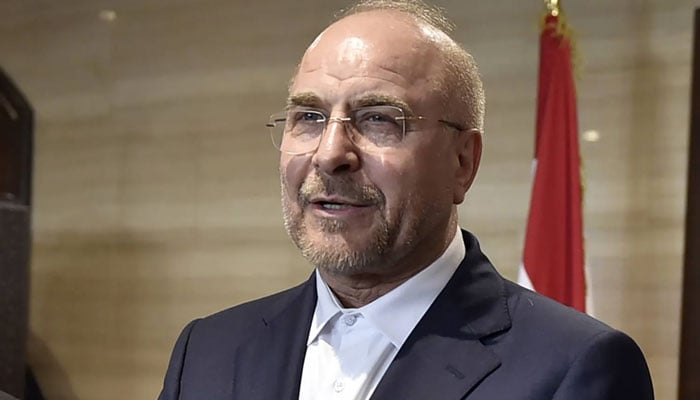
Iran’s parliament speaker, Mohammad Baqer Qalibaf, the country’s main negotiator in mediated talks with the United States, said Washington appeared to have concluded it could not prevail in its direct military confrontation.

“We must make plans to deal with the unjust sanctions so that we can overcome them,” he said in neighboring Iraq, accusing the US and Israel of resorting to what he said was economic and “cognitive” warfare.

Bessent says measures should not drive up oil price

Oil prices edged lower on Friday but were on track for a second weekly rise after rising on Thursday, August 20, following the new US sanctions threat.

“I’m not sure why oil has popped up on this,” Bessent told CNBC. “If we are doing the maximum economic pressure, then that means that likely there will not be a large-scale kinetic restart,” he said, using a term referring to military force.

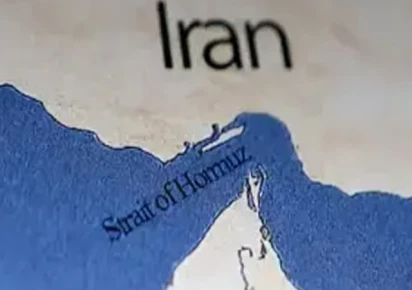
Thousands of people have been killed in the war, which has drawn in Gulf nations and raised global fuel prices as Iran has attacked shipping through the Strait of Hormuz, which before February carried about a fifth of all traded oil.

Just seven commodity ships sailed along the Strait of Hormuz on Thursday, half the previous day’s tally, data from shiptracker Kpler showed, compared with more than 130 a day before the war.

The US and Iran have twice announced ceasefire deals, in April and June, aiming to restore the free flow of ships through Hormuz on a path towards ending the nearly six-month-old conflict, but both quickly crumbled.

Bessent told CNBC he would “talk about exactly what we’re going to do” on Iran at a press conference on Monday.

“We are going to collapse this regime. It is time for our allies and the rest of the world to make a decision,” he said, describing a naval blockade reimposed on Iran in July and the “toughest sanctions in history” as a “one-two punch.”

Iran has weathered near-continuous economic sanctions for nearly 50 years, since the Islamic Revolution of 1979, but its people are suffering high inflation, a weakening currency and energy shortages along with damaged infrastructure.

Some Iranians interviewed by Reuters have said more economic punishment could increase hardship, weaken the clerical establishment and prompt unrest, although there has been no sign of that since a deadly crackdown on protests in January.

Before Bessent spoke, Iran’s foreign ministry said US sanctions would not “create even the slightest hesitation in Iranians’ determination to safeguard Iran’s independence, dignity and national sovereignty.”

Iranian President Masoud Pezeshkian, a relative moderate who has expressed concern about the economy, said Iran’s response to the attack would be “crushing” but that the war should end now that the US is isolated internationally, reiterating an earlier stance.

Latest US blockade starts reducing oil flows to China

Trump is under pressure to end the war, with high fuel prices dragging down his approval ratings and potentially threatening his Republican Party’s control of Congress in midterm elections in November.

Bessent said China got half its energy from the Gulf, so it would make sense for them to “get with the program.”

China buys more than 80% of Iran’s shipped oil, according to 2025 data from analytics firm Kpler, but further US economic warfare with Beijing, which has eased earlier restrictions on exports of its vital rare-earth minerals, risks retaliation.

Offers of Iranian crude to Chinese buyers have already declined since the US reimposed its blockade on Iranian ports in mid-July, trade sources told Reuters.

China’s embassy in Washington said “sanctions and pressure do not help resolve the problem,” calling for diplomatic means.

Tightening sanctions entails other risks, especially to US allies in the Gulf, some of whose energy facilities and the desalination plants they depend on for drinking water have come under Iranian attack. – Rappler.com
Similar Posts

  • |

    South Korea backs Trump’s push to revive North Korea talks

    SEOUL: South Korea has welcomed US President Donald Trump’s efforts to restart dialogue with North Korea but wants any renewed negotiations to produce meaningful progress on Pyongyang’s nuclear programme. South Korean National Security Adviser Wi Sung-lac said on Friday that Seoul supports Washington’s diplomatic outreach to North Korea, provided that it does not weaken the country’s security preparedness or leave South Korea out of the process. Wi said any renewed US-North Korea dialogue should focus on achieving tangible progress towards addressing North Korea’s nuclear weapons capabilities while also supporting efforts to establish lasting peace on the Korean Peninsula. He stressed that close coordination between Seoul and Washington would be essential if negotiations with Pyongyang resume. “We need to coordinate with the United States to ensure that any resumption of US-North Korea dialogue leads to substantive progress on the North Korean nuclear issue,” Wi said. The national security adviser also referred to Trump’s recent decision to significantly reduce major joint military exercises between the United States and South Korea. He said the move appeared to indicate Washington’s willingness to create conditions for renewed engagement with North Korea. However, Seoul remains concerned about maintaining a credible defence posture. Wi said South Korea must ensure that diplomatic efforts do not undermine military readiness. He also warned that Seoul should not be sidelined if Washington succeeds in reopening talks with Pyongyang. Trump has been seeking another meeting with North Korean leader Kim Jong Un. The two leaders held three summits during 2018 and 2019, but their negotiations failed to produce a lasting agreement on denuclearisation. Trump has previously criticised the scale of joint US-South Korean military exercises, arguing that some drills could send the wrong message to North Korea. His administration has continued to explore ways to bring Pyongyang back to negotiations. Meanwhile, South Korea, the United States and Japan are scheduled to hold joint military exercises from September 9 to 11. The drills are intended to test the three countries’ readiness to respond to potential missile and nuclear threats from North Korea. Wi also said Seoul was seeking closer cooperation with Washington on several issues that have occasionally created friction between the two allies. These areas include South Korean investment in the United States under a bilateral trade agreement, security cooperation, intelligence sharing and the planned transfer of wartime operational control. The treatment of US-listed South Korean e-commerce company Coupang was also mentioned among the issues requiring greater coordination.

  • |

    Gulf nations back Omani plan for voluntary transit payments to resolve Hormuz maritime crisis

    Gulf Cooperation Council member states have formally endorsed a diplomatic initiative proposed by Oman to introduce voluntary service fees for commercial vessels transiting the Strait of Hormuz, seeking to restore global energy shipments disrupted by the broader conflict involving the United States, Israel, and Iran. The framework, modeled after the cooperative navigation safety mechanism used in Asia’s Malacca Strait, allows shipowners to make optional financial contributions toward environmental protection, search-and-rescue services, and navigational maintenance rather than paying mandatory tolls. Designed as a compromise between Tehran’s demand for administrative authority over shipping lanes and Washington’s insistence on unimpeded international transit, the Omani proposal explicitly prevents Iran from exercising exclusive operational control over the waterway while offering a structured path toward reopening commercial transit routes. The diplomatic breakthrough coincides with a temporary lull in direct aerial bombardments after US President Donald Trump called off a two-week bombing campaign following advice from military commanders. Despite the pause in direct strikes between Washington and Tehran, regional tensions remain elevated due to ongoing proxy drone activity across Jordan, Saudi Arabia, and Iraq, alongside continued US naval enforcement actions against non-compliant commercial vessels. While market reactions to the suspension of airstrikes sent global crude prices down sharply, formal resolution remains subject to upcoming diplomatic negotiations in Washington and the broader implementation of the bilateral framework agreement.

  • | |

    Irish songwriter Glen Hansard dies in Dublin motor…

    Irish singer-songwriter Glen Hansard, acclaimed for his work with The Frames and his Academy Award-winning song Falling Slowly, has died following a motorbike accident in Dublin. He was 56. Emergency services were called to Lower Road in Lucan shortly before dawn on Wednesday. Police confirmed the crash involved only Hansard’s vehicle and appealed for witnesses. His management, ATC, said his family was “heartbroken” and asked for privacy. Hansard’s career began on Dublin’s streets as a busker before he appeared in Alan Parker’s The Commitments in 1991. A year earlier he had founded The Frames, a band that became a cornerstone of Ireland’s rock scene. His international breakthrough came with Once, the 2007 film in which he starred alongside Czech musician Markéta Irglová. Their duet Falling Slowly won the Oscar for Best Original Song the following year and later formed the backbone of a Broadway musical that earned eight Tony Awards. Beyond his collaborations with Irglová in The Swell Season, Hansard released solo records including Didn’t He Ramble, which earned a Grammy nomination in 2016. He also became a familiar face on Irish television as the original presenter of RTÉ’s Other Voices. Hansard was widely admired for his charity work, particularly the Christmas Eve busk he launched in Dublin in 2010 to support the Simon Community. The annual event drew stars such as Bono, Sinéad O’Connor and Shane MacGowan. The charity described him as “a giant in the fight against homelessness” and said his compassion would remain part of his legacy. Tributes poured in from fellow artists and public figures. Actor Chris O’Dowd wrote: “He did that. And he leaves it with us. Thanks Glen.” Musician Mike Scott of The Waterboys added: “Travel on well, Buddy. You made your dreams come true.” Irish Prime Minister Micheál Martin called Hansard “a talented musician and actor who made a significant contribution to Ireland’s cultural landscape.” Hansard leaves behind his partner and their young son. In a recent interview he reflected on fatherhood, saying it had “upturned everything I know” and brought him to “a very different place than I’ve ever been before.”

  • |

    Modi ramps up Gen Z outreach on Instagram

    Indian Prime Minister Narendra Modi has launched a fresh social media campaign aimed at winning over young voters, shifting to a more informal and relatable style on Instagram after recent student-led protests exposed growing frustration over jobs and education. The campaign features selfie-style videos, casual greetings and short clips with popular music, reflecting a departure from the highly polished political messaging traditionally associated with Modi and his Bharatiya Janata Party (BJP). The strategy is designed to connect with India’s Generation Z audience, which is expected to play a decisive role in the 2029 general election. The renewed digital push follows nationwide protests by students and job seekers last month after an examination paper leak triggered widespread anger over the country’s education and employment system. The demonstrations eventually led to the resignation of India’s education minister. In response, BJP leaders and government ministries have increased their presence on youth-focused platforms by sharing short videos with minimal editing and a more spontaneous style. Officials believe authentic content is more likely to resonate with younger audiences than carefully scripted political messaging. Political observers say Instagram and similar platforms reward creativity, humour and genuine interaction, making them more challenging environments for traditional political campaigns. They note that recent protests gained significant momentum through viral reels and short videos that amplified public dissatisfaction. Beyond social media, the BJP and its ideological affiliate, the Rashtriya Swayamsevak Sangh (RSS), have also expanded outreach efforts by organising events and discussions targeting students and first-time voters. With more than half of India’s 1.4 billion population under the age of 35, analysts say younger voters are expected to become one of the most influential electoral groups in the next general election.

  • | | | | |

    Trump says Iran serious about talks but not ready …

    US President Donald Trump has said Iran is showing greater seriousness toward negotiations than before, but cautioned that Tehran is still not prepared to reach a final agreement with Washington. Speaking to reporters at the White House, Trump said communication between the United States and Iran remains ongoing, although the prospects for an immediate breakthrough are still uncertain. According to media reports, the US president noted that Iran’s approach has changed compared with earlier stages of the diplomatic process, describing the country’s current attitude toward negotiations as more constructive. “Iran appears to be taking the talks more seriously than before,” Trump said, while emphasizing that a final deal is not yet within reach. He added that although discussions are continuing, significant progress is still needed before both sides can arrive at a mutually acceptable agreement. Trump said his administration remains committed to pursuing diplomatic efforts and is closely monitoring developments. He stressed that the coming days and weeks would be important in determining whether the ongoing contacts can lead to meaningful progress. The latest remarks come amid continued tensions between Washington and Tehran, with diplomatic channels remaining active despite months of regional instability and military confrontations. While both sides have maintained communication, key differences over major issues have continued to prevent a comprehensive agreement. Neither US officials nor Iranian authorities have announced any new breakthrough in the negotiations following Trump’s comments. Analysts say Trump’s latest assessment may signal cautious optimism, but they also note that complex disputes remain unresolved. They believe any potential agreement would require extensive negotiations and compromises from both sides before a deal could be finalized. For now, Trump’s message suggests that while diplomacy remains alive, expectations for an immediate agreement should remain measured. Observers will be watching closely for any signs of further progress as discussions continue, with the outcome likely to have significant implications for regional stability and US-Iran relations.

Leave a Reply

Your email address will not be published. Required fields are marked *