keeping ayala family
| | | | |

Keeping Ayala in the family: How the Zobels pass the torch

There was never any pressure on Jaime Augusto Zobel de Ayala to join the family business. So how did he end up leading one of the Philippines’ oldest and biggest business empires?

As it turns out, all it took was a little favor from his father, or more accurately, a series of little favors.

The elder Jaime Zobel de Ayala had financed his son’s education in the United States and encouraged him to find his own path in life. Along the way, Jaime Augusto, better known as JAZA, would also lend a hand whenever his father asked him to help out with this or that.

Then, one day, came a bigger request: Would he come home to the Philippines and work in the family business for just three years? After that, he was free to pursue whatever future he wanted.

“I enjoyed the challenges that the Philippines put on the table, working in an emerging market. I found it fantastic and very exciting, a chance to make a difference,” JAZA said. “The rest is history.”


Keeping Ayala in the family: How the Zobels pass the torch

Decades later, he is chairman of Ayala Corporation, a nearly 200-year-old conglomerate whose businesses span banking, property, telecommunications, and energy. 

And now, it is his turn to prepare the next generation of Zobels, including his son Jaime Alfonso Zobel de Ayala, better known as JAZ.

A new generation

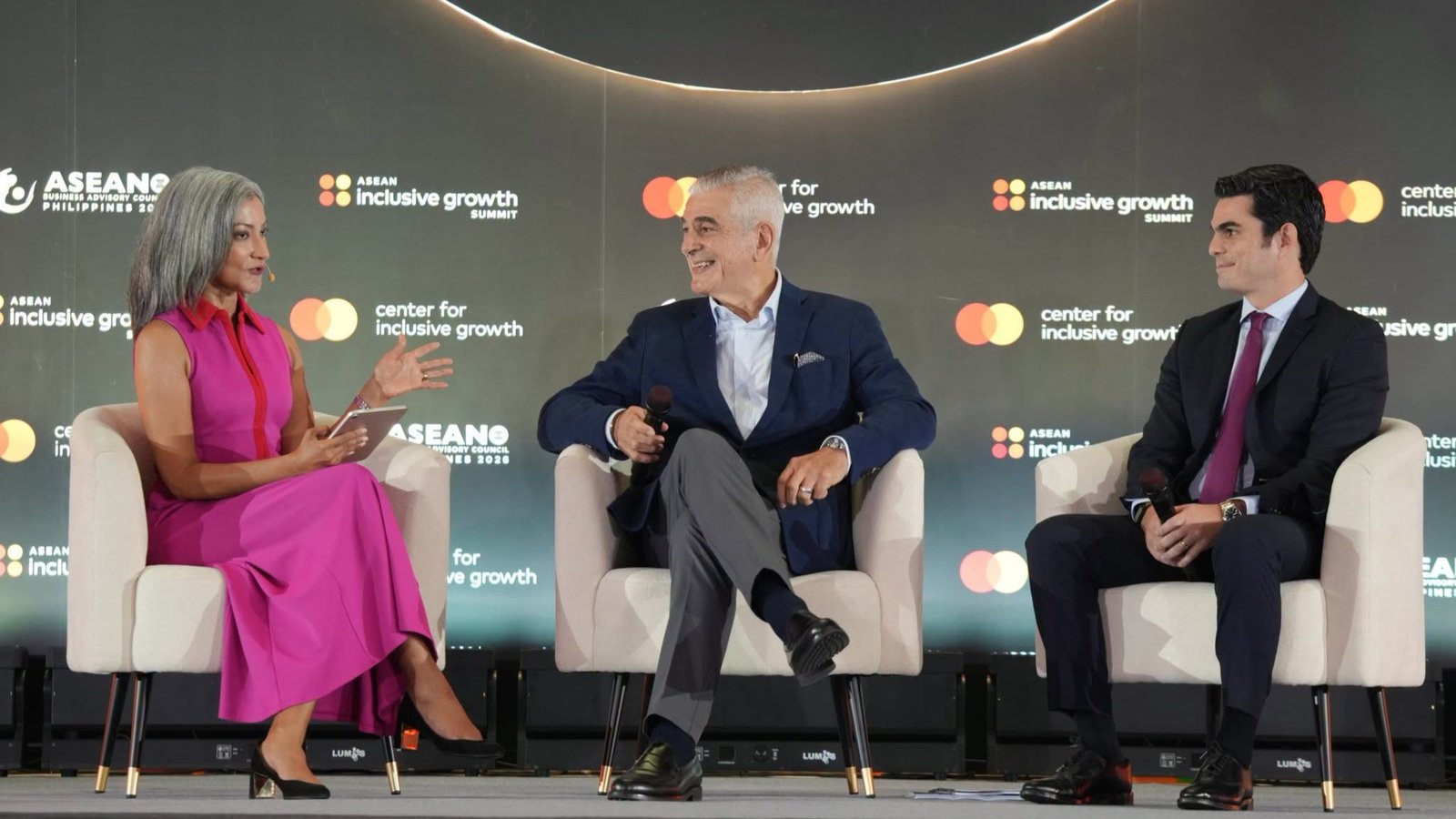
At the ASEAN Inclusive Growth Summit on Wednesday, November 11, father and son shared a few stories about growing up in a family that has been running businesses for nearly two centuries.

JAZA recalled sending his son, then just 13 or 14, to work on a farm in the Australian Outback, far from familiar faces and comforts. It was part of his parenting philosophy of pushing children outside their comfort zones.

“All of us have a responsibility to put people through difficult places at certain points in life to try and build up a sense of resilience, a sense of problem solving,” JAZA said.

His son remembers things a little differently.

“JAZA has never liked me hanging around during the summer,” JAZ joked, recalling that his time in the Outback also involved “a lot of horseback riding.”

And yes, he calls his father JAZA, even when sharing family stories. “It’s his name in the office. Hard to say ‘Dad,’” JAZ said, drawing chuckles from the crowd.

In any case, JAZA said he had “no kind of formal plan” when it came to preparing his children. What mattered was teaching them to find solutions rather than complain about their circumstances.

Time will tell whether these lessons will play out as the next generation of Zobels take their posts in the conglomerate.

JAZ now heads ACMobility, Ayala’s automotive and electric mobility arm. His sister Mariana Zobel de Ayala oversees Ayala Land’s leasing and hospitality businesses.

Their cousins Jaime Zobel Urquijo and Paloma Zobel de Ayala are also involved in the group, part of another generation preparing to carry the nearly 200-year-old institution forward. (READ: Preparing for the future: Ayala promotes 4 ‘next-generation’ leaders)

But succession at Ayala isn’t just about keeping executive titles in the family. Career executives have played a central role, with JAZ crediting his father for empowering them to lead. At BPI, for instance, JAZA remains chairman even as the bank prepares to hand over its presidency from TG Limcaoco to Ginbee Go in April 2027.

Must Read

Bigger bank, broader base: TG Limcaoco’s BPI years


Bigger bank, broader base: TG Limcaoco’s BPI years

The next 200 years

Ayala traces its beginnings to 1834 and will celebrate its bicentennial in 2034. Having survived Spanish and American colonial rule, two world wars, and countless economic crises, the conglomerate has seen more than its share of history. 

But for JAZA, more important than holding on to its storied legacy is ensuring that the nearly 200-year-old institution is still relevant.

“Remaining relevant to the changing nature of the country and the world is vitally important,” JAZA said. 

“I always wanted an Ayala that was important to the country in a broader sense and touching the lives of as many Filipinos as possible.” – Rappler.com

Must Read

JAZA: Does the Philippines have what it takes to win big investments?


JAZA: Does the Philippines have what it takes to win big investments?

Similar Posts

  • | | |

    PM to decide fate of refinery upgrade policy

    Prime Minister Shehbaz Sharif is expected to address key issues facing Pakistan’s refinery sector today. The Cabinet Committee on Energy (CCoE) will review proposed changes to the Brownfield Refinery Policy.The policy was approved in 2023. It aims to encourage investment in the modernisation of existing refineries. The proposed changes could affect billions of dollars in planned refinery investments.The main dispute is over deemed duty protection. The government has proposed reducing it from 7.5 per cent to 5 per cent. Refinery companies have opposed the proposed cut. They say it could weaken the financial benefits offered under the policy.The industry also disputes the government’s position on delays in signing Upgrade Agreements. Officials say refineries failed to sign the agreements within the required period.Refinery representatives reject the claim. They say they had already accepted the draft agreements in 2024. According to industry officials, the companies were waiting for the government to arrange the formal signing process.They say the industry repeatedly contacted the Petroleum Division and other authorities to complete the process. The companies argue that the delay was caused by administrative issues on the government side.They therefore believe the incentives should not be reduced because of delays beyond their control. Deemed duty protection is a key part of the refinery upgrade package.The incentive is designed to encourage companies to invest in modernisation. The planned upgrades are aimed at increasing production of Euro-V compliant fuels.They are also expected to reduce furnace oil production. The projects could help improve Pakistan’s overall fuel mix.The refining sector has also faced additional financial pressure from changes in the tax system. The Finance Act 2024 moved several petroleum products from the zero-rated sales tax regime to the exempt category.The change affected the ability of refineries to adjust input sales tax. It also increased their unrecoverable tax costs.The Petroleum Division has acknowledged that the tax changes affected the financial viability of refinery upgrade projects. Officials said the prime minister is expected to review the major issues that have delayed the implementation of the policy since August 2023.The Petroleum Division has proposed limited amendments to make the policy operational. It has also recommended a committee to finalise the Upgrade Agreement.The committee would include senior officials from the Petroleum Division, Law Division and OGRA. A representative of the Special Investment Facilitation Council would also be included.OGRA, however, has reservations about signing the agreements. OGRA Chairman Masroor Khan has argued that the regulator should focus on its regulatory role.He believes OGRA should not become a party to commercial agreements. The refinery industry is now hoping for a decision that removes the remaining hurdles.Companies want the government to maintain the existing incentive structure. They say policy consistency is important for attracting investment.They also warn that changes to agreed incentives could discourage investors. A clear decision by the CCoE could help restart delayed refinery upgrade projects.The decision could also influence Pakistan’s fuel supply and long-term energy security.

  • | | |

    Shehbaz, Bangladesh PM set for first Jakarta meeti…

    Prime Minister Shehbaz Sharif is expected to meet Bangladesh Prime Minister Tarique Rahman next week in Jakarta, Indonesia. The meeting will be the first between the two leaders since Tarique Rahman assumed office as Bangladesh’s prime minister around six months ago. The meeting is being viewed as significant in light of recent regional developments. Both leaders will be in Jakarta to attend the 12th summit of the D-8 Organisation for Economic Cooperation. The nine-member grouping is focused on strengthening economic cooperation among its member states. The three-day summit is scheduled to begin on Monday, August 17. The summit was earlier postponed in April due to the conflict that emerged in the Middle East. Leaders from member countries are now expected to gather in Jakarta for discussions on regional and economic issues. Prime Minister Shehbaz Sharif is also expected to hold a meeting with Iranian President Masoud Pezeshkian on the sidelines of the summit. The Pakistani prime minister is likely to meet other participating leaders as well. His expected engagements include a meeting with Turkish President Recep Tayyip Erdogan. The meetings are expected to provide an opportunity to discuss bilateral relations, regional developments and areas of mutual interest. The expected meeting between the Pakistani and Bangladeshi prime ministers also comes amid efforts to strengthen ties between the two countries. Both sides have shown interest in expanding cooperation in different areas. Pakistan has also decided not to seek special permission from India to use its airspace for the prime minister’s journey to Indonesia. Instead, Prime Minister Shehbaz Sharif’s aircraft will take an alternative route to reach Jakarta. The change in travel route will allow the Pakistani delegation to proceed with its scheduled participation in the D-8 summit without seeking special approval from India.

Leave a Reply

Your email address will not be published. Required fields are marked *