johnson johnson announces
| | |

Johnson & Johnson announces $5.5-billion settlement of talc lawsuits

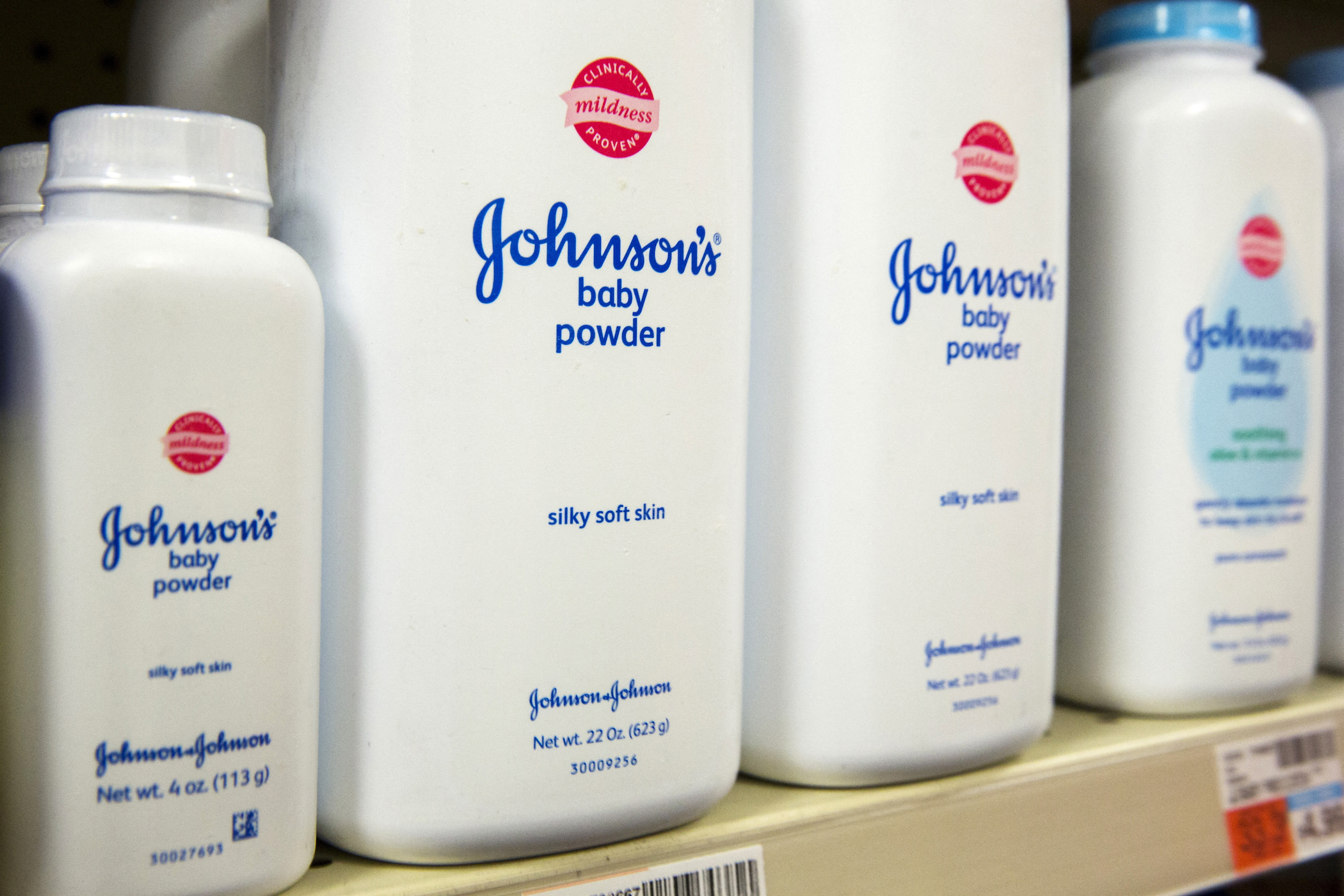
NEW YORK,USA – Johnson & Johnson said on Monday, July 27, it would pay $5.5 billion to resolve tens of thousands of lawsuits alleging its baby powder and other talc products cause ovarian cancer, in a landmark settlement aimed at closing a chapter of contentious litigation that has dogged the company for years.

J&J said the settlement covers about 69,000 cases consolidated in federal court in New Jersey, and related cases in state court, totaling 99.75% of the remaining talc claims.

Plaintiffs’ law firms confirmed the deal on Monday, saying it was a good resolution after a decade-long court battle. The deal must be accepted by 95% of the ovarian cancer claimants in state or federal court before it becomes final.

J&J’s vice president of litigation, Erik Haas, said the claims were “meritless” and that the company was willing to settle in order to get closure.

“While we are confident the company would have ultimately prevailed with further litigation, as it has in the vast majority of cases tried to date, this resolution allows the company to put this matter behind it and remain focused on its mission to develop medicines and devices that save lives,” Haas said.

J&J won a significant court victory in the long-running legal battle last week, when a federal judge cast doubt on individual plaintiffs’ ability to prove that talc specifically caused their ovarian cancer.

J&J has long denied that its talc products caused cancer, saying that talc was safe and did not contain asbestos. The company stopped selling talc-based baby powder in the US in 2020, switching to a cornstarch product.

The litigation resumed in March 2025, after being put on hold for more than three years during J&J’s repeated failed attempts to resolve the lawsuits through a shell company’s bankruptcy.

Unlike the proposed bankruptcy settlements, Monday’s agreement applies only to existing claims and does not address future lawsuits. – Rappler.com

Similar Posts

  • |

    Pakistan moves to revive Steel Mills after earlier liquidation decision

    The federal government has revived plans to restore Pakistan Steel Mills (PSM), signaling a major policy shift after previously deciding to wind up the loss-making state-owned enterprise. The development follows renewed interest from international parties in bringing the dormant steel producer back into operation, with Russian company Industrial Engineering LLC emerging as a key potential partner for the revival, modernisation and restructuring of the mill. Well-informed sources said the government has initiated consultations with the Russian firm to assess the technical, financial and operational requirements for restoring PSM’s production capacity. Two protocols have already been signed between Industrial Engineering LLC and Pakistan Steel Mills under the Ministry of Industries and Production. The first agreement was signed in Moscow on July 10, 2025, and provides a framework for cooperation on the revival, modernisation and restructuring of PSM. The second protocol was signed on November 26, 2025, during the 10th session of the Pakistan-Russia Intergovernmental Commission. The second agreement focuses on assessing the operational and capital expenditure required to restart manufacturing activities at the steel mill. Feasibility assessment under way According to sources, the authorities have also carried out an exercise to calculate production costs and evaluate the commercial viability of restarting PSM. The assessment is expected to help determine whether the mill can operate sustainably and compete in the domestic and international steel markets after years of inactivity. The findings will form the basis for recommendations to the government before a final decision is taken on the future structure and operations of the enterprise. Sources said the relevant authority would submit recommendations to the Cabinet Committee on State-Owned Enterprises (CCoSOEs), seeking an end to the liquidation process and approval to pursue the revival option with the participation of international investors. The move represents a reversal of the government’s earlier policy. Government had approved liquidation In May 2024, the Special Investment Facilitation Council (SIFC) had decided to scrap Pakistan Steel Mills after efforts to find a buyer failed to produce a viable offer. The Cabinet Committee on Rightsizing subsequently approved the liquidation of the existing mill in August 2024. However, the government has now shifted its focus towards rehabilitation, apparently encouraged by renewed international interest and the possibility of securing foreign technical and financial support. A formal summary regarding the proposed policy shift has been submitted to the Ministry of Industries and Production for consideration, sources said. A parliamentary secretary also indicated that the government’s policy direction had changed and that efforts were now being made to restore PSM to operational status. He said the timeline agreed upon with the Russian company would be followed, with the relevant departments expected to take further steps after completion of the ongoing assessments. Power minister signals renewed revival efforts Separately, Minister for Power Sardar Awais Leghari said recommendations for reviving Pakistan’s dormant steel giant would soon be presented to policymakers, reinforcing indications that the government is seriously reconsidering the future of PSM. Speaking at a webinar titled “Pakistan-Russia: Strengthening Trade, Education and Energy Collaboration,” jointly organised by the University of World Civilizations Moscow (UWCM) and the Institute of Regional Studies (IRS), Leghari highlighted the growing momentum in Pakistan-Russia relations. He said bilateral ties had strengthened over the past two decades on the basis of mutual trust, respect and a shared interest in regional stability. The minister’s remarks come as Pakistan explores greater Russian involvement in key economic and industrial sectors, including the possible rehabilitation of PSM. Financial burden remains a challenge Pakistan Steel Mills has remained largely dormant for years, creating a continuing financial burden for the government. Following the earlier decision to wind up the enterprise, the government has continued to bear the salaries and other expenses of its remaining employees. Meanwhile, some of the mill’s liabilities and operating costs have been met through proceeds generated from the sale of scrap. The proposed revival could therefore provide an opportunity to turn the idle industrial asset into a productive enterprise while reducing the recurring financial burden on the national exchequer. However, the government is expected to carefully evaluate the mill’s outstanding liabilities, infrastructure requirements, production costs, technology needs and long-term market prospects before committing substantial public resources. If the revival plan moves forward with foreign participation, the project could also open the door to new investment, technology transfer and employment opportunities in Pakistan’s steel and related industrial sectors.

  • | | |

    PARCO, Cnergyico lead $1bn refinery exports

    Pakistan’s oil refining sector has achieved a major milestone. The country’s five major refineries exported petroleum products worth around $1.046 billion during the fiscal year 2025-26. This is the first time that the refinery sector has crossed the $1 billion export mark. The development has also strengthened the sector’s role as a source of foreign exchange for Pakistan. The achievement comes as the country continues to face pressure from a large trade deficit. Pakistan’s trade deficit is estimated at around $40 billion, increasing the importance of exports and import savings. The five major refineries made a significant contribution to the overall export earnings. Pakistan Arab Refinery Company (PARCO) recorded exports of around $277 million. Cnergyico Pakistan Limited exported petroleum products worth approximately $258 million. National Refinery Limited (NRL) recorded exports of around $238 million. Pakistan Refinery Limited (PRL) exported products worth approximately $200 million. Meanwhile, Attock Refinery Limited (ARL) exported petroleum products worth nearly $73 million. PARCO and Cnergyico remained the biggest contributors. Their combined exports reached approximately $535 million. This accounts for more than half of the total exports recorded by the five refineries. The development is particularly significant because the refining sector has traditionally been viewed mainly as a means of reducing Pakistan’s dependence on imported petroleum products. The latest figures show that the industry is increasingly contributing to both sides of the equation. It is helping reduce the import burden while also generating foreign exchange through exports. Cnergyico has also entered the global marine fuel market. The move could provide the company with new export opportunities and help expand Pakistan’s presence in the international fuel market. Industry modernization is expected to further improve the sector’s performance. Upgraded refinery facilities can increase production efficiency and enable companies to produce products that meet international market requirements. Further investment in refinery upgrades could therefore lead to higher exports in the coming years. It could also increase savings on petroleum imports. The latest performance highlights the growing importance of Pakistan’s refining industry. With continued modernization, better efficiency and access to international markets, the sector could become an increasingly important source of foreign exchange for the country. The development also comes at a critical time for Pakistan’s economy. Higher exports and lower import dependence are essential for reducing pressure on the country’s external account.

Leave a Reply

Your email address will not be published. Required fields are marked *