pakistan inflation falls
|

Pakistan inflation falls to 9.2% in July 2026: PBS

Pakistan’s annual inflation eased to single digits in July 2026, with the latest official figures showing a noticeable decline in price growth compared to the previous month. However, economists cautioned that inflationary pressures have not disappeared, as higher fuel costs and other economic challenges continue to weigh on the outlook.

According to data released by the Pakistan Bureau of Statistics (PBS) on Monday, the Consumer Price Index (CPI) recorded an annual inflation rate of 9.2% in July 2026. The reading marked a significant decline from 11.1% in June, although it remained considerably higher than the 4.1% recorded in July 2025.

On a monthly basis, consumer prices increased by 1.2% during July, reversing the 0.3% decline witnessed in June. In comparison, monthly inflation had risen by 2.9% in July last year.

Urban and rural inflation

The PBS data showed that inflation in urban areas slowed to 8.7% year-on-year in July, down from 11.2% in June. During the same month last year, urban inflation had stood at 4.4%.

Month-on-month, urban prices climbed 1.2%, compared to a 0.5% decline in June and a 3.4% increase recorded in July 2025.

Meanwhile, rural inflation also moderated, with the annual rate easing to 9.9% in July from 10.9% a month earlier. Rural inflation had been 3.5% in the corresponding month of last year.

On a monthly basis, rural prices increased by 1.2%, compared with no change in June, while July 2025 had witnessed a 2.2% monthly increase.

Government projects inflation to remain elevated

The Finance Division had earlier projected inflation to remain between 9% and 10% in July, warning that rising international oil prices could continue to exert pressure on domestic prices.

The ministry’s latest economic outlook also highlighted concerns over external investment, noting that Pakistan’s foreign direct investment (FDI) fell by 33.9% during the last fiscal year, declining from $2.48 billion in FY2024-25 to $1.64 billion in FY2025-26.

SBP keeps policy rate unchanged

Last week, the State Bank of Pakistan’s Monetary Policy Committee maintained the benchmark policy rate at 11.5% during its first monetary policy meeting of the new fiscal year.

Speaking after the decision, SBP Governor Jameel Ahmad said inflation was expected to decline in July and expressed optimism that it would gradually move towards the central bank’s target.

He said the State Bank expects inflation to settle within the upper end of its 5-7% target range by the close of the current fiscal year.

Analysts see base effect behind slowdown

Market analysts had largely anticipated inflation returning to single digits in July, though many argued that the improvement was mainly due to favourable statistical base effects rather than a broad-based easing in price pressures.

Analysts at Ismail Iqbal Securities estimated July inflation at 9.3%, saying the decline reflected comparison with a higher base from the previous year rather than a sustained reduction in inflationary momentum.

Similarly, JS Global projected headline inflation at 9.1% for July, indicating that while inflation has eased, underlying economic pressures continue to pose risks for the months ahead.

The latest inflation reading provides some relief for consumers and policymakers, but economists believe the path ahead will depend on global commodity prices, exchange rate stability, energy costs and the government’s fiscal management during the current financial year.
Similar Posts

  • | | | |

    Iran vows retaliation after fresh US strikes

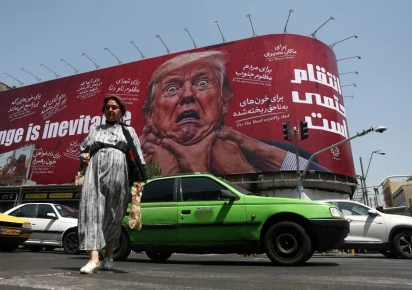
    Iran has vowed to retaliate after the United States launched fresh overnight air strikes on multiple locations across the country, further escalating the conflict that has increasingly drawn several Middle Eastern nations into the fighting. The Islamic Revolutionary Guard Corps (IRGC) issued a strong warning, saying those responsible for the attacks would face punishment. Iranian media quoted the force as saying that the “aggressor” would be held accountable. The latest US strikes reportedly targeted several areas in southern Iran, including Bushehr province, which is home to the country’s only nuclear power plant. Explosions were also reported in Qeshm, Kish, Bandar Abbas, Abadan and other nearby locations. Iranian officials said a residential building on Qeshm Island was struck during the attacks. Local authorities confirmed that three members of the same family, including a child, were killed. Two other children from the same family were injured and shifted to hospital for treatment. The US military said the strikes were launched in response to recent Iranian missile attacks targeting American forces stationed in Jordan. Washington described the operation as a powerful response aimed at deterring further attacks on its troops in the region. The military action came shortly after US President Donald Trump warned that Iran would face severe consequences following attacks on American military facilities. Meanwhile, Jordan said its air defence systems intercepted and destroyed five Iranian missiles heading toward its territory. Officials said this was the fourth consecutive day that missiles or drones launched from Iran had been intercepted. No casualties or property damage were reported. Iran also strongly condemned recent joint US-Saudi air strikes carried out in Iraq. Tehran described the attacks as a violation of Iraq’s sovereignty and territorial integrity. It accused Washington of widening the regional conflict and expressed support for the Iraqi government. The Iraqi government also criticised the strikes and called on all parties to avoid further escalation. Iraqi officials stressed that the country should not become a battleground for regional disputes. Israeli Prime Minister Benjamin Netanyahu said it was difficult to predict Iran’s next moves regarding the Strait of Hormuz. However, he argued that alternative energy routes could eventually reduce the strategic importance of the vital shipping lane. The United Nations expressed deep concern over the renewed fighting. UN Secretary-General António Guterres urged both the United States and Iran to end hostilities and return to diplomatic negotiations. He also welcomed mediation efforts by regional countries seeking to reduce tensions. The IRGC claimed that two oil tankers attempting to sail through what it described as an unauthorised route in the Strait of Hormuz turned back after a fire reportedly broke out on one vessel. Iranian officials insisted the country maintained control over the strategic waterway and warned that restrictions would remain as long as foreign military threats continued. The United Arab Emirates also condemned drone attacks targeting Saudi oil facilities from Iraqi territory, calling them a serious violation of Saudi sovereignty and a threat to regional security. The conflict has expanded rapidly over recent days, with military activity reported in Iran, Iraq, Jordan, Egypt and the Gulf region. The growing instability has increased concerns over regional security and disrupted global energy markets. Oil prices climbed sharply as investors reacted to fears of further escalation and possible disruptions to shipping through the Strait of Hormuz, one of the world’s most important energy trade routes.

  • |

    Kelly Osbourne pays emotional tribute to father Ozzy on first death anniversary

    Kelly Osbourne has opened up about the grief of losing her father, legendary rocker Ozzy Osbourne, as the music world marks one year since his passing. On Wednesday, July 22, the 41-year-old singer and television personality took to Instagram to share a deeply personal message about her journey through loss over the past year. It offered fans a rare, intimate look into how she has been coping since his death. In her post, Kelly explained that her mourning goes beyond simply missing her father. She wrote that death also took away a part of who she used to be. Grief, she claimed, reshaped her sense of self in ways she never expected when she first lost him. She went on to describe grief as something that quietly erodes a person from within, dimming their joy and their sense of hope. Eventually, she said, it leaves them no longer recognizing themselves the way they once did before the loss. The “Papa Don’t Preach” singer reflected on how loss changes a person’s entire outlook on life, explaining that a part of who you are effectively disappears alongside the person you have lost. She described grief as an experience that can not truly be understood until it is lived, no matter how much someone tries to imagine it in advance or prepare themselves for its weight. Kelly also spoke about how losing a parent can feel like it splits a person’s life into two chapters, one who they were before the loss, and then who they have become since. She described carrying a love that no longer has anywhere to go, with no outlet left for all that remains unspoken. Closing out her tribute, she admitted that death does not just take away the people we love. It leaves the rest of us carrying on as different, changed versions of ourselves, forced to live with an absence that never fully fades. Ozzy Osbourne, widely known as the “Prince of Darkness,” rose to fame as the frontman of Black Sabbath, the band widely credited with pioneering heavy metal. He later built a decades-long solo career and became a reality television fixture through The Osbournes. He died of heart failure on July 22, 2025, at the age of 76, following a long battle with health issues in his final years. The rock icon is survived by his wife of 43 years, Sharon Osbourne, along with their three children, Aimee, Kelly, and Jack. All of them have continued to honour his memory publicly since his passing.

  • | |

    Ali Fazal prioritises meaningful stories over blockbusters

    Ali Fazal is at a point in his career where the choices he makes carry a different kind of weight, and he is no longer making them for the reasons he once did. In a candid conversation with Elle India, the actor opened up about the creative philosophy guiding his work now, a deliberate shift away from commercial instincts and toward projects that leave a genuine mark. He described what worries him most as a performer with characteristic directness. “Mostly the feeling that you’ve made less of a difference in people’s lives,” he said. It is the kind of answer that says everything about how far his priorities have moved from where they began. Fazal said he now gravitates toward roles that have “less relevance and more resonance”, a distinction that defines much of his current thinking about both his Bollywood and Hollywood career. He wants the work to reflect the ambition and humanity that define him as a person, not simply as an actor building a brand. His upcoming film Raakh, a crime thriller in which he plays a police officer investigating a case rooted in real historical events from 1970s Delhi, served as the central example in his conversation. “Sometimes you’re part of things that work, and that’s wonderful because we all need appreciation to move forward,” he said. “But once in a while, there are projects that actually begin conversations. They come at a time when society perhaps needs them or needs reminding that, sadly, not much has changed fifty years later. That’s what Raakh has done. It has humbled me.” He was equally candid about how his decision-making process has changed. “Earlier, I’d jump into whatever came my way because I had to. Today, I can afford patience.” That patience is now applied most rigorously to the screenplay itself, which he described as the first and most important filter. “The punctuation in a screenplay tells you whether it’s going to be good or bad,” he said, adding with a self-aware joke: “I’m not some A-list star who’s staying away from genres because they’ll spoil my image. I’ve probably stayed away from bad scripts more than genres.” His early career also featured in the conversation. He credited Always Kabhi Kabhi, a film that performed modestly at the box office, with teaching him the grammar of cinema. The film introduced him to Shah Rukh Khan, who produced it, and whom Fazal described as “one of the best artists we have.” On Mirzapur: The Film, which brings the streaming universe to theatres, Fazal called it “a giant experiment,” and on his character Guddu Pandit, he said what has stayed with him is not the violence but the innocence beneath it. Away from acting, he and his wife Richa Chadha are building Pushing Buttons Studios, their independent production company aimed at supporting original storytelling. Asked to describe his journey in a single word, Fazal chose “relentless.” It is the right word for a career that is now defined not by the roles he has taken but by the ones he has chosen to wait for.

  • |

    Hina Khan reveals cancer battle tested her marriage deeply

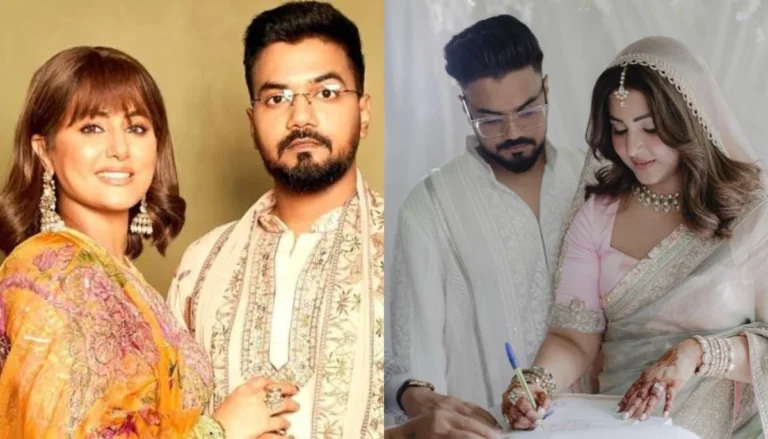
    Indian television actress Hina Khan has opened up about the difficult impact her cancer diagnosis had on her relationship with longtime partner Rocky Jaiswal, revealing that her health battle made her reconsider their future together. Hina and Rocky had known each other for nearly 13 years before taking their relationship to the next level. The couple eventually married in an intimate ceremony in June 2025, during a particularly challenging period in Hina’s life as she was undergoing treatment for stage 3 breast cancer. Speaking about their relationship, Hina admitted that her diagnosis brought an enormous amount of uncertainty into their lives. Rather than questioning Rocky’s commitment, she found herself worrying about whether she could still give him the life and happiness he deserved. The actress revealed that she even encouraged Rocky to move on and consider marrying someone else. According to Hina, she made the suggestion several times because she feared that her illness could permanently change different aspects of their lives. “We are not in that space where we fight; we have been in real-life crises,” Hina explained while discussing their relationship. She recalled telling Rocky that he should marry someone else, believing that he should not feel obligated to stay with her because of her health struggles. For Hina, the decision was not an attempt to test Rocky’s love or loyalty. Instead, she said it came from a genuine desire to ensure that he could have the future he wanted, even if that future did not include her. Her cancer journey brought emotional and physical challenges, but Rocky remained a constant source of support. Hina acknowledged that his presence played a major role in helping her cope with one of the most difficult periods of her life. “Anyone who was around me then knew that I was able to get through that time only because of him,” she shared, adding that Rocky made the difficult circumstances appear much easier than they actually were. Despite Hina’s repeated attempts to convince him to move forward without her, Rocky chose to remain by her side. He supported her throughout her cancer treatment and stood with her through the uncertainty surrounding her health. The couple ultimately married while Hina was still battling cancer, turning their relationship into a story of commitment and resilience during an exceptionally challenging chapter. Hina’s revelations offer a deeply personal look at how serious illness can affect not only an individual but also the relationships surrounding them. While she feared that her condition might prevent Rocky from experiencing the life he deserved, his decision to stay demonstrated his willingness to face the difficult circumstances alongside her. Their journey highlights the strength of a relationship when both partners choose to stand together during moments of uncertainty. For Hina, Rocky’s unwavering support became an important part of her ability to navigate her cancer battle, while their marriage marked another significant chapter in their 13-year journey together.

  • | | |

    PRL and SSGC face Senate anger over missing inform…

    Islamabad: State owned petroleum companies Pakistan Refinery Limited (PRL) and Sui Southern Gas Company (SSGC) faced serious criticism in the Senate after lawmakers expressed dissatisfaction over missing information, failure to follow committee directions and concerns about company management. The Senate Standing Committee on Petroleum questioned the performance and accountability of government owned petroleum companies and considered taking strict action against officials who failed to cooperate with parliamentary oversight. During the meeting chaired by Senator Umer Farooq, the committee reviewed the appointment criteria for chairpersons and managing directors of petroleum companies, the structure of their boards and progress on previous committee recommendations. The committee took serious notice of the absence of the Managing Director of Pakistan Refinery Limited during the meeting. Members expressed concern that PRL, despite being a state-owned company, did not provide the required information to the committee. The committee considered initiating a privilege motion against the Managing Director of PRL for failing to appear and provide necessary details. The Petroleum Division was directed to submit complete information about the boards of directors and senior management of all government owned petroleum companies. The committee said transparency in leadership appointments and company management is necessary because these organisations deal with matters directly linked to the national economy and public interest. The committee also expressed dissatisfaction over the performance of Sui Southern Gas Company and its failure to implement previous recommendations. Members said SSGC had not provided details of its board of directors despite earlier instructions. The committee also raised concerns over remarks made by SSGC that were considered discouraging toward the Senate Standing Committee’s role in discussing important matters. The committee considered moving a privilege motion against SSGC over non compliance with its directions. The Petroleum Division was further directed to review the tenure of board members who have remained in positions beyond the approved period and submit a detailed report. The committee also raised concerns over the absence of performance audits of oil rigs. Authorities were directed to provide the required audit report within seven days so that the committee could review the performance and efficiency of petroleum sector operations. Members said proper audits are necessary to identify problems, improve production and ensure better use of national resources. The committee also reviewed issues related to LPG quotas and licensing. The Oil and Gas Regulatory Authority was directed to hold consultations with all relevant stakeholders and submit a detailed report to the committee. Senators stressed that petroleum companies must improve governance, follow parliamentary instructions and ensure public institutions operate with transparency. The committee said accountability in state owned petroleum companies is essential to protect national interests and improve confidence in the energy sector.

  • | |

    Karachi court acquits Anmol alias Pinky in three d…

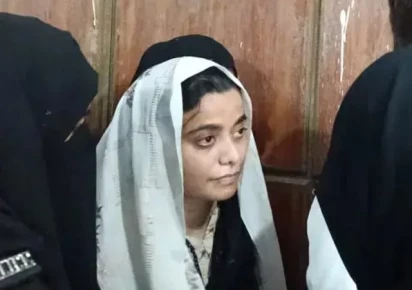
    KARACHI: An Additional District and Sessions Court in Karachi has acquitted Anmol alias Pinky in three drug cases registered at Gizri Police Station. The court announced the decision on Thursday after hearing arguments from the defence. Pinky was arrested by Karachi police in May during a joint operation with a civil agency at an apartment in the Garden area. Police had accused her of operating an organised narcotics supply network in Karachi. Investigators alleged that the network was involved in processing and distributing cocaine and had links with other major cities, including Lahore and Islamabad. According to police, the three cases against Pinky were registered at Gizri Police Station in 2020, 2021 and 2022. She had remained a fugitive in the cases before her arrest. During Thursday’s hearing, Pinky’s defence counsel argued that two other accused persons in the cases had already been acquitted. The lawyer told the court that co-accused Ali and Fehmida were acquitted in 2024. He argued that Pinky had subsequently been implicated on the basis of statements attributed to the acquitted co-accused. The defence maintained that after the acquittal of the two co-accused, there was insufficient legal basis to convict Pinky in the cases. The court accepted the defence arguments and acquitted her in all three cases. Before her acquittal, investigators had made several allegations about Pinky’s alleged role in the narcotics trade. Police claimed she supplied drugs to customers in affluent areas of Karachi, including DHA and Clifton. Investigators also alleged that she personally prepared cocaine and used female riders and online platforms to facilitate deliveries. Police further claimed that her alleged network extended beyond Karachi to cities including Lahore and Islamabad. During interrogation, investigators attributed statements to Pinky regarding the quality and sale of cocaine. Police alleged that two categories of cocaine were being sold through the network at different prices. Pinky, however, made separate allegations during interrogation. She claimed she was being pressured to name politicians and members of the entertainment industry. She also alleged that she had been subjected to physical mistreatment during questioning and accused an investigation officer of threatening her.

Leave a Reply

Your email address will not be published. Required fields are marked *