
ali fazal prioritises
| |

Ali Fazal prioritises meaningful stories over blockbusters

Ali Fazal is at a point in his career where the choices he makes carry a different kind of weight, and he is no longer making them for the reasons he once did. In a candid conversation with Elle India, the actor opened up about the creative philosophy guiding his work now, a deliberate shift away from commercial instincts and toward projects that leave a genuine mark.
He described what worries him most as a performer with characteristic directness. “Mostly the feeling that you’ve made less of a difference in people’s lives,” he said. It is the kind of answer that says everything about how far his priorities have moved from where they began.
Fazal said he now gravitates toward roles that have “less relevance and more resonance”, a distinction that defines much of his current thinking about both his Bollywood and Hollywood career. He wants the work to reflect the ambition and humanity that define him as a person, not simply as an actor building a brand.
His upcoming film Raakh, a crime thriller in which he plays a police officer investigating a case rooted in real historical events from 1970s Delhi, served as the central example in his conversation. “Sometimes you’re part of things that work, and that’s wonderful because we all need appreciation to move forward,” he said. “But once in a while, there are projects that actually begin conversations. They come at a time when society perhaps needs them or needs reminding that, sadly, not much has changed fifty years later. That’s what Raakh has done. It has humbled me.”
He was equally candid about how his decision-making process has changed. “Earlier, I’d jump into whatever came my way because I had to. Today, I can afford patience.” That patience is now applied most rigorously to the screenplay itself, which he described as the first and most important filter. “The punctuation in a screenplay tells you whether it’s going to be good or bad,” he said, adding with a self-aware joke: “I’m not some A-list star who’s staying away from genres because they’ll spoil my image. I’ve probably stayed away from bad scripts more than genres.”
His early career also featured in the conversation. He credited Always Kabhi Kabhi, a film that performed modestly at the box office, with teaching him the grammar of cinema. The film introduced him to Shah Rukh Khan, who produced it, and whom Fazal described as “one of the best artists we have.”
On Mirzapur: The Film, which brings the streaming universe to theatres, Fazal called it “a giant experiment,” and on his character Guddu Pandit, he said what has stayed with him is not the violence but the innocence beneath it.
Away from acting, he and his wife Richa Chadha are building Pushing Buttons Studios, their independent production company aimed at supporting original storytelling. Asked to describe his journey in a single word, Fazal chose “relentless.” It is the right word for a career that is now defined not by the roles he has taken but by the ones he has chosen to wait for.

Similar Posts

  • | |

    Zardari leaves Lahore quietly, Bilawal’s whereab…

    LAHORE: President Asif Ali Zardari has left Lahore after spending around two days in the city without meeting the local leadership of his Pakistan Peoples Party (PPP), adding to speculation surrounding the political situation within the party. Zardari departed for Islamabad on Sunday after a low-profile visit during which he reportedly held no formal meetings with PPP leaders in Lahore. His stay has drawn particular attention amid unconfirmed reports that PPP Chairman Bilawal Bhutto Zardari may have left Pakistan. A senior party figure close to the leadership said the president’s visit was not intended for meetings with the party’s local leadership. According to the source, Zardari had come to Lahore to deal with sensitive and urgent matters away from public attention. The same source acknowledged hearing reports about Bilawal’s possible departure but said he could neither confirm nor reject them. During his stay, Zardari was reported to have held only one known meeting, with Interior Minister Mohsin Naqvi, who was accompanied by businessman Gohar Ejaz. The president’s arrival also appeared to catch several PPP leaders off guard, with party members saying they had not been informed beforehand. Some PPP leaders reportedly sought meetings with Zardari but were unable to secure appointments. The president’s visit comes at a politically sensitive time for the PPP, which has recently taken a strong position against the creation of new administrative units and criticised the PML-N government over what it describes as excessive reliance on the establishment. Zardari has also recently withheld his assent to the elevation of judges, adding another layer to the growing political tensions. Attempts were made to contact PPP leaders Nadeem Afzal Chan and Shazia Marri for clarification about the reports concerning Bilawal, but no response was received before the report was filed. Meanwhile, PPP Kashmir leader Chaudhary Riaz said Bilawal had left the Kashmir Valley but added that he did not know where the party chairman was currently located.

  • | |

    Türkiye condemns Black Sea drone strikes on cargo…

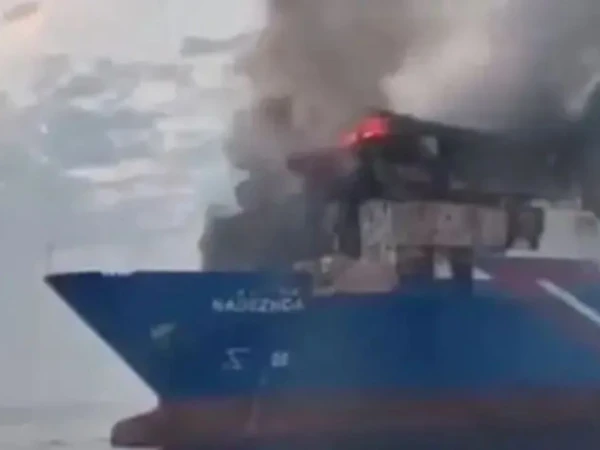
    ISTANBUL: Türkiye has strongly condemned drone attacks on two commercial cargo vessels in the Black Sea, warning that continued assaults on civilian shipping could jeopardize international maritime trade and global food security. According to international media reports, the vessels were attacked shortly after departing Russia’s Black Sea port of Novorossiysk. Türkiye’s Foreign Ministry confirmed that several crew members were injured in the incidents and said their condition is being closely monitored. In a statement, the ministry expressed deep concern over the escalating tensions between Russia and Ukraine in the Black Sea, noting that repeated warnings about the risks to civilian navigation have gone unheeded. It stressed that disruptions to commercial shipping could have serious consequences for global trade routes and food supply chains. Ankara urged all parties involved in the conflict to take immediate and effective measures to safeguard freedom of navigation and ensure the safety of commercial vessels operating in the region. Reports identified the targeted ships as Yasir and Nadezhda, sailing under the flags of Panama and Cameroon, respectively. Although registered abroad, both vessels are reportedly owned by Turkish companies. The attacks come amid a steady rise in hostilities across the Black Sea, where commercial shipping has increasingly been caught in the crossfire of the Russia-Ukraine conflict. In late June, an attack near Crimea on a Turkish fishing boat left one person dead and four others injured, while another Turkish cargo ship was reportedly struck by a drone at the end of May. Meanwhile, separate security incidents have further heightened regional tensions. In the Russian-controlled Crimean city of Sevastopol, four people, including a soldier, were killed after a serviceman allegedly opened fire on both military personnel and civilians before being taken into custody. Authorities have launched an investigation into the motive behind the shooting. Elsewhere, Russian officials reported that a Ukrainian drone strike on the industrial area of Novoselki near Moscow killed five people and injured ten others. The attack also triggered multiple fires across the industrial zone. Analysts say the intensifying military activity in the Black Sea is increasing the risks to international commerce, energy transportation, and global food supplies, while further complicating efforts to ease the conflict between Russia and Ukraine.

  • | | | |

    US strikes IRGC bases after Iran missile attack

    The Middle East moved a step closer to a broader regional conflict after the United States launched large-scale airstrikes against dozens of Islamic Revolutionary Guard Corps (IRGC) facilities across Iran in retaliation for Tehran’s ballistic missile attack targeting American forces stationed in the region. According to the US Central Command (CENTCOM), the operation targeted military command centers, drone infrastructure, weapons depots and other strategic IRGC installations during a coordinated two-hour campaign. US officials said the strikes were intended to weaken Iran’s ability to threaten American troops, commercial shipping lanes and allied Gulf nations. Iranian state media reported that at least three people were killed during strikes on Qeshm Island, while authorities vowed that the country would continue defending its territory against what it described as “American aggression.” The crisis quickly spread beyond Iran’s borders. Jordan announced that its air defence systems intercepted five missiles following Iran’s confirmed launch toward US military installations in the kingdom. Washington maintained that all missiles directed at American bases were successfully intercepted, preventing casualties among US personnel. In another major development, US and Saudi forces carried out coordinated strikes against Iran-backed armed groups operating in eastern Iraq after drone attacks launched from Iraqi territory targeted Saudi oil facilities. The joint operation marked the first publicly acknowledged military action conducted together by Washington and Riyadh against Iran-aligned militias. Regional instability deepened further after a fire broke out aboard a US-owned gas storage tanker at Egypt’s Mediterranean port of Damietta. Although maritime security experts suggested the blaze may have resulted from a drone strike, Egyptian officials confirmed only the fire and said investigations into its cause were continuing. The latest escalation comes against the backdrop of months of confrontation between Iran, the United States and Israel. Fighting resumed after disputes over the strategically important Strait of Hormuz ended a short-lived ceasefire reached in June. US President Donald Trump reiterated that America would respond decisively to attacks on its forces while insisting diplomatic efforts remained active. However, continued military exchanges around the Strait of Hormuz have complicated negotiations and increased concerns over global energy supplies. Iran has claimed it targeted three tankers attempting to pass through what it called an unauthorized route in the strait, while rejecting an Omani-backed proposal supported by Gulf states for joint management of the crucial waterway. The conflict has also rattled global energy markets, with Brent crude prices climbing above $90 per barrel before easing later in trading. Meanwhile, Iraq’s Iran-backed Popular Mobilisation Forces said at least 20 of their fighters were killed in the US-Saudi strikes, prompting Baghdad to condemn the attacks as a violation of its sovereignty while urging all armed groups to halt cross-border military operations. Saudi Arabia has also intensified diplomatic efforts, with Defence Minister Prince Khalid bin Salman meeting US Vice President JD Vance in Washington to urge restraint. Saudi officials reportedly warned that expanding military operations against Yemen’s Houthis and Iran-backed militias in Iraq could trigger unpredictable consequences across the Middle East, highlighting growing fears that the conflict could widen even further.

  • | |

    Arjumand Rahim opens up about anxiety and multiple ER visits

    Arjumand Rahim is one of Pakistani television’s most enduring and respected performers. She began her career in the 1990s and has built a body of work that spans three decades, evolving alongside the industry itself and consistently delivering performances that leave a mark. Her recent role in Sher reminded audiences precisely what she is capable of, earning widespread praise and reinforcing her standing as one of the finest actors of her generation. Away from the screen, however, she has been quietly navigating a health struggle that was far more frightening than anything she has portrayed on camera. Appearing as a guest on Vasay Chaudhary’s show, Arjumand spoke with remarkable candour about a period in her life when she repeatedly found herself in the emergency room with no clear explanation for what was happening to her body. She described feeling faint and physically unwell on multiple occasions, with each ER visit leaving her more shaken than the last. Adding to her fear was a deeply personal detail: her father had passed away due to cardiac arrest, and the physical symptoms she was experiencing brought that grief rushing back in the most frightening way possible. Every episode of faintness or discomfort carried the shadow of that loss. It was only when she received a proper diagnosis that the picture began to make sense. She was found to be suffering from extreme anxiety and depression, conditions that had been manifesting through very real and alarming physical symptoms. For someone who had not understood what was happening to her, the diagnosis, while difficult to hear, was also the beginning of clarity. She sought professional help, underwent therapy, and received the treatment she needed to begin recovering. She described the period before the diagnosis as truly frightening, a time when she did not know what was wrong with her and could not explain what her body was doing or why. The uncertainty, layered on top of grief and the physical toll of the episodes themselves, made for an extraordinarily difficult stretch of time. The good news, and she was clear about this, is that she is doing significantly better now. The treatment worked, and the willingness to seek help made the difference. Her decision to speak openly about what she went through carries weight beyond her own story. In Pakistan, conversations around mental health and its physical manifestations remain challenging, and the stigma surrounding anxiety, depression and therapy continues to prevent many people from reaching out. When a figure of Arjumand Rahim’s stature speaks plainly about her own diagnosis and her experience of getting treatment, it sends a message that reaching for help is not weakness but the beginning of getting better. That is a message worth hearing.

  • |

    Nicole Kidman details her prep behind ‘Lioness’ season 3

    Nicole Kidman is opening up about the intense preparation behind her scenes in “Lioness”. She revealed exactly what she and co-star Morgan Freeman make sure to nail down before filming begins. In the CIA thriller series created by Taylor Sheridan, the 59-year-old actress plays Kaitlyn Meade, while 89-year-old Morgan Freeman portrays Edwin Mullins. The show also features an ensemble cast, including Zoe Saldaña, Jill Wagner and Laysla De Oliveira. Speaking at Paramount+’s Icons of Taylor Sheridan’s Universe event, Kidman explained that the work never really stops, even when cameras aren’t rolling. She said the entire cast has to fully understand every single line they deliver. According to her, the scripts are genuinely dense, requiring the cast to work through them carefully for every episode. She described the process as a significant undertaking that demands constant attention. Kidman explained that dialogue has to come out naturally, almost as if it is part of everyday conversation. She admitted that achieving that level of ease takes real effort, since the material itself isn’t something people would normally say casually. She specifically credited her ongoing collaboration with co-stars Michael Kelly and Morgan Freeman. According to Kidman, the three of them are constantly working together behind the scenes to get the material right. She revealed that before filming key scenes, she and Freeman always break down their lines in detail. Kidman said they consistently ask themselves what specific words and phrases actually mean, working through definitions repeatedly. She explained that this process ensures the entire cast stays fully aligned on what they are discussing throughout each scene. According to her, that level of preparation is essential given how technical and layered the show’s dialogue can be. Season three of “Lioness” premiered on Paramount+ on August 2, with new episodes releasing weekly every Sunday. Kidman’s comments offer fans a behind-the-scenes look at just how much preparation goes into delivering the show’s fast-paced, dialogue-heavy storytelling.

  • | | |

    Uganda backs sending troops to planned Gaza peace …

    Uganda’s Parliament has approved a government proposal to deploy troops to a planned international peace and stabilisation force for Gaza, marking the country’s first commitment to the proposed multinational mission. The resolution was introduced by Uganda’s Minister of Defence and received parliamentary approval following debate among lawmakers. With the decision, Uganda joins Morocco, which has also announced its willingness to contribute troops to the proposed force. The Ugandan government has not publicly disclosed the diplomatic discussions or political considerations behind its decision. However, the move sparked debate in Parliament, with opposition members expressing concerns about the potential implications for Uganda’s foreign policy and regional relationships. Opposition lawmaker Hassan Kiromera questioned the mission’s objectives, asking which parties Ugandan troops would ultimately be expected to confront if deployed. He argued that the government should provide greater clarity regarding the mandate of the proposed force before committing military personnel. Defence Minister Jacob Oboth-Oboth defended the proposal, stating that the Uganda People’s Defence Forces (UPDF) possess extensive experience in international peacekeeping operations, including missions in Somalia and other conflict zones. He said that this experience would enable Ugandan troops to contribute effectively to efforts aimed at restoring peace and stability in Gaza. According to the report, the proposed Gaza International Stabilisation Force is expected to consist of approximately 20,000 personnel from multiple countries. The force is reportedly planned under a proposal associated with US President Donald Trump’s Board of Peace and would be commanded by US Major General Jasper Jeffers. The mission is intended to help maintain law and order in Gaza following the end of hostilities between Israel and Hamas. Reports indicate that the proposal was first introduced earlier this year as part of broader discussions on post-conflict governance and security arrangements in the territory. The development follows recent announcements regarding a reported agreement under which Hamas would disarm and Israel would gradually withdraw its military forces from Gaza. Under the reported framework, the international stabilisation force would be deployed after the phased Israeli withdrawal. However, uncertainty remains over the implementation of the proposed arrangement. Israeli officials have reportedly expressed serious security concerns after reviewing the reported agreement, arguing that certain provisions could pose risks to national security. As a result, questions remain about the timeline and conditions for the deployment of the multinational peace force despite Uganda’s parliamentary approval.

Leave a Reply

Your email address will not be published. Required fields are marked *