iran vows retaliation
| | | |

Iran vows retaliation after fresh US strikes

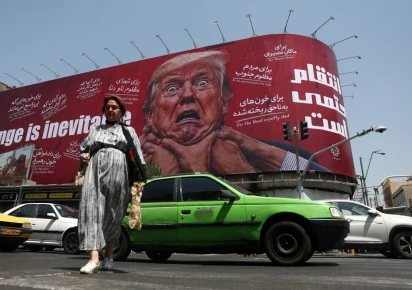
Iran has vowed to retaliate after the United States launched fresh overnight air strikes on multiple locations across the country, further escalating the conflict that has increasingly drawn several Middle Eastern nations into the fighting.

The Islamic Revolutionary Guard Corps (IRGC) issued a strong warning, saying those responsible for the attacks would face punishment. Iranian media quoted the force as saying that the “aggressor” would be held accountable.

The latest US strikes reportedly targeted several areas in southern Iran, including Bushehr province, which is home to the country’s only nuclear power plant. Explosions were also reported in Qeshm, Kish, Bandar Abbas, Abadan and other nearby locations.

Iranian officials said a residential building on Qeshm Island was struck during the attacks. Local authorities confirmed that three members of the same family, including a child, were killed. Two other children from the same family were injured and shifted to hospital for treatment.

The US military said the strikes were launched in response to recent Iranian missile attacks targeting American forces stationed in Jordan. Washington described the operation as a powerful response aimed at deterring further attacks on its troops in the region.

The military action came shortly after US President Donald Trump warned that Iran would face severe consequences following attacks on American military facilities.

Meanwhile, Jordan said its air defence systems intercepted and destroyed five Iranian missiles heading toward its territory. Officials said this was the fourth consecutive day that missiles or drones launched from Iran had been intercepted. No casualties or property damage were reported.

Iran also strongly condemned recent joint US-Saudi air strikes carried out in Iraq. Tehran described the attacks as a violation of Iraq’s sovereignty and territorial integrity. It accused Washington of widening the regional conflict and expressed support for the Iraqi government.

The Iraqi government also criticised the strikes and called on all parties to avoid further escalation. Iraqi officials stressed that the country should not become a battleground for regional disputes.

Israeli Prime Minister Benjamin Netanyahu said it was difficult to predict Iran’s next moves regarding the Strait of Hormuz. However, he argued that alternative energy routes could eventually reduce the strategic importance of the vital shipping lane.

The United Nations expressed deep concern over the renewed fighting. UN Secretary-General António Guterres urged both the United States and Iran to end hostilities and return to diplomatic negotiations. He also welcomed mediation efforts by regional countries seeking to reduce tensions.

The IRGC claimed that two oil tankers attempting to sail through what it described as an unauthorised route in the Strait of Hormuz turned back after a fire reportedly broke out on one vessel. Iranian officials insisted the country maintained control over the strategic waterway and warned that restrictions would remain as long as foreign military threats continued.

The United Arab Emirates also condemned drone attacks targeting Saudi oil facilities from Iraqi territory, calling them a serious violation of Saudi sovereignty and a threat to regional security.

The conflict has expanded rapidly over recent days, with military activity reported in Iran, Iraq, Jordan, Egypt and the Gulf region. The growing instability has increased concerns over regional security and disrupted global energy markets.

Oil prices climbed sharply as investors reacted to fears of further escalation and possible disruptions to shipping through the Strait of Hormuz, one of the world’s most important energy trade routes.


Similar Posts

  • | |

    AJK voters rally behind PML-N ahead of August 2 po…

    ISLAMABAD: Senior Punjab Minister Maryam Aurangzeb has expressed confidence that the people of Azad Jammu and Kashmir (AJK) are firmly backing the Pakistan Muslim League-Nawaz (PML-N), saying recent public gatherings reflect growing support for the party ahead of the August 2 elections. In a statement issued on Tuesday, Aurangzeb said the people of Mirpur had demonstrated their trust in the PML-N during the visit of former prime minister Nawaz Sharif and Punjab Chief Minister Maryam Nawaz on July 24. She described the enthusiastic public response as a clear indication of the party’s popularity in the region. She further stated that voters would reinforce this support through the ballot box by electing PML-N candidates under the party’s election symbol, the lion. According to Aurangzeb, the people believe that the progress and prosperity of Azad Jammu and Kashmir are closely tied to the PML-N’s development agenda. Referring to earlier political activity, she said Muzaffarabad had already conveyed its support for the party on July 21. Aurangzeb added that the people of Kashmir would make their final decision on polling day, August 2, by voting in favour of the PML-N.

  • | |

    Paris Jackson shares rare insights into first meet…

    Paris Jackson is opening up about one of the most personal moments of her life: meeting her mother, Debbie Rowe, for the first time when she was 15. The singer and actress discussed the experience during a recent appearance on the Call Her Daddy podcast. Looking back, Paris revealed that the meeting was much more relaxed than people might expect. Rather than being an emotional or dramatic reunion, their first encounter unfolded in a surprisingly natural way. (People.com⁠) Paris explained that she had started asking questions about her mother when she was around 10 or 11. At the time, she was given enough information to satisfy her curiosity, including Rowe’s name, and she simply moved on. Several years later, however, Paris and Rowe finally connected when Paris was about 15. The reunion happened after years of limited contact. Rowe is the biological mother of Paris and her older brother, Prince Jackson. She was married to Michael Jackson from 1996 until their divorce in 2000, after which Michael retained full custody of their children. (EW.com⁠) Paris recalled that when she first encountered Rowe, she was with her grandmother. Instead of making the moment overly serious, Paris greeted her mother casually, reportedly saying, “Hey, Mom.” The two then spent time together talking and getting to know each other. (Page Six⁠) Interestingly, Paris said she did not approach the reunion with many expectations. She believes that keeping expectations low helped their relationship develop naturally instead of placing pressure on either of them. Over time, the mother-daughter relationship became stronger. Paris has previously spoken about discovering similarities between herself and Rowe, including their personalities and shared interest in music. She has also noted that they look alike and enjoy similar genres, particularly country and folk music. (Yahoo⁠) Their bond became especially meaningful as the years passed. Paris supported Rowe during her battle with breast cancer in 2016, further strengthening their connection. More recently, Paris has continued to share glimpses of their relationship, including rare photos of the two together. The actress has also reflected on how different her relationship with Rowe is from a traditional mother-daughter bond. Because they were separated during much of Paris’ childhood, their connection developed more gradually as she grew older. Now, Paris appears grateful for the relationship they have built. Her latest comments offer a rare glimpse into a deeply personal chapter of her life and show how a simple first meeting at 15 eventually grew into a meaningful bond between mother and daughter.

  • | |

    Kuwaiti Foreign Minister meets Army Chief  Asim M…

    RAWALPINDI: Kuwait’s Minister of Foreign Affairs, Sheikh Jarrah Jaber Al-Ahmad Al-Sabah, met Field Marshal Syed Asim Munir, Chief of Army Staff and Chief of Defence Forces, at the General Headquarters (GHQ) in Rawalpindi on Tuesday to discuss regional security and ways to strengthen cooperation between the two countries. The Kuwaiti foreign minister was accompanied by Kuwait’s Ambassador to Pakistan, Nassar Abdul Rahman J. Al-Mutairi. According to the Inter-Services Public Relations (ISPR), the two sides exchanged views on matters of mutual interest, the regional security environment, and opportunities to further deepen bilateral cooperation. During the meeting, the Kuwaiti foreign minister appreciated Pakistan’s continued support and its constructive role in promoting regional peace and stability. He also highlighted the longstanding fraternal relationship between Pakistan and Kuwait. Field Marshal Syed Asim Munir reaffirmed Pakistan’s commitment to further strengthening ties with Kuwait, stressing that both countries share a common vision for regional peace, stability, and prosperity. He expressed confidence that the enduring partnership between the two nations would continue to grow across multiple areas of cooperation.

  • |

    Pakistan squad arrives in England for Test series

    Pakistan’s Test squad has arrived in England for a three-match series, with the team set to begin preparations ahead of the opening Test on August 19. The national side reached England after drawing their recent Test series in the West Indies 1-1. The upcoming tour will present another demanding challenge, particularly with England’s conditions expected to test Pakistan’s batters and bowlers. The Pakistan squad will take a short break on August 8 and 9 before returning to training. The team is scheduled to begin its first practice session on August 10 at the County Ground in Beckenham. Training is scheduled to start at 9:30am local time as the players begin adapting to the English conditions. Before the Test series gets underway, Pakistan will have an important opportunity to fine-tune their combinations during a four-day practice match against a Select XI. The warm-up fixture is scheduled to take place from August 12 to 15. The practice game is expected to help the team management assess players ahead of the first Test while allowing the squad to adjust to the pace, movement and weather conditions in England. Pakistan and England will then begin their three-Test series on August 19. The visitors will be hoping to carry lessons from their West Indies campaign into the tour and make a strong start in England. For Pakistan, the series will also provide an important test of their red-ball depth, with both experienced players and younger members of the squad expected to play key roles. With training, a four-day practice match and the opening Test all lined up, Pakistan’s preparations are now officially underway. The team will be eager to use the coming days wisely before the real contest begins on August 19, when Pakistan and England resume their battle in the longest format of the game.

  • |

    Israeli banks plan to end services for Palestinian banks raising fears of financial crisis

    Israeli banks have informed Palestinian financial institutions that they plan to end key banking services within the coming weeks, a move that has sparked concerns about serious economic disruption in the occupied West Bank. Officials on both sides say the decision could affect trade, salaries, and the daily financial operations that rely on cooperation between the two banking systems. The banking relationship allows Palestinian institutions to process transactions in Israeli shekels, the currency widely used in the Palestinian territories. These services are essential for paying for electricity, water, fuel, food imports, and other goods purchased from Israel. They also help transfer wages earned by thousands of Palestinians employed in Israel. According to Palestinian banking officials, five local banks that depend on Israel’s Bank Hapoalim for correspondent banking services have been told those arrangements will end on August 13. Other Palestinian banks that work through Discount Bank have reportedly been informed that their services will stop on September 1 unless a solution is reached. Israel’s Finance Ministry confirmed that both banks had announced plans to discontinue their correspondent banking services. The ministry said the decision reflects increasing legal and financial risks faced by Israeli banks while handling transactions for Palestinian institutions. In a statement, the ministry said it is holding discussions with the banks to find a way to continue these services while protecting Israel’s economic and security interests. Officials are exploring options that would allow financial cooperation to continue under conditions that reduce legal exposure for the banks involved. The banking arrangements have long depended on a government backed legal guarantee that shields Israeli banks from liability related to transactions carried out on behalf of Palestinian financial institutions. This protection is renewed every six months by the Israeli government. However, banking officials say commercial lenders no longer believe the existing guarantees provide enough protection. They argue that the risks of possible money laundering claims or allegations linked to terrorist financing have increased over time. According to one Israeli banking official, the banks believe the responsibility should now be taken over directly by the government instead of remaining with private financial institutions. Discount Bank confirmed that it had informed Israeli authorities of its concerns regarding the growing risks associated with these services. The bank said it has a responsibility to protect its depositors and shareholders while operating within an increasingly complex legal environment. Bank Hapoalim said the issue remains under review and did not provide further details. Economic experts warn that ending these banking links could have serious consequences for the Palestinian economy. Without access to correspondent banking services, businesses and individuals may be forced to rely more heavily on cash transactions. That shift could weaken the formal banking sector, reduce financial transparency, and encourage the growth of an informal economy. The decision could also place additional pressure on the Palestinian Authority, which already faces severe financial difficulties. The Authority depends heavily on local banks to finance public sector salaries and cover budget shortfalls. Financial analysts warn that if banks lose access to essential payment systems, the government’s ability to meet its financial obligations could be significantly weakened. A Palestinian businessman with close connections to the banking sector said the stability of local banks is closely tied to the stability of the Palestinian Authority. He warned that serious disruption to the banking system could have wider political and economic consequences across the West Bank. The latest development comes as the Palestinian Authority continues to struggle with reduced revenues after Israel suspended the transfer of customs and tax funds collected on its behalf. Those funds account for around two thirds of the Authority’s income, leaving its finances under increasing strain. Unless an agreement is reached soon, officials fear the planned banking cutoff could deepen the economic challenges already facing Palestinians in the occupied territory.

  • | |

    Israel raises concerns over Trump’s Gaza plan

    Israel has raised concerns with the United States over a Gaza peace plan praised by President Donald Trump after Hamas reportedly agreed to discuss disarmament. Prime Minister Benjamin Netanyahu’s office said Israel had shared its objections with US officials and stressed that the publicly released version of the proposal did not reflect its position. Israeli officials also accused Hamas of rebuilding its military capabilities and recruiting fighters since a ceasefire announced by Trump in October. Israel has continued carrying out strikes in Gaza despite the truce, while the conflict has seen a reduction in overall violence. Trump described Hamas’s reported agreement as a “major milestone” in efforts to end the war and claimed that Israel welcomed the development. However, Netanyahu’s office said Hamas’s alleged military preparations showed that the group could still pose a serious threat to Israel. It argued that any long-term agreement must include the complete, verifiable and irreversible disarmament of Hamas. An Israeli official said Israel would not withdraw its forces from Gaza under the proposed framework until it could confirm that Hamas had fully surrendered its weapons. Meanwhile, Israeli strikes continued after the Hamas announcement. Palestinian authorities said Israeli attacks on Sunday killed at least 13 people. According to Palestinian authorities, more than 73,000 Palestinians have died in Israel’s military campaign in Gaza since October 7, 2023.

Leave a Reply

Your email address will not be published. Required fields are marked *