salma hayek embraces
| |

Salma Hayek embraces grandmotherhood, shares 1st l…

Hollywood star Salma Hayek has stepped into a new chapter of her life as a grandmother and has given fans a heartwarming first glimpse of her newborn grandson.

The 59-year-old Oscar-nominated actress shared an emotional video on Instagram on Sunday, August 16, showing herself lovingly holding the baby and speaking to him in Spanish.

Hayek revealed that the baby, born to her stepson François Pinault Jr. and his wife Lara Cosima Henckel von Donnersmarck, has been named François. However, the actress said she plans to affectionately call him “Panchito,” a nickname that she says the newborn already seems to enjoy.

“We are blessed to welcome the fourth living generation of Francois,” Hayek wrote alongside the video, expressing her joy over the newest addition to the family.

Hayek shares her 18-year-old daughter Valentina with her husband, François-Henri Pinault. She is also stepmother to Pinault’s three other children, Mathilde, François and Augustin.

Although Hayek only recently made her grandmotherhood public, reports indicate that the baby was born in July. The new parents recently marked their first month as a family, sharing photographs of their baby boy, including sweet moments with Hayek.

The Desperado and Frida star’s latest post has since drawn warm reactions from fans, who celebrated the actress’s joyful new role and the growing Pinault family.
Similar Posts

  • | |

    Indian celebrities voice support for Cockroach Janta Party protests

    A growing number of prominent Indian celebrities and public figures have publicly voiced their solidarity with the youth-led Cockroach Janta Party (CJP) protests, amplifying the movement’s demands for educational reform, transparency, and youth empowerment. What began as a viral, satirical social media campaign addressing systemic issues like exam irregularities and widespread unemployment has rapidly evolved into a major political and cultural phenomenon across the nation. ​In recent days, several high-profile figures from the entertainment industry have used their platforms to condemn the harsh government response to peaceful student demonstrators at New Delhi’s Jantar Mantar. Actor Sonu Sood called for compassion and understanding from authorities, emphasizing that young students require supportive hands rather than force. Meanwhile, actor and comedian Vir Das urged fellow artists and performers not to remain silent, highlighting the hypocrisy of relying on young audiences for ticket sales while failing to stand up for their rights during moments of crisis. ​Joining the chorus of support, actor Dia Mirza strongly criticized the use of police force against peaceful marchers, expressing her distress over reports of harsh measures used against students and citizens demanding accountability. Actors Aditi Rao Hydari and Soha Ali Khan also shared messages advocating for constructive dialogue, dignity, and the fundamental right to peaceful protest, framing the issue as an urgent matter of human welfare and youth rights rather than partisan politics. ​Veteran actor Prakash Raj went a step further by physically joining demonstrators on the ground in Delhi, addressing crowds alongside activists and waving the Indian Constitution to demand accountability from political leadership. Raj openly challenged the broader film industry’s hesitation to speak up, noting that public judgment will fall on those who choose to remain silent during critical moments of youth struggle. ​The CJP movement—initially launched by digital activist Abhijeet Dipke—has resonated deeply with millions of young Indians frustrated by entrance exam scandals, job scarcity, and administrative indifference. Despite facing account suspensions, digital censorship, and heavy security measures at protest sites, the movement continues to build significant momentum both online and in public spaces. With influential cultural figures now lending their voices to the cause, the student-driven agitation has successfully pushed youth issues to the center of national debate.

  • |

    Government reviews splitting LESCO, MEPCO before privatisation

    The Ministry of Privatisation has established a high-level Technical Committee to examine the feasibility of dividing the Lahore Electric Supply Company (LESCO) and Multan Electric Power Company (MEPCO) into two or three smaller power distribution companies before their proposed privatisation, according to informed sources. The move is part of the government’s broader strategy to reform Pakistan’s power distribution sector and make state-owned electricity companies more attractive for private investment. LESCO and MEPCO currently serve the largest geographical areas and consumer bases among the country’s distribution companies (DISCOs), prompting officials to assess whether restructuring them into smaller entities could improve operational efficiency and facilitate the privatisation process. Technical Committee Constituted The committee is headed by Sajid Akram, Adviser (Power) at the Privatisation Commission. Other members include Ghulam Rasool, Joint Secretary at the Privatisation Commission; Imran Hafeez, Additional Director Tariff at the National Electric Power Regulatory Authority (NEPRA); and Abid Lodhi, Managing Director of the Power Planning and Monitoring Company (PPMC). The committee has been tasked with conducting a comprehensive review of the proposal and submitting recommendations to the government after evaluating its technical, operational and strategic implications. Weak Performance Raises Concerns Officials familiar with the matter said that both LESCO and MEPCO have consistently faced operational challenges, particularly in controlling electricity theft, reducing transmission and distribution losses, and improving bill recovery. These issues have affected their financial performance and have remained a major concern for policymakers pursuing reforms in the power sector. Recent audit reports for the fiscal year 2024-25 also highlighted unsatisfactory performance by both companies, reinforcing the need for structural reforms before moving ahead with the privatisation programme. MEPCO: Pakistan’s Largest Distribution Company MEPCO was incorporated in 1998 as a public sector company and operates under a permanent electricity distribution licence issued by NEPRA. The company is wholly owned by the Government of Pakistan through the Ministry of Energy. Serving nearly 8.76 million consumers across 13 districts of southern Punjab, MEPCO is the country’s largest electricity distribution company in terms of customer base. Its extensive network includes more than 82,000 kilometres of distribution lines and over 780 grid stations, supplying electricity across a vast region bordering three provinces. The company has initiated several modernisation projects, including the deployment of Advanced Metering Infrastructure (AMI), commonly known as smart metering, and digital billing systems aimed at improving transparency, reducing losses and enhancing customer services. LESCO Serving Over Seven Million Consumers LESCO also began operations in 1998 and supplies electricity to approximately 7.05 million consumers across Lahore, Kasur, Sheikhupura, Nankana Sahib and Okara. Its consumer base includes domestic, commercial, industrial, agricultural and bulk supply customers. The company’s operational network is divided into eight circles supervised by Superintending Engineers and 41 divisions managed by Executive Engineers to oversee field operations. In recent years, LESCO has accelerated efforts to modernise its infrastructure through the installation of smart meters, with plans to convert its entire consumer base to the Advanced Metering Infrastructure by 2029. However, the company continues to face significant operational hurdles, including shortages of transformers and electricity meters, resulting in delays in providing new connections and replacing faulty equipment. These issues have drawn criticism from regulators and consumers alike. Committee’s Terms of Reference According to the approved Terms of Reference (ToRs), the Technical Committee will: Assess the feasibility of splitting LESCO and MEPCO into two or three smaller distribution companies. Examine the potential advantages and disadvantages of such restructuring in line with the National Electricity Plan, the government’s Power Policy and the ongoing privatisation programme. Review whether similar committees were constituted in the past and analyse their findings, recommendations and implementation status. The committee’s recommendations are expected to play an important role in determining whether the government proceeds with restructuring the two major DISCOs before offering them for privatisation.

  • | |

    Rawalpindi Railway Station lights up in Pakistani,…

    RAWALPINDI: Rawalpindi Railway Station has been given a festive makeover ahead of Pakistan’s Independence Day, with the historic building illuminated and decorated with the national flags of Pakistan, Türkiye and Saudi Arabia. The display also highlights the growing ties among the three countries following the signing of the Mecca defence agreement. The railway station has been decorated with red and green lighting, creating a striking visual display across the building. According to the arrangement, red represents Türkiye, while green reflects the national colors of Pakistan and Saudi Arabia. Similar red and green lights have also been installed at the Railway Headquarters Police Station in Rawalpindi. The decorations are part of the city’s preparations to mark Independence Day while also showcasing the close diplomatic and strategic relations between Pakistan, Türkiye and Saudi Arabia. The colorful illumination has added a festive atmosphere to one of Rawalpindi’s key landmarks as celebrations for August 14 get underway.

  • |

    British firm begins salvage of grounded shadow fleet tanker leaking oil off Oman coast

    British maritime response firm Ambrey has launched an emergency operation to contain an expanding oil spill from the grounded Russian shadow fleet tanker Caroline Bezengi off the coast of Oman, following weeks of worsening environmental damage. Specialist crews boarded the vessel with assistance from the Royal Air Force of Oman to evaluate its structural integrity and begin stabilization procedures. The 25-year-old vessel, carrying an estimated 800,000 barrels of sanctioned Russian crude, ran aground at Qabiliyah Island on 30 June after experiencing an unexplained explosion off Yemen earlier in the month. Severe weather conditions from the regional Khareef monsoon season have accelerated the spread of the slick, which has expanded across more than 2,000 square kilometers of sea. Oman’s Environment Authority confirmed that crude pollution has reached shoreline sediments in the Ras Madrakah area, more than 200 kilometers north of the grounding site, and warned that the slick threatens sensitive habitats including the protected Hallaniyat Archipelago reserve. Environmental advocates and maritime experts have warned that the disaster could worsen dramatically if the increasingly submerged hull breaks open completely, potentially releasing tens of millions of gallons of crude into the Arabian Sea. Recovery efforts remain hindered by monsoon conditions and the vessel’s lack of recognized Western insurance coverage.

  • | | |

    Pakistan rejects EU GSP+ report, defends reform re…

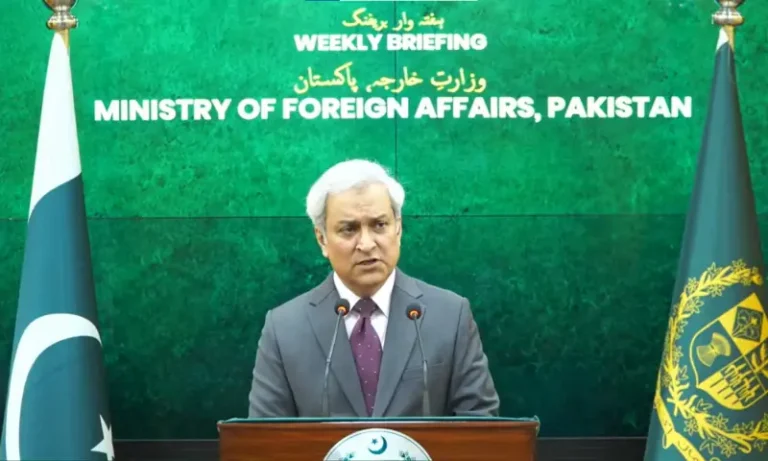
    Pakistan has expressed disappointment over the European Union’s latest assessment of the country’s performance under the Generalised Scheme of Preferences Plus (GSP+), saying the report does not accurately reflect the scale of reforms implemented over the past several years. Speaking during the weekly media briefing, Foreign Office spokesperson Tahir Andrabi said Pakistan appreciates that the report acknowledges the country’s legislative progress and continued implementation of the 27 international conventions linked to the GSP+ programme. However, he said the overall assessment presents an unbalanced picture by placing greater emphasis on areas where progress has been slower while overlooking broader reforms. Andrabi said Pakistan has introduced wide-ranging legal, administrative, and institutional reforms since joining the GSP+ scheme in 2014. He maintained that these reforms have strengthened governance, improved labour protections, promoted human rights, and supported sustainable economic development. The spokesperson described GSP+ as one of the most important pillars of Pakistan’s economic partnership with the European Union. He said the preferential trade arrangement has played a significant role in boosting exports, creating employment opportunities, increasing women’s participation in the workforce, reducing poverty, and supporting economic growth. He reaffirmed Pakistan’s commitment to constructive dialogue with the European Commission and other European institutions. According to Andrabi, the government remains fully committed to implementing international conventions and continuing reforms aimed at meeting its obligations under the GSP+ framework. He also highlighted that Pakistan’s cooperation with the European Union extends beyond trade. Both sides continue to work together in areas including climate resilience, migration, regional security, counterterrorism, development, connectivity, education, and economic cooperation. During the same briefing, the Foreign Office also rejected allegations made in a recent Amnesty International report regarding Pakistani military strikes in Kabul earlier this year. Andrabi said Pakistan completely rejects the claims, arguing that the report contains serious allegations without credible evidence. He maintained that any military action taken by Pakistan was carried out solely in self-defence and targeted terrorist hideouts and logistical facilities. He said the operations were conducted only after other options had been exhausted and fully complied with the principles of necessity, distinction, proportionality, and precaution under international law. He added that Pakistan exercised restraint despite facing repeated cross-border terrorist attacks. The spokesperson urged the international community to focus greater attention on militant groups operating from Afghan territory. He said organisations such as the Tehreek-i-Taliban Pakistan (TTP), the Baloch Liberation Army (BLA), and other affiliated groups continue to maintain bases and carry out attacks against Pakistan from across the border. Andrabi called on the Afghan Taliban authorities to fulfil their international commitments by preventing terrorist organisations from using Afghan territory for attacks against neighbouring countries. He said the continued presence of militant groups poses a serious threat to regional peace and security. The Foreign Office reiterated that Pakistan reserves the right to take all necessary measures to defend its sovereignty, territorial integrity, and the safety of its citizens. Andrabi said no responsible state can ignore repeated attacks on its people and security forces.

  • | | |

    China’s Saindak copper mine in Pakistan faces su…

    China’s long-running copper mining project in Pakistan is facing growing operational challenges as repeated militant attacks in Balochistan disrupt supply routes connected to the mine. The Saindak copper and gold mine, located in Balochistan’s Chagai district, is considered one of China’s oldest mining investments in Pakistan and remains its only major copper interest in the country. Analysts say ongoing security issues have created difficulties for transporting materials and maintaining regular operations. The attacks along key routes have raised concerns about what some analysts describe as an “economic blockade,” potentially affecting the movement of supplies required for mining activities and the shipment of copper produced at the site. Copper is a strategically important commodity for China, which is the world’s largest consumer of the metal due to its extensive manufacturing, energy, and technology industries. Any disruption to supply sources can create concerns for industries dependent on stable copper availability. The Saindak project has long been viewed as an important symbol of Pakistan-China economic cooperation. The mine has contributed to Pakistan’s mineral sector while providing China with access to copper resources. However, security challenges in Balochistan have repeatedly affected development projects and infrastructure networks. The province has witnessed several militant attacks targeting government installations, security forces, and economic projects. Officials and security agencies have increased efforts to protect strategic assets and transportation routes, but continued instability remains a major challenge for investors operating in the region. Experts say maintaining security around mining operations is essential not only for the continuity of the Saindak project but also for attracting future foreign investment in Pakistan’s mineral resources. As global demand for critical minerals continues to rise, the stability of resource-rich regions like Balochistan will remain a key factor in determining the future of mining cooperation between Pakistan and international partners.

Leave a Reply

Your email address will not be published. Required fields are marked *