indian celebrities voice
| |

Indian celebrities voice support for Cockroach Janta Party protests

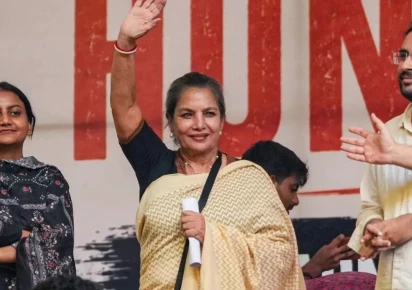
A growing number of prominent Indian celebrities and public figures have publicly voiced their solidarity with the youth-led Cockroach Janta Party (CJP) protests, amplifying the movement’s demands for educational reform, transparency, and youth empowerment. What began as a viral, satirical social media campaign addressing systemic issues like exam irregularities and widespread unemployment has rapidly evolved into a major political and cultural phenomenon across the nation.
​In recent days, several high-profile figures from the entertainment industry have used their platforms to condemn the harsh government response to peaceful student demonstrators at New Delhi’s Jantar Mantar. Actor Sonu Sood called for compassion and understanding from authorities, emphasizing that young students require supportive hands rather than force. Meanwhile, actor and comedian Vir Das urged fellow artists and performers not to remain silent, highlighting the hypocrisy of relying on young audiences for ticket sales while failing to stand up for their rights during moments of crisis.
​Joining the chorus of support, actor Dia Mirza strongly criticized the use of police force against peaceful marchers, expressing her distress over reports of harsh measures used against students and citizens demanding accountability. Actors Aditi Rao Hydari and Soha Ali Khan also shared messages advocating for constructive dialogue, dignity, and the fundamental right to peaceful protest, framing the issue as an urgent matter of human welfare and youth rights rather than partisan politics.
​Veteran actor Prakash Raj went a step further by physically joining demonstrators on the ground in Delhi, addressing crowds alongside activists and waving the Indian Constitution to demand accountability from political leadership. Raj openly challenged the broader film industry’s hesitation to speak up, noting that public judgment will fall on those who choose to remain silent during critical moments of youth struggle.
​The CJP movement—initially launched by digital activist Abhijeet Dipke—has resonated deeply with millions of young Indians frustrated by entrance exam scandals, job scarcity, and administrative indifference. Despite facing account suspensions, digital censorship, and heavy security measures at protest sites, the movement continues to build significant momentum both online and in public spaces. With influential cultural figures now lending their voices to the cause, the student-driven agitation has successfully pushed youth issues to the center of national debate.

Similar Posts

  • |

    Pakistan reports major gas discovery in Sarani block

    ISLAMABAD: Pakistan has recorded a significant milestone in its hydrocarbon exploration sector with the discovery of high-quality gas from an exploration well in Sindh, marking the country’s first reported hydrocarbon find from the Jurassic-era Chiltan Formation of the Lower Indus Basin. Pakistan Petroleum Limited (PPL) announced that its exploration well Dolphin, drilled in the company-operated Sarani Block in District Sujawal, Sindh, has encountered a potentially commercially important gas accumulation. The company described the discovery as unique and strategically significant for Pakistan’s future exploration activities. According to PPL, the discovery confirms the existence of an active petroleum system in an area that had previously presented considerable exploration challenges. The find is particularly important because it demonstrates the hydrocarbon potential of the Jurassic-age Chiltan Formation, opening up new possibilities for further exploration in the region. The company said the Dolphin well has provided valuable geological evidence that could help redefine exploration prospects in the onshore swampy areas of the Lower Indus Basin, as well as their possible extensions into shallow marine zones. The discovery is being viewed as an important development for Pakistan, which continues to face a growing gap between domestic energy demand and local oil and gas production. New indigenous gas reserves could help reduce reliance on imported energy resources, although the commercial scale and recoverable reserves associated with the discovery would depend on further evaluation and development work. PPL’s latest find also highlights the potential of relatively underexplored geological formations in the country. The identification of hydrocarbons in the Chiltan Formation could encourage exploration companies to reassess nearby acreage and investigate similar geological structures. The Dolphin discovery is therefore significant not only because of the gas encountered but also because it may establish a new exploration play in the Lower Indus Basin. Further appraisal and technical studies will be required to determine the size, quality, production potential and commercial viability of the discovery. Industry experts have long emphasized the need for increased domestic exploration to strengthen Pakistan’s energy security. Successful discoveries such as Dolphin could support that objective by expanding the country’s indigenous resource base and creating opportunities for additional exploration and investment. PPL said the discovery has effectively opened a new exploration frontier, particularly in the swampy onshore terrain and potentially adjoining shallow marine areas. The company is expected to undertake further technical assessment to establish the full potential of the newly identified gas-bearing formation.

  • |

    Global chip market set to cross $1 trillion as AI demand surges

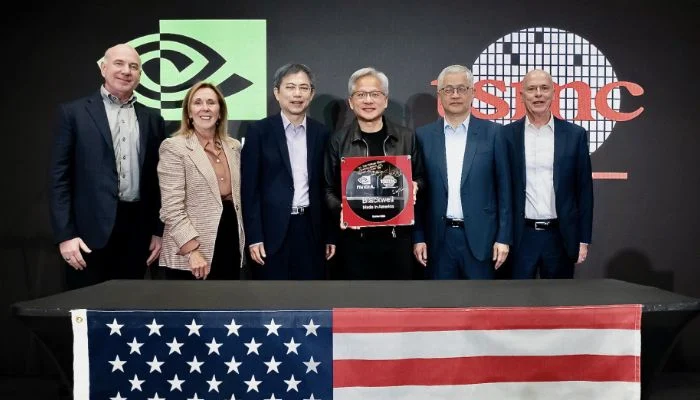
    The global semiconductor industry is on track to surpass $1 trillion in annual revenue in 2026, driven largely by the rapid expansion of artificial intelligence infrastructure. AI-related chips are reshaping the semiconductor business. Although advanced AI processors represent only a tiny share of total chip shipments, they are expected to generate almost half of the industry’s overall revenue this year. The surge reflects the enormous investment being made in AI data centres around the world. The five largest global technology hyperscalers have allocated more than $600 billion to AI data-centre infrastructure in 2026. The growing demand is also increasing the importance of advanced chip manufacturing. Producing a sophisticated 3-nanometre processor can take around six months, highlighting the complexity and limited capacity of the global supply chain. Taiwan Semiconductor Manufacturing Company (TSMC) remains central to the production of the world’s most advanced processors. The company manufactures an estimated 90% of the most sophisticated chips, making it a critical supplier for the rapidly expanding AI industry. This concentration has also raised concerns about supply-chain vulnerability. Any major disruption to advanced chip production could affect technology companies, AI developers and governments that are investing heavily in artificial intelligence. Nvidia has emerged as one of the biggest beneficiaries of the AI boom. The company reported revenue of $215.9 billion, strengthening its position as a leading supplier of processors used to train and operate advanced AI models. The chip industry’s challenges extend beyond processors. High-bandwidth memory (HBM), which is essential for AI computing, has become another major supply constraint. Much of the available HBM production capacity is already committed through 2026. The global memory market is also expected to generate substantial revenue, with estimates putting fiscal 2026 revenue at around $594.7 billion. The figures underline how quickly AI is transforming the global semiconductor industry. Demand is shifting toward fewer but far more valuable advanced chips, while manufacturers face pressure to expand capacity and secure critical components. As AI investment continues to grow, semiconductor production is increasingly becoming a strategic issue for technology companies and governments. The ability to manufacture advanced processors and memory at scale could determine how quickly the next phase of AI development progresses.

  • | |

    Karachi traffic accidents claim 603 lives this yea…

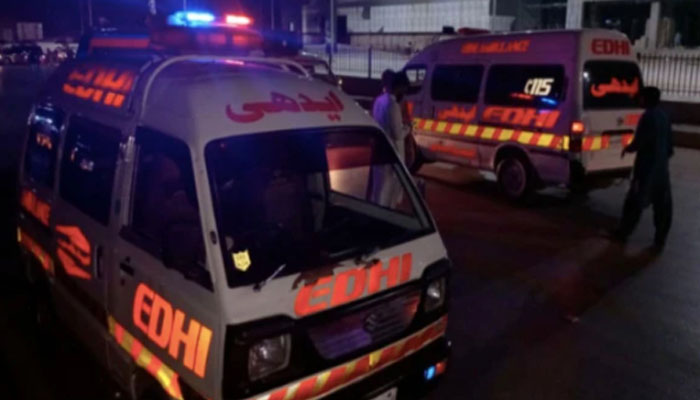
    Karachi: At least 603 people have lost their lives in different traffic accidents across Karachi this year, according to data released by Rescue authorities. Thousands of others have suffered injuries in road crashes, highlighting the continuing traffic safety challenges faced by the city. According to Rescue officials, 7,467 people were injured in traffic accidents during the year. The victims include people from different age groups and both genders. Of the 603 people who died in road accidents, 463 were men, 73 were women and 67 were children. The figures show that men made up the majority of fatalities, while women and children also suffered significant losses in road crashes. Rescue authorities said heavy vehicles were involved in a considerable number of fatal accidents. A total of 184 people were killed in accidents involving heavy vehicles during the year. According to the available data, 12 people lost their lives after being hit by dumpers. Trailer-related accidents claimed the lives of 84 people, making trailers one of the major contributors to fatalities involving heavy vehicles. Water tankers were also involved in several deadly accidents. Rescue officials reported that 46 people were killed in accidents involving water tankers during the year. Meanwhile, 18 people died in accidents involving mini-trucks, while 24 people were killed in accidents involving buses. The injury figures are also significant. Of the 7,467 people injured in traffic accidents, 5,649 were men, 1,322 were women and 496 were children. The data underscores the scale of road safety concerns in Karachi, where busy roads, increasing traffic and the movement of heavy vehicles have contributed to serious accidents. The high number of fatalities and injuries has renewed concerns about traffic management and road safety measures in the city.

  • |

    QatarEnergy buys US LNG cargoes amid Hormuz crisis

    QatarEnergy has purchased 33 liquefied natural gas (LNG) cargoes from the United States this year to reduce supply disruptions caused by the ongoing conflict in the region and the closure of the Strait of Hormuz, according to industry sources. The LNG shipments have been arranged for key Asian markets, including South Korea, Taiwan, Bangladesh, India and Japan, as Qatar works to maintain supplies for its long-term customers. The move comes after QatarEnergy declared force majeure on some of its LNG contracts following the shutdown of shipping routes through the Strait of Hormuz. The waterway is a critical global energy corridor through which a significant portion of the world’s oil and gas supplies passes. The company’s decision to purchase additional LNG cargoes from the US represents a major increase compared with previous years. In 2025, QatarEnergy had purchased only four spot LNG cargoes, while the number has now risen sharply to 33 in 2026. The additional purchases are aimed at protecting Qatar’s reputation as one of the world’s most reliable energy suppliers and ensuring that customers continue receiving gas despite regional instability. Industry sources said the US LNG purchases represent a goodwill effort by QatarEnergy to support important Asian buyers affected by the disruption. The 33 cargoes are estimated to equal around one-third of QatarEnergy’s monthly LNG exports before the conflict and are valued at nearly $1 billion. Qatar is among the world’s largest LNG exporters, with Asia accounting for around 80% of its LNG shipments. Countries such as Japan, South Korea and India rely heavily on Qatari gas supplies for energy security. The Strait of Hormuz crisis has created uncertainty in global energy markets, forcing major producers and consumers to seek alternative supply arrangements. QatarEnergy has not officially commented on the reported LNG purchases, but the move highlights efforts by energy companies to adjust supply chains amid geopolitical tensions.

  • | | |

    800 young swimmers compete in CM Punjab Championsh…

    The two-day CM Punjab Swimming Academies Championship has started at the Punjab International Swimming Complex. The event has attracted around 800 young swimmers from different swimming academies across Punjab. Boys and girls are taking part in the championship in various age groups. The competition includes participants from Under-6 to Under-19 categories. Young swimmers are displaying their talent and determination in front of coaches, officials and spectators. The championship features five competitive events. These include the 25-metre kickboard race, 25-metre floater race, 25-metre backstroke, 25-metre breaststroke and 25-metre freestyle. Every event is designed according to the age and skill level of the participants, allowing young athletes to compete fairly. The tournament aims to encourage children and teenagers to take part in sports from an early age. It also seeks to strengthen the culture of competitive swimming in Punjab and provide a platform for young talent to grow. Coaches believe such events help swimmers improve their technique, confidence and fitness while gaining valuable experience in a competitive environment. Officials said the large turnout reflects the growing popularity of swimming among young athletes in the province. The championship also gives coaches an opportunity to assess promising swimmers who may represent Punjab in future national competitions. Parents and supporters attended the opening day to cheer for the participants. The atmosphere remained lively as swimmers competed with enthusiasm in different races throughout the day.

  • | |

    Ex-army chief Qamar Bajwa undergoes Dubai check-up

    Former Chief of Army Staff General (retd) Qamar Javed Bajwa has been shifted to the United Arab Emirates for further medical examination and treatment. Family sources said Bajwa is currently in the UAE. He travelled abroad after completing his initial treatment in Pakistan. The former army chief was examined by a team of specialist doctors in Dubai. The doctors carried out a detailed medical check-up. According to family sources, Bajwa’s condition has improved considerably after the medical examination. However, the results of some important medical tests are still awaited. Doctors will review the remaining reports before giving their final recommendations. His further treatment and return to Pakistan will depend on the doctors’ advice. Family sources said Bajwa will stay in the UAE for a few days. He will remain with his son during his stay in the country. A final decision about his return to Pakistan will be taken after the doctors review all his medical reports. His family is also awaiting the doctors’ further instructions. Bajwa had suffered serious injuries around four and a half months ago. He reportedly slipped and fell at his residence. The accident caused injuries to his head and back. He was immediately shifted to Combined Military Hospital (CMH) Rawalpindi for treatment. The former army chief remained admitted to the hospital for around three weeks. He received treatment under the supervision of military doctors. At the time, the Inter-Services Public Relations (ISPR) officially confirmed that Bajwa had been injured after falling at his residence. The military’s media wing said he was receiving treatment at CMH Rawalpindi. His condition was monitored by doctors during his stay at the hospital. After completing his initial treatment in Pakistan, Bajwa later travelled to the UAE for further medical assessment. His current stay in the UAE is expected to continue until doctors complete their assessment. The results of the pending tests will help determine the next course of treatment. Family sources have not provided a specific date for his return to Pakistan. They said the decision will be made after consultation with doctors. General (retd) Qamar Javed Bajwa served as Pakistan’s Chief of Army Staff from November 2016 to November 2022. He retired from the position after completing his tenure in November 2022.

Leave a Reply

Your email address will not be published. Required fields are marked *