exarmy chief qamar
| |

Ex-army chief Qamar Bajwa undergoes Dubai check-up

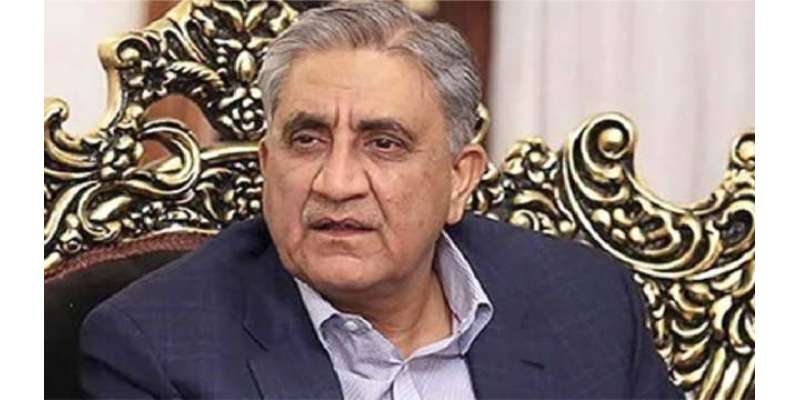
Former Chief of Army Staff General (retd) Qamar Javed Bajwa has been shifted to the United Arab Emirates for further medical examination and treatment.

Family sources said Bajwa is currently in the UAE. He travelled abroad after completing his initial treatment in Pakistan.

The former army chief was examined by a team of specialist doctors in Dubai. The doctors carried out a detailed medical check-up.

According to family sources, Bajwa’s condition has improved considerably after the medical examination. However, the results of some important medical tests are still awaited.

Doctors will review the remaining reports before giving their final recommendations. His further treatment and return to Pakistan will depend on the doctors’ advice.

Family sources said Bajwa will stay in the UAE for a few days. He will remain with his son during his stay in the country.

A final decision about his return to Pakistan will be taken after the doctors review all his medical reports. His family is also awaiting the doctors’ further instructions.

Bajwa had suffered serious injuries around four and a half months ago. He reportedly slipped and fell at his residence.

The accident caused injuries to his head and back. He was immediately shifted to Combined Military Hospital (CMH) Rawalpindi for treatment.

The former army chief remained admitted to the hospital for around three weeks. He received treatment under the supervision of military doctors.

At the time, the Inter-Services Public Relations (ISPR) officially confirmed that Bajwa had been injured after falling at his residence.

The military’s media wing said he was receiving treatment at CMH Rawalpindi. His condition was monitored by doctors during his stay at the hospital.

After completing his initial treatment in Pakistan, Bajwa later travelled to the UAE for further medical assessment.

His current stay in the UAE is expected to continue until doctors complete their assessment. The results of the pending tests will help determine the next course of treatment.

Family sources have not provided a specific date for his return to Pakistan. They said the decision will be made after consultation with doctors.

General (retd) Qamar Javed Bajwa served as Pakistan’s Chief of Army Staff from November 2016 to November 2022. He retired from the position after completing his tenure in November 2022.
Similar Posts

  • |

    US replaces warship in Mideast as crew faces mental health crisis

    The US Department of Defence has dispatched the aircraft carrier USS George Washington to the Middle East, replacing the USS Abraham Lincoln following mounting concerns over living conditions and mental health struggles among sailors aboard the long-deployed vessel. The USS George Washington departed Da Nang, Vietnam, passing through the Strait of Malacca toward the Indian Ocean. The deployment temporarily leaves the Asia-Pacific region without a US aircraft carrier presence, reflecting a strategic shift under the Trump administration, which views China as a manageable regional presence rather than a primary global threat. The deployment of the USS Abraham Lincoln has surpassed 260 uninterrupted days at sea, setting a modern record without a port call. Operational demands linked to the conflict with Iran disrupted traditional supply hubs, leading to severe shortages of fresh food, clean water, and hygiene items, alongside broken sanitation facilities and lost mail. Reports have also highlighted safety concerns and multiple incidents of sailors attempting to jump overboard. Congressional leaders have demanded answers regarding the ship’s operational conditions. Senator Richard Blumenthal pressed defense officials on fleet sustainability, while Senate Minority Leader Chuck Schumer called for Defense Secretary Pete Hegseth to be removed from his post. Hegseth rejected the criticisms, stating that reports of deteriorating conditions aboard the carrier were completely misrepresented.

  • |

    French DJ Kavinsky dies at 50, investigation underway

    French electronic music artist Kavinsky, best known for his internationally acclaimed track Nightcall, has died at the age of 50. The musician was reportedly found dead at his home in Paris on Tuesday, prompting an official investigation into the circumstances surrounding his death. Kavinsky, whose real name was Vincent Belorgey, became one of France’s most recognizable electronic music producers through his distinctive blend of synthwave and electro sounds. His music gained worldwide popularity for its retro-inspired style, drawing influence from 1980s cinema, video games, and electronic music. Authorities in Paris have confirmed that an investigation has been launched following the discovery of the artist’s body. Officials have not yet announced the exact cause of death, and no conclusions have been reached as the inquiry continues. While some reports have suggested that he may have suffered a stroke, authorities have not confirmed those claims, and the investigation remains ongoing. Born as Vincent Belorgey, Kavinsky launched his music career in the early 2000s. He quickly attracted attention within France’s electronic music scene and released his debut extended play, Teddy Boy, in 2006. The project introduced listeners to his signature cinematic sound, which later became his trademark. His career reached a major milestone when he was selected to open for legendary French electronic music duo Daft Punk during their 2007 tour. The opportunity exposed his music to a global audience and helped establish him as one of the leading names in the growing synthwave movement. Kavinsky achieved international fame with Nightcall, a track that became one of his defining works. The song earned even greater recognition after being featured in the 2011 film Drive, starring Ryan Gosling. Its haunting melody and atmospheric production introduced millions of listeners to his music and cemented his reputation as a pioneer of modern retro-electronic sound. Following news of his death, tributes poured in from across France and the international music community. French Culture Minister Catherine Pégard honored the late musician in a message shared on X, describing him as one of France’s most distinctive artistic voices. She praised his contribution to electronic music and said his work would continue to inspire future generations of musicians. French President Emmanuel Macron also paid tribute, calling Kavinsky a source of pride for France and acknowledging the lasting impact he made on the country’s cultural landscape. Throughout his career, Kavinsky remained admired for creating a unique musical identity that blended nostalgia with futuristic electronic production. His influence extended beyond music into film, fashion, and popular culture, making him one of the most recognizable figures in contemporary French electronic music. As investigators continue to examine the circumstances surrounding his death, fans around the world are remembering Kavinsky for his innovative sound and the timeless music that defined his remarkable career. His legacy is expected to endure through the recordings that introduced a generation of listeners to his unmistakable style.

  • | | | | |

    Iran ready for talks with US as Tehran sends message through Pakistan

    Iran has reportedly conveyed to Pakistan that it is willing to resume negotiations with the United States, opening a possible new chapter in diplomatic efforts between the two countries, according to a report by Arab media. Sources cited in the report claimed that Tehran has informed Islamabad about its readiness to continue talks with Washington at possible venues including Geneva, Doha, or Islamabad. The discussions, according to the report, would proceed under the framework of a memorandum of understanding. The reported message suggests that Iran wants negotiations to be conducted in phases. According to sources, the first phase would focus on issues related to the Strait of Hormuz, followed by discussions on frozen assets and later the nuclear program. The report further claimed that Iran has rejected any initiative aimed at creating a new route or corridor through the Strait of Hormuz, which remains one of the world’s most strategically important waterways for energy transportation. Earlier, Iran and the United States had reportedly moved toward direct diplomatic engagement after signing an understanding in Islamabad on June 17, 2026. The agreement paved the way for high-level talks, including a meeting in Switzerland after decades without direct negotiations between the two sides. Representatives from Pakistan and Qatar were also present during earlier diplomatic efforts. Pakistan played a role in facilitating communication, while Qatar hosted one round of discussions in Doha. However, the negotiation process later faced setbacks after both sides accused each other of violating commitments and military tensions escalated. Former US President Donald Trump and Iranian officials blamed each other for the collapse of the dialogue process. Despite the tensions, both sides have indicated that diplomacy remains a possible path toward resolving disputes. Iran has maintained that it is open to negotiations but has rejected what it describes as pressure or threats. If confirmed, the reported Iranian message could mark a renewed opportunity for dialogue and place Pakistan in an important diplomatic role between Tehran and Washington.

  • |

    US makes visa bond programme permanent, raises limit to $20,000

    The United States has announced that its visa bond programme will become permanent, introducing stricter financial requirements for certain foreign travellers seeking business and tourist visas. Under the new policy, US consular officers will have the authority to require applicants from 50 countries to post a refundable bond of up to $20,000 before a visa is issued. The programme applies to B1 (business) and B2 (tourist) visas and is aimed at reducing the number of visitors who overstay their visas. According to a notice published in the Federal Register, the decision follows the completion of a pilot programme launched in 2025. Officials said the trial demonstrated that visa bonds could be an effective tool for improving compliance with US immigration rules. The new regulation will officially take effect on August 3. During the pilot phase, applicants could be asked to pay bonds of $5,000, $10,000, or $15,000. The updated rule removes the $5,000 option and increases the maximum bond amount to $20,000, giving consular officers greater discretion when assessing visa applications. The programme covers citizens of 50 countries, with 30 of those nations located in Africa. US authorities say the selection is based on factors such as visa overstay rates and immigration compliance. The move is part of President Donald Trump’s broader immigration agenda, which focuses on tightening border controls and strengthening enforcement of immigration laws. The administration argues that stricter visa policies are necessary to protect national security and discourage individuals from remaining in the United States beyond the period allowed by their visas. However, immigration advocates and civil rights organisations have criticised the decision, saying the higher financial burden could discourage legitimate travellers, including tourists and business visitors, from applying for US visas. They also argue that recent immigration measures have made legal entry into the United States increasingly difficult through higher fees, expanded social media screening, and stricter visa requirements.

  • | |

    Shaandaar brings a different kind of story to Pakistani television

    Pakistani television dramas tend to follow familiar patterns. Family feuds, romantic misunderstandings, domestic conflicts. Shaandaar, the new crime thriller airing on Express Entertainment, has made a deliberate choice to go somewhere different, and the early response suggests audiences are ready for exactly that. The 16-episode drama, directed by Wajahat Rauf, draws inspiration from several real-life roadside killing cases that have sparked public debate and outrage in Pakistan. It is not a dramatisation of any single incident. Instead, the story brings together elements from different cases involving violence, privilege and the kind of power that can sometimes make consequences disappear. The question it keeps returning to is one that many Pakistanis have asked in real life: what happens when the powerful believe they are beyond accountability? For Ahsan Afzal Khan, who plays the central character Salar, the project offered something rare. “A script picked by Mr Wajahat Rauf already gives you the impression that something different is coming,” he told The Express Tribune. He described the opportunity to work in this genre as one of the main reasons he signed on. “There are very few such stories. We were getting a chance to do something different, a crime thriller genre.” Salar is not easy to like. He is privileged, arrogant and narcissistic. He looks down on others and misuses his influence. But Khan was careful to distinguish between understanding a character and excusing one. “I hope people relate to the human side of Salar, but not to his entire personality,” he said. He also pushed back on the idea that characters can be neatly sorted into good and bad. “No negative character is a bad person, and no positive character is a good person. We are all layered somewhere.” His explanation for how someone becomes Salar is rooted in how they were raised and what they absorbed along the way. “Did we face bullying? What did we face? All of that is incorporated into your mind. You are reacting as a defence mechanism.” Beneath the arrogance, there is a human being shaped by something. But those origins do not erase the damage. The drama is designed to move quickly. Khan described it as “fast-paced, gritty and dark,” but said the tone is not relentlessly heavy. “There is a light mood too, then slowly it gets darker and darker. There are social messages and a lot of things.” He said he watches the episodes with his family and finds himself wanting to see the next one. “It keeps you interested. It is not dragged.” That pace appears to be connecting with a younger audience. “Teenagers and Gen Z are enjoying this drama a lot,” Khan said. He also noted that viewers who usually prefer international content have expressed interest in the series, which says something about how far Shaandaar’s tone and subject matter depart from what Pakistani television typically offers. The ensemble cast includes Shamoon Abbasi, Shahzad Sheikh, Areeka Haq, Ali Dayan, Laila Wasti and Ahsan Afzal Khan. Together they inhabit a world where privilege and power create consequences that ordinary people cannot escape, and where the same actions carry very different costs depending on who commits them. It is a world many Pakistani viewers will recognise without needing it explained.

  • | | | |

    Trump reveals why Secret Service changed his plane

    WASHINGTON: US President Donald Trump has confirmed that his surprise plane switch during his departure from Turkey last month was carried out on the advice of the Secret Service, amid concerns over a potential threat linked to Iran. Trump said the aircraft he had initially been expected to travel on could have faced a “greater risk,” adding that he does not trust Iran. His remarks came after reports revealed that his departure from Ankara following the NATO summit involved an elaborate security operation. According to reports, Trump publicly boarded Air Force One in front of cameras, creating the impression that he would fly out of Turkey on the presidential aircraft. However, he was later secretly transferred to a smaller C-32A military aircraft. The move was reportedly carried out using an airport catering truck to conceal his transfer. Journalists and some White House staff reportedly remained under the impression that Trump was aboard Air Force One. Reporters were also instructed to keep their window shades closed, adding to the secrecy surrounding the operation. Trump said he followed the Secret Service’s instructions when the aircraft change was made and did not challenge the security decision. The unusual operation reportedly stemmed from heightened concerns over Iranian threats against the US president. Trump’s latest comments have now confirmed key details of the previously undisclosed flight arrangement. The episode has drawn attention because of the extraordinary measures used to conceal the president’s movements. It also highlights the heightened security concerns surrounding Trump amid continuing tensions between Washington and Tehran. For a president whose movements are normally tracked closely by the media and security officials, the covert transfer from one aircraft to another remains one of the most unusual presidential travel episodes of the year.

Leave a Reply

Your email address will not be published. Required fields are marked *