katy perry8217s stage
| |

Katy Perry’s stage stunt goes wildly wrong

American pop star Katy Perry experienced an unexpected scare during a live concert in Malta after a planned stage stunt went off course, leaving her stranded inside a giant inflatable water bottle. Videos of the incident quickly spread across social media, attracting millions of views and sparking widespread discussion among fans.

The 41-year-old singer used the oversized inflatable prop as part of her performance. The stunt was designed to allow the audience to carry the giant inflatable over the crowd and guide it back toward the stage, where a large decorative straw had been placed as part of the performance.

However, the plan did not go as expected. Instead of moving back toward the stage, the inflatable drifted deeper into the audience. As the crowd carried the prop farther away, Perry found herself unable to return to the stage as intended.

Videos shared online showed the singer trying to keep her balance while sitting inside the inflatable bottle. As she realized she was being carried farther from the stage, she called out to fans and urged them to take her back toward the performance area.

After several minutes of confusion, concertgoers managed to change the direction of the inflatable and safely guided Perry back to the stage. She resumed her performance without any injuries and completed the concert.

Speaking about the incident later on social media, Perry laughed about the unexpected moment. She explained that she often uses the giant inflatable during her concerts to interact with fans. However, she admitted that on this occasion she had travelled much farther into the crowd than planned and briefly worried she might not be able to return to the stage.

The unusual incident quickly became one of the most talked-about moments online. Fans shared countless videos, memes and humorous posts inspired by the singer’s famous songs. Many praised Perry for remaining calm and handling the situation with a sense of humour.

At the same time, some social media users questioned the safety measures surrounding the stunt. They raised concerns about crowd control and wondered whether such a large inflatable prop should have been allowed to move through a packed audience without clearer supervision or guidance.

Similar Posts

  • |

    Pakistan High Commissioner presents credentials documents at Lancaster House

    Pakistan’s High Commissioner to the United Kingdom, Tipu Usman, on Tuesday presented the working copies of his Letter of Appointment to Scott Furssedonn-Wood, Vice-Marshal of the Diplomatic Corps, during a meeting at Lancaster House. During the meeting, the High Commissioner conveyed the best wishes of Pakistan’s leadership and people to the leadership and people of the United Kingdom. He reaffirmed Pakistan’s commitment to working closely with his UK counterparts to further strengthen the longstanding bilateral relationship between the two countries. The presentation of the working copies marks an important diplomatic step before the formal presentation of credentials to His Majesty King Charles III, enabling the High Commissioner to commence his official diplomatic responsibilities in the United Kingdom. Pakistan and the United Kingdom share longstanding ties across trade, investment, security, education and people-to-people links, with both sides expressing their commitment to further enhancing cooperation in areas of mutual interest.

  • | |

    Tabish Hashmi called out on using Kashmir for publicity

    Tabish Hashmi has built his public profile on warmth, humour and a reputation for speaking his mind. His show Hasna Mana Hai made him a household name, and his film debut in Aag Lagay Basti Mein widened that profile further. But a sequence of events over the past few days has placed him at the centre of a controversy that cuts deeper than most he has faced, because it touches on something Pakistani audiences take very seriously: the sincerity of public voices when they speak on Kashmir. The sequence began when Hashmi posted on his Instagram announcing that Hasna Mana Hai had come to an end. The announcement landed at a moment of heightened public emotion, coinciding directly with his video in support of Kashmiri protesters who were demonstrating against what they described as unrest and violence in the region. The timing created an obvious and powerful impression in the minds of many followers: that his show had been shut down as a consequence of his stand on Kashmir. The response was immediate. Hashmi received an outpouring of solidarity and support from social media, with many people praising him for paying a professional price for speaking up. Then came the reveal. It turned out that Hasna Mana Hai had not been cancelled at all. The show’s set was simply being redesigned and renovated. The announcement of the show’s end was a marketing exercise to generate excitement around the new set reveal, and the Kashmir video had been used in proximity to that announcement in a way that allowed the association to form organically in the public mind without being explicitly stated. Content creator and commentator Ali Arif was among the most visible voices to call out what had happened. In a video addressing the controversy, he went through the sequence of events and pointed out precisely what Hashmi had done: posted a video about Kashmir, allowed the public to connect it to his show’s apparent end, absorbed the sympathy and support that followed, and then revealed the whole thing was a set change. He criticised Hashmi specifically for not clarifying the situation while the solidarity was pouring in, arguing that the failure to correct the impression was itself the problem. The public reaction was sharp and widely shared. “This is what is wrong with this nation. Using a tragedy for your gain,” wrote one person. Another said simply, “Such a sad state of affairs.” A third was even more pointed: “He made a mockery of taking a stand.” The controversy has prompted a genuine conversation about the ethics of celebrity activism in Pakistan, particularly when serious political or humanitarian situations are in the vicinity of promotional content. Whether the proximity of the Kashmir video and the show announcement was deliberate or poor timing, the result has been a significant erosion of goodwill from an audience that had, until this week, been squarely in Hashmi’s corner.

  • | |

    Sindh government spokesperson accuses Hafiz Naeem …

      Sindh government spokesperson Sadia Javed has accused Jamaat-e-Islami Pakistan Emir Hafiz Naeem ur Rehman of distorting the context of what she described as sincere national agreements reached in the past. In a statement issued from Karachi, Sadia Javed said that Hafiz Naeem was presenting previous national agreements in a misleading manner. She criticised the Jamaat-e-Islami leader for allegedly attempting to portray past understandings between political stakeholders in a way that did not reflect their original spirit or context. She questioned Hafiz Naeem’s position on electricity generated from Thar coal, asking why he remained silent about what she described as some of the cheapest electricity being produced through the country’s indigenous coal resources. “Why is Hafiz Naeem silent on the inexpensive electricity generated from Thar coal?” she questioned, while responding to his criticism of the Sindh government and the Pakistan Peoples Party (PPP). Sadia Javed also strongly rejected what she described as allegations against the Sindh government, saying that Hafiz Naeem had no justification for issuing what she termed “mafia certificates” to others. She challenged the Jamaat-e-Islami leader to examine his own political record before making accusations against others. According to her, political leaders should first reflect on their own actions and positions before questioning the credibility or performance of others. The Sindh government spokesperson further defended the provincial government’s policies and highlighted the importance of Thar coal in meeting Pakistan’s energy requirements. She suggested that criticism of the provincial government should be based on facts and a complete understanding of the agreements and projects under discussion. Another Sindh government spokesperson, Ghanhor Khan, also criticised Jamaat-e-Islami and Hafiz Naeem, accusing them of making allegations based on what he described as political hypocrisy. Ghanhor Khan said that making accusations against the PPP over the issue of Independent Power Producers (IPPs) was part of what he called Jamaat-e-Islami’s unsuccessful political strategy. He argued that the party was attempting to use the controversial issue of IPPs to create political pressure against the PPP and the Sindh government. The dispute comes amid renewed political debate over Pakistan’s electricity sector, particularly the cost of power generation, agreements with IPPs and the role of domestic energy resources. Political parties have frequently criticised successive governments over electricity prices, power-sector contracts and energy policies. The Sindh government has continued to highlight Thar coal as an important component of its energy strategy, while its political opponents have raised questions about governance, transparency and the broader impact of energy-sector agreements. The exchange between the Sindh government and Jamaat-e-Islami reflects growing political tensions over energy policy and the interpretation of past agreements. While Hafiz Naeem has criticised the government’s handling of the power sector, Sindh government representatives have rejected his allegations and questioned the consistency of his political position. Both sides have continued to defend their respective positions, with the Sindh government emphasising its energy initiatives and Jamaat-e-Islami maintaining its criticism of the power-sector policies.

  • |

    Progressive Abdul El-Sayed and moderate Haley Stevens lock horns in high-stakes Michigan Democratic Senate primary

    Voters across Michigan headed to the polls on Tuesday for a pivotal Democratic Senate primary that has emerged as a major battleground testing the ideological direction of the party. Former public health director Abdul El-Sayed faced four-term US Representative Haley Stevens in a fierce contest to secure the nomination to replace retiring Democratic Senator Gary Peters. The election night watch party for El-Sayed in Detroit saw left-wing commentator Hasan Piker launch a sharp critique against the Democratic political establishment while speaking to media representatives. Piker praised El-Sayed’s campaign as an “issues-first” movement, asserting that grassroots engagement carried greater weight than financial backing. Piker drew specific attention to external campaign funding, taking aim at the more than $30 million (£23.5 million) poured into the race by political action committees affiliated with the American Israel Public Affairs Committee (AIPAC) in support of Stevens. Describing the influx of negative advertising against El-Sayed as a “heinous smear campaign”, Piker expressed hope that mainstream Democrats would learn from El-Sayed’s approach. He also dismissed suggestions that the candidate or his high-profile backers would prove to be a general election liability, arguing that voters are disillusioned with personality-driven politics and seeking structural policy changes. Throughout the primary, the candidates presented starkly contrasting visions for the party’s future in the battleground state. El-Sayed, who gained endorsement from Senator Bernie Sanders, focused his platform on reducing corporate influence in politics, expanding healthcare access, and providing economic support to working families. Responding to characterisations regarding his political stance, El-Sayed clarified that he advocates for regulated capitalism rather than socialism. Conversely, Stevens leaned on her tenure in the US House of Representatives and her previous role in the Obama administration, positioning herself as a pragmatic candidate with the legislative track record needed to retain the seat. While earlier polling indicated El-Sayed held a slight edge, surveys suggested Stevens might hold broader appeal amongst moderate voters in the upcoming general election. The political friction surrounding the primary also drew public commentary from US President Donald Trump, who characterised the race as a contest between a “communist and a socialist.” The winning Democratic nominee will move on to face Republican candidate Mike Rogers in the November general election, a race anticipated to play a crucial role in determining party control of the US Senate.

  • | |

    PM Shehbaz orders probe into PIMS CTA failure

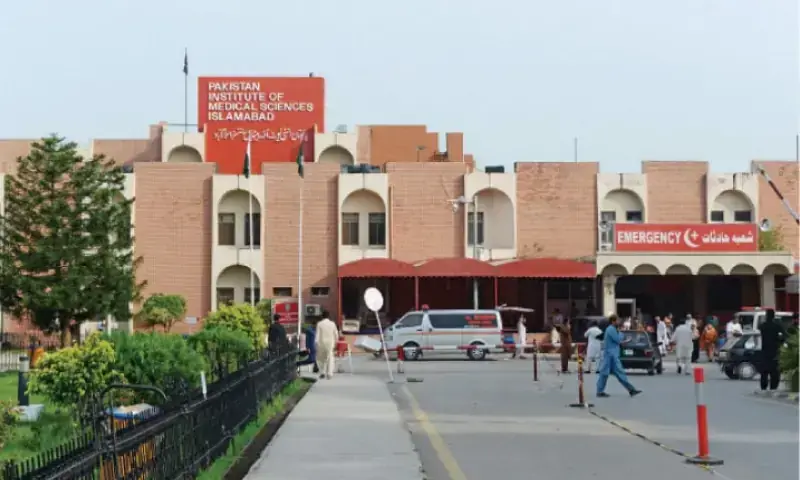
    Prime Minister Shehbaz Sharif has taken notice of the failure to conduct a CT angiography (CTA) test at the Pakistan Institute of Medical Sciences (PIMS) after PTI founder Imran Khan was taken to the hospital for a medical examination. The prime minister has formed an inquiry committee to investigate why the recommended cardiac test could not be performed and determine whether the required facilities were available at the hospital. The committee will be headed by the secretary of the Establishment Division and will include senior officials and medical experts from the National Health Services ministry, Armed Forces Institute of Cardiology (AFIC) and PIMS. The inquiry will examine whether PIMS had the technical capacity to conduct CTA scans since 2022. It will also determine whether the necessary equipment, software and trained staff were available when the test was recommended. The committee will review hospital records to establish how many CTA procedures have been conducted at PIMS since 2022 and whether patients requiring the test were routinely referred to private medical facilities. The investigation will also examine coordination between the cardiology and radiology departments and determine whether administrative shortcomings contributed to the failure to conduct the test. According to hospital officials, Imran Khan was brought to PIMS in the early hours of Friday for a medical check-up. His CTA was recommended, but the test was not carried out and he was subsequently taken back to Adiala Jail. The issue has raised questions about the availability and use of diagnostic facilities at the public-sector hospital. Officials said a CTA machine in the cardiac centre had remained out of service for years, while another machine in the radiology department was reportedly operational. The inquiry will specifically determine whether hospital staff were aware of the functioning radiology facility and why the patient was not referred there for the required examination. The committee will also investigate whether poor coordination, mismanagement or a misunderstanding between departments caused the failure and whether any officials should be held responsible. It has further been tasked with examining referrals to private hospitals, including whether any particular private facility was repeatedly preferred and whether such referrals resulted in the diversion of patients and revenue from the public hospital. Prime Minister Shehbaz has directed the committee to conduct a comprehensive review of all relevant records and facts and submit its findings. Further action will be taken on the basis of the inquiry report and in accordance with the law.

  • | |

    Wildfires keep Spain and France on alert amid extr…

    Firefighters battling wildfires across Spain and France warned Wednesday that the risk of additional blazes remains very high in the coming days, even as a major fire in Spain’s central Guadalajara province eased enough to allow some residents to return home. Wildfires have already scorched more land across Europe this year than the continent’s average over the past two decades, according to available data, as the world’s fastest warming continent endures its third stifling heatwave in close succession this year. In France, where two firefighters died Tuesday after their truck became engulfed in flames in the southwestern Gironde region, authorities urged residents in areas affected by the heat to avoid using barbecues, stressing that nine out of ten wildfires start as a result of human activity, whether accidental or not. Meanwhile, in the Western Balkans, the nature of the threat has shifted from heat to hailstorms, with several people injured in North Macedonia and eastern Kosovo. Scientists say human driven climate change continues to intensify heatwaves, droughts and wildfires, while also creating conditions that can trigger sudden and destructive storms. Real time data from a climate monitoring tool showed the average high temperature across Western Europe is forecast to reach 26.6 degrees Celsius, about 3 degrees above the historical norm for July 22 based on the 1961 to 1990 reference period. Spain’s most severe wildfire so far this year has burned an estimated 32,000 hectares in the Guadalajara region. The fire began to stabilize Tuesday after forcing evacuations across 34 municipalities and confinement orders in 14 others. Castilla La Mancha’s regional fire service, INFOCAM, said residents of five villages have been allowed to return home, though other restrictions remain in place. Visiting the affected region Wednesday, Prime Minister Pedro Sanchez said Spain has already experienced 22 major wildfires this year. He said the country has already surpassed 100,000 hectares burned before even reaching the most critical period of the wildfire season, noting that figure matches Spain’s annual average over the past decade. He added that more action is needed to prevent future fires. Spain’s national weather agency, AEMET, said wildfire danger remains very high or extreme across most of mainland Spain and the Balearic Islands and is expected to climb further in the coming days. The agency urged extreme caution as the ongoing heatwave combines with dry thunderstorms and Saharan dust blowing into the region. While temperatures are expected to ease slightly in some areas Thursday, forecasters expect a dry westerly wind to drive a fresh surge of heat into Mediterranean regions, where highs of 42 to 44 degrees Celsius could be recorded in some locations. The back to back heatwaves and wildfires this summer add to a growing pattern of extreme weather events across southern Europe, with officials in both Spain and France continuing to stress prevention measures as the region moves deeper into what is traditionally its most dangerous period for wildfire activity.

Leave a Reply

Your email address will not be published. Required fields are marked *