nigel farage reclaims

Nigel Farage reclaims Clacton seat in party-boycotted by-election

Nigel Farage has won back his parliamentary seat after Reform UK triumphed in the Clacton by-election. The contest was notably boycotted by every other major Westminster party.

Farage regained the seat by defeating his closest challenger, satirical candidate Count Binface, in an election he himself triggered by resigning last month. A Survation poll released Monday had projected Farage taking around 75% of the vote, with Binface trailing at 20%.

The Reform UK leader declared victory even before the final vote count was completed. According to the Guardian, Farage secured 22,239 votes, while Binface followed with 9,455 votes.

Voter turnout for the by-election stood at 44%. Despite the win, the final result wasn’t quite as dramatic as some earlier polling had suggested it might be.

Farage and Binface ultimately topped a crowded field that included several joke candidates, independents and minor party representatives. With every major political party sitting the race out, the contest largely became a two-way face-off between the pair.

The vacancy stemmed from a deepening scandal involving a £5 million gift Farage received from cryptocurrency billionaire Christopher Harborne. Facing mounting scrutiny, Farage resigned his seat in July and called the by-election himself.

As results came in, Farage described the outcome as a convincing and overwhelming win. He said he wanted the people of Clacton, rather than Britain’s mainstream media, to serve as his judge in the matter.

He added that voters in the constituency had firmly rejected the broader political establishment through their decision. Despite the win, Farage skipped the official vote count and cancelled a planned victory speech altogether.

Addressing the allegations tied to the gift earlier, Farage maintained he had done nothing wrong and broken no laws. Many political observers continue to view him as a potential future contender for prime minister.

Farage has pledged tougher migration policies if he gains greater power, including deploying the British navy to intercept asylum seekers arriving by boat. He was first elected to the Clacton seat in 2024, winning with 46.2% of the vote and an 8,400-vote majority.

Similar Posts

  • | | |

    Hezbollah slams Israel talks as ‘humiliation’

    Hezbollah Secretary-General Sheikh Naim Qassem has strongly criticized direct negotiations between Lebanon and Israel, describing the dialogue as a series of “concessions” that have failed to serve Lebanon’s national interests. Speaking during an Arbaeen commemoration in the Lebanese city of Baalbek, Qassem said the ongoing negotiations had brought “humiliation and repeated compromises” rather than meaningful progress. He urged Lebanese leaders to avoid external pressure and instead pursue policies that safeguard the country’s sovereignty. The Hezbollah chief also criticized President Joseph Aoun, claiming the president had failed to play a neutral and unifying role during the current political situation. Qassem argued that Lebanon’s leadership should engage in dialogue with domestic political forces rather than making concessions to achieve foreign policy objectives. He further claimed that Israeli attacks were halted only after a memorandum linked to efforts between Iran and the United States helped reduce tensions. According to Qassem, Lebanon’s political leadership would not achieve lasting stability by following policies influenced by outside powers. Meanwhile, Iranian President Masoud Pezeshkian reiterated that Iran remains committed to defending its territorial integrity but has no intention of expanding the ongoing conflict beyond its borders. Addressing a gathering in Tehran, Pezeshkian said Iran would continue protecting its national security while focusing on strengthening internal unity. He stressed that a united society would leave no opportunity for foreign interference or attempts to create divisions within the country. The latest statements come as uncertainty continues over possible diplomatic contacts between Iran and the United States. US President Donald Trump recently said discussions with Tehran were underway and described them as a final opportunity to reach an agreement. However, Iranian officials denied that any negotiations were currently taking place or that formal meetings had been scheduled. The conflicting statements have added to uncertainty over future diplomatic efforts to ease regional tensions. The regional situation has also affected global energy markets. Saudi energy giant Aramco reported a sharp rise in second-quarter earnings, saying higher oil prices and supply disruptions linked to the regional conflict significantly boosted its financial performance. The company said it maintained production despite challenging conditions across the region.

  • | | | |

    President Masoud Pezeshkian meets Supreme Leader M…

    TEHRAN: Iranian President Masoud Pezeshkian has held an important meeting with Supreme Leader Ayatollah Mojtaba Khamenei as speculation over the president’s future continues to attract attention amid heightened tensions with the United States and Israel. The meeting reportedly came as Pezeshkian entered the third year of his presidency. It also followed reports suggesting that the Iranian president was considering stepping down, claims he has rejected. Iranian authorities have previously dismissed resignation reports as unfounded, while Pezeshkian has publicly indicated that he intends to continue serving. According to statements attributed to Mojtaba Khamenei on social media, the discussions covered a wide range of economic, military and strategic issues facing Iran. Among the topics were the economic needs of ordinary Iranians, the country’s military situation, access to resources and management of the Iranian rial, foreign currency and energy costs. The two leaders also discussed economic relations with foreign partners and the wider implications of the confrontation with Washington and Israel. The meeting comes at a particularly sensitive moment for Tehran. Iran remains under pressure from the continuing regional conflict and economic difficulties, while efforts to engage Washington have faced repeated obstacles. The reported contact is also notable because Pezeshkian recently said that reaching Mojtaba Khamenei had been difficult, prompting speculation about the supreme leader’s health and whereabouts. Reports in recent days have offered conflicting accounts about how and where senior Iranian officials have been able to meet him. Meanwhile, Iran’s diplomatic efforts with the United States remain uncertain. According to the material cited by Iranian officials, negotiations have been reduced largely to messages exchanged through intermediaries after earlier attempts failed to produce a lasting agreement. The political backdrop has also been complicated by reported tensions between the presidency and powerful military-security institutions. Some reports have suggested disagreements over decision-making and the conduct of Iran’s response to the conflict, although details remain contested. Pezeshkian’s political position has therefore become a subject of renewed attention. He was elected president in July 2024 following the death of former President Ebrahim Raisi in a helicopter crash. Mojtaba Khamenei, meanwhile, became Iran’s supreme leader in March 2026 following the death of his father, Ayatollah Ali Khamenei, during the conflict. Against this backdrop, the latest meeting between the president and supreme leader carries significance beyond routine government business, particularly as Iran confronts economic pressures, military uncertainty and difficult relations with Washington. For now, however, Pezeshkian remains in office, while reports of his resignation have been publicly rejected.

  • |

    South Africa proposes stricter protocols for former leaders following Jacob Zuma’s controversial India visit

    South Africa’s Department of International Relations and Cooperation has submitted formal recommendations to parliament to establish stricter rules and greater transparency regarding foreign travel undertaken by former heads of state. The legislative push follows intense backlash over a recent visit to India by former President Jacob Zuma, during which the 84-year-old politician was photographed at a temple alongside fugitive businessman Ajay Gupta. The Gupta family remains central to South Africa’s massive “state capture” corruption scandal, which involved allegations of systemic political influence and state asset siphonage that ultimately contributed to Zuma’s resignation in 2018. The incident sparked severe political friction, leading South Africa’s High Commissioner to India, Anil Sooklal, to be recalled after he was also pictured alongside Zuma and Gupta. Foreign Affairs Minister Ronald Lamola confirmed that the proposed protocols would require former presidents to disclose complete details regarding international itineraries prior to departure. The advance documentation would allow government agencies to evaluate security requirements alongside potential diplomatic, political, and reputational risks to the nation. The controversy marks the latest diplomatic dispute involving the former president, who now leads the opposition uMkhonto we Sizwe (MK) party following his expulsion from the ruling African National Congress (ANC). Last year, the South African government issued a formal diplomatic protest to Morocco after Zuma engaged in talks supporting Moroccan sovereignty over the disputed Western Sahara region, directly contradicting official South African foreign policy.

  • | |

    Over 60,000 Gaza children lose parents amid ongoing war

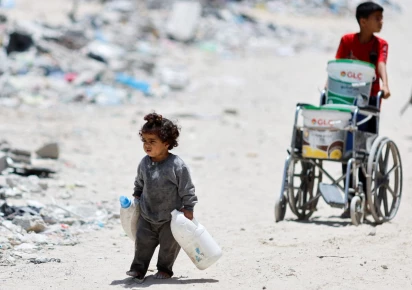
    More than 60,000 children in Gaza have lost at least one parent since the conflict began in October 2023, according to figures released by the Palestinian health ministry on Wednesday. The ministry reported that 60,737 children had either been orphaned or left with only one surviving parent. Of these, 52,095 children lost their fathers, while 5,929 lost their mothers. Another 2,713 children lost both parents during the conflict. The figures highlight the devastating impact of prolonged violence on children across the Gaza Strip. The ministry also reported that thousands of families had been completely erased from Gaza’s civil registry. According to its figures, 2,276 families comprising 8,858 people have been wiped out during the conflict. The overall death toll in Gaza has also exceeded 73,000 since the start of the war, the ministry said. A ceasefire reached in October has failed to end all violence in the territory. Palestinian authorities say Israeli forces have continued carrying out strikes, with more than 1,100 people reportedly killed since the truce began. The latest figures have renewed concerns over the humanitarian consequences of the conflict. Thousands of children have been left without one or both parents, while many families have lost multiple members. The United Nations Independent International Commission of Inquiry has also documented serious violations involving Palestinian children. In a report released in June, the commission said Israeli authorities and security forces had deliberately targeted Palestinian children. It alleged that violations amounted to genocide, crimes against humanity and war crimes in Gaza, as well as war crimes in the occupied West Bank. The commission examined alleged violations against Palestinian children since the conflict began on October 7, 2023. It found that children accounted for around 30 per cent of those killed in the Gaza war. In an earlier report released in September, the commission concluded that Israel had committed genocide in Gaza and said senior Israeli officials, including Prime Minister Benjamin Netanyahu, had contributed to incitement. Israel has rejected the accusations, describing them as unfounded and deeply offensive. The latest Palestinian figures underline the long-term consequences of the conflict for Gaza’s youngest population. Beyond the immediate loss of life, thousands of children are now facing life without parents, while entire families have disappeared from official records.

  • | | |

    Iran claims 200+ US troops killed as Tehran warns …

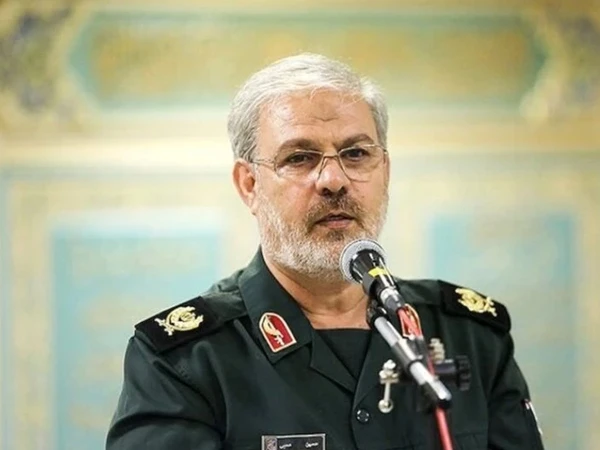
    TEHRAN: Iran’s Islamic Revolutionary Guard Corps (IRGC) has claimed that more than 200 US military personnel were killed and many others wounded during Iranian retaliatory attacks amid the latest escalation between Tehran and Washington. The claim, however, has not been independently verified, and no immediate confirmation or denial of the reported US casualties was available from American officials. IRGC spokesman Brigadier General Hossein Mohebbi rejected figures released by Washington, arguing that they did not reflect the full extent of losses suffered by US forces during the conflict. Speaking to Iran’s semi-official Tasnim news agency, Mohebbi said Iranian forces had targeted US military facilities across the region. He claimed that eight American military centers were struck and that around 20 protective shelters at one location were destroyed. The IRGC spokesman challenged Washington to allow journalists access to the affected military sites, saying such visits would reveal the extent of the damage. He accused US authorities of withholding information about casualties and military losses. Iran claims major US aircraft losses Mohebbi also claimed that Iranian attacks during roughly two weeks of fighting destroyed 11 US warplanes and helicopters on the ground. According to the IRGC account, the reported losses included an F-15 fighter jet, a P-8 maritime patrol aircraft, a C-17 transport aircraft and eight aerial refueling planes. Iran also claimed that 17 reconnaissance and operational drones were destroyed, including eight described as brand-new. The claims represent a potentially significant escalation in Tehran’s portrayal of the conflict. Independent confirmation of the reported aircraft losses has not emerged, and the locations of the alleged strikes have not been publicly specified. The statements came as tensions between Iran and the United States remained high, even as diplomatic contacts appeared to be continuing. Reports indicate that Washington and Tehran have exchanged messages through intermediaries, although major differences and deep mistrust remain. IRGC issues warning to Israel Iran also issued a fresh warning to Israel, saying Tel Aviv could face serious consequences if it re-enters the conflict. The IRGC said Iranian forces were closely monitoring the possibility of Israeli involvement and had prepared their strategy accordingly. The latest claims add another layer of uncertainty to an already volatile situation. With casualty figures and battlefield damage disputed by the opposing sides, the coming days could determine whether the confrontation moves toward diplomacy—or another dangerous round of escalation.

Leave a Reply

Your email address will not be published. Required fields are marked *