• | | | |

    Iranian president rejects resignation rumours

    TEHRAN: Iranian President Masoud Pezeshkian has firmly denied reports claiming he had submitted his resignation, saying he remains fully committed to leading the country despite ongoing regional tensions and recent military escalation involving the United States. Speaking in a televised address, Pezeshkian dismissed speculation about stepping down, stating that he would publicly announce such a decision if it were ever made. He emphasized that he has no intention of resigning and will continue carrying out his responsibilities. The Iranian president also rejected reports suggesting differences with Mojtaba Khamenei and the country’s armed forces. He said the government, military leadership and state institutions were working in close coordination and remained united on national issues. His remarks came after opposition-linked media claimed that he had submitted his resignation several times amid growing political and security challenges. Iranian officials have not confirmed those reports. Meanwhile, diplomatic efforts to ease tensions between Lebanon and Israel continued as the two sides launched the seventh round of direct negotiations in Rome under United States sponsorship. According to Lebanese media reports, delegations from both countries are discussing the implementation of a US-backed framework agreement reached in June. The agreement outlines a gradual Israeli withdrawal from occupied Lebanese territory in exchange for the deployment of the Lebanese army and the disarmament of armed groups operating in those areas. The latest negotiations follow six previous rounds of talks aimed at reducing border tensions and advancing the implementation of the agreement. Separately, a report published by The New York Times claimed that Iran and Oman are close to reaching an arrangement to restore normal commercial shipping through the Strait of Hormuz, one of the world’s most important energy transit routes. According to the report, the proposed arrangement would establish separate shipping channels for vessels entering and leaving the Gulf. Iranian officials reportedly said the plan would include a service fee to cover environmental protection, maritime security and operational costs, with revenue shared between Iran and Oman.

  • |

    25 US states challenge Trump’s new tariffs in court

    NEW YORK: A coalition of 25 US states has filed a lawsuit against the administration of President Donald Trump, seeking to block a new round of tariffs imposed on imports from dozens of countries. The legal challenge was submitted to the US Court of International Trade in New York, where the states asked the court to suspend the tariffs, declare them unlawful and order the federal government to refund businesses that have already paid the import duties. The coalition argued that the administration exceeded its legal authority by introducing sweeping tariffs under Section 301 of the Trade Act of 1974. According to the lawsuit, the investigations cited by the administration as justification for the tariffs were used as a pretext to impose broad trade restrictions. The disputed tariffs, ranging from 10% to 12.5%, were introduced last month and apply to imports from 60 trading partners, covering a significant share of goods entering the United States. The Trump administration has defended the measures, saying they are intended to address concerns related to forced labour in international supply chains and to protect American trade interests. The White House maintains that the tariffs were imposed within the government’s legal authority and remain an important tool for securing fair trade practices. A White House spokesperson said the administration is using powers granted under US trade law to respond to what it considers unfair policies and practices affecting American commerce. Officials also argued that Section 301 tariffs have previously withstood legal scrutiny and continue to be a lawful instrument of trade policy. The lawsuit follows earlier legal disputes over President Trump’s tariff policies. Previous tariffs introduced under emergency economic powers were struck down by the US Supreme Court earlier this year, prompting the administration to replace them with the current Section 301 measures after a temporary global tariff expired in July. The states involved in the case contend that the latest tariffs are arbitrary and unlawful, arguing that while they support efforts to combat forced labour worldwide, such concerns cannot be used to justify what they describe as an illegal expansion of presidential tariff powers.

  • | |

    Pakistan envoy Saadia Altaf Qazi honors Sahara Wel…

    OSLO: In a heartfelt ceremony marking the end of her diplomatic tenure in Norway, Pakistan’s Ambassador to Norway, Saadia Altaf Qazi presented a certificate of appreciation to Hafiz Muhammad Aslam Haq, chairman of the Sahara Welfare Foundation, in recognition of his longstanding humanitarian services and commitment to social welfare. The ambassador acknowledged Hafiz Aslam Haq’s contributions to supporting underprivileged communities across Pakistan, including assistance for poor families, orphans, widows and victims of devastating floods. She praised the foundation’s welfare initiatives, describing them as a valuable example of community service and compassion that reflects the true spirit of humanity. During the ceremony, Hafiz Aslam Haq paid tribute to Ambassador Saadia Altaf Qazi for her dedicated service to the Pakistani community in Norway and her efforts to strengthen diplomatic, cultural and people-to-people ties between Pakistan and Norway. He commended her leadership throughout her diplomatic assignment and wished her continued success in her future responsibilities. Expressing his gratitude for the recognition, Hafiz Aslam Haq thanked the ambassador for honoring his organization’s humanitarian work. He also extended his best wishes and prayers for her health, prosperity and continued achievements in representing Pakistan abroad. The event came as Ambassador Saadia Altaf Qazi concluded her diplomatic mission in Norway. Following the completion of her tenure, she is departing Oslo to assume her new assignment as Pakistan’s ambassador to Thailand. Her tenure in Norway has been widely recognized for promoting stronger bilateral relations, engaging with the Pakistani diaspora and enhancing cooperation between the two countries. The farewell recognition ceremony served not only as a tribute to humanitarian service but also as a celebration of the enduring partnership between Pakistan and Norway, highlighting the important role played by both diplomats and community leaders in strengthening international goodwill and supporting those most in need.

  • | |

    NAB recovers record Rs5.4 trillion in six months

    The National Accountability Bureau (NAB) has announced record recoveries worth Rs5.414 trillion during the first six months of 2026, describing it as the highest six-month recovery in the institution’s history. According to an official statement, the bureau recovered Rs2.452 trillion during the second quarter alone, significantly increasing the overall recovery figure for the first half of the year. Among regional offices, NAB Sukkur recorded the highest overall recoveries. Meanwhile, NAB Balochistan reclaimed 209,544 acres of forest and state land valued at Rs604.64 billion, including areas linked to Hingol National Park and land belonging to the Gwadar Industrial Estate Development Authority (GIEDA). In Karachi, the anti-corruption watchdog recovered 11,422 acres of illegally allotted government land and disputed housing society leases worth Rs467.11 billion. The Lahore bureau reclaimed 1,909 acres of state and PCBL land valued at Rs288.29 billion, while the Islamabad/Rawalpindi office recovered 810 acres of CDA amenity plots in various housing societies, with an estimated value of Rs66.63 billion. NAB also reported progress in housing and financial fraud cases. The bureau said more than 24,365 victims received compensation through the return of recovered money and assets worth Rs42.303 billion. The accountability body said the recoveries reflect its continued efforts to retrieve public assets, restore illegally occupied state land, and provide financial relief to citizens affected by fraud and corruption

  • | | | |

    Hezbollah signals major u-turn, seeks talks with S…

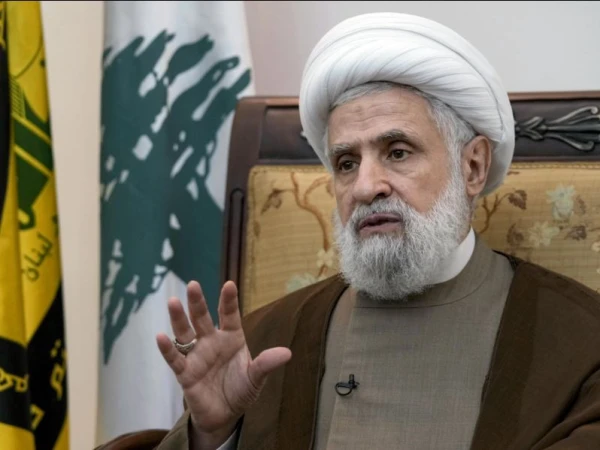
    BEIRUT/DAMASCUS: In what analysts are describing as a significant policy shift, Hezbollah Secretary-General Naim Qassem has expressed readiness to meet Syria’s new leadership, signaling a potential reset in relations after years of political uncertainty following the fall of former president Bashar al-Assad. Speaking during a televised address, Qassem said Hezbollah seeks “positive, brotherly and cooperative” ties with Syria and has no objection to holding an official meeting with the country’s current leadership if both sides consider the timing appropriate. He added that there were no barriers to public engagement once mutual conditions were met. The remarks mark the first time Hezbollah’s chief has openly endorsed the possibility of direct contact with Syria’s post-Assad leadership, a move that could reshape political dynamics across the region. For years, Hezbollah played a key role in supporting Assad’s government during Syria’s prolonged civil war. Throughout the conflict, Syrian territory served as a vital corridor for the movement of weapons and logistical supplies from Iran to Lebanon, making Damascus a strategic partner for the Iran-backed Lebanese group. However, the regional landscape changed dramatically after Syria’s new government assumed power in December 2024. The political transition created uncertainty over the future of relations between Damascus and Hezbollah, with observers questioning whether the alliance forged during the civil war would survive under the country’s new leadership. Political analysts believe Qassem’s latest comments indicate Hezbollah is adapting to the changing realities of the Middle East. By signaling openness to dialogue, the group appears to be seeking a pragmatic relationship with Syria’s new rulers while protecting its broader regional interests. Experts say any formal meeting between Hezbollah and Syrian officials would carry implications extending beyond the two neighbors. Such engagement could influence Iran’s regional strategy, Lebanon’s internal political landscape, and the broader balance of power in the Middle East. While no timetable for talks has been announced, Qassem’s statement is widely viewed as an important diplomatic opening, suggesting that former rivals and long-time allies alike are reassessing their positions as the region enters a new political era.

  • |

    Pakistan boxer mysteriously disappears in Glasgow before flight home

    GLASGOW: A mystery has emerged following the conclusion of the Commonwealth Games after Pakistani boxer Qudrat Ullah reportedly disappeared from Glasgow just hours before the national squad was scheduled to fly back to Pakistan, prompting an investigation by the Pakistan Boxing Federation. According to federation sources, Qudrat Ullah failed to rejoin his teammates ahead of the team’s departure from Scotland. The boxer is believed to have gone missing approximately six hours before the group’s scheduled return flight, raising concerns among officials accompanying the contingent. The team had been instructed to assemble in the hotel lobby at 9 a.m. before leaving for the airport. However, when officials went to Qudrat Ullah’s room to escort him, they found it empty. Sources said he had last been seen in his room around 2 a.m., but by morning there was no sign of him. The circumstances surrounding his disappearance have deepened the mystery because his passport and return airline ticket were reportedly still in the custody of the team manager. Officials have not explained how the boxer could have left without the travel documents required for his scheduled journey home. The Pakistan Boxing Federation has confirmed that the athlete is missing and said the matter is under investigation. Federation officials are coordinating with relevant authorities to determine his whereabouts and establish the sequence of events leading to his disappearance. No official statement has yet been issued regarding whether local Scottish authorities have launched a formal search or whether there is any indication of foul play. Federation officials have urged caution, saying further details will be shared once the inquiry progresses. The incident has revived memories of a similar episode during the 2022 Commonwealth Games in England, when two Pakistani boxers reportedly separated from the national team and failed to return with the delegation. That case sparked debate over athlete monitoring during international competitions and the challenges sports federations face in ensuring team discipline while abroad. Qudrat Ullah’s unexplained disappearance is likely to draw renewed scrutiny of travel protocols for national teams representing Pakistan at major sporting events. As officials continue their investigation, questions remain over what happened in the final hours before the squad’s departure and when the missing boxer will be located.

  • | |

    Subway launches legal action after Multan staff as…

    MULTAN: Subway Pakistan has initiated legal proceedings after one of its employees was allegedly assaulted by a customer at its Multan outlet, an incident that has sparked widespread outrage on social media. The altercation, captured on the restaurant’s CCTV cameras, quickly went viral online, prompting strong reactions from the public and renewed calls for better protection of frontline service workers. The employee, identified as Fazil, said the incident occurred while he was performing his duties and enforcing the restaurant’s policy prohibiting customers from consuming food purchased from outside the outlet. According to Fazil, a group of customers entered the restaurant carrying samosas. After an initial request from another staff member was reportedly ignored, he approached the group himself and politely explained the restaurant’s policy. He said he respectfully asked the customers to finish their food quickly to avoid disturbing others and to comply with the outlet’s operating procedures. Fazil alleged that the situation escalated unexpectedly when one of the customers, identified as Asad Khan, slapped him without warning. He claimed that even after stepping away to avoid further confrontation, the accused followed him and assaulted him again. The employee further alleged that he was grabbed by the neck, dragged across the restaurant and physically attacked by three individuals for several minutes. He said he sustained multiple blows to his face, back and other parts of his body despite offering no resistance. In an official statement, Subway Pakistan strongly condemned the incident, saying the safety, dignity and well-being of its employees remain a top priority. The company confirmed that it has referred the matter to the relevant legal authorities and is pursuing legal action against those allegedly involved. Subway also reiterated its commitment to maintaining a safe and respectful environment for both employees and customers at all its outlets.

  • | |

    CJP unveils nationwide women facilitation centres

    Chief Justice of Pakistan Justice Yahya Afridi has announced that Women Facilitation Centres will be established in courts across the country to make the justice system more accessible, supportive and efficient for women. The announcement was made during a meeting with representatives of the Sindh High Court Bar Association and the Karachi Bar Association at the Supreme Court’s Karachi Registry. The meeting focused on improving facilities for women litigants and addressing challenges faced by female lawyers in the legal profession. During the discussion, the chief justice said the proposed centres are part of broader judicial reforms aimed at creating a more welcoming and convenient environment for women seeking legal assistance. He stressed that women should have easier access to courts and receive the support needed to pursue their cases without unnecessary difficulties. Justice Yahya Afridi said the Women Facilitation Centres would provide a wide range of services under one roof. In addition to offering legal guidance, the centres would include mediation and alternative dispute resolution (ADR) facilities to help settle suitable cases quickly and reduce the burden on courts. He added that the centres would also provide psychological counselling and connect women with relevant government departments and support organisations whenever required. The initiative is intended to ensure that women receive both legal and social assistance throughout the judicial process. The chief justice informed the delegation that the judiciary has already selected the three best designs for the proposed centres. These model designs will be shared with all high courts to ensure a uniform system is introduced across Pakistan. The representatives of women lawyers welcomed the initiative and thanked the chief justice for giving priority to the needs of female litigants. They also highlighted several issues affecting women in the legal profession, including workplace challenges and barriers to equal opportunities within the justice system. Justice Afridi assured the delegation that the concerns raised during the meeting would be addressed on a priority basis. He said the judiciary would work closely with the relevant high courts and other institutions to develop practical solutions and improve facilities for women across the country’s judicial system.

  • Fundamental Right No. 12: Protection Against Retro…

    By Muhammad Imran, Staff Member, SAHSOL-LUMS and Asma Rahmat, Final Year Law Student, SLC, Superior University and Muhammad Ameer Hamza, Final Year Law Student, SLC, Superior University Article 12 of the Constitution of the Islamic Republic of Pakistan, 1973, enshrines one of the oldest and most celebrated principles of criminal jurisprudence, namely nullum crimen, nulla poena sine lege, which means there can be neither a crime nor a punishment without prior law. This constitutional guarantee embodies the rule of law by prohibiting retrospective criminal legislation and protecting every individual from arbitrary prosecution or punishment. It ensures that a person may be held criminally liable only for conduct that constituted an offence under the law at the time it was committed, and that no punishment more severe than that then prescribed may subsequently be imposed. The first part of Article 12 prohibits the retrospective creation of criminal offences. A person cannot be convicted for an act or omission which was lawful when committed merely because the legislature subsequently criminalises that conduct. The second part prohibits the retrospective enhancement of punishment. Accordingly, where the law prescribes a maximum sentence of six months’ imprisonment or two years’ imprisonment at the time of the offence, neither the judiciary nor the legislature may subsequently impose or authorise a more severe penalty for that completed act. The constitutional guarantee thus preserves legal certainty, protects legitimate expectations, and prevents arbitrary exercises of legislative and executive power. Article 12 is founded upon the universally accepted doctrine of legal certainty, which requires that criminal laws be clear, prospective, and predictable. Individuals must be capable of regulating their conduct according to existing law without fear that future legislation will retrospectively criminalise their past actions or increase their punishment. The principle therefore operates as an indispensable safeguard against governmental arbitrariness and political persecution and constitutes a cornerstone of every constitutional democracy governed by the rule of law. The constitutional philosophy embodied in Article 12 is consistent with internationally recognised human rights norms. Article 11(2) of the Universal Declaration of Human Rights, 1948, provides that no person shall be held guilty of any penal offence on account of any act or omission that did not constitute a penal offence under national or international law at the time it was committed, nor shall a heavier penalty be imposed than that applicable at the time of the commission of the offence. Likewise, Article 15 of the International Covenant on Civil and Political Rights (ICCPR), to which Pakistan is a State Party, reiterates the same prohibition against retrospective criminal liability while recognising only the limited exception relating to offences recognised under the general principles of international law. Comparable constitutional protection is also found in the United States Constitution, where Article I, Sections 9 and 10 expressly prohibit Congress and the States from enacting ex post facto laws. This prohibition has long been regarded as a fundamental limitation upon legislative authority and reflects a universal constitutional commitment to fairness in criminal justice. The superior courts of Pakistan have consistently treated Article 12 as an indispensable constitutional safeguard. In Mian Muhammad Nawaz Sharif v. The State, the Supreme Court reaffirmed that Article 12 embodies the constitutional prohibition against retrospective penal legislation and protects individuals from being subjected to criminal liability or enhanced punishment under laws enacted after the commission of the alleged offence. The Court emphasised that retrospective penal laws offend the rule of law because criminal consequences must always be determined according to the law in force at the relevant time. Similarly, in Benazir Bhutto v. Federation of Pakistan, the Supreme Court underscored that fundamental rights must receive a liberal and purposive interpretation so as to prevent arbitrary governmental action and preserve constitutional liberties. Although that case did not directly concern Article 12, its interpretative philosophy has significantly influenced the constitutional protection afforded to penal safeguards. A significant constitutional question concerns the offence of high treason under Article 6 of the Constitution. High treason, comprising the abrogation, subversion, suspension, or holding in abeyance of the Constitution, represents the gravest constitutional offence. Through the Constitution (Eighteenth Amendment) Act, 2010, Parliament expanded Article 6 to include persons who aid, abet, collaborate with, or validate such unconstitutional acts. Nevertheless, Article 12 continues to apply with full constitutional force. Even in prosecutions for high treason, criminal liability and punishment cannot be imposed retrospectively. Any legislative amendment increasing punishment or enlarging criminal liability can operate only prospectively and cannot constitutionally affect acts committed before its enactment. The historical experience of constitutional development further demonstrates the importance of this principle. Following the restoration of the English monarchy, the remains of Oliver Cromwell were exhumed in 1661 upon the orders of Charles II, symbolically hanged, beheaded, and publicly displayed. Although this episode belonged to a different constitutional era, it illustrates the dangers of political vengeance unconstrained by constitutional guarantees. Modern constitutional democracies reject such practices and instead insist that criminal justice must always be governed by legality, due process, and prospective application of penal laws. Article 12, therefore, is not merely a procedural safeguard but a substantive manifestation of constitutionalism itself. It preserves the supremacy of law over arbitrary power, protects individual liberty against retrospective criminal legislation, and strengthens public confidence in the fairness and integrity of the criminal justice system. Together with Articles 4, 9, and 10A of the Constitution, it forms an integral part of Pakistan’s constitutional architecture for the protection of human dignity, legal certainty, and the rule of law. Article 12 of the Constitution of the Islamic Republic of Pakistan, 1973, is a cornerstone of constitutionalism and the rule of law. By prohibiting retrospective criminal legislation and the retrospective enhancement of punishment, it embodies the fundamental principle of nullum crimen, nulla poena sine lege, ensuring that no person is punished except in accordance with the law in force at the time of the alleged offence. In conjunction with Articles 4, 9, and 10A, Article 12 protects legal certainty, due process, and individual liberty while preventing arbitrary or politically

  • |

    Atif Aslam says new album Subah Aaye Na marks a turning point

      Globally acclaimed Pakistani singer Atif Aslam has described his upcoming album, Subah Aaye Na, as one of the most significant milestones of his 25-year music career, saying it represents a fresh beginning and a return to his true artistic identity. Speaking in a recent interview, the celebrated vocalist revealed that the album is deeply personal and reflects a transformative phase in his life. Atif admitted that over the years, he had gradually lost touch with his inner self while juggling concerts, commercial projects, and other professional commitments. “I forgot who I really was,” he said. “That is why I decided to start again from zero. I reminded myself that, by the grace of Allah, people made me a star, but now it is time for me to become an artist.” The singer explained that throughout most of his career, he focused on creating music for his fans and fulfilling the expectations of music companies. While he remains grateful for the love and support he has received over the years, he felt it was finally time to create music that truly reflected his own emotions, creativity, and artistic vision. “I have always sung for my audience and for the music industry,” Atif shared. “But now I wanted to do something for myself, and that is how this album came into existence.” Reflecting on his remarkable journey in the music industry, Atif said that despite enjoying immense fame and success, he realized that he had become disconnected from the passion that first inspired him to pursue music. He acknowledged that fame is undoubtedly a blessing, but he also emphasized the importance of staying connected to one’s authentic self. “Fame is a gift, and I am thankful for it,” he said. “However, deep inside, I felt a strong desire to create the kind of music my heart truly wanted to make.” According to the singer, this longing became the driving force behind Subah Aaye Na. Unlike many commercial projects that operate under strict schedules, Atif deliberately chose not to set any deadlines for the album. He wanted every song to develop naturally, allowing him the freedom to express himself without external pressure. “I did not set a deadline for this album because I wanted to create every piece of music wholeheartedly,” he explained. “I wanted each composition to be genuine and meaningful.” The album represents more than just a collection of songs; it symbolizes Atif Aslam’s artistic rebirth. After spending decades meeting commercial expectations, he now aims to reconnect with the essence of music that first inspired him. ThroughSubah Aaye Na, the singer hopes listeners will experience not only his evolution as a musician but also the sincerity and emotion behind every track. With this highly anticipated project, Atif Aslam embarks on a new chapter in his career—one driven by artistic freedom, personal expression, and a renewed commitment to creating music that comes straight from the heart. Fans eagerly await the release of Subah Aaye Na, which promises to showcase a more authentic and deeply personal side of one of Pakistan’s most celebrated musical icons.