parliamentary inquiry finds
|

Parliamentary inquiry finds UK Ministry of Defence Afghan data breach was a foreseeable failure

A parliamentary inquiry by the UK House of Commons Defence Committee has concluded that a major data breach by the British Ministry of Defence was a foreseeable systemic failure rather than an isolated mistake.

The leak exposed the personal details of over 18,500 Afghan applicants fleeing the Taliban. It occurred when a staff member at the UK Special Forces headquarters in England emailed an unencrypted Microsoft Excel spreadsheet containing the entire applicant database to a third party.

The compromised individuals had applied for the UK’s Afghan Relocations and Assistance Policy after working alongside British forces during the war in Afghanistan.

The committee’s report severely criticised the UK Ministry of Defence’s operational competence, stating that the British military department lacked the expertise to manage immigration casework and relied on a continuing cultural failure of using basic spreadsheet tools for sensitive data.

Defence Committee Chairman Tan Dhesi condemned the UK Ministry of Defence for using operational secrecy as a “shield against proper accountability”, highlighting that a UK court-issued super-injunction barred the public and British parliamentarians from knowing about the breach between August 2023 and July 2025.

The inquiry also highlighted administrative flaws in how former Afghan commandos were evaluated for UK resettlement. Internal records revealed a British Special Forces officer systematically rejected 1,585 applications from Afghan commandos in 2023 without approving a single case.

Following a UK government review, 884 of those rejections were overturned. With former Afghan commandos remaining in hiding from Taliban reprisals, the parliamentary committee urged the British government to fulfill its responsibility to expedite the safe relocation of affected families to the UK.
Similar Posts

  • |

    India files charges against 13 in medical exam paper leak case

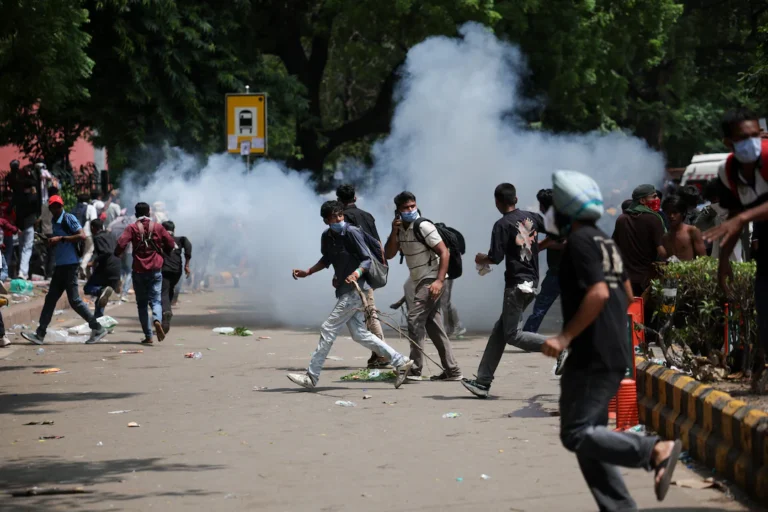
    India’s federal investigation agency has filed charges against 13 people accused of involvement in the leak of question papers for the country’s national medical entrance examination, following weeks of protests over the scandal. The Central Bureau of Investigation (CBI) said the accused include subject experts linked to the National Testing Agency, intermediaries who allegedly distributed leaked papers, and individuals associated with coaching institutes. The charges include criminal conspiracy, cheating, breach of trust, and destruction of evidence. All 13 accused are currently in custody, according to the investigation agency. The case relates to the National Eligibility cum Entrance Test (NEET), which was taken by nearly two million students in May. The examination was cancelled after allegations emerged that questions had been leaked in several areas. A fresh test was later conducted on June 21. The controversy triggered nationwide protests led by students and young activists, with thousands gathering in New Delhi and other cities demanding accountability. The demonstrations intensified after protesters marched towards parliament and faced clashes with police. The unrest eventually led to the resignation of Education Minister Dharmendra Pradhan, who stepped down after mounting pressure over the handling of the examination crisis. India’s Supreme Court has also intervened in the matter, ordering authorities not to take strict action against protesters and directing the release of detained minors. The court further instructed officials to preserve surveillance footage related to alleged police action during demonstrations. In response to the controversy, Prime Minister Narendra Modi’s government has introduced proposed amendments to public examination laws. The changes seek tougher punishments, including longer prison sentences and heavier fines for those involved in exam fraud. Under the proposed rules, those found guilty could face imprisonment of up to 10 years and fines reaching 50 million Indian rupees.

  • |

    Zanjeerain sparks memes after unexpected Chota Bheem reference

    Pakistani drama Zanjeerain, which initially attracted viewers with its revenge-driven storyline and suspenseful plot, is now facing growing criticism from fans who believe the serial has lost its direction. Many viewers have expressed disappointment over the drama’s recent episodes, pointing to slow pacing, inconsistent storytelling and scenes they feel add little to the overall narrative. The latest episode has sparked a wave of discussion on social media after featuring an unexpected reference to the popular animated character Chota Bheem. The scene quickly went viral, with viewers sharing clips, jokes and memes across various platforms. In the scene, Sarbuland is seen talking to Rabiya during a light-hearted conversation. He tells her about his favourite cartoon from childhood, revealing that he was a fan of Chota Bheem. He goes on to mention that the cartoon character loved eating laddus, adding that he also enjoys the sweet treat. While the moment appeared to be intended as a playful exchange, many viewers found it unusual given the serious tone the drama had established in its earlier episodes. The unexpected dialogue immediately became a trending topic online, with fans questioning why such a reference was included in a drama centred around revenge, family conflict and emotional turmoil. Several viewers argued that the scene felt disconnected from the main storyline and interrupted the overall flow of the episode. Social media users were quick to respond with humorous reactions. Many joked that Sarbuland was comparing himself to Chota Bheem, while others suggested that the conversation implied Rabiya was being portrayed as Chutki, another well-known character from the animated series. One user joked, “Sarbuland mein Bheem jaisi shakti,” while another wrote that the scene made it seem as though Sarbuland was indirectly calling himself Chota Bheem. Others laughed that if Sarbuland was Bheem, then Rabiya must be his Chutki. The comments quickly spread across social media, turning the dialogue into one of the most talked-about television moments of the week. The memes did not stop there. Fans created numerous edited images and short videos featuring Sarbuland alongside Chota Bheem, blending scenes from the drama with clips and artwork inspired by the beloved cartoon. Many of these posts attracted thousands of views and shares, with users praising the creativity of the memes even as they criticised the drama itself. Beyond the jokes, several viewers also voiced broader concerns about the direction of Zanjeerain. Fans who had praised the series during its early episodes said they were disappointed by what they described as stretched storylines, repetitive scenes and uneven editing. According to many comments online, the drama’s original revenge-thriller premise has gradually been overshadowed by scenes that feel unnecessary or out of place. Despite the criticism, the viral moment has significantly increased online engagement surrounding the show. Clips from the Chota Bheem conversation continue to circulate on social media, attracting reactions from both regular viewers and people who do not normally follow the drama. Whether the unexpected reference was intended as comic relief or simply a nostalgic nod to a popular childhood cartoon, it has become one of the most memorable moments from the series so far. However, many fans hope future episodes will return their focus to the gripping storyline that originally drew audiences to Zanjeerain, rather than relying on scenes that risk distracting from the central plot.

  • |

    DR Congo releases 15 prisoners to M23 rebel group

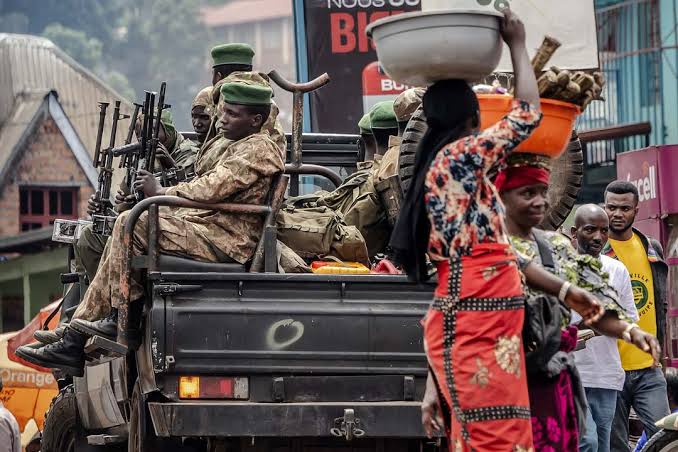
    Authorities in the Democratic Republic of Congo have released 15 prisoners and handed them over to the AFC/M23 rebel movement. The International Committee of the Red Cross facilitated the transfer, marking the first known exchange under last year’s peace agreement signed in Qatar. The detainees departed from the government-held city of Beni in a convoy and travelled through Uganda before being delivered to rebels in Rutshuru territory. All 15 individuals explicitly agreed to the transfer after months of bilateral negotiations regarding the finalised list of detainees. The diplomatic step aims to bring relief to separated families while addressing ongoing conflict in eastern Congo.

  • |

    Senegal court jails TikTok creators for insulting president

    A Senegalese court has sentenced three TikTok influencers to custodial sentences and fines for insulting President Bassirou Diomaye Faye. Critics have condemned the ruling as a direct blow to free expression within the country. The creators work for Feenal Digital, an online channel known for producing content supportive of former Prime Minister Ousmane Sonko. The decision follows a recent political rift between President Faye and Sonko. Mandoumbe Diop, operating under the moniker Lamignou Darou, received a three-month unconditional prison term. He represents the most prominent of the group, boasting over 500,000 followers on TikTok. Magueye Diaw and Moustapha Ndiaye were each handed two-month custodial sentences alongside fines of 500,000 CFA francs. Defence counsel Abdy Nar Ndiaye argued the posts were purely satirical and did not warrant criminal sanction.

  • |

    Tanzania opens government debt market to all overseas investors

    Tanzania has relaxed its foreign exchange regulations to permit all international investors to purchase government-issued Treasury bills and bonds. The Bank of Tanzania announced that the policy change aims to deepen domestic financial markets and position the country as an attractive investment destination. Participation in government securities was previously restricted to residents of the East African Community, the Southern African Development Community, and the Tanzanian diaspora. President Samia Suluhu Hassan’s administration is seeking fresh revenue options following recent reductions in aid from international partners.

  • | | | |

    US strikes IRGC bases after Iran missile attack

    The Middle East moved a step closer to a broader regional conflict after the United States launched large-scale airstrikes against dozens of Islamic Revolutionary Guard Corps (IRGC) facilities across Iran in retaliation for Tehran’s ballistic missile attack targeting American forces stationed in the region. According to the US Central Command (CENTCOM), the operation targeted military command centers, drone infrastructure, weapons depots and other strategic IRGC installations during a coordinated two-hour campaign. US officials said the strikes were intended to weaken Iran’s ability to threaten American troops, commercial shipping lanes and allied Gulf nations. Iranian state media reported that at least three people were killed during strikes on Qeshm Island, while authorities vowed that the country would continue defending its territory against what it described as “American aggression.” The crisis quickly spread beyond Iran’s borders. Jordan announced that its air defence systems intercepted five missiles following Iran’s confirmed launch toward US military installations in the kingdom. Washington maintained that all missiles directed at American bases were successfully intercepted, preventing casualties among US personnel. In another major development, US and Saudi forces carried out coordinated strikes against Iran-backed armed groups operating in eastern Iraq after drone attacks launched from Iraqi territory targeted Saudi oil facilities. The joint operation marked the first publicly acknowledged military action conducted together by Washington and Riyadh against Iran-aligned militias. Regional instability deepened further after a fire broke out aboard a US-owned gas storage tanker at Egypt’s Mediterranean port of Damietta. Although maritime security experts suggested the blaze may have resulted from a drone strike, Egyptian officials confirmed only the fire and said investigations into its cause were continuing. The latest escalation comes against the backdrop of months of confrontation between Iran, the United States and Israel. Fighting resumed after disputes over the strategically important Strait of Hormuz ended a short-lived ceasefire reached in June. US President Donald Trump reiterated that America would respond decisively to attacks on its forces while insisting diplomatic efforts remained active. However, continued military exchanges around the Strait of Hormuz have complicated negotiations and increased concerns over global energy supplies. Iran has claimed it targeted three tankers attempting to pass through what it called an unauthorized route in the strait, while rejecting an Omani-backed proposal supported by Gulf states for joint management of the crucial waterway. The conflict has also rattled global energy markets, with Brent crude prices climbing above $90 per barrel before easing later in trading. Meanwhile, Iraq’s Iran-backed Popular Mobilisation Forces said at least 20 of their fighters were killed in the US-Saudi strikes, prompting Baghdad to condemn the attacks as a violation of its sovereignty while urging all armed groups to halt cross-border military operations. Saudi Arabia has also intensified diplomatic efforts, with Defence Minister Prince Khalid bin Salman meeting US Vice President JD Vance in Washington to urge restraint. Saudi officials reportedly warned that expanding military operations against Yemen’s Houthis and Iran-backed militias in Iraq could trigger unpredictable consequences across the Middle East, highlighting growing fears that the conflict could widen even further.

Leave a Reply

Your email address will not be published. Required fields are marked *