
permit documents reveal
| |

Permit documents reveal fresh details about Taylor…

Newly surfaced permit documents have offered fans a closer look at how Taylor Swift and Travis Kelce planned one of the most talked-about celebrity weddings of the year.

The superstar couple exchanged vows earlier this month during a lavish yet highly private ceremony at Madison Square Garden in New York City. While they have largely kept details of the celebration out of the public eye, official event permits have now revealed how carefully every aspect of the wedding was organized.

According to documents obtained by the Associated Press, the main wedding celebration began at 5 p.m. and continued until 4 a.m. the following morning. The permits also outlined a multi-day schedule, with an intimate rehearsal dinner for approximately 100 guests taking place the evening before the ceremony, followed by the larger wedding celebration attended by around 1,000 guests. 

The paperwork also confirmed that extensive road closures were approved around Madison Square Garden to accommodate guest arrivals, security operations and event logistics. Several nearby streets were temporarily closed, while police officers and traffic personnel were deployed throughout the area to manage crowds and ensure the safety of attendees. The large-scale security operation reflected the extraordinary level of public interest surrounding the wedding. 

The newly revealed documents also highlight just how much planning went into maintaining the couple’s privacy. Reports indicated that the event featured a strict no-phone policy, while guests and staff were asked to follow confidentiality measures designed to prevent photos or videos from leaking online. Those efforts appear to have been successful, as very few authentic images from the ceremony have surfaced since the celebration. 

Preparations inside Madison Square Garden were equally impressive. Sources previously revealed that the iconic venue was transformed into an elegant wedding setting featuring custom décor, greenery, canopies and a specially designed reception space while preserving the arena’s unique character. 

The wedding reportedly brought together family members, close friends and a long list of celebrity guests from the worlds of music, sports and entertainment. Despite its grand scale, those in attendance have largely respected the couple’s wishes for privacy, allowing Taylor and Travis to celebrate away from constant public attention. 

The permit documents provide the clearest picture yet of how the high-profile celebration was executed. From carefully timed arrivals and extensive security measures to a multi-day schedule, every detail reflected meticulous planning.

While fans remain eager to learn more about the wedding, the newly released documents show that Taylor Swift and Travis Kelce prioritized one thing above all else: creating a memorable celebration that remained intimate despite the world’s attention.

Similar Posts

  • |

    Pakistan hockey team Beats South Korea 3-1 in hist…

    Pakistan hockey team eased past South Korea 3-1 in the opening match of the four-test series at the Naseer Bunda Hockey Stadium on Thursday, marking the first time in 20 years that an international hockey team has toured Pakistan for an official bilateral series. The 13th-ranked Green Shirts dominated the 22nd-ranked Korea throughout the match. Sufyan scored twice, while newly appointed captain Abu Bakar Mahmood added a goal to cap off an excellent performance. South Korea managed just one goal in reply. The series marks a significant milestone for Pakistan hockey, which has struggled to attract international teams to its shores over the past two decades due to security concerns and the sport’s declining profile in the country. Earlier, President of the Pakistan Hockey Federation (PHF), Mohyuddin Ahmad Wani welcomed the Korean team’s arrival and described the tour as a landmark moment for the revival of international hockey in Pakistan. “This is a proud and memorable occasion for Pakistan hockey. After almost two decades, we are once again welcoming an international team to our home grounds,” he said. “We extend a warm welcome to the Korean National Hockey Team and are confident that this series will strengthen the longstanding friendship between our two countries while promoting high-quality international hockey.” The second match of the series will be played on 2 August, followed by the third and fourth fixtures on 4 and 7 August, respectively. The series is seen as a crucial step in Pakistan’s efforts to revive the sport and attract more international competition in the future.

  • | | |

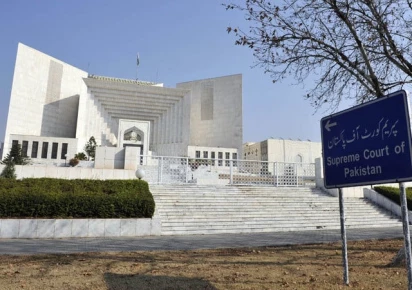
    SC fixes Sept 16 hearing on Imran’s medical tran…

    ISLAMABAD: The Supreme Court has fixed September 16 for hearing a contempt petition filed by Uzma Khanum, sister of PTI founder and former prime minister Imran Khan, over the alleged non-implementation of the court’s order regarding his medical treatment. The petition was submitted after the government took Imran Khan to the Pakistan Institute of Medical Sciences (PIMS) instead of shifting him to Shifa International Hospital, as directed by the Supreme Court in its August 18 order. The court had also directed arrangements for regular meetings between Imran Khan and his family. PTI had challenged the government’s decision and filed a contempt petition through Uzma Khanum. The petition was returned after the Supreme Court registrar raised certain objections. The party later resubmitted it after addressing the objections. Speaking outside the Supreme Court, PTI Chairman Barrister Gohar Khan said the party wanted the matter to be heard at the earliest. He said the PTI founder’s health remained the party’s primary concern. Gohar urged the authorities to facilitate meetings between Imran Khan and his family members. He maintained that the Supreme Court’s August 18 order had not been implemented in its original form. Uzma Khanum also submitted an application seeking an early hearing. She expressed concern over what she described as a deterioration in Imran Khan’s health and argued that further delay could have serious consequences. The application alleged that the government had failed to follow the Supreme Court’s directions. It maintained that if authorities required clarification about the order, they should have approached the court instead of taking a different course of action. The government, meanwhile, has filed a review petition challenging the August 18 order. It has described the directive as discriminatory and sought its reconsideration. Imran Khan was taken to PIMS on August 21 for a medical examination and was later returned to Adiala Jail after doctors declared him medically fit. The government has maintained that security concerns prompted the decision to use PIMS instead of Shifa International Hospital. Information Minister Attaullah Tarar said the security situation involving PTI workers affected the planned transfer. The Supreme Court had also declined an immediate hearing of petitions seeking contempt proceedings and review of its August 18 order. The government’s review petition is therefore expected to be heard according to the court’s schedule. Gohar said PTI wanted Imran Khan’s sister, Dr Uzma, and his personal physician, Dr Faisal Sultan, to be included in the medical board. He also called for the medical tests recommended by Imran Khan’s doctors to be conducted. The PTI chairman said the party was currently focusing on Imran Khan’s health rather than political matters. He described the issue as a humanitarian concern and urged the authorities to implement the Supreme Court’s directions. Gohar also questioned the detention of Imran Khan’s physician, Dr Faisal Sultan, who was taken to Shifa International Hospital. He asked why the doctor was detained for several hours while Imran Khan was not transferred to the same facility. He reiterated that a Supreme Court order should be followed unless the court itself modifies, reviews or suspends it. Gohar said PTI also recognised the importance of security arrangements and did not want any violation of security protocols. However, he claimed the party had not been informed in advance that security concerns would prevent Imran Khan’s transfer to Shifa International Hospital.

  • | |

    Ariana Grande sues hackers over unreleased music

    Ariana Grande has taken legal action against those responsible for years of music leaks, filing a lawsuit against two unidentified individuals she alleges hacked into the private digital accounts of photographers and producers within her inner circle and walked away with hundreds of unreleased songs, behind-the-scenes photographs, and private video and audio recordings from her creative process. The complaint, filed on Monday, July 27, paints a picture of sustained and deliberate theft that stretches back years. According to the filing, the stolen material was never intended for public consumption and was subsequently sold on the dark web, turning the private moments of Grande’s creative life into a commodity traded without her knowledge or consent. The scale of what was taken is considerable. “In 2023 alone, 45 unreleased songs belonging to Ms. Grande were hacked, stolen, and leaked by Defendants,” the complaint alleged. “Since her music debut in 2011, hundreds of similar leaks have taken place.” The cumulative picture that emerges is of an artist who has spent over a decade watching work she had not chosen to release being stripped from her and shared with the world on someone else’s timeline. Grande is also asking the court to assist in identifying the individuals behind the alleged cyberattacks, suggesting that the full extent of who is responsible remains under investigation. A source close to the singer framed the lawsuit in terms that extended beyond her own situation. “The lawsuit is intended to serve as a deterrent against future acts of this nature, not only targeting Ariana, but also the many artists who have faced similar invasions of their privacy and theft of their creative work,” the source told People magazine. “Artists deserve the right to control how and when their art is shared with the world. The unlawful theft and distribution of creative work undermines that right and should not be tolerated.” The lawsuit carries a particular irony given what Grande herself said publicly years before it became reality. While promoting Eternal Sunshine on the Zach Sang Show, she had reacted to the viral leak of Fantasize with a warning that now sounds entirely prophetic. “We were, before I left for Wicked, a few studio sessions that I did which are all over TikTok, thank you so much, I’ll see you in jail. Literally,” she had said. She described the leaked material as having been written for a separate television project and was unambiguous about her feelings toward those responsible. “These pirates, crooks, illegal!” she said. For Grande, the filing of this lawsuit is a statement that the theft of an artist’s creative work is not a victimless act. It is an invasion, and she intends to hold those responsible accountable for it.

  • | | | |

    Russia, COMSTECH seek stronger cooperation in scie…

    Russia and the Organisation of Islamic Cooperation’s Standing Committee on Scientific and Technological Cooperation (COMSTECH) have discussed new opportunities to expand collaboration in science, technology and higher education. Russian Ambassador Albert P. Khorev received a COMSTECH delegation on August 12. The delegation was led by COMSTECH Coordinator General Professor Dr M. Iqbal Choudhary. The meeting focused on strengthening cooperation between Russia and COMSTECH, particularly in areas of scientific research and academic development. Russia participates in the OIC as an observer state. Professor Iqbal Choudhary highlighted existing cooperation between COMSTECH and Russian institutions. He specifically mentioned collaboration with Kazan Federal University and the Russian Association of Earthquake Engineering and Protection against Natural and Man-Made Hazards. The participants identified considerable potential for expanding academic links between the two sides. They discussed stronger partnerships between universities, increased scholarship opportunities and joint research projects in fundamental sciences. Both sides also stressed the need to speed up implementation of initiatives previously agreed upon under their bilateral working mechanism. These initiatives were discussed during the first meeting of the Working Group on Cooperation between COMSTECH and the Russian Federation in science, technology and higher education. The meeting was held in Kazan on May 13, 2026, on the sidelines of the international economic forum Russia–Islamic World: KazanForum. Ambassador Khorev reaffirmed Moscow’s interest in expanding its engagement with the OIC and Muslim-majority countries. He also highlighted the importance of cooperation with Pakistan. The participants noted that stronger scientific and academic links between Russia and COMSTECH could also contribute to closer Russia-Pakistan relations, particularly through education, research and technological cooperation. The two sides agreed to maintain regular communication and provide necessary support for implementing joint initiatives and projects.

  • |

    Power sector circular debt rises by Rs364 billion in FY2025-26

    ISLAMABAD: Pakistan’s power sector circular debt increased by Rs364 billion during fiscal year 2025-26, highlighting persistent weaknesses in the electricity supply chain despite substantial government subsidies and efforts to contain the buildup of unpaid liabilities. According to the circular debt report for June 2026, the increase was significantly higher than the previous year, when the debt had risen by around Rs45 billion. The latest increase represents a surge of roughly 709% year-on-year in the annual flow of circular debt. The Power Division has not yet formally uploaded the one-page circular debt report for June 2026 on its official website. The latest figures indicate that structural problems, including distribution company inefficiencies, weak bill recovery, payment disputes and delays in tariff adjustments, continue to generate fresh liabilities in the power sector. The development comes despite the government’s efforts to contain the debt through budgetary support and subsidies. IMF target and government commitments The International Monetary Fund (IMF) had permitted Pakistan to record up to Rs400 billion in circular debt flow during the year, while simultaneously requiring the government to take measures to prevent the accumulation of new liabilities and eventually bring the flow down to zero. Under the IMF programme, the government has been relying on tariff adjustments, subsidy rationalisation and other reforms to improve the financial health of the electricity sector. However, the latest increase suggests that governance and operational problems remain a major obstacle to achieving a sustainable reduction in circular debt. The government provided approximately Rs302 billion in subsidies aimed at supporting the power sector and reducing the debt burden. However, the amount was insufficient to maintain the circular debt stock at the level of Rs1.614 trillion recorded at the end of June 2025. As a result, the debt stock recorded a net increase of around Rs61 billion during the year. The Power Division had earlier stated that the federal government allocated Rs893 billion for the power sector in the FY2025-26 budget. However, around Rs98 billion of the allocated amount was not released, affecting the government’s ability to reduce the outstanding liabilities. A Power Division spokesperson said that if the entire budgeted allocation had been released, the circular debt stock could have fallen further to around Rs1.577 trillion. The funding shortfall, according to the official, contributed to the Rs61 billion increase recorded during the year. Distribution companies remain a major source of losses Inefficiencies within power distribution companies continued to be one of the biggest contributors to the accumulation of circular debt. The government incurred approximately Rs262 billion in losses during FY2025-26 because of inefficiencies in distribution companies. The amount was only around Rs3 billion lower than the previous year, indicating that little progress has been made in addressing operational weaknesses. Another Rs64 billion was added to the circular debt because of lower electricity bill recoveries. Although significant, this amount was around 51% lower than the corresponding figure recorded in the preceding year. The figures underline the financial pressure created by electricity theft, transmission and distribution losses, weak collection systems and inadequate enforcement against non-paying consumers. Privatisation of distribution companies The government has initiated the process of privatising three relatively profitable distribution companies — Faisalabad Electric Supply Company, Gujranwala Electric Power Company and Islamabad Electric Supply Company. However, the proposed privatisation is not expected to immediately resolve the broader circular debt problem because a substantial portion of sector losses originates from other distribution entities. Earlier, the government had considered a model under which profitable distribution companies would be combined with loss-making entities before privatisation. The plan, however, was subsequently abandoned in favour of offering comparatively stronger companies separately. Experts have repeatedly argued that privatisation alone cannot eliminate circular debt unless the underlying issues of electricity theft, poor recoveries, governance and operational losses are addressed across the entire distribution network. K-Electric dispute adds to debt Payment disputes with K-Electric also contributed substantially to the increase. According to the report, approximately Rs194 billion was added to the circular debt because of non-payments by K-Electric. The company’s outstanding payments are linked to a dispute concerning the delayed finalisation of its multi-year tariff by the National Electric Power Regulatory Authority. The prolonged disagreement has created financial pressure throughout the power supply chain, adding to the accumulation of unpaid liabilities. In addition, around Rs75 billion was added to the circular debt because of delays in tariff adjustments. The government, meanwhile, made payments of approximately Rs129 billion against principal loans of the power sector. Without these payments, the annual circular debt flow could have exceeded Rs600 billion, according to the figures. The Power Division also benefited from a reduction of around Rs98 billion in the circular debt flow because of subsidy payments. Interest payments add further pressure Interest charges also contributed to the accumulation of liabilities, adding around Rs14 billion to the circular debt during the fiscal year. These financing costs ultimately increase the burden on consumers because the cost of servicing the sector’s outstanding liabilities is recovered through electricity bills. Consumer groups have frequently criticised the practice, arguing that households and businesses that regularly pay their electricity bills are effectively being charged for inefficiencies, theft and non-payment elsewhere in the system. Subsidies and burden on consumers The government’s continued reliance on subsidies has helped prevent an even larger accumulation of circular debt, but it has also placed pressure on the national budget. The power sector received hundreds of billions of rupees in subsidies during the year, while the government simultaneously pursued tariff increases and other measures intended to improve cost recovery. The contrast has raised questions about whether existing policies are addressing the underlying causes of circular debt or merely shifting the burden between consumers, the federal budget and power-sector entities. The government has also been under pressure to address similar financial problems in the gas sector. Although no comparable subsidy was provided for the gas sector, the authorities were expected to prevent a further increase in its circular debt. The government reportedly refrained from passing the full reduction in gas prices on

  • |

    Admiral Naveed Ashraf makes historic IISS address as UK visit deepens Pakistan-Britain defence ties

    LONDON: Chief of the Naval Staff Admiral Naveed Ashraf has concluded a high-profile official visit to the United Kingdom, highlighted by a landmark address at the International Institute for Strategic Studies (IISS) in London—the first by any serving Pakistan Navy chief. Addressing one of the world’s leading strategic think tanks, Admiral Ashraf outlined Pakistan’s perspective on the evolving security landscape in the Indian Ocean, stressing the importance of regional maritime stability, freedom of navigation and enhanced international cooperation to tackle emerging maritime security challenges. The address marked a significant milestone in Pakistan Navy’s engagement with the global strategic community and underscored its expanding role in international maritime security discourse. During his visit, organised in coordination with the Pakistan High Commission in London, Admiral Ashraf held a series of high-level meetings with senior officials of the Royal Navy, the UK Ministry of Defence, NATO Allied Maritime Command, and the Royal College of Defence Studies (RCDS). Discussions focused on strengthening bilateral naval cooperation, professional exchanges and regional security. The Naval Chief also met representatives of the Lloyd’s Market Association and the Joint War Committee, where discussions centred on maritime insurance, security risks in the Indian Ocean and the protection of global shipping routes. As part of his engagements, Admiral Ashraf attended the Royal International Air Tattoo (RIAT) at RAF Fairford, Europe’s largest military air show, where he interacted with senior military leaders from allied nations and representatives of the British defence industry. He also visited the Pakistan High Commission in London and met High Commission officials to discuss ways of expanding Pakistan-UK cooperation in defence, maritime affairs and strategic engagement. He later recorded his remarks in the High Commission’s guest book. Defence observers say the visit reflects the growing momentum in Pakistan-UK defence relations and demonstrates Islamabad’s commitment to expanding strategic dialogue with international partners. The historic IISS address, in particular, is being viewed as a significant diplomatic and strategic achievement, placing the Pakistan Navy more prominently within global maritime security discussions.

Leave a Reply

Your email address will not be published. Required fields are marked *