
rain fails dampen
| |

Rain fails to dampen Khalistan referendum turnout …

INDIANAPOLIS: A large number of members of the Sikh community participated in a Khalistan referendum held in Indianapolis, Indiana, despite rainy weather, as organizers called for the creation of an independent Sikh state.

The event was organized by Sikhs for Justice, with participants travelling from different cities and states across the United States. Organizers said voting continued despite the rain, with women and children also among those attending. Polling was scheduled to remain open until 6pm, after which organizers were expected to announce the final turnout.

Pro-Khalistan slogans were raised during the event, while some participants also expressed support for Kashmir’s independence.

Ghazala Habib, chairperson of Friends of Kashmir, addressed the gathering and said she was the only non-Sikh speaker to speak from the stage.

Vikramjit Singh, a representative associated with the Khalistan Referendum Campaign, said the initiative was launched in 2020 but faced disruptions because of the COVID-19 pandemic. He said the first voting event under the campaign was held in London on October 31, 2021, attracting thousands of Sikh participants.

According to Singh, subsequent voting events were organized in countries including the United Kingdom, Australia, Switzerland, Italy and Canada. He said Canada hosted three events in Toronto, two in Vancouver and another in Calgary, while the United States has held voting in San Francisco, Los Angeles, Washington, DC and now Indianapolis.

Singh claimed that nearly two million Sikhs worldwide had participated in the campaign so far. However, the figure could not be independently verified.

He accused the Indian government of committing historical injustices against Sikhs, citing the 1984 attack that damaged the Akal Takht and subsequent violence against the Sikh community, as well as what he described as the exploitation of Punjab’s economic resources.

Singh said supporters of the movement wanted to pursue their demand through peaceful and democratic means. He called for a formal referendum in Punjab whose outcome, according to him, would have legal and political effect for all parties.

Organizers said details of the Indianapolis vote and the next stage of the campaign would be announced after polling concludes. The campaign is expected to hold another referendum in Canada on October 18, although the specific city has not yet been confirmed.

Similar Posts

  • | |

    Iran issues fresh warnings as regional tensions es…

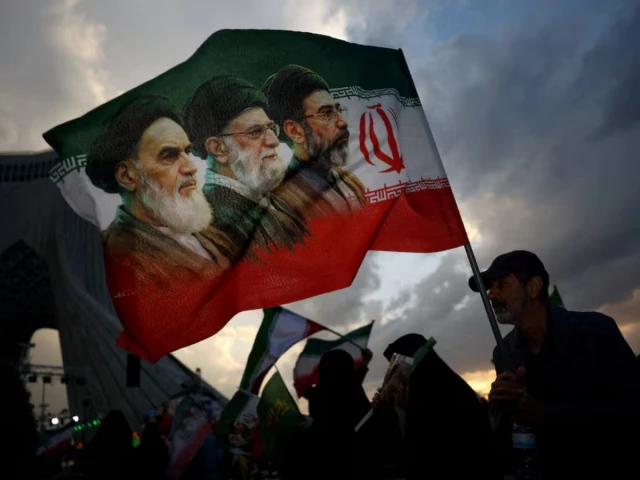
    Tensions across the Middle East intensified on Saturday as senior Iranian military and political officials issued strong warnings to the United States and its regional partners, while Kuwait reported intercepting drones it said were launched from Iran. Major General Abdollahi, commander of Iran’s Khatam al-Anbiya Central Headquarters, accused Washington of deliberately widening the regional conflict. In a statement shared on X and reported by Iranian state media, he alleged that the United States was pursuing a strategy aimed at expanding the war and increasing its influence across the Middle East. According to Abdollahi, the recent confrontation with Iran demonstrated that Washington was prepared to target the interests and resources of Muslim nations to achieve its objectives. He further claimed that the US was relying on the wealth, infrastructure, and strategic assets of regional countries to protect its military presence while reinforcing Israel’s security. The Iranian commander argued that the balance of power in the region had shifted in Iran’s favor, asserting that the United States and Israel failed to achieve their goals during the latest conflict. He also claimed they were now attempting to continue the confrontation through the territory of neighboring Muslim countries. Abdollahi urged regional governments to reconsider their cooperation with Washington, warning that nations acting as a “defensive shield” for the United States could eventually face the consequences of war. Separately, Iranian lawmaker Ebrahim Rezaei, a member of the parliament’s National Security Commission, warned that any future attack on Iran would have devastating consequences for the region. He claimed that such a conflict could reduce regional infrastructure to the “Stone Age” and cautioned against further military action. Meanwhile, Kuwait strongly condemned what it described as Iranian aggression after reporting drone attacks on key facilities. Kuwaiti authorities said their air defense systems detected and destroyed multiple hostile drones that entered the country’s airspace early Saturday. Officials stated that a government installation in northern Kuwait and civilian vehicles on Bubiyan Island sustained material damage from falling debris, although no casualties were reported. Kuwait’s Foreign Ministry described the attacks as a serious violation of the country’s sovereignty and said it reserved the right to take all necessary measures to protect its national security, interests, and critical infrastructure. Iran also warned that continued US maritime pressure could trigger broader consequences. Mohammad Bagher Zolghadr, secretary of Iran’s Supreme National Security Council, said ongoing American actions could ultimately lead to restrictions on the Strait of Hormuz and other strategic waterways, warning that such developments would have significant consequences for global energy markets and the wider economy. At the same time, Iranian Parliament Speaker Mohammad Bagher Ghalibaf declared that Iran had emerged victorious from the recent conflict but stressed that the country must strengthen its long-term stability and national resilience. He emphasized expanding the authority of Iran’s supreme leadership as a key step toward securing the country’s future. Elsewhere, maritime security concerns remained high. The UK Maritime Trade Operations (UKMTO) reported that a commercial tanker was struck by an unidentified projectile off the coast of Oman, damaging its engine room and leaving it temporarily unable to maneuver. Authorities are investigating the incident. In Yemen, the Houthi movement denied reports that it planned to charge commercial vessels for passage through the Bab al-Mandab Strait, insisting that its maritime transit services remain free. However, the group claimed that its blockade had already forced several Saudi oil tankers to reroute around Africa via the Cape of Good Hope, underscoring the continuing disruption to regional shipping routes.

  • | |

    Javed Sheikh says he refused fee for Om Shanti Om

    Veteran Pakistani actor Javed Sheikh has revealed that he initially refused to take any remuneration for his role in the hit 2007 Bollywood film Om Shanti Om, stating that sharing the screen with Indian megastar Shah Rukh Khan was an honor in itself. ​Speaking in an interview with Vasay Chaudhry, the veteran actor reminisced about playing the role of Rajesh Kapoor—Shah Rukh Khan’s on-screen father in the Farah Khan directorial—and reflected on the immense warmth and respect he experienced during the film’s production. ​Recalling the financial negotiations prior to filming, Sheikh shared that when the production manager approached him to finalize his contract and discuss his fee, he immediately declined monetary compensation. He emphasized that being chosen out of countless actors across India to portray Shah Rukh Khan’s father felt like a massive privilege that transcended money: ​”Farah Khan wanted me to play Shah Rukh’s father and they started discussing my fee. I said, ‘Money? I won’t take it.’ They said that was impossible. I told them it was such a big honour that, out of everyone in India, they had chosen a Pakistani actor to play Shah Rukh Khan’s father. Money wasn’t important.” ​When the production team insisted that working without pay violated contract guidelines, Sheikh jokingly proposed accepting a symbolic fee of just one rupee. However, both director Farah Khan and Shah Rukh Khan rejected the gesture, insisting on compensating him generously to honor his professional standing. Sheikh praised Shah Rukh Khan for his exceptional hospitality and care on set, describing their working relationship during the shoot as superb. ​Reflecting on his journey in the entertainment industry, Sheikh spoke candidly about his early career struggles. He disclosed that despite his deep passion for acting—which often involved running from school to Radio Pakistan—his father remained strict and skeptical. After his debut film Dhamaka (1974) failed at the box office, his career faced significant setbacks, leaving him devastated when industry insiders initially labeled him a “flop actor.” ​Five years later, his fortunes took a dramatic turn with the hit television drama Ankahi, which earned immense popularity across both Pakistan and India, effectively cementing his star status. Sheikh concluded by highlighting the mindset that guided his decade-long career: focusing entirely on self-improvement rather than competition, envy, or status. ​With a career spanning over four decades, Javed Sheikh continues to remain a vital force across Pakistani media, recently appearing in prominent projects including Delhi Gate, Aag Lagey Basti Mein, and the drama series Kabhi Main Kabhi Tum.

  • | |

    Sohail Afridi says KP Police, CTD key to restoring…

    Khyber Pakhtunkhwa Chief Minister Sohail Afridi has said that lasting peace in the province can only be ensured by the Khyber Pakhtunkhwa Police and the Counter Terrorism Department (CTD), stressing that no other force can replace their role in maintaining law and order. Speaking to reporters after visiting those injured in the recent explosion in Swat, the chief minister said peace is a shared responsibility and a common need for every citizen. He added that all political parties, religious groups, and people from different schools of thought are united in their desire to restore peace across the province. Afridi said the provincial government remains fully committed to its security policy and will implement it without compromise. He urged the people of Khyber Pakhtunkhwa to stand together in support of peace and stability. He praised the sacrifices made by the provincial police and said the government is providing the force with all the resources it needs to combat terrorism and maintain security. According to the chief minister, more than Rs35 billion has been allocated to strengthen police infrastructure, modern equipment, and operational capacity. He maintained that the KP Police and CTD have the experience, capability, and commitment required to tackle security challenges and said no third party could establish peace in the province more effectively than these institutions. The chief minister said peace is essential for economic growth and public prosperity, adding that development cannot take place without a secure environment. He reaffirmed that strengthening law enforcement agencies remains one of the provincial government’s top priorities. Commenting on national politics, Afridi criticised the federal government, claiming it came to power through what he described as a “Form 47 mandate.” He urged the federal leadership to focus on addressing its own governance and economic challenges instead of criticising the provincial government. He also alleged that Rs5 trillion had been paid under the Independent Power Producers (IPPs) framework and claimed that the country’s economic indicators, including GDP growth, were declining.

  • |

    Zanjeerain takes a dramatic turn as Sarbuland and Rabia marry

    Pakistani prime-time drama Zanjeerain has continued to attract strong attention from viewers with its emotional storyline, intense conflicts and unexpected twists. The Hum TV drama, directed by Shahzad Kashmiri and written by Farhat Ishtiaq, explores tribal traditions and family conflicts in Khyber Pakhtunkhwa. The drama has gained significant popularity following several heartbreaking developments, particularly the deaths of Sher Dil, Mudassir and Bano. These events changed the direction of the story and left viewers wondering how the surviving characters would move forward. After airing 30 episodes, Zanjeerain has now reached another major turning point. In the latest episodes, the jirga made a surprising decision involving Sarbuland and Rabia. As part of the traditional practice of Khoon Baha, Sarbuland was expected to marry Rabia, a decision that came as a shock to many viewers. The much-discussed twist finally reached its conclusion in Episode 30 when Sarbuland and Rabia’s Nikah was solemnized. Their marriage has generated a strong reaction online, particularly among fans who had been hoping to see the two characters together following Bano’s tragic death. Many viewers celebrated what they saw as the much-awaited Sarbiya pairing, while others questioned the sudden development and its implications for the story. Some fans were amused by how quickly the characters moved toward marriage despite the tragic events that had taken place before it. One viewer jokingly pointed out that after so many deaths and tragedies, the characters suddenly got married without much difficulty. Another fan expressed excitement over the unexpected development, saying the twist was so surprising that they wanted to celebrate. However, not everyone was pleased with the storyline. Several viewers felt that the marriage did not fit naturally with the emotional journey of the characters. Some questioned what the development meant for Mudassir and Bano, arguing that the story appeared to move on from their relationship too quickly. Others criticised the makers for turning Mudassir’s wish to protect Rabia into a marriage between her and Sarbuland. One disappointed viewer argued that Mudassir had only asked Sarbuland to keep Rabia safe, rather than marry her. Despite the mixed reactions, the Sarbuland-Rabia Nikah has clearly become one of the most talked-about developments in Zanjeerain. The unexpected turn has left fans divided, with many now eager to see how the newly married couple’s relationship unfolds in the upcoming episodes.

  • |

    Unesco reports 2.4 million Afghan girls barred from secondary education under Taliban rule

    Roughly 2.4 million Afghan girls have been systematically denied access to secondary education since the Taliban regained power in 2021, the United Nations Educational, Scientific and Cultural Organisation (Unesco) announced, urging an immediate end to the policy. The UN agency noted that the number of girls excluded from high school has grown by 200,000 over the past year and warned that the figure could reach nearly four million by 2030 if the restrictions remain in place. Afghanistan remains the only country in the world where female students are formally prohibited from attending school beyond the primary level. The current restrictions mark a stark reversal of educational progress achieved over the preceding two decades. In 2001, female enrolment was severely limited, but by 2021, nearly one million girls were actively attending secondary schools across the country. Beyond human rights concerns, Unesco highlighted the severe long-term economic fallout, estimating that the prohibition on female education and employment could cost the Afghan economy $9.6 billion (£7.5 billion) by 2066. The wider educational landscape in Afghanistan faces critical systemic strain. More than half of primary-school-aged children are out of school entirely, and over 90 per cent of 10-year-olds are unable to read basic text. Infrastructure deficits, including widespread shortages of clean drinking water, sanitation, and heating, alongside recurrent natural disasters continue to exacerbate the ongoing crisis.

  • |

    Right-wing party proposes armed forces intervention to halt Channel crossings

    Reform UK has proposed an extensive military-led framework aimed at completely stopping small boat migration across the English Channel. The policy proposal outlines leveraging combined military and intelligence tracking technology to create a heavily monitored sea border, alongside granting emergency powers to armed forces to intercept vessels and push them back toward French territory. The plan includes expanding detention facilities to enable immediate offshore or domestic processing and deportation without eligibility for standard asylum routes. To facilitate these changes, the party stated it would pursue major legal shifts, including withdrawing the United Kingdom from the European Convention on Human Rights and replacing current national human rights legislation with a new domestic framework. Critics and legal scholars have questioned the feasibility of the measures, pointing out potential conflicts with international maritime agreements and international law. Meanwhile, Prime Minister Andy Burnham stated his administration would maintain a relentless focus on tackling immigration networks through increased enforcement and cross-border security cooperation.

Leave a Reply

Your email address will not be published. Required fields are marked *