unesco reports million
|

Unesco reports 2.4 million Afghan girls barred from secondary education under Taliban rule

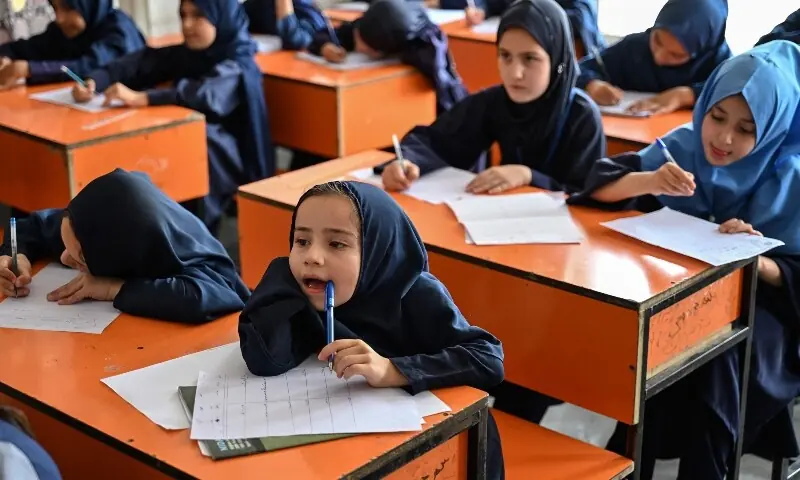
Roughly 2.4 million Afghan girls have been systematically denied access to secondary education since the Taliban regained power in 2021, the United Nations Educational, Scientific and Cultural Organisation (Unesco) announced, urging an immediate end to the policy.

The UN agency noted that the number of girls excluded from high school has grown by 200,000 over the past year and warned that the figure could reach nearly four million by 2030 if the restrictions remain in place. Afghanistan remains the only country in the world where female students are formally prohibited from attending school beyond the primary level.

The current restrictions mark a stark reversal of educational progress achieved over the preceding two decades.

In 2001, female enrolment was severely limited, but by 2021, nearly one million girls were actively attending secondary schools across the country. Beyond human rights concerns, Unesco highlighted the severe long-term economic fallout, estimating that the prohibition on female education and employment could cost the Afghan economy $9.6 billion (£7.5 billion) by 2066.

The wider educational landscape in Afghanistan faces critical systemic strain. More than half of primary-school-aged children are out of school entirely, and over 90 per cent of 10-year-olds are unable to read basic text. Infrastructure deficits, including widespread shortages of clean drinking water, sanitation, and heating, alongside recurrent natural disasters continue to exacerbate the ongoing crisis.


Similar Posts

  • |

    Russia issues arrest request for Telegram founder Pavel Durov

    Russian authorities have announced that they are seeking the arrest of Telegram founder Pavel Durov, accusing him of allowing the messaging platform to be used for activities linked to terrorism. The move marks the latest escalation in Moscow’s long running dispute with the tech entrepreneur, who has repeatedly clashed with Russian officials over internet freedom and user privacy. Russia’s Federal Security Service, known as the FSB, said it had launched international search proceedings against Durov, alleging that Telegram was being used by Ukraine’s security services to recruit Russian citizens for sabotage and other attacks. The agency claimed that Durov failed to remove a dating bot that it says played a central role in these recruitment efforts. According to the FSB, an international wanted notice has been issued for Durov, who serves as Telegram’s chief executive. However, Russian authorities did not clarify the type of notice issued or whether foreign governments or international law enforcement agencies would recognise or act on the request. Durov’s legal representatives declined to comment on the allegations, while Telegram said the company would not make any public statement at this stage. The FSB alleged that a bot known as Leo Match Bot, which is banned in Russia, was used by individuals posing as young women to contact Russian teenagers and young adults. Authorities claimed these fake identities were created by Ukrainian intelligence agents to persuade users to attack police officers and carry out acts of sabotage against transport and energy infrastructure. Russian officials said that since July 2025, 46 people between the ages of 12 and 22 have been arrested in connection with attacks allegedly organised through the messaging bot. Ukraine has not publicly responded to these specific accusations. Since the beginning of the war, both Russia and Ukraine have accused each other of using online platforms and social media to recruit supporters and gather intelligence. The internet has become an increasingly important part of the conflict, with governments closely monitoring digital communication and online activity. Durov, who was born in Saint Petersburg, left Russia years ago and now holds French and United Arab Emirates citizenship. He first gained prominence after creating VKontakte, Russia’s largest social networking platform, before losing control of the company as government pressure increased. He later founded Telegram, which has grown into one of the world’s most widely used encrypted messaging services. Telegram has remained especially popular in Russia despite repeated attempts by the government to restrict access to the platform. Officials have long criticised the company for refusing to provide user data and have encouraged citizens to use state backed communication services instead. Durov also faced legal challenges in France last year, when he was arrested as part of an investigation into the distribution of illegal content through Telegram. He was later released on bail, and French authorities eventually lifted restrictions on his travel, allowing him to leave the country. The latest action by Russia comes as state controlled social media company VK continues promoting its government backed messaging application Max as an alternative to Telegram and WhatsApp. Russian authorities have increasingly supported domestic digital platforms as part of broader efforts to strengthen control over online communications. The announcement adds another chapter to the long standing conflict between the Russian government and Durov, whose commitment to encrypted communication and user privacy has repeatedly placed him at odds with Moscow’s efforts to regulate internet platforms. The outcome of Russia’s international arrest request remains uncertain, particularly given Durov’s residence outside the country and his foreign citizenship.

  • | |

    Mark Consuelos shocks Kelly Ripa with bold divorce…

    Mark Consuelos had Kelly Ripa laughing after making an unexpected confession about what could keep him from ending their marriage. The Riverdale star jokingly revealed that his love for their dog, Lena, would be enough to make him stay in a “loveless marriage.” The playful moment happened during the August 11 episode of Live With Kelly and Mark. Ripa was discussing a proposed Pennsylvania bill that would give pets greater consideration in legal matters, including divorce. The legislation could introduce rules involving pet custody, shared schedules and expenses. (TV Insider⁠) The conversation quickly became personal when the couple considered what might happen to Lena if they ever separated. Consuelos made his feelings very clear. He explained that he loved Lena so much that he would rather remain in an unhappy marriage than risk not being able to see her every day. His dramatic confession immediately sent Ripa into a fit of laughter. She jokingly asked whether a loveless marriage was really all he wanted from their relationship. Without missing a beat, she responded, “Done!” (People.com⁠) Consuelos continued the joke by admitting that a divorce would leave him constantly wondering what Lena was doing. Ripa then playfully imagined Lena potentially receiving attention from another man, adding another layer to their hilarious exchange. Behind the jokes, however, the conversation showed just how important Lena is to the couple. Consuelos and Ripa adopted their Maltese and Shih Tzu mix in 2021 after seeing her featured during a “Happy Pets” segment. The dog has since become a cherished member of their family. (People.com⁠) Their affection for Lena has become particularly meaningful following the loss of their longtime dog, Chewie, in 2025. Ripa previously became emotional while recalling how much Chewie had meant to their family throughout the years. The playful divorce conversation is also a reminder that Consuelos and Ripa are not actually announcing a split. The couple celebrated their 30th wedding anniversary in May 2026 and continue to openly express affection for each other. (InStyle⁠) Consuelos and Ripa first met while starring together on All My Children and eloped in Las Vegas in 1996. They now share three adult children: Michael, Lola and Joaquin. For the longtime couple, divorce may be purely hypothetical, but their latest television exchange proved one thing: if Lena were ever involved, Consuelos would take the custody battle very seriously.

  • | |

    Sindh High Court rejects disqualification plea aga…

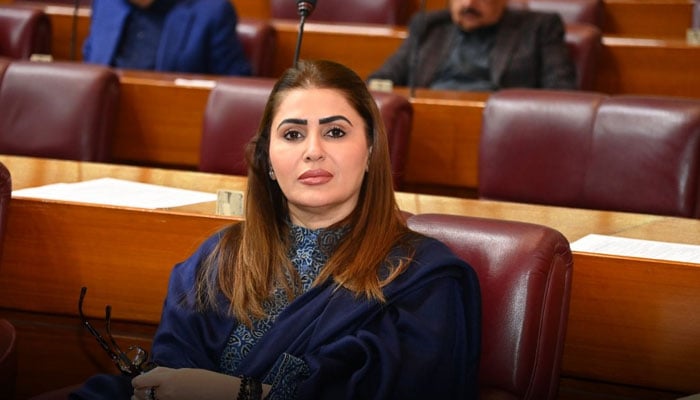
    The Sindh High Court has dismissed a petition seeking the disqualification of Pakistan Peoples Party leader and National Assembly member Shazia Marri over an alleged fake degree. The court announced its decision after the case remained pending for around 13 years. The petition was declared not maintainable and subsequently rejected. The court said the High Court does not have constitutional authority to disqualify a member of Parliament. According to the court, such matters must be dealt with through the relevant constitutional and electoral forums. The court also noted that a similar objection had previously been raised during the 2018 general elections. The matter was taken before an election tribunal at that time. The Election Commission later rejected the objection concerning Marri’s degree in 2022. An appeal against the tribunal’s decision was subsequently filed before the Supreme Court. The Supreme Court dismissed the appeal in 2023 after it was withdrawn. During the latest proceedings, Marri’s lawyer argued that the degree issue had already been examined by the Election Commission. He told the court that evidence relating to the qualification had been presented before the commission. The lawyer maintained that the Election Commission had already rejected the petition concerning Marri’s degree. The court also discussed the constitutional requirements for disqualification. It observed that a person cannot be disqualified simply through a constitutional petition. The court said the authority to determine whether a person meets the required constitutional standards rests with the appropriate judicial and electoral forums. It further stated that the courts cannot declare an individual truthful and trustworthy outside the constitutional procedure provided for such matters. The judges also referred to previous orders of the Supreme Court while determining the maintainability of the petition. Based on these considerations, the court concluded that the petition could not be entertained. The decision brings an end to a legal challenge that had remained pending for more than a decade. The case had focused on allegations concerning Marri’s educational qualification. However, the Election Commission had already rejected the related objection. The latest ruling also reinforces the distinction between the powers of the High Court and those of election tribunals and other constitutional forums in matters involving parliamentary eligibility. The court’s decision means that the petition seeking Marri’s disqualification has been dismissed without granting the requested relief.

  • |

    Trump’s generic drug tariff plan puts US-India pharma ties to test

    A newly announced tariff schedule introduced by President Donald Trump targeting generic pharmaceutical imports is expected to significantly affect the deep trade relationship between the United States and India, which serves as the principal supplier of generic medicines to the American market. Indian drug manufacturers currently supply roughly half of all generic pharmaceuticals consumed in the United States, with the American market generating close to a third of India’s overall pharmaceutical export earnings. The scale of this commercial exposure means the newly outlined tariff timeline, despite featuring a two-year grace period, has immediately drawn close scrutiny from Indian pharmaceutical firms and market analysts due to the critical role US sales play in corporate revenues. The policy introduces additional uncertainty to a bilateral trade dynamic already strained by recent tariff disputes, raising the stakes for Indian manufacturers as they decide whether to commit capital toward expanding domestic manufacturing inside the United States or absorb steep import duties in the future. Trump outlined a phased tariff framework for generic medications entering the United States. Under this timeline, generic drug imports will continue to enter duty-free under a zero per cent tariff until August 1, 2028, marking a two-year transition window from the policy’s effective date. Following this grace period, a 100 per cent tariff will apply for one year, after which the import levy will rise to 200 per cent. Trump framed the escalated duties as a penal mechanism designed to compel foreign pharmaceutical companies to construct manufacturing facilities on American soil within the allotted timeframe, rather than remaining reliant on overseas production plants. He explicitly distinguished this new generic drug framework from the administration’s policy on branded and patented pharmaceuticals, stating that existing regulations for branded drugs would remain unchanged due to their ongoing success. Reports citing White House details indicate that the new generic tariffs will be executed under Section 232 trade authority, matching the legal foundation used for the administration’s earlier tariffs placed on branded pharmaceuticals in April. Trump also highlighted what he described as an unprecedented surge in new domestic pharmaceutical plant construction currently underway across the United States, presenting the new tariff schedule as a measure to reinforce an existing shift toward onshore manufacturing. The policy holds major implications for the broader American healthcare system and global exporters because generic medications account for nearly 90 per cent of all prescriptions filled in the United States. This action follows previous interventions in the pharmaceutical sector, including the 100 per cent tariff placed on branded drugs starting in October 2025, alongside a most-favoured-nation pricing push. That pricing policy led more than a dozen major pharmaceutical corporations, including Pfizer, Eli Lilly, and Novo Nordisk, to conclude agreements to reduce US drug prices in exchange for multi-year exemptions from import duties. For Indian drugmakers, the two-year transition window provides initial breathing room but lacks long-term security. Indian generic manufacturers now face the choice of allocating capital to construct or expand production facilities within the United States before the 2028 deadline, or facing severe cost disadvantages once the punitive tariffs take effect. Industry analysts expect to monitor whether major Indian drug companies will announce accelerated manufacturing investments in the United States over the coming months as the sector formulates its response.

  • | | |

    SC orders Imran’s transfer to Shifa Hospital

    The Supreme Court has directed authorities to transfer Pakistan Tehreek-e-Insaf founder Imran Khan from Adiala Jail to Shifa International Hospital for medical assessment and treatment. The order was issued by a three-member bench headed by Justice Shahid Waheed. Justice Naeem Akhtar Afghan and Justice Ishtiaq Ibrahim were also part of the bench. The court was hearing petitions related to Imran’s medical treatment, access to his personal doctors and meetings with family members. The bench also ordered authorities to submit Imran’s complete medical record before the next hearing. Justice Waheed questioned why the court had been provided with only a summary instead of the full medical file. The judge said the court wanted the complete record to properly assess Imran’s health condition. The matter came under discussion after a medical report submitted by Adiala Jail authorities highlighted concerns about Imran’s health. Justice Waheed noted that the reports indicated abnormalities in his pulse and heart condition and suggested that his vital organs could be affected. The bench also discussed a recommendation for angiography. Justice Afghan asked whether the procedure could be performed inside the jail. The Islamabad advocate general told the court that angiography could be carried out at a hospital outside the prison. PTI lawyer Uzair Bhandari raised concerns about the cause of an alleged blood clot and requested access for Imran’s personal physicians. He sought permission for Dr Asim Yusuf and Dr Faisal Sultan to meet Imran. The court discussed the qualifications of the doctors proposed for the visit and noted that no formal challenge had been made to the doctors who had already examined the former premier. The court also addressed the issue of media statements following meetings with Imran. Bhandari assured the bench that family members and doctors would not speak to the media after meeting the PTI founder. The Islamabad advocate general said an earlier undertaking regarding media interactions had allegedly been breached. The matter is also pending before the Islamabad High Court. Senior PTI lawyer Salman Akram Raja argued that responsibility should not automatically be placed on others if an undertaking had been violated. Justice Waheed warned that if contempt proceedings were initiated against officials for violating court directions, similar action could also be considered against lawyers or other individuals who breached court orders. The bench said the PTI and Imran’s family would have to provide an undertaking that no media briefing would take place after meetings. Justice Afghan also urged the PTI to avoid turning Imran’s medical condition into a political dispute. The court separately examined restrictions on meetings between Imran and his sisters. Justice Waheed said meeting family members was a fundamental right and should not be treated as a special favour. Authorities told the court that Imran had met his sisters 48 times during the past three years. The court ordered officials to submit complete details of all those meetings. It also sought records concerning Imran’s communication with his sons, including call detail records. The bench further directed authorities to provide comprehensive information about the cases against Imran. The court wants details of cases in which he is an under-trial prisoner, cases resulting in convictions and matters where sentences have been suspended. Adiala Jail officials were summoned to appear before the court at the next hearing. The court also questioned the implementation of Islamabad High Court directions concerning meetings with Imran. The Islamabad advocate general said the matter was pending before the high court in an intra-court appeal. The hearing was adjourned until after the summer vacation. Medical report submitted to court A two-page medical report submitted by the Adiala Jail superintendent provided details of Imran’s treatment and health monitoring during his imprisonment. The report said Imran had received treatment from ophthalmologists in Islamabad and Rawalpindi for central retinal vein occlusion, an eye condition diagnosed previously. According to the report, his affected eye had shown significant improvement and had almost returned to normal vision. The report also contained a summary of 39 medical examinations conducted by various specialists between November 4, 2023 and August 10, 2026. Several government doctors examined Imran during this period. Jail authorities said records of the consultations had been maintained. Medical officers at the jail also monitored his food and fluid intake three times a day and conducted regular health checks. The report stated that Imran and his wife had been meeting every Tuesday under jail rules. A total of 84 such meetings had reportedly taken place.

  • |

    Taiwan president joins wartime evacuation drill

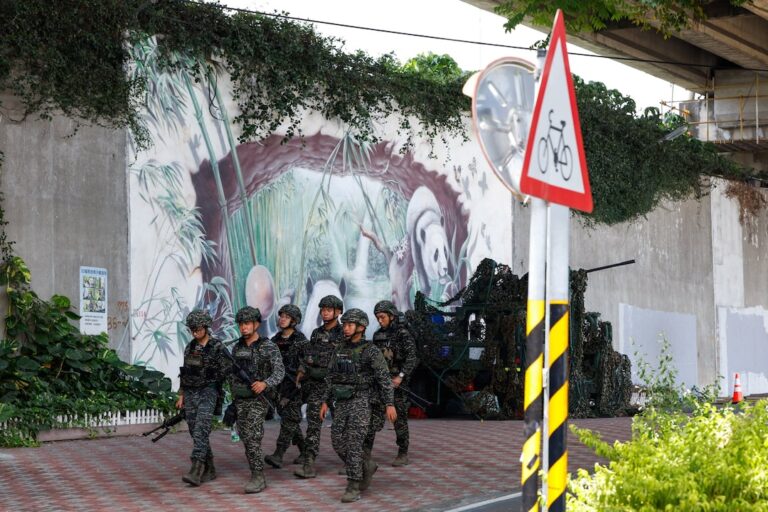
    Taiwan has intensified its annual military exercises by rehearsing the wartime evacuation of President Lai Ching-te, testing how the government would continue operating if the island came under attack. During the overnight exercise, President Lai, wearing body armour and a helmet, was transported in an armoured personnel carrier to a secure command centre. Senior government officials also participated in the drill, which focused on maintaining leadership, coordinating emergency responses and ensuring the continuity of government during a national crisis. The evacuation formed part of Taiwan’s 10-day Han Kuang military exercises, the country’s largest annual defence drill. The exercises are designed to strengthen military readiness amid growing tensions with China, which claims Taiwan as its territory and has repeatedly vowed to bring the self-governed island under its control, by force if necessary. The wartime evacuation plan has its roots in the Cold War era and was created to protect Taiwan’s leadership in the event of an invasion. Taiwanese authorities have long expressed concern that China could attempt a “decapitation strike” targeting the president and other senior officials during a conflict. As part of this year’s drills, President Lai also observed coast guard vessels being equipped with missile launchers, highlighting efforts to improve Taiwan’s coastal defence capabilities. Military units have deployed advanced air defence systems and other equipment across key locations as they practise responding to realistic combat scenarios. The exercises also include training for counter-blockade operations, coastal defence, protection of strategic infrastructure and broader civilian support during wartime. Next week, authorities will test emergency communication systems by deliberately reducing mobile internet speeds to evaluate how people would communicate if networks became disrupted during a crisis. Meanwhile, Taiwan’s defence ministry reported continued Chinese military activity near the island, saying multiple Chinese aircraft and naval vessels were detected operating around Taiwan during the exercises. Beijing has not officially commented on the ongoing drills but continues to increase military pressure on the island while rejecting President Lai’s calls for dialogue.

Leave a Reply

Your email address will not be published. Required fields are marked *