fifty police chiefs
|

Fifty UK police chiefs urge prime minister to halt early release of PC Harper’s killers

Fifty police chiefs from across the United Kingdom have sent a joint letter to Prime Minister Andy Burnham, urging the government to exhaust every legal avenue to prevent the early release of the teenagers convicted in the 2019 death of PC Andrew Harper.

PC Harper, a 28-year-old Thames Valley Police officer, died after being dragged behind a getaway car following a quad bike theft in Berkshire. Two of the men convicted of his manslaughter, Jessie Cole and Albert Bowers, were sentenced to 13 years in 2020. Under recent legislative changes to manage severe prison overcrowding, both men are due to become eligible for release in January after serving half their sentences.

The intervention by police chiefs across England, Scotland, Wales, and Northern Ireland supports Burnham’s recent declaration that he is confident a legal resolution can be found to halt their discharge. In Downing Street, officials reiterated that the government intends to do everything within its power to block the early release.

Beyond the specific case, the letter highlights broader concerns regarding public safety, victim impact, and officer morale. The police chiefs argued that reducing sentences for individuals involved in the deaths of emergency service personnel undermines the perceived sacrifice of officers who put themselves in harm’s way to protect the public.

The police leaders called on the government to mandate explicit public protection reviews before amending release terms for offenders convicted of serious violence or causing death, while also ensuring bereaved families are formally consulted whenever significant sentencing changes are implemented.

Similar Posts

  • |

    Messi-less Inter Miami stunned by Monterrey in Leagues Cup

    MIAMI: Inter Miami suffered a dramatic 2-1 defeat to Monterrey in the Leagues Cup on Saturday, with Lionel Messi absent as he travelled to Argentina following the death of his father, Jorge Messi. The match began with an emotional tribute to Messi’s father, who died at the age of 68. Both teams observed a minute of silence before kick-off, while Inter Miami expressed its support for their captain and his family. Despite missing their star player, Miami looked set for another positive result after Rodrigo De Paul opened the scoring in the 32nd minute. The Argentine midfielder celebrated in a particularly touching manner, removing his No. 7 shirt to reveal a No. 10 underneath as a tribute to Messi. The hosts carried their 1-0 advantage into half-time, but Monterrey quickly changed the momentum after the break. Belgian striker Hugo Cuypers equalised just two minutes into the second half, putting Miami under increasing pressure. The match appeared destined for a draw until Monterrey delivered a late blow. Uruguayan forward Diego Rossi struck in the 90th minute to complete Monterrey’s comeback and leave Inter Miami empty-handed. The defeat comes after Miami opened their Leagues Cup campaign with a convincing 4-2 victory over Atletico San Luis. The MLS champions will now look to respond when they face Leon on Wednesday. For Messi, however, football understandably took a back seat as he returned to Argentina to be with his family following his father’s death. The emotional night in Miami showed just how much the Argentine captain means to the club, both on and off the pitch.

  • |

    Air India appoints CEO amid mounting financial losses

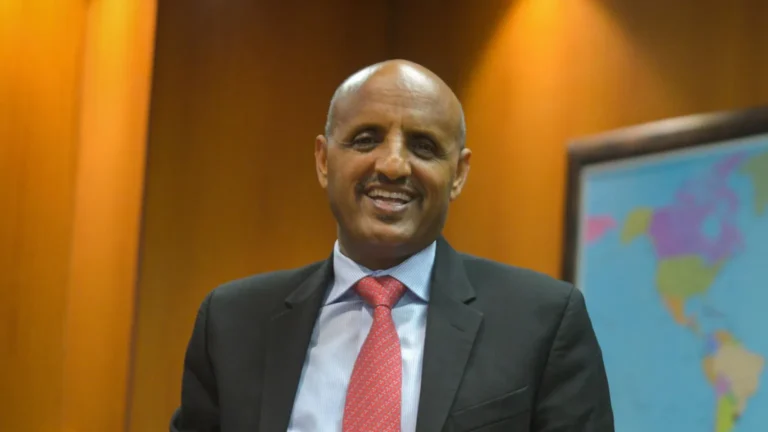
    Air India has appointed former Ethiopian Airlines chief Tewolde Gebremariam as its new chief executive officer, entrusting him with leading the airline through a challenging period marked by financial losses, operational setbacks and heightened safety concerns. Gebremariam succeeds Campbell Wilson, who stepped down in April after overseeing the airline’s initial restructuring following its acquisition by the Tata Group in 2022. The Air India board unanimously selected Gebremariam after an extensive global search, citing his leadership experience and strong operational record. During more than a decade at Ethiopian Airlines, he expanded the carrier’s fleet significantly and helped transform it into one of Africa’s leading and most profitable airlines. His appointment comes at a difficult time for Air India, which continues to recover from last year’s fatal Ahmedabad–London plane crash that claimed 260 lives. The airline is also dealing with mounting financial pressure after reporting a record loss of nearly $2.3 billion and reducing a significant portion of its international operations. In recent months, Air India has faced several operational disruptions, including flight delays, route adjustments and unexpected diversions. The broader aviation industry in India has also been affected by higher operating costs, aircraft delivery delays, disrupted international routes and stricter regulatory oversight. Industry analysts believe Gebremariam’s experience managing Ethiopian Airlines through the Boeing 737 Max crisis and the Covid-19 pandemic could prove valuable as Air India works to restore public confidence. Experts say his immediate priorities will include strengthening safety standards, improving employee morale, modernising the airline’s fleet, expanding its network and returning the carrier to long-term profitability.

  • | |

    Gulf allies reportedly lose confidence in Trump over Iran war

    Several US allies in the Gulf are reportedly becoming increasingly frustrated with President Donald Trump over what they see as a lack of effective diplomacy to end the war between the United States and Iran. According to a report by The Washington Post, officials from Arab, European and US circles said governments in Saudi Arabia, the United Arab Emirates, Qatar, Kuwait and Bahrain were growing increasingly concerned about the Trump administration’s approach to the conflict. The report said Gulf allies were particularly worried that the Trump administration had failed to advance the diplomatic efforts needed to achieve a peaceful settlement with Iran. According to the newspaper, some Gulf states have also started discussing whether continuing to host major US military bases on their territory remains in their national interest. Three current US officials and a former American diplomat reportedly told the Washington Post that the debate had intensified after months of war and continued missile and drone attacks by Iran and groups allied with Tehran. The officials said some Gulf countries were questioning how beneficial it was to host large US military installations while also facing potential security risks linked to the conflict. One senior Gulf official was quoted as saying that Trump had started the war while Gulf countries were paying the price. Despite the growing frustration, Gulf states continue to regard Washington as a major security partner and an important supplier of military equipment. The United States maintains major military facilities in Qatar and Bahrain. These bases have long played an important role in Washington’s military presence and security strategy in the region. However, the reported dissatisfaction is prompting some Gulf governments to consider alternative security arrangements. Some countries have also started exploring other options to reduce their dependence on the United States for defence and regional security. The recent mutual defence agreement between Saudi Arabia, Türkiye and Pakistan has also attracted attention in this context. A senior European official reportedly described the agreement as a signal to Washington. According to the official, the so-called Makkah defence agreement indicates that Gulf countries may no longer want to rely exclusively on the United States for their security. The development reflects growing concerns among some US allies about the consequences of the Iran conflict. While Gulf states continue to maintain close relations with Washington, the war has encouraged discussions about diversifying their security partnerships. The reported shift could have wider implications for US influence in the Gulf. Any reduction in reliance on American military protection could encourage regional countries to strengthen defence cooperation with other partners.

  • |

    Afghan fathers struggle as girls remain barred from secondary schools

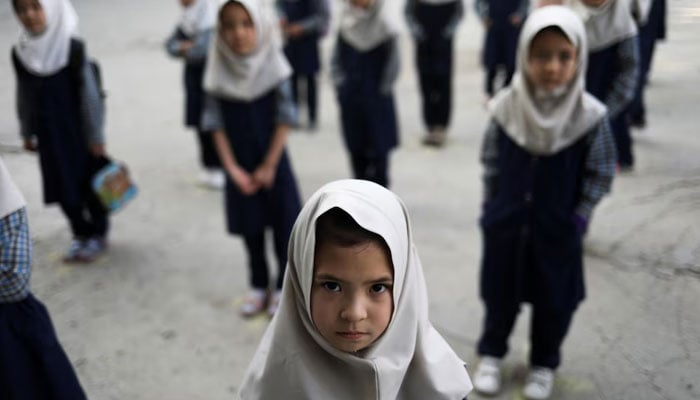
    KABUL: Afghan fathers are facing growing distress as their daughters remain unable to continue their education beyond primary school under restrictions imposed by the Taliban authorities. Families across Afghanistan say the education ban is creating deep emotional and financial pressure. Some fathers are openly questioning the policy, despite their religious beliefs and support for other government measures. The Taliban administration has defended the restrictions as temporary and based on its interpretation of religious principles. However, many Afghan men say they cannot understand why girls should be prevented from receiving secondary education. A United Nations survey conducted last year found that about nine out of 10 Afghan men considered it important for girls to attend secondary school. Nearly two-thirds also viewed supporting a daughter’s education as a religiously commendable act. Girls were barred from secondary schools after the Taliban returned to power in 2021. Women were later also prohibited from attending universities. The restrictions have affected a large number of young Afghan women and girls. For many families, the approaching end of primary education has become a source of fear. Fathers worry that their daughters will lose their chance to pursue higher education and build professional careers. One father, identified as Ahmad, said he had never imagined that his daughters could be forced to stop studying. His wife is a mathematics teacher who is also unable to continue teaching secondary-level students. Ahmad said his eldest daughter is approaching the end of primary school. The family has considered private and underground educational options, but the cost is difficult to manage. Another father, a doctor identified as Mohammad, said he had always wanted his daughters to attend leading universities. He believes women are essential to Afghanistan’s development and should have opportunities beyond household responsibilities. His daughters are approaching the age when they will be forced to leave formal schooling. The family has considered sending them abroad, including to Pakistan, but changing regional circumstances have made that option difficult. Some families have turned to private schools that secretly provide general education alongside religious studies. These institutions often charge high fees and may not provide recognised graduation certificates. Parents also fear that authorities could take action against schools operating outside official restrictions. This leaves families caught between protecting their children and trying to continue their education. Another father from Kandahar said his young daughter has a strong interest in astronomy. She asks questions about the solar system, gravity and science. The girl reportedly asked her father how she could continue learning if she could not study beyond the sixth grade. Her question has become a painful reminder of the limited opportunities available to girls. Some families have moved to Kabul in search of better educational opportunities. Others are relying on online courses, home schooling and secret classes. The restrictions are also affecting children emotionally. Parents say many girls feel frustrated, isolated and uncertain about their future. One father said his teenage daughter often stays at home and becomes deeply upset when she thinks about her education. He said he sometimes leaves the room because he cannot control his emotions and ends up crying privately. Another family has created a home-schooling routine using old secondary-school textbooks. The parents try to maintain a school-like schedule so their daughters can continue learning. However, the parents say home education cannot fully replace a formal school environment. They worry about the lack of recognised qualifications, social interaction and access to trained teachers. Some girls have also begun attending secret classes. Their families remain concerned about possible consequences if the authorities discover them. The prolonged restrictions have created uncertainty for an entire generation of Afghan girls. Parents fear that years without formal education will limit their daughters’ future opportunities

  • | |

    Iran cannot be subdued, people are forcing enemies…

    TEHRAN: Iranian Parliament Speaker Mohammad Baqer Qalibaf has said that Iran cannot be subdued, claiming that the country’s people are standing united against external pressure and forcing their opponents to retreat. Qalibaf made the remarks while congratulating General Mohsen Rezaei on his appointment to the Supreme National Security Council. He described Rezaei’s inclusion in the council as evidence of the confidence placed in him by Iran’s Supreme Leader. According to Qalibaf, Iran is currently passing through one of the most sensitive periods in its history. He said recent developments had demonstrated to the international community that attempts to bring Iran under pressure would not succeed. The Iranian parliament speaker said national unity remained strong across the country, with the public, military and diplomatic institutions standing together under the leadership of Supreme Leader Mojtaba Khamenei. Qalibaf further claimed that the Iranian people were demonstrating resilience in the face of their adversaries and were now putting pressure on the opposing side to back down. His comments come amid heightened tensions surrounding Iran and the United States, with disagreements over regional security, military threats and the strategic Strait of Hormuz continuing to dominate international attention.

Leave a Reply

Your email address will not be published. Required fields are marked *