How local heritage advocates are keeping Santa Rosa City’s history alive
Tucked within Laguna are fragments of history that offer a glimpse of what life was like during the Philippines’ colonial past. These are ancestral houses and other historical structures that can be found in what was once a barrio of Biñan — now Santa Rosa City.
They are being kept alive by two local heritage advocates, Lucky Ian Solomon and Jodel Sarmiento. However, behind these preservation efforts lies a constant struggle to keep the city’s history intact.
History of the history preservers
Sarmiento, 32, himself was born and raised in an ancestral house. His ancestors, Felix and Vicenta, built the house sometime between 1910 and 1920.
Meanwhile, 42-year-old Solomon was a staffer of the late historian Nonia Tiongco, first working alongside her under the city government. Solomon later followed Tiongco when she founded the Santa Rosa Studies Center in 2008, which sought to broaden understanding of the city’s history.
Tiongco is a descendant of the Zavalla-Tiongco family, one of the most established and landed families in the area during the colonial period.
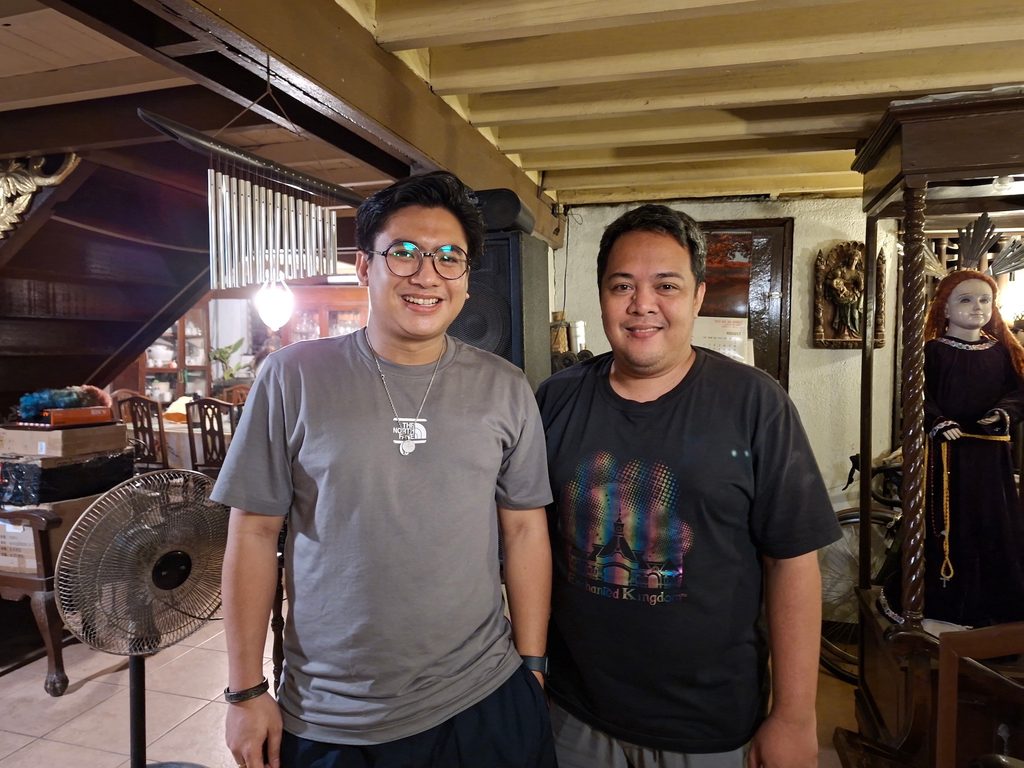
Sarmiento and Solomon met in 2010 when Solomon was conducting research on the Sarmiento household for a local heritage exhibit conducted by the center. A student of mass communication, Sarmiento provided pictures and details of ancestral houses for the exhibit, including his own house.
Their shared interest ignited Solomon’s curiosity. “Nagkinang ang mata ko (My eyes lit up),” he recalled, describing his enthusiasm upon learning that Sarmiento also had a passion for Rosense history.
Since then, they have worked together on researching Santa Rosa’s history and attending events and activities related to Philippine history.
“Utang natin ‘yun…sa susunod na generation,” Solomon said. (We owe it to the next generation.)
“Mahirap maging mangmang sa sariling kasaysayan ng bayan,” added Sarmiento. (It is difficult to be ignorant when it comes to the history of your own land.)
Early efforts
The Santa Rosa Studies Center, according to Sarmiento, began by documenting city history based on the oral accounts and family vignettes that Tiongco gathered from descendants of the oldest families there.
One of their first major efforts was looking into the supposed link between the Ochoa-Zavalla-Tiongco family with Jose Rizal, who was said to have visited the Tiongco household during his youth. The historian Tiongco then constructed a family tree, shown below, that could link the families together with Rizal through the Ochoas. However, as of writing, the link between the Ochoas and Rizal remains unverified.

The center also looked into Santa Rosa’s former name. According to a historical timeline on the city government’s website, the area was initially called Barrio Bukol.
Sarmiento said the name was believed to have come from the lumps or bumps that once characterized the area. “Dahil daw maraming bukol-bukol sa southern part ng lugar. ‘Yun ang nakalagay sa description dati, ‘yung mga nalalaman ng mga estudyante,” he said. (It was supposedly because of the many bumps in the southern part of the place. That’s what was in the description before, what students would learn.)
However, the center disputed this explanation, arguing that bukol was a clerical error that persisted for generations. Through a Spanish colonial map discovered by the center, along with a fellow researcher, Kitty Miranda, they were able to uncover that the settlement was identified as Barrio Bukal because of a nearby body of water. Bukal means “spring.”
According to the center, the confusion likely arose from old Spanish handwriting, which Solomon described as “kulot-kulot” or loopy, where the letter “a” was mistakenly read as an “o” during transcription.

Struggles in preservation
Today, their preservation efforts are not without obstacles. According to Sarmiento, the greatest threat to local heritage work is the belief that dismisses ancestral houses and other heritage structures as “ugly” or “outdated,” and disregards their historical significance.
The group cited as most recent examples the demolitions of the Zavalla-Rivera and Perlas ancestral houses. City government records state that the former, considered by both Solomon and Sarmiento to be the “oldest ancestral house,” was demolished after being declared “dangerous and ruinous” and was later converted into a restaurant, while the latter was cleared because it supposedly “does not possess any cultural heritage value of national significance nor any local cultural significance.”
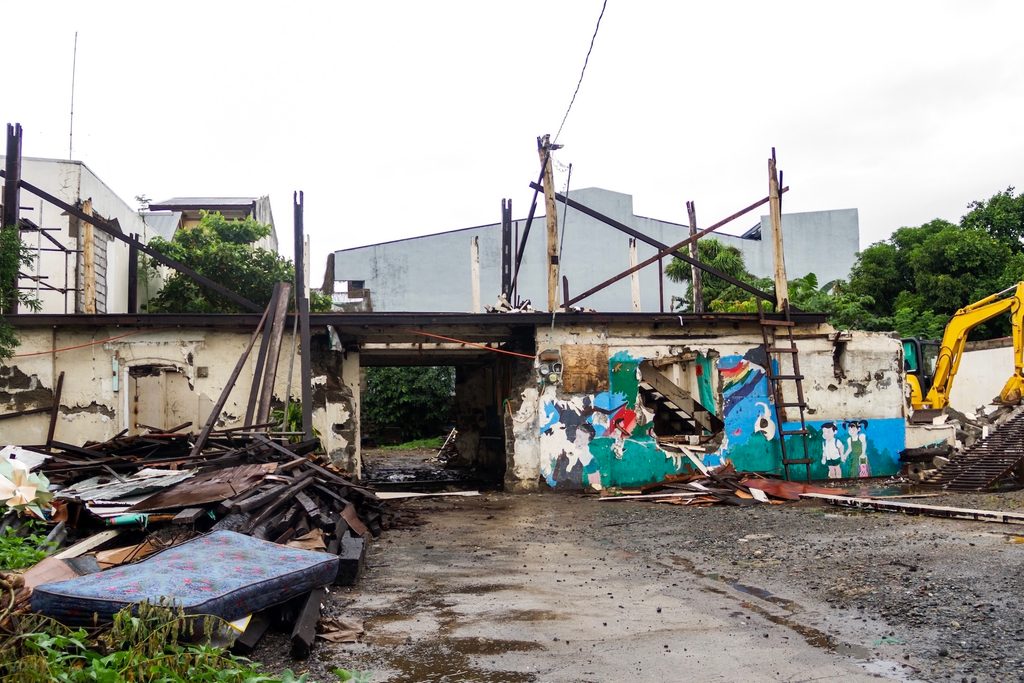
Moreover, most ancestral houses are privately owned, and some choose to sell or demolish the homes instead as cash is easy to split between family members, as narrated by Solomon and Sarmiento.
Sarmiento also lamented that ordinances are not being followed. “May heritage ordinance…. Imagine, sarili mong batas, sinasalungat mo,” he said. (There’s a heritage ordinance. Imagine, you go against your own local laws.)
The City of Santa Rosa Heritage Square Ordinance was enacted in 2019 in order to create a protected heritage zone in the city. It included provisions to protect ancestral houses.
Ultimately, what Solomon and Sarmiento fear the most is that one day, there would be no one to tell Rosense history anymore, especially to succeeding generations — hence their continued efforts.
Both of them hope that Santa Rosa will keep its identity even as it grows and changes with the times.
“Mahalin natin ang kultura. Pag-aralan pa natin ang ating kasaysayan, ang ating pinagmulan,” Sarmiento said. (Let’s love our culture. Let’s study our history further, our roots.)
For Solomon, not knowing one’s history may lead to a lack of direction as a people. “[Alamin] mo ‘yung identity ng lahi mo. Hindi ‘yung para kang nawawala.” (Learn about the identity of your race. Do not become lost.) – Rappler.com
Lance Ariel Bustos is a campus journalist from Santa Rosa City, Laguna, studying Political Science and Philippine Media Studies at De La Salle University Manila. An Aries Rufo Journalism Fellow for 2026, he is also the intermedia editor of The LaSallian.