small islands aim
| | |

Small islands aim to use remittances to fund climate resilience

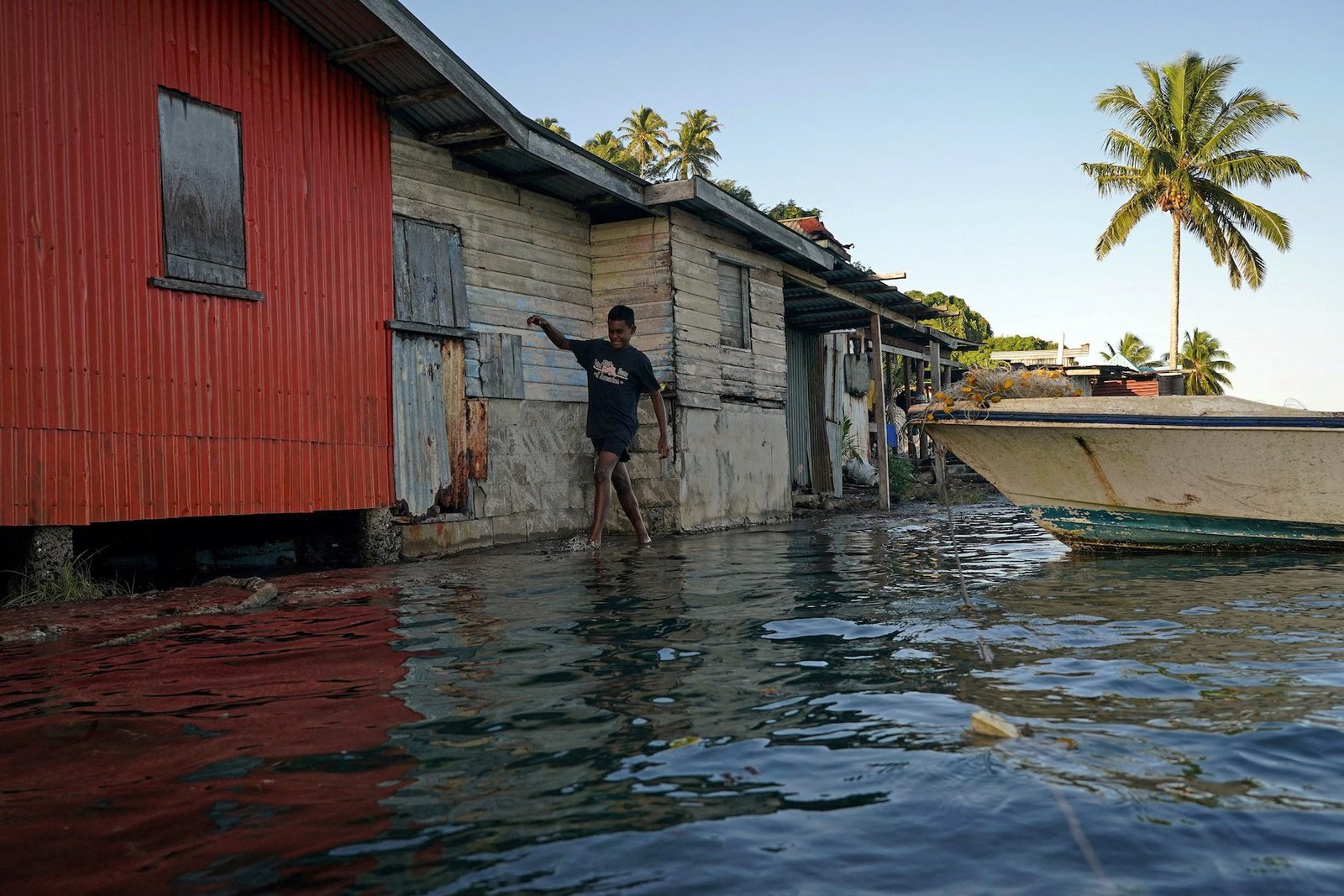
ANTALYA, Turkey – A group of small island states aims to create a fund backed by a charge on money that islanders receive from abroad to eventually raise around $3 billion a year for projects to make their nations less vulnerable to climate change.

That would exceed the roughly $2 billion in international public adaptation finance they received in 2021-2022, according to a 2025 study by non-profit research group the Climate Policy Initiative.

Country representatives meeting until the end of next week in the Mediterranean city of Antalya in Turkey for COP31 climate talks are trying to agree ways to increase funding for adaptation to a warming world.

Representatives of Small Island Developing States, or SIDS, have decided they cannot wait for the long-running international debate on financing to deliver more help.

“We decided that there had to be a way that we can guarantee more reliable sources of funding for the islands,” Antigua and Barbuda’s UN ambassador Walton Webson said. “We cannot rely solely on development assistance again.”

“What we are now trying to do is create our own.”

The SIDS grouping brings together island nations in the Pacific, the Caribbean and the Atlantic, Indian Ocean, and South China Sea that are particularly vulnerable to the impact of rising sea levels as the planet warms.

Many of them also have large amounts of national debt that constrain their ability to invest in protection, such as measures to halt coastal erosion.

Webson said preliminary discussions had taken place with several development banks and a broader meeting with them and SIDS leaders was planned for January to try to make progress by COP32 in 2027.

Their plan would create the first platform to use earnings sent by the overseas diaspora rather than international development aid to build a permanent endowment fund for climate resilience.

Emigres send billions back home

Total remittances from the many islanders who have emigrated were around $22 billion and grew at a compound annual rate of 7% between 2010 and 2023, according to numbers provided by the SIDS group.

It aims for the planned platform to capture about a third of that total by its 10th year of operation.

Drafted with the help of non-profit organisation, the International Institute for Environment and Development, a first phase would draw on remittances to the Dominican Republic, Haiti, Jamaica and Guyana in year one. Fiji, Samoa and Tonga would be included in year two and Comoros, Cabo Verde and Mauritius in year three.

The SIDS platform would charge senders 3% per transaction, lower than average costs of around 5% to 9% across the markets studied.

The commercial sector in total charges up to $1.3 billion a year to cover transfer fees and foreign exchange margins, the SIDS document seen by Reuters showed. By contrast, multilateral climate funds approved just $202 million for SIDS in 2023.

After costs, 2 to 2.5 percentage points of each transaction would enter the fund, be held as an endowment and invested, seeking base-case returns of 6.5%. Of the returns, 85% would be spent on resilience measures and the rest held as a disaster reserve.

By year 10, the base-case scenario estimates the endowment would have reached $2.59 billion. Matching grants and other income streams such as tourism levies could take the total to $5.53 billion and generate $306 million a year in distributable surplus.

Leverage through tools such as guarantees could help mobilize up to $3.13 billion a year.

Palau’s President Surangel Whipps Jr said the small islands that did not create the climate crisis are expected to borrow more money to cope with it than those that did.

“This proposal turns that logic around. It takes money that is already ours, already flowing home across the Pacific, the Caribbean and beyond, and puts it to work for our own resilience,” he said. – Rappler.com
Similar Posts

  • |

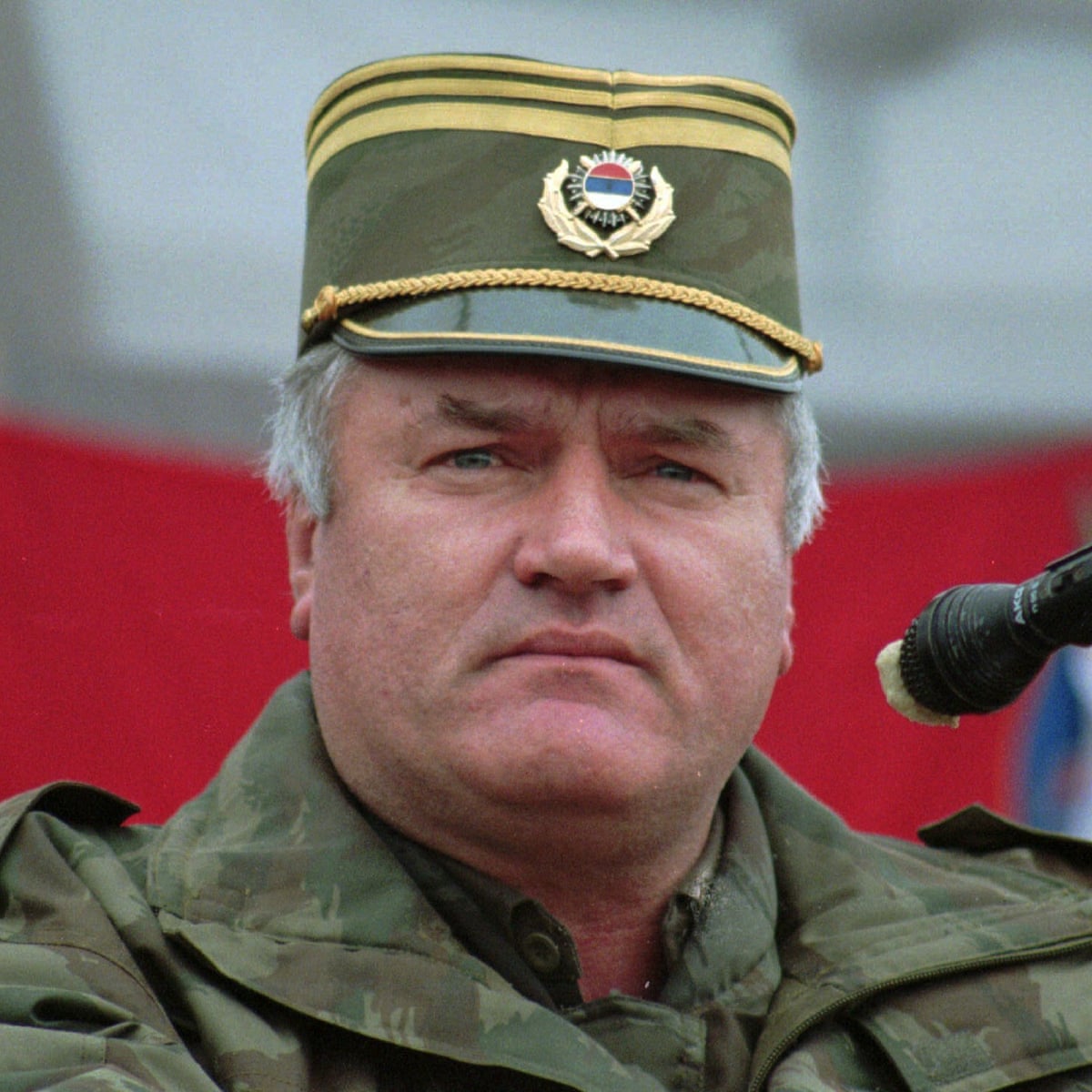
    ‘Butcher of Bosnia’ Ratko Mladic dies at 84 in…

    THE HAGUE: Ratko Mladic, the former Bosnian Serb military commander convicted of genocide, war crimes and crimes against humanity over some of the worst atrocities of the Bosnian war, has died at the age of 84 while serving a life sentence in The Hague. Mladic died in a United Nations detention facility in the Netherlands after suffering several strokes and a prolonged deterioration in his health, Serbian state broadcaster RTS reported. A UN official also confirmed his death. His death was reported on Thursday, August 27, and comes more than three decades after he became one of the most notorious figures of the 1992-95 Bosnian War. Known internationally as the “Butcher of Bosnia,” Mladic commanded Bosnian Serb forces during the conflict that followed the breakup of Yugoslavia. His name became inseparable from the 1995 Srebrenica massacre, when more than 8,000 Bosniak Muslim men and boys were killed after the town had been designated a UN-protected safe area. The killings at Srebrenica are regarded as the worst atrocity in Europe since the Second World War. International judges later concluded that Mladic played a central role in the operation, including the forcible removal of civilians and the execution of thousands of men and boys. The massacre was followed by attempts to conceal evidence, with victims buried in mass graves and, in some cases, their remains later moved to secondary locations. Mladic was indicted by the International Criminal Tribunal for the former Yugoslavia in 1995 but remained at large for another 16 years. He was finally arrested in Serbia in May 2011 and transferred to The Hague. In 2017, the tribunal convicted him of genocide, crimes against humanity and war crimes and sentenced him to life imprisonment. His appeal was rejected in 2021, leaving the life sentence intact. Throughout his trial and appeal, Mladic denied responsibility for the crimes and repeatedly attacked the tribunal’s legitimacy. He remained an admired figure among some Serbian nationalists, even as survivors and victims’ families continued to regard him as a symbol of the violence inflicted on Bosnia’s Muslim population. In his final years, Mladic’s family and lawyers repeatedly sought permission for him to receive treatment in Serbia or be released on humanitarian grounds because of his worsening health. Those requests were rejected. RTS reported that a recent request to allow him to spend his final days at home was also turned down. His death closes the life of one of the most infamous commanders of the Balkan wars, but the wounds left by Srebrenica and the wider Bosnian conflict remain deeply embedded in the region’s history.

  • |

    Texas cracks down on birth tourism

    DALLAS: Texas has launched one of its toughest crackdowns yet on birth tourism. Governor Greg Abbott signed Executive Order GA-57, directing state agencies to investigate hospitals, medical facilities and individuals suspected of helping foreign nationals travel to Texas to give birth and secure U.S. citizenship for their children. The order could affect hospitals, doctors and healthcare providers, as well as visitors from Pakistan, India, Bangladesh and other South Asian countries who travel to the United States on visit visas. Announcing the order, Abbott said, “American citizenship is not for sale,” and vowed that Texas would not tolerate activities that the state believes exploit the U.S. immigration system. The executive order directs six state agencies, including the Texas Department of State Health Services, the Health and Human Services Commission, the Texas Medical Board and the Texas Board of Nursing, to investigate suspected birth tourism-related activities within the healthcare sector. The agencies can also share information with federal authorities and recommend actions such as suspending or revoking professional licenses and removing healthcare providers from state contracts when necessary. The move follows Abbott’s earlier directive to the Health and Human Services Commission to investigate hospitals accused of advertising maternity packages specifically for foreign women. State officials later referred the cases of two Texas hospitals to the attorney general after reports emerged about advertisements in Mexico promoting maternity services for pregnant foreign women near the U.S.-Mexico border. The advertisements reportedly listed normal delivery packages at $3,950 and C-section procedures at $5,525.

  • |

    Iran vows to resist new US sanctions as China rejects pressure

    TEHRAN: Iran has vowed to strengthen its economy and find ways to withstand what it calls unjustified US sanctions, as Washington prepares to announce a new package of economic measures against Tehran. Iranian Parliament Speaker Mohammad Bagher Ghalibaf made the remarks during a meeting with Iranian and Iraqi business representatives in Baghdad on Friday. Ghalibaf said economic strength and national security were closely connected. He accused the United States and Israel of using economic and political pressure after failing to achieve their objectives through direct military confrontation. He called for stronger economic cooperation between Iran and Iraq. He also suggested that the two neighbours increase trade using their national currencies to reduce dependence on the US dollar. Ghalibaf said Iran and Iraq should focus on economic development and shared prosperity despite pressure from Western countries. The comments came a day after US Treasury Secretary Scott Bessent announced plans for what he described as the toughest sanctions ever imposed on Iran. Bessent said further details of the measures would be released on Monday. He suggested that maximum economic pressure could reduce the need for another major military operation against Iran. US President Donald Trump has also warned countries and businesses against providing financial or economic support to Tehran. Trump described the planned campaign as an unprecedented effort of economic warfare and isolation. He warned that countries allowing financial institutions, companies, airports or government bodies to provide assistance to Iran could face severe economic consequences. Iran has strongly rejected the US pressure. Its Foreign Ministry described the latest sanctions as economic terrorism and said they would not weaken Iran’s determination to protect its independence and sovereignty. Iranian Foreign Minister Abbas Araghchi also accused Washington of trying to divert attention from economic problems inside the United States. China rejects sanctions strategy China has opposed Washington’s approach and said sanctions and economic pressure would not solve the conflict. Chinese Foreign Ministry spokesman Lin Jian called on all sides to adopt responsible measures and seek a political and diplomatic solution. China has significant economic ties with Iran and remains a major buyer of Iranian oil. Data from energy analytics firm Kpler indicated that China accounted for more than 80% of Iran’s shipped oil purchases in 2025. The issue could further complicate US-China relations. Washington has warned against economic cooperation with Tehran, while China has repeatedly criticised unilateral sanctions. Bessent said the United States was seeking cooperation from its allies and other countries. He argued that China had a strong interest in maintaining stability in the Gulf because a significant portion of its energy supplies comes from the region. The latest sanctions threat comes as the wider Middle East conflict continues to disrupt energy markets and regional trade. Oil prices rose after Trump announced plans for stronger economic measures against Iran. The conflict has affected oil supplies and raised concerns about shipping through the Strait of Hormuz. The strategic waterway handles a significant share of global oil trade and has become a major point of tension during the conflict. The United States and Iran have announced ceasefire agreements on two occasions in recent months, but both arrangements have broken down. Iran now faces growing economic pressure from Washington while attempting to maintain trade and regional partnerships.

  • | | | |

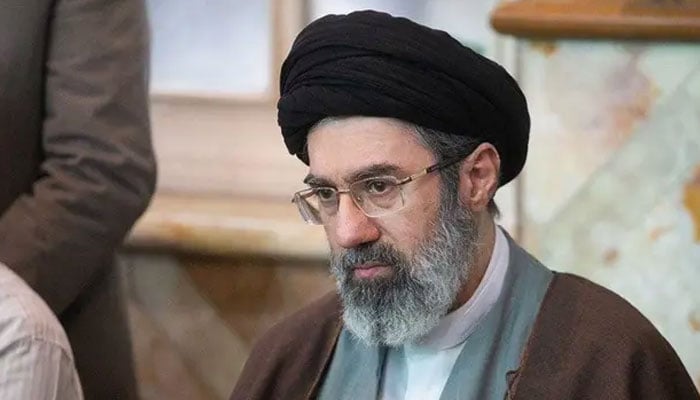
    Mojtaba Khamenei appears in new video as health qu…

    TEHRAN: A new video showing Iran’s Supreme Leader Mojtaba Khamenei has emerged, offering a rare public glimpse of the Iranian leader amid heightened attention over his health and whereabouts. The footage was released by Iran’s semi-official Mehr News Agency and appears to show Khamenei sitting with several people and engaged in conversation. The agency did not disclose when or where the recording was made, nor did it identify the other individuals seen alongside him. Khamenei appears in normal condition in the short footage. The release comes after reports and speculation about his health had circulated in recent days, making the video particularly significant for observers following developments in Tehran. Iranian media presented the footage as evidence of the Supreme Leader’s continued presence and activity. The video does not provide independent confirmation of when it was recorded, however, leaving some questions unanswered about Khamenei’s current condition and location. The appearance comes as tensions surrounding Iran remain high. Iranian Foreign Minister Abbas Araghchi has reiterated Tehran’s determination to withstand pressure and continue what he described as resistance. “We are fully prepared for resistance despite all pressures,” Araghchi said, according to the statement cited by Iranian media. He also said Iran would not forget what he described as the unjust bloodshed of its martyrs, adding that those responsible would not be forgiven. Khamenei’s limited public appearances have attracted considerable attention since he became Iran’s Supreme Leader earlier this year. The latest footage is therefore likely to be closely examined both inside Iran and abroad as questions continue over the country’s leadership and its response to mounting regional pressures. For now, the exact timing and location of the recording remain undisclosed.

  • |

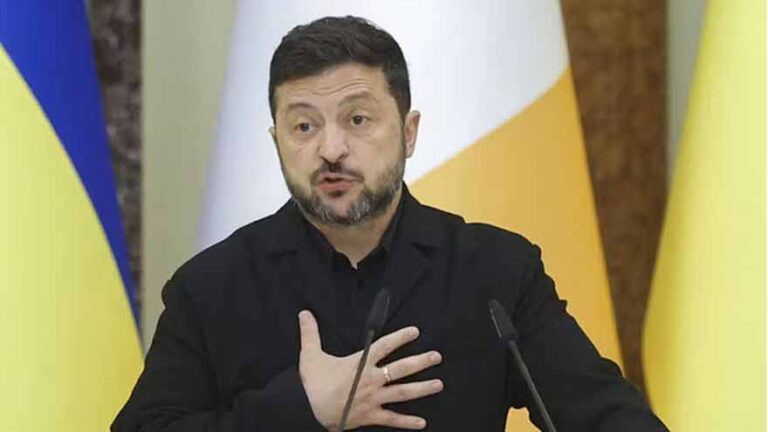
    Zelensky accuses Iran of direct role in Russia’s war against Ukraine

    Ukrainian President Volodymyr Zelensky has accused Iran of directly participating in the war against Ukraine through its continuous military support for Russia. Speaking on potential threats following a recent incident involving an Iranian vessel, Zelensky urged caution to prevent the opening of another front while stressing that Ukraine must remain prepared for all scenarios. He stated that Tehran became a direct participant by supplying Moscow with thousands of attack drones from the outset of the full-scale invasion and subsequently granting licences for local production. He added that both Iran and North Korea have effectively attacked Ukraine by supplying Russia with weaponry, including missiles, drones, and artillery ammunition. In response, Iranian Foreign Ministry spokesperson Ismail Baghaei rejected assertions that Tehran had sought negotiations with the United States to end hostilities, asserting that Iran will independently determine matters of war and peace. Baghaei added that Washington had initially expected an Iranian surrender within days of commencing attacks, yet months later, the United States continues to face severe challenges in the region.

Leave a Reply

Your email address will not be published. Required fields are marked *