stories pakistan8217s unsung

The Stories of Pakistan’s Unsung Heros

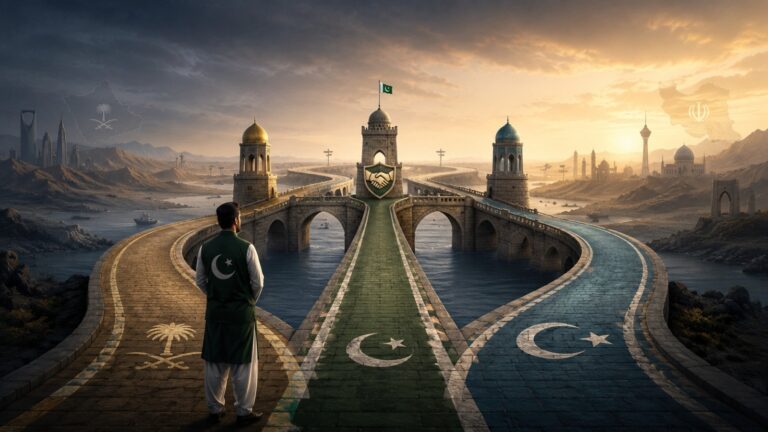
Every 14th of August we hear the same national narrative. Speeches recall 1947, flags are hoisted, and anthems are played at midnight. The symbolism matters. It reminds us of the cost of independence and the idea of Pakistan. Yet symbolism without substance risks becoming ritual. If we are to understand what independence means in 2026, we must look beyond the ceremony and toward the quiet, persistent work that sustains the nation through every crisis. That work is rarely televised. It is carried out by teachers in under-resourced schools, by health workers walking door to door, by engineers keeping the grid alive during heatwaves, by farmers adapting to erratic weather, and by young people building livelihoods from laptops in small towns. These are the stories of resilience that deserve a central place in our understanding of Pakistan, 79 years after its founding.

Resilience is not an abstract virtue. It is a measurable response to constraint. Pakistan has faced recurring fiscal stress, energy shortfalls, climate shocks, and security challenges. In each case, state capacity alone has been insufficient. What has prevented collapse is a dense network of civic and professional effort that fills gaps, innovates under pressure, and restores basic function. Consider education. Official data continues to show millions of children out of school and low learning outcomes. At the same time, thousands of low-fee private schools, community learning centers, and volunteer tutoring initiatives operate in the same neighborhoods. They do not appear in headlines, but they keep children literate, prepare them for exams, and create a pathway, however narrow, to higher education. The same pattern appears in health. Lady Health Workers and polio teams travel on foot in heat and in risk, maintaining immunization coverage and maternal counseling in areas where clinics are distant or overburdened. Their work is repetitive, underpaid, and essential. Without it, disease surveillance and primary care would deteriorate far more rapidly.

Economic resilience is visible in the informal sector and in the emerging digital economy. Pakistan’s labor market has never been able to absorb all new entrants through formal jobs alone. In response, millions have created their own employment: workshops, transport, retail, agriculture processing, and services. In the last decade, a new layer has appeared. Freelancers in Lahore, Karachi, Islamabad, Peshawar, Quetta, Multan, and Faisalabad now earn foreign exchange by writing, designing, coding, and providing remote services. They pay no rent for office space, require little imported capital, and learn through online courses. This is not a substitute for industrial policy, but it is a real expansion of opportunity. It represents a form of independence: the ability of an individual to earn without waiting for a large institution to hire them. The state’s role here should be to reduce friction, ensure reliable electricity and internet, and simplify taxation and payment systems, so that this energy is not wasted.

Climate resilience is now inseparable from national security. Floods in 2010, 2014, and 2022 displaced millions and damaged infrastructure worth billions. Drought and heatwaves threaten wheat and water. The response has included both engineering and community adaptation. Farmers are experimenting with drought-tolerant varieties and more efficient irrigation. Urban volunteers organize tree planting and waste management in their streets. Provincial and federal programs have attempted large-scale afforestation and watershed management. Progress is uneven and often underfunded, but the impulse is clear: adapt or lose. The most effective adaptations are local, because they are designed around specific soil, rainfall, and social networks. National policy can support them by providing data, credit, and technical extension, but it cannot replace the judgment of people who live on the land.

What ties these examples together is a refusal to wait for perfect conditions. Resilience in Pakistan is not optimism. It is a practical calculation that problems will persist, and that action must proceed anyway. This attitude is visible in small businesses that maintain generators and solar panels to cope with load-shedding, in parents who pool money to hire a tutor, and in journalists and lawyers who document cases despite pressure. It is not heroic in the cinematic sense. It is tedious, repetitive, and often thankless. That is precisely why it matters. Nations are built not only in founding moments but in the accumulation of ordinary competence over decades.

As we mark 79 years, the task is to recognize this resilience and to institutionalize it. Recognition means collecting data that captures informal work, community schools, and local adaptation, and then designing policy around them. Institutionalization means protecting merit in recruitment, ensuring predictable funding for primary services, and removing regulatory obstacles for small enterprises and freelancers. It also means telling a different story about Pakistan. The dominant story is one of crisis and rescue. The more accurate story is one of persistence and incremental gain. Both are true. But a country that only narrates its crises will train its citizens to expect failure. A country that also narrates its resilience will train its citizens to contribute.

Independence, therefore, is not a date. It is a practice. It is the practice of showing up to teach, to heal, to build, to adapt, and to hold institutions accountable when they fall short. The midnight speech reminds us why we began. The morning work determines whether we continue. If we wish to honor 1947, we should honor those who, without fanfare, keep Pakistan functioning every day between 15th August and the next 14th. Their work is not perfect, and it is not sufficient on its own. But it is the foundation on which any serious reform must rest. To see it, to name it, and to support it is the most patriotic act available to us now.
Similar Posts

  • Gen Z, Jantar Mantar & PM Modi

    If a protest is peaceful, does not create problems for the public, and remains free of violence, it is a basic human right. In fact, protest is a sign of a living society. Dead people cannot protest or resist. Unfortunately, in our society, the protests of ordinary and poor people are often looked down upon, even though every protest should be judged on its own merits. People often complain that today’s generation is not as good as the previous one. But history shows that every older generation has made the same complaint about its youth. Even centuries ago, elders believed that young people had lost their values. Times have changed, but this mindset has remained the same. I believe that every new generation brings something better than the one before it. Today’s young people have access to knowledge in ways that no previous generation could have imagined. The internet and artificial intelligence have placed the world’s knowledge within everyone’s reach. As a result, today’s youth are more informed, more curious, and more aware. This is exactly what can be seen in the recent **Generation Z protests in India**. These young people are presenting their demands in a calm and respectful manner. Their speeches are based on logic rather than emotion. Whether boys or girls, they explain their concerns with confidence and reason. According to the protesters, **152 examination papers have leaked over the past ten years**, affecting nearly **70 million students**. They believe that Education Minister **Dharmendra Pradhan** should take responsibility and resign. They are demanding reforms in the education system, action against police officers who used force on students, medical treatment for the injured, the release of arrested protesters, and the withdrawal of cases filed against them. One female student said that their movement should not be turned into a Hindu-Muslim issue. She explained that her closest friend is Muslim and that religion has never come between them. According to her, the real issues are education, employment, and a better future—not religious divisions. She also argued that public money should be spent on schools and hospitals instead of fueling religious politics. Another young protester remarked that India’s two prominent leaders, Prime Minister Modi and Yogi Adityanath, do not have children of their own, so they may not fully understand the struggles faced by students and young people. Some protesters also mocked allegations that they were receiving funding from Pakistan or China. Holding packets of chips and spices, they jokingly referred to them as their “Pakistani funding,” using humor to challenge what they described as baseless accusations. The movement has not relied only on slogans. Students have also used songs, poetry, and creative performances to express their message. In some places, however, clashes with the police have occurred. The movement traces its origins to remarks made by **Justice Surya Kant** of the Supreme Court of India, who reportedly compared some unemployed young people to “cockroaches” during a court hearing. Many students felt insulted by the comment, which eventually led to the formation of the **Cockroach Janata Party** protest movement. The movement focuses on issues such as examination paper leaks, unemployment, and reforms in the education system. Among its well-known figures are **Abhijit Deepke** and **Sonam Wangchuk**. Wangchuk carried out a 26-day hunger strike before being taken into custody and moved to a hospital. What began in Delhi has gradually spread to other cities across India. Reports indicate that police have used baton charges, tear gas, and water cannons against demonstrators. Several international human rights organizations have expressed concern over the use of force against peaceful protesters. The students argue that India is the world’s largest democracy and that the right to peaceful protest must be protected rather than suppressed. Prime Minister Narendra Modi has announced that cases involving examination paper leaks will be referred to fast-track courts and that those responsible will face strict action. However, many protesters believe that promises alone are not enough and that concrete reforms are needed. History has shown that governments often underestimate public movements in their early stages. If legitimate concerns are ignored, such movements can grow into much larger crises, as has happened in several countries in the past. If the demands of these young people are genuine and reasonable, the government should engage with them directly, listen to their concerns, and reform the education system where necessary. If officials have failed in their responsibilities, they should be held accountable. A strong democracy is one that listens to peaceful voices instead of trying to silence them.

  • The 60-Day Window in Hormuz: Oil, Sanctions, and t…

     On the morning of June 23, 2026, oil traders watching screens in London and Singapore saw a rare combination: the price of Brent crude falling and tanker traffic in the Strait of Hormuz rising. The trigger was a one-page notice from the U.S. Treasury. Effective immediately, the United States would authorize the production, delivery and sale of Iranian crude oil and petrochemical products through August 21, a 60-day general license issued as American and Iranian officials concluded a first round of talks in Switzerland.   For a waterway that carries roughly one-fifth of the world’s oil consumption, the shift was significant. After months in which oil had spiked above $100 on fears of a closure of the Strait, Brent fell back below $85. European shares opened August higher on hopes that diplomacy would hold. The question now confronting energy markets and foreign ministries alike is whether this “Hormuz Corridor” arrangement marks the beginning of a stabilization of global energy security, or merely a tactical pause in a longer confrontation.   From Maximum Pressure to Managed De-escalation   To understand the current opening, it is necessary to recall how the Strait became a flashpoint. The Strait of Hormuz, a narrow channel 21 miles wide at its narrowest point between Iran and Oman, has long been the world’s most important oil chokepoint. About 20 million barrels of oil per day transit it, along with a third of global liquefied natural gas trade.   U.S.-Iran tensions over the waterway escalated sharply after 2018, when the United States withdrew from the Joint Comprehensive Plan of Action and reimposed sweeping sanctions on Iranian oil exports. Iran, whose economy relies heavily on crude sales, responded by threatening to impede shipping and, at times, seizing tankers. The cycle repeated in late 2025 and early 2026, with a series of attacks and counter-threats that pushed insurance premiums for Gulf shipping to multi-year highs and forced major refiners in China, India, and South Korea to seek alternative barrels.   The talks that began in Switzerland in late June followed that period of acute risk. Mediated by Oman, Qatar and Pakistan, according to official statements, the first round concluded with what U.S. Vice President J.D. Vance described as a “good foundation for a successful final deal.” The resulting U.S. general license does not lift sanctions permanently. It is a temporary waiver, valid through August 21, designed to allow Iranian oil to flow legally while negotiators pursue a final peace framework within 60 days. Iran’s Foreign Ministry, for its part, said it was discussing a temporary safe route through the Strait and denied that direct bilateral talks were continuous, underscoring the fragility of the process.   For Washington, the calculus is twofold. Domestically, lower energy prices ahead of the autumn reduce inflationary pressure. Crude futures had risen sharply earlier in the year on supply fears, contributing to volatility in equities. Strategically, a temporary de-escalation allows the U.S. to reallocate diplomatic and military resources and to test whether Tehran is willing to agree to constraints on its nuclear program and regional activities in exchange for sanctions relief.   For Tehran, the incentive is economic. Iran holds the world’s third-largest proven oil reserves, but its exports had been curtailed to well below capacity. Even under sanctions, Iranian-linked tankers continued to move oil, according to tracking data, but at steep discounts and with high transaction costs. A legal channel to sell crude through August 21 provides immediate revenue and a measure of relief for an economy facing high inflation and currency pressure.   Market Relief and Market Skepticism   The initial market reaction has been cautiously optimistic. After reports that both sides had agreed on a roadmap, oil prices settled down more than 3 percent in a single session, with the more active August Brent contract settling around $73.86 to $79.04 per barrel in late June trading, down from earlier highs near $93. European equities, sensitive to energy costs, began August higher.   Analysts interviewed for this article point to two competing interpretations of this relief.   The optimistic view holds that the waiver creates a positive feedback loop. By allowing Iranian oil back into the formal market estimated at 1 to 1.5 million barrels per day of additional supply if fully utilized it eases global balances at a time when OPEC+ is managing voluntary cuts first announced in April 2023 and set to continue into August 2026. Lower prices reduce the incentive for further escalation, giving negotiators space to discuss the more difficult issues: the future of uranium enrichment, the status of Iranian support for armed groups, and verification mechanisms for any corridor through Hormuz that would give Iran a role in monitoring inbound traffic, as suggested in one proposal reported by Reuters.   The skeptical view, which currently dominates private commentary among Gulf-based energy executives, is that the structure of the deal itself reveals its limits. A 60-day license is, by design, reversible. It does not resolve the underlying lack of trust, nor does it provide long-term certainty for refiners and shippers to sign term contracts. Tanker operators continue to price in risk, and traffic data showed an initial uptick as talks progressed, but not a full normalization. One proposal that would give Iran formal control over inbound traffic through the Strait has alarmed some Gulf states, who have privately warned that such an arrangement could be used as leverage in the future.   Stakeholders Beyond Washington and Tehran   The implications extend far beyond the two principal parties.   For Gulf Arab states, particularly Saudi Arabia and the United Arab Emirates, the Hormuz arrangement presents a dilemma. They benefit from lower oil prices and reduced risk of a regional war that could target their own infrastructure, but they are wary of any deal that enhances Iran’s ability to control shipping lanes or that is reached without binding security guarantees. Iran’s recent warning that it could target Gulf states if the U.S. launches new strikes has reinforced that anxiety.   For

  • The AJK Crisis 

    Azad Jammu and Kashmir has recorded at least 40 deaths since early June in clashes tied to the Joint Awami Action Committee’s campaign against the region’s twelve refugee assembly seats, a toll that predates the events of July 27-28, when JAAC and AJK police gave conflicting counts of 14 to 21 more killed in Rawalakot. The combined total since June likely sits in the high 40s to high 50s, though no independent body has confirmed a single figure; every clash in this sequence has produced a JAAC count and a police count that don’t match, and neither has been verified from outside. The July violence fell during the first phase of a legislative election that AJK’s election commission split into three stages because of the unrest, a break from the territory’s usual practice of voting in a single day. Mirpur division cast ballots on July 27. Rawalakot, in Poonch division, was deliberately held back for the third phase because it has been the epicenter of the agitation. The clashes there on July 27-28 came as JAAC’s long march tried to push through the city toward Muzaffarabad, not on a day its own constituents were voting. That the state felt it necessary to stagger an election by geography to manage a protest movement is itself a measure of how far the crisis had already gone. Law enforcement personnel have been repeatedly targeted through the unrest. Police say an armed JAAC contingent opened fire on officers near Combined Military Hospital Rawalakot in a planned attack, which the region’s police chief called outright terrorism. JAAC disputes this, as it has disputed nearly every account of nearly every clash, saying its own people came under fire after power was cut to the area. Neither version has been independently verified, and the Human Rights Commission of Pakistan has called for an impartial probe into the Rawalakot deaths for that reason. What is not contested is that a movement now banned under anti-terrorism law has been in near-continuous confrontation with police for eight weeks, and that officers have died in it. The dispute traces back to a structural question the state has already answered through the proper channel. Six of the twelve seats go to refugees from the Jammu division, numbering around 434,000; six more go to refugees from the Kashmir Valley, numbering around 30,000. JAAC calls this disproportionate and argues the seats let people who do not live in AJK shape its politics from outside. The AJK Supreme Court ruled on June 7 that the seats are constitutionally protected and can only be altered through a formal amendment, not by administrative order or by protest. The government’s proscription of JAAC under anti-terrorism law came two days earlier, on June 5, ahead of a planned June 9 protest; the worst of the killing followed the ban rather than preceding it. Both sides of that sequence can be argued. What can’t be argued is that the state waited for a body count before invoking the law , it acted first, and the deaths followed. On the demands themselves, the government reports 24 of JAAC’s 44 total demands fully implemented and 16 more partially complete or in process, with 4 at an impasse. That record is substantial, larger than most governments manage against a protest charter. But it does not settle the argument on its own, because none of the 24 completed demands is the refugee-seat question. That one sits among the 16 still unresolved, and it is the demand driving the current violence. A compliance rate built mostly from other line items ; subsidies, cabinet size, judicial commissions, demonstrates the state’s good faith in general. It does not demonstrate its handling of the one issue JAAC is dying and killing over, and that distinction should not be blurred. Even so, the seat question has been settled by the only body with authority to settle it. Abolishing the seats to appease pressure tactics would be unconstitutional on its face, and it would tell any future movement in Pakistan that enough disruption can override a court and a negotiated settlement alike. A state that has followed its own constitutional process, implemented most of an agreed reform charter, and still faces an intensifying campaign of blockades and attacks on security personnel has grounds to hold its position; grounds that rest on the process it followed, not on an implementation statistic that doesn’t reach the actual grievance. The state’s strongest move now is to negotiate from the position it has already earned, not concede from a position of weakness. Reweighting the seats toward Jammu’s larger population, pursued through the amendment process the Supreme Court has itself outlined, would resolve the proportionality complaint on the state’s own terms and timeline, not JAAC’s. Offered now, immediately after a disputed mass-casualty event, it would read as capitulation. Offered once the group’s remaining leadership either accepts the court’s authority or is dealt with through the law, it becomes a demonstration of a functioning constitutional order rather than a retreat from one. The state does not owe JAAC a seat at the table it has spent eight weeks helping to blow up. It owes AJK’s residents a government that can enforce the law, account honestly for its own role in how this got this bloody, and eventually fix what is fair within the constitution , in that order.

  • Why Trump welcomed Makkah pact?

    The signing of the Mecca Joint Defence Agreement by Pakistan, Saudi Arabia and Türkiye on August 7 has opened a new and potentially consequential chapter in the security architecture of Asia and the Gulf. The agreement states that an armed attack against any one of the three countries will be regarded as an attack against all three, while envisaging deeper military coordination, joint exercises, intelligence cooperation and collaboration in areas including drones, electronic warfare, artificial intelligence and defence production. Türkiye has also indicated that the framework could eventually be expanded to other countries. What makes the development particularly significant is not simply the agreement itself, but the reaction from Washington. President Donald Trump has welcomed the pact as a “big, bold, important first step” towards regional countries being able to defend themselves more meaningfully. His words raise a larger strategic question, is the United States beginning to transfer a greater share of the burden of confronting Iran to regional powers, particularly the Gulf and Asian countries? Or making this region as its main combatant force against Iran? And what are the possible next steps? The answer is more complicated than a simple American withdrawal. Washington is unlikely to abandon the Middle East, its military assets, intelligence networks, diplomatic influence or relationships with Gulf states. What appears to be changing is the distribution of responsibility. The Trump administration’s broader philosophy of burden-sharing suggests that countries possessing substantial financial, military and strategic resources should assume greater responsibility for their own security rather than expecting Washington to carry the entire cost. In that sense, America may not be handing over the war against Iran, but it may be regionalising the consequences of that war. The distinction is crucial. A regionalised conflict can become much more dangerous because the number of actors involved increases. At the same time, regional ownership of security could eventually create a framework in which regional states themselves negotiate a new balance rather than remaining permanently dependent on an external power. The Pakistan-Saudi relationship provides the foundation for this transformation. The two countries signed their Strategic Mutual Defence Agreement in September 2025, committing themselves to collective security. The new Mecca agreement effectively brings Türkiye into a much broader strategic framework. Each country brings a different strategic asset. Saudi Arabia possesses enormous financial resources, energy influence and geographical importance. Türkiye brings one of the region’s most capable conventional militaries, a rapidly developing indigenous defence industry, drone technology and NATO experience. Pakistan brings a large and experienced military establishment and, uniquely among Muslim-majority states, a nuclear deterrent. The combination therefore has significance beyond its three signatories. It links the Gulf, South Asia and the eastern Mediterranean in a single security conversation. For Saudi Arabia, the agreement represents strategic insurance. Riyadh has increasingly understood that sophisticated American weapons alone cannot eliminate vulnerabilities created by missiles, drones, cyberwarfare and attacks on energy infrastructure. Diversifying its security relationships allows Saudi Arabia to maintain its partnership with Washington while simultaneously developing alternative sources of military capability. For Türkiye, the pact fits into Ankara’s long-standing ambition to exercise greater strategic autonomy. Türkiye remains a NATO member, but it has increasingly demonstrated that it does not want its foreign policy to be dictated by any single great power. A defence relationship stretching from Türkiye through Saudi Arabia to Pakistan expands Ankara’s influence across two strategically vital regions. For Pakistan, however, the equation is much more delicate. Pakistan has the opportunity to emerge as an important security bridge between South Asia and the Gulf, but it also has a geographical reality that cannot be ignored, it shares a border with Iran. Islamabad cannot afford to treat Tehran simply as an enemy without exposing itself to enormous security, economic and diplomatic risks. Pakistan therefore faces the most difficult balancing act of the three. Its relationship with Saudi Arabia is strategically important. Its relationship with Türkiye is deepening. Its partnership with China remains fundamental. Its relationship with the United States is economically and strategically significant. Yet Iran is its immediate western neighbour, with which it shares a long border and important diplomatic and economic interests. This makes Pakistan potentially more valuable as a mediator than as a frontline combatant. If Islamabad can defend Saudi Arabia while simultaneously maintaining communication with Tehran, it could acquire an extraordinary diplomatic role. Pakistan could become one of the few countries capable of speaking to the Gulf, Iran, Türkiye, China and Washington at the same time. That possibility is already visible in Pakistan’s efforts to maintain diplomatic engagement with Iran while navigating its defence commitments to Saudi Arabia. The Iranian response will be critical. Although the three countries have described the agreement as defensive rather than an alliance directed against a particular state, Tehran will inevitably examine its military implications. A coordinated Saudi-Turkish-Pakistani security structure potentially means improved intelligence, air defence, military exercises, drone capabilities and defence-industrial cooperation around Iran’s strategic neighbourhood. But this could produce two very different outcomes. The first is escalation. Iran could interpret the emerging architecture as an attempt to encircle it and respond by strengthening its missile forces, regional partnerships and asymmetric capabilities. The Gulf could then become increasingly militarised, with every defensive measure interpreted by the other side as preparation for aggression. The second possibility is deterrence leading eventually to diplomacy. If Iran concludes that it cannot achieve regional dominance through military pressure, while Saudi Arabia and other Gulf states conclude that permanent dependence on American protection is neither sufficient nor sustainable, both sides may eventually have an incentive to negotiate a regional security arrangement. That would be the more constructive outcome. The danger, however, is that the emerging alliance could be interpreted through a sectarian lens. Saudi Arabia, Türkiye and Pakistan are all Sunni-majority states, while Iran is the region’s principal Shia power. If the new security architecture becomes identified as a Sunni military bloc confronting Shia Iran, it could revive precisely the sectarian competition that has destabilised the Middle East for decades. Pakistan should be particularly careful

  • Pakistan’s Defence Alliance: Is Islamabad Sh…

    Pakistan has just taken on a new kind of commitment, and it has caught people’s attention in a way that ordinary diplomatic announcements rarely do. Pakistan’s ties with Saudi Arabia go back decades, and its defence relationship with Türkiye has grown steadily closer in recent years, so cooperation between the three is not surprising on its own. What is new is the nature of the commitment: an attack on any one of the three countries is now to be treated as an attack on all three.   This is not really about whether Pakistan should be working with Saudi Arabia and Türkiye. It is about whether Islamabad has entered this arrangement with a clear enough sense of what it wants from it, and what obligations it may quietly be creating for the future.   It also helps to get the timeline right. This is not Pakistan’s first mutual-defence commitment with Saudi Arabia. Back in September 2025, the two countries had already signed a Strategic Mutual Defense Agreement, treating aggression against either as aggression against both. What is new in 2026 is the attempt to bring Pakistan, Saudi Arabia and Türkiye together inside one shared framework. Seen that way, this is less a first step and more a new layer added to a relationship that was already forming. An Alliance at a Complicated Moment The agreement comes at a difficult time. Pakistan sits right next to Iran and has a tense relationship with India, while both Saudi Arabia and Türkiye maintain strong economic ties with New Delhi. At the same time, Islamabad has to keep managing working relationships with Iran, China, the United States and its Gulf partners. Any defence commitment, then, has to be understood against several relationships that do not always move in the same direction.   Pakistan is also not entering this alliance from a position of comfort. The country is dealing with economic, security and political pressures all at once, along with instability on its Afghan border and a delicate Iran border to manage. That is a lot to balance already, which is exactly why the practical details of this new commitment matter more than the ceremony around its announcement. What Has Pakistan Actually Committed To? The basic idea is simple: an attack on one member is treated as an attack on all. But what does that actually mean in practice? What would genuinely trigger the commitment, and what military support would Pakistan be expected to give—or receive? And what happens if the three countries find themselves with different interests in the same crisis?   Pakistan’s own Foreign Ministry offered some sense of this in July 2026, saying that agreements of this kind mostly involve peacetime military cooperation, and that in an actual war, how far the commitment would go still needs to be worked out. If anything, that statement makes the case for more clarity, not less.   That uncertainty matters most in two situations close to home. If Pakistan faced another serious confrontation with India, would Saudi Arabia and Türkiye offer real support, given their own important ties to New Delhi? And if tensions with Iran escalated, would Pakistan be expected to take a position that could strain its relationship with its neighbour? Even the growing water dispute with India, one of Pakistan’s most basic security concerns, has not been publicly linked to any shared plan among the three partners. These questions remain open.   There is also a quieter concern worth sitting with. Saudi Arabia brings financial strength to the table, Türkiye brings a growing defence industry, and Pakistan brings manpower, real operational experience and nuclear deterrence. If these strengths are genuinely shared, all three countries could benefit. But if the load falls unevenly, with Pakistan carrying most of the manpower while its own position in a future India crisis stays unclear, the costs could end up outweighing the gains.   History offers a useful reminder here. In his 1983 book Can Pakistan Survive? The Death of a State, Tariq Ali examined Pakistan’s political system, its foreign policy, and the powerful role the military has long played within the state. The circumstances today are very different, but his broader question still feels relevant: can Pakistan turn its usefulness to other powers into lasting strength of its own?   Something else stood out alongside the agreement itself: the mood surrounding it. Governments naturally welcome diplomatic wins, but a defence pact carrying possible wartime obligations is a different kind of agreement than a trade deal. With so many practical details still unclear, the celebratory tone raises a fair question: is this a carefully thought-through long-term strategy, or mostly the excitement of the moment? Commitments this serious deserve a clear explanation before they deserve applause.   Pakistan must also make sure its growing ties with Saudi Arabia and Türkiye stay compatible with its long-standing relationship with China, and with the working relations it still needs with Iran and the United States. Strategic Relevance Is Not Strategic Autonomy Pakistan is becoming more important to other countries. Its military strength, its geography, its nuclear deterrence, and its relationships across very different global camps all give Islamabad real value in the eyes of others. But being useful to other countries is not the same as having a clear strategy of your own.   Strategic autonomy simply means that Pakistan knows what it wants and makes sure its partnerships actually serve that. It means asking not only what Saudi Arabia, Türkiye, China or the United States want from Pakistan, but what Pakistan wants from each of them in return. A country can be militarily valuable, geographically important and courted by several powers, and still have no defined national strategy behind it. That difference sits at the heart of this entire discussion.   Washington’s fairly quiet response also deserves attention. There is no evidence that the United States is deliberately setting a trap for Pakistan. But Islamabad should still think carefully about whether a closer Saudi-Pakistani security relationship could, over time,

  • A New Axis of Stability: Pakistan, Türkiye and Sa…

      In an international system undergoing rapid transformation, the emergence of a trilateral defense cooperation framework among Pakistan, Türkiye, and Saudi Arabia signals a notable shift in how middle powers are approaching security and strategic autonomy.Three states, each central to its respective region, are seeking to institutionalize collaboration in defense, industry, and crisis management. The significance of this alignment extends beyond bilateral ties and touches upon regional stability, defense industrialization, and the evolving balance of power in Eurasia and the Indian Ocean. The rationale for this cooperation lies in the complementary strengths that each country brings. Pakistan contributes a large, professionally trained military with extensive experience in counterterrorism, peacekeeping, and mountainous warfare. It also maintains a credible nuclear deterrent and has developed a domestic defense industry in areas such as aerospace, missiles, and armored vehicles. Its location provides access to the Arabian Sea and proximity to key trade and energy routes linking South Asia, Central Asia, and the Gulf. Türkiye offers a military with NATO operational experience, combined with one of the fastest-growing defense industrial bases outside the traditional Western suppliers. Over the last decade, Ankara has demonstrated capacity in unmanned aerial systems, naval platforms, electronics, and aerospace subsystems. Its geographic position, connecting Europe, the Mediterranean, and West Asia, makes it a natural bridge between different security theaters. Saudi Arabia adds financial depth, energy influence, and a central role in Gulf security. Under Vision 2030, Riyadh has prioritized localization of defense manufacturing and diversification of partnerships. The Kingdom also carries substantial weight in the Arab and Islamic world, giving any trilateral initiative immediate political resonance across a wide geography. When viewed together, these capabilities form the basis for a partnership that is both symbolic and practical. Symbolically, it represents a commitment by three major Muslim-majority states to take greater responsibility for regional security. Practically, it creates opportunities for joint development, procurement, training, and operational coordination that can reduce duplication and increase efficiency. The regional importance of this alignment can be understood in several contexts. The Middle East and South Asia continue to face a complex mix of traditional and non-traditional security challenges. These include maritime threats in the Red Sea and Arabian Sea, the proliferation of unmanned systems, cyber intrusions, and the persistent risk of transnational militancy. A structured mechanism for consultation among Pakistan, Türkiye, and Saudi Arabia provides an additional channel for de-escalation and coordinated response. In maritime terms alone, the cooperation could contribute to the security of sea lanes that carry a significant portion of global energy and trade. Equally important is the dimension of defense industry collaboration. All three states have expressed a desire to move away from over-reliance on external suppliers and to build indigenous capacity. A trilateral format allows for economies of scale in research and development, co-production, and technology transfer. Areas of immediate potential include air defense systems, drones and counter-drone technology, armored vehicles, naval ships, and cybersecurity infrastructure. Beyond the military domain, such industrial cooperation often generates spillovers into civilian sectors such as aviation, shipbuilding, and advanced manufacturing, thereby supporting broader economic diversification goals. There is also a clear utility in the area of human security. The armed forces of Pakistan, Türkiye, and Saudi Arabia have all been involved in humanitarian assistance and disaster relief, both domestically and abroad. Institutionalizing cooperation in logistics, medical support, and rapid deployment can enhance the region’s ability to respond to natural disasters, which have become more frequent and severe due to climate change. At the global level, the impact of this pact should be assessed within the framework of a multipolar world. The era of reliance on a single security provider is receding. States are increasingly building flexible, interest-based coalitions. The Pakistan-Türkiye-Saudi Arabia arrangement fits this pattern. It is not designed to replace existing alliances, but to complement them. All three countries maintain important relationships with the United States, China, the European Union, and Russia. The trilateral framework offers them greater flexibility and reduces exposure to disruptions in supply chains or shifts in political conditionality. For the wider Muslim world, this initiative presents a model of cooperation based on functional objectives rather than ideological or sectarian lines. It demonstrates that collective action is possible on issues of security, technology, and economic resilience. If successful, it could encourage similar arrangements in Africa and Southeast Asia, contributing to a more decentralized and networked global security architecture. From an economic perspective, defense cooperation often acts as a catalyst for deeper trade and investment. Joint ventures in defense production can lead to partnerships in technology, education, and infrastructure. Secure and stable regions are also essential for the trade corridors that all three states are seeking to develop, whether linking the Gulf to South Asia or connecting Anatolia to Central Asia. The long-term effectiveness of this pact will depend on how it is institutionalized. Three considerations will be decisive. First, the framework must remain open and consultative, so that it is not perceived as an exclusive bloc. Second, communication must be clear that the purpose is defensive and stabilizing, to avoid unnecessary misperceptions. Third, the cooperation must be rooted in sustainable industrial planning and regular exercises, rather than remaining at the level of declarations. The timing of this alignment is significant. The world in 2026 is marked by geopolitical competition, technological disruption, and climate-related stresses. In such an environment, states that can pool resources and coordinate policy are better positioned to protect their interests and contribute to regional stability. In essence, the trilateral defense cooperation among Pakistan, Türkiye, and Saudi Arabia reflects a pragmatic recognition that security in the 21st century is interconnected. No single state can address maritime security, technological change, or humanitarian crises alone. By aligning their capabilities, these three countries are creating a platform that can deliver tangible benefits in deterrence, industrial development, and crisis response. This is not merely a defense agreement. It is an expression of strategic convergence among states that share geography, history, and a stake in a stable international order. If implemented with consistency

Leave a Reply

Your email address will not be published. Required fields are marked *