thousands sahiwal villagers
|

Thousands Sahiwal villagers demand steel bridge at…

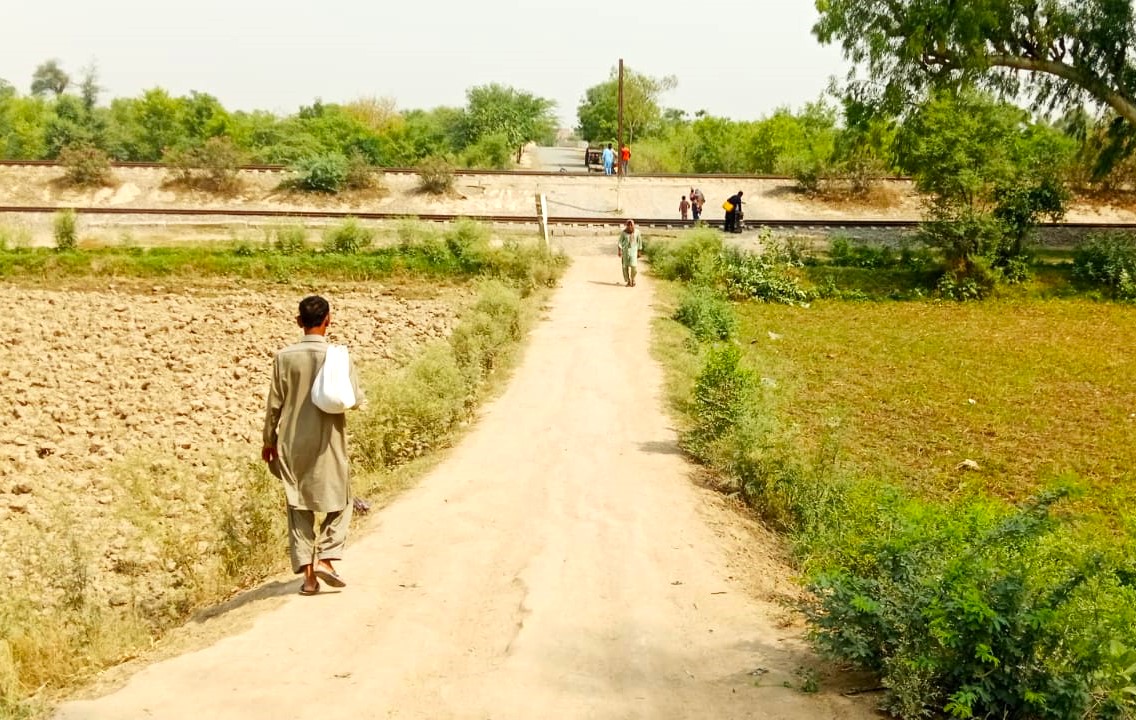
SAHIWAL: Residents of villages 76/5-R, 77/5-R and 74/5-R have renewed their demand for a steel overhead bridge at 77 Wali Pully. They saying the long-standing absence of a safe railway crossing has turned a routine journey into a daily hazard for thousands of people.

The three villages are home to an estimated 20,000 to 23,000 people. Residents say the proposed bridge would provide a safe route for pedestrians, cyclists, motorcyclists and rickshaws to cross the Lower Bari Doab Canal (LBDC) and the double-track Lahore-Khanewal railway line. They also demand improving access to the Lahore-Multan National Highway and markets in Yousafwala, Qadirabad and Sahiwal.

The demand has been raised repeatedly with the district administration, Pakistan Railways, Punjab government and local PML-N parliamentarians since the 1,320MW Sahiwal coal-fired power plant became operational in 2017. Official records confirm that the plant is located near Qadirabad and that its commercial operations began in October 2017.

Before the power plant was built, villagers had two traditional routes to Yousafwala and Qadirabad markets. One was through the railway crossing near Yousafwala Railway Station, which allowed light and heavy traffic to pass. The other, locally known as “77 Wali Pully”, involved crossing the LBDC by wire-boat before walking across the railway tracks.

Tehzeeb, an LHV from village 76/5-R, said the second route had been used for three to four decades, particularly by women and pedestrians. Rickshaws operated on both sides of the canal and railway line, helping commuters reach nearby villages and markets.

However, following the power plant’s development, the railway crossing was closed for public use and traffic was diverted to a new route several kilometres away. A concrete bridge was constructed over the LBDC, but no corresponding crossing was provided over the double railway track.

“This challenge of crossing the railway line remains unresolved,” said Sadique, a resident of 76/5-R.

Villagers say more than 1,000 people, including students, women, elderly residents, traders and labourers, cross the area on foot every day, often facing the danger of fast-moving trains.

Pir Imran Shah, a former four-time MNA, said he had twice forwarded the villagers’ proposal to Pakistan Railways, but it did not progress to the PC-I stage.

Residents working through the Model Village Welfare Committee have now renewed their appeal. Najam Lumberdar of 77/5-R said the bridge would eliminate a lengthy detour and provide safer access to markets and Sahiwal city.

A local civil society representative also described the demand as genuine, noting that similar pedestrian and motorcycle bridges have been constructed elsewhere.

Dawn has learnt that Pir Imran Shah has again forwarded the committee’s application to Pakistan Railways, seeking preparation of a PC-I and construction of the proposed steel bridge.

For residents, the demand is simple: a safe crossing that restores the connectivity they say was lost nearly a decade ago.
Similar Posts

  • | |

    FBR imposes immediate advance sales tax on Gujranw…

    The Federal Board of Revenue (FBR) has imposed an immediate advance sales tax on the steel mill sector in Gujranwala, directing electricity distribution companies to begin collecting the tax through power bills. According to the FBR, eligible steel mills will have to pay an additional Rs30 per unit in advance sales tax through their electricity bills. The tax collection has been ordered to begin immediately. The FBR issued a written directive to electricity distribution companies, instructing them to recover the applicable amount from steel mills falling within the scope of the new advance tax arrangement. The revenue authority has also released a list of steel mills that are subject to the advance sales tax. The move is expected to affect the operating costs of businesses included in the notified category. However, the FBR has clarified that steel mills importing a significant proportion of their raw materials will be exempt from the advance sales tax. According to the notification, mills that import 70% of their raw material will not fall under the new tax requirement. Electricity distribution companies have been directed to start collecting the advance tax immediately and submit a compliance report to the FBR by August 23. The decision represents another significant tax measure affecting Pakistan’s industrial sector. Collecting the tax through electricity bills provides the authorities with a direct mechanism for recovering the amount from eligible industrial units. For steel manufacturers, however, the additional Rs30 per unit could increase electricity-related operating expenses, particularly for mills with high energy consumption. The impact will depend on individual production levels, electricity usage and whether a particular mill qualifies for the exemption. The steel industry is an important component of Pakistan’s manufacturing sector, supplying products for construction, infrastructure and other industrial activities. Changes in taxation and energy costs can therefore have wider implications for production costs and market prices. The latest FBR directive also places responsibility on electricity distribution companies to ensure timely collection and reporting. Mills covered by the notification will need to account for the additional charge in their electricity bills as the new collection mechanism takes effect. The government’s decision comes as the FBR continues efforts to strengthen tax collection and broaden revenue measures. The implementation deadline of August 23 means the authorities are expected to monitor compliance closely over the coming days.

  • Cambodian Attacks Continue but Intensity Declines Substantially: Thai Defence Ministry

    BANGKOK – Cambodian forces continued strikes along the Thai border on Sunday, the fourteenth day of renewed hostilities, though the intensity of attacks has dropped considerably, according to the Thai Ministry of Defence. In a daily briefing, Defence Ministry spokesman Rear Admiral Surasant Kongsiri reported that Cambodian troops fired rockets from BM-21 multiple launchers at […]

  • | | |

    Pakistan’s Major General Qazi appointed as new U…

    UN Secretary-General António Guterres has appointed Pakistan Army Major General Jawwad Ahmed Qazi as the new Force Commander of the United Nations Mission for the Referendum in Western Sahara (MINURSO). Major General Qazi, who has been awarded with the Hilal-e-Imtiaz (Military), brings more than 35 years of military leadership, operational command and international peacekeeping experience to his new assignment. His appointment reflects Pakistan’s longstanding contribution to United Nations peacekeeping operations. During his military career, Major General Qazi has held several senior command, staff and instructional positions in Pakistan and abroad. His previous appointments include serving as General Officer Commanding of an Infantry Division, Force Commander Northern Areas and Director General at the Ministry of Defence. He has also gained direct experience in UN peacekeeping, having served with the United Nations Transitional Administration in Eastern Slavonia, Baranja and Western Sirmium (UNTAES) in Croatia earlier in his career. Pakistan has welcomed the appointment, describing it as another significant contribution to international peace and stability. The country continues to support UN peacekeeping efforts by providing trained contingents and experienced military leaders for missions around the world. Major General Qazi’s appointment further highlights Pakistan’s extensive experience and continued commitment to global peacekeeping and international security.

  • | |

    Lahore police bar women from stations after sunset

    Lahore Police have directed that no woman should remain at any police station after sunset, introducing a new measure that officials say is aimed at ensuring the safety and dignity of women. The directive was issued by Deputy Inspector General (DIG) Operations Muhammad Faisal Kamran during a crime review meeting with officers of the City Division. He instructed police personnel to treat women with respect and ensure that female complainants as well as women taken into custody are not kept at police stations after Maghrib. According to the directive, police officers must adopt procedures that protect women’s privacy and dignity while dealing with complaints or investigations. The decision comes in the wake of growing concerns over crimes against women and follows the arrest of a Lahore police Assistant Sub-Inspector (ASI) accused of sexually assaulting a 19-year-old woman with a mental health condition. According to police, the woman had left her home and did not return for several hours. Her family later learned from a local resident that a plain-clothes police officer had taken her away on a motorcycle. The victim later alleged that the officer took her to another location and sexually assaulted her. Following the allegations, police registered a case against the accused officer. DIG Investigation Syed Zeeshan Raza ordered an immediate and transparent investigation, directing investigators to proceed strictly on merit. The incident also led to disciplinary action within the police department, with 78 police officials reportedly suspended as authorities launched an internal review of the case. While police officials say the new directive is intended to safeguard women, some critics argue that restricting women’s presence at police stations does not address the root problem. They contend that law enforcement agencies should instead focus on ensuring police stations remain safe and accessible for women at all hours.

  • |

    Court summons former Lebanon Central Bank governor

    Lebanese judicial authorities have issued a court summons for former Central Bank governor Riad Salameh after he failed to appear at a scheduled hearing in a high-profile financial corruption case, marking another major development in one of the country’s most closely watched legal investigations. According to a judicial source, prosecutors ordered security forces to locate Salameh at his residence and escort him to Beirut’s Palace of Justice after he did not attend Thursday’s hearing. The case stems from a complaint filed by current Central Bank Governor Karim Soueid, who has accused his predecessor of embezzlement of institutional funds, illicit enrichment and money laundering. Salameh, 76, led Lebanon’s central bank from 1993 until July 2023, overseeing the country’s monetary policy for three decades. Once regarded as one of the Middle East’s most influential financial figures, he later became a central figure in the controversy surrounding Lebanon’s devastating financial collapse. The Central Bank has alleged that it was the victim of an embezzlement scheme involving several hundred million euros, claiming the funds were misappropriated by Salameh with assistance from individuals close to him. However, the former governor has repeatedly denied all allegations, insisting he has committed no wrongdoing. The first hearing in the case took place in June at Salameh’s home because of his reported health condition, where he was questioned by an investigating judge. On Thursday, former banking executive Samir Hanna appeared before the court in connection with the same investigation, while Salameh remained absent. The former governor has faced growing legal pressure both inside Lebanon and abroad. He was arrested in September 2024 over allegations that he embezzled $44 million from the institution he once headed. After spending a year in detention, he was released on bail exceeding $14 million, one of the largest ever imposed in Lebanon, but remains banned from leaving the country. International investigations have also intensified. French authorities issued an international arrest warrant for Salameh in 2023, while prosecutors in Paris continue examining allegations linked to cross-border financial transactions. In May this year, the Swiss subsidiary of British banking giant HSBC was formally indicted as investigators examined claims that it may have facilitated financial activities connected to the former governor. The latest court summons underscores Lebanon’s efforts to pursue accountability for the country’s prolonged financial crisis. As investigations continue at home and overseas, the case against Salameh remains one of the most significant legal battles tied to Lebanon’s economic collapse, with many citizens viewing it as a crucial test of the country’s commitment to transparency and judicial reform.

  • | |

    US appeals Court again blocks Trump’s $100,0…

    The Trump administration has suffered another legal setback after a US federal appeals court refused to reinstate a controversial $100,000 fee for H-1B visas, dealing a fresh blow to the administration’s immigration policy. A three-judge panel of the First US Circuit Court of Appeals in Boston ruled that the administration had failed to demonstrate a strong likelihood of success in its appeal or prove that it had acted within its legal authority when imposing the massive fee increase. The decision comes in a lawsuit filed by attorneys general from 20 Democratic-led states, who challenged the legality of the policy soon after it was introduced. The appeals court’s ruling leaves in place an earlier decision issued on June 8, when a lower court declared the $100,000 H-1B visa fee unlawful. That court concluded that Congress had never granted the executive branch the authority to impose a charge of that magnitude, describing it as a tax that exceeded the administration’s legal powers. President Donald Trump introduced the fee increase through an executive order issued last year, arguing that the H-1B visa program had been widely used by companies to replace American workers with lower-paid foreign professionals. The administration maintained that the significantly higher fee would discourage misuse of the program and encourage employers to prioritize hiring US workers. Critics, however, argued that the measure would severely disrupt industries that rely on highly skilled international talent, particularly the technology, healthcare and engineering sectors. Under current immigration rules, the United States issues 65,000 H-1B visas annually, along with an additional 20,000 visas for applicants holding advanced academic degrees from US institutions. The visas are generally granted for periods ranging from three to six years. Before Trump’s proposed increase, employers typically paid between $2,000 and $5,000 in government filing fees for an H-1B visa, depending on the size of the company and other applicable charges. The proposed $100,000 fee would not have applied to foreign nationals already in the United States on student visas who later transitioned to H-1B status. The latest court ruling represents another significant legal obstacle for the Trump administration’s immigration agenda and ensures that the dramatic fee increase will remain suspended while the broader legal battle continues.

Leave a Reply

Your email address will not be published. Required fields are marked *