iran agree extend
| | | |

US and Iran agree to extend 60-day ceasefire

ISLAMABAD: The United States and Iran have agreed in principle to extend their 60-day ceasefire, according to a Turkish news agency report citing Pakistani government sources.

The report said both Washington and Tehran had informed mediators of their willingness to prolong the truce.

The two sides are also exchanging messages to determine the length of the proposed extension, according to the report.

The current ceasefire is due to expire on August 17. Mediators have been informed that both countries are prepared to continue the pause in hostilities.

According to international media reports, the United States and Iran signed a 14-point memorandum of understanding on June 17. The agreement established a 60-day period for maintaining the ceasefire and completing negotiations aimed at bringing a permanent end to the conflict.

The memorandum also included arrangements for keeping the Strait of Hormuz open to commercial shipping during the ceasefire.

However, disagreements over the interpretation of several provisions have continued to create tensions between Washington and Tehran.

Both sides have repeatedly accused each other of violating the terms or spirit of the understanding.

The proposed extension could provide additional time for diplomatic efforts and negotiations aimed at addressing the outstanding issues between the two countries.

Mediators are expected to remain engaged as Washington and Tehran work to settle the duration and other details of the extended ceasefire.
Similar Posts

  • | |

    Russia blasts Japan over Putin’s Kuril visit

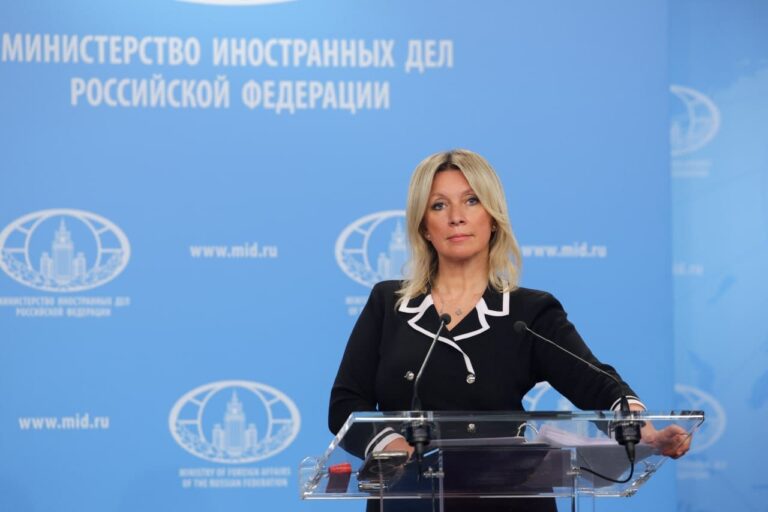
    MOSCOW: Russia has strongly condemned recent remarks by Japanese Prime Minister Sanae Takaichi and Foreign Minister Toshimitsu Motegi concerning President Vladimir Putin’s visit to Iturup Island. Russian Foreign Ministry spokeswoman Maria Zakharova described Tokyo’s criticism as unacceptable and rejected Japan’s objections to Putin visiting the island, which Moscow considers part of Russian territory. Zakharova accused senior Japanese officials of attempting to dictate where the Russian president could travel within his own country. She said Moscow regarded the Japanese statements as politically motivated and legally invalid, arguing that Russia’s sovereignty over the southern Kuril Islands was not open to question. The dispute over the islands remains one of the most sensitive issues in Russia-Japan relations. Japan refers to the southern islands as the Northern Territories and maintains its own claim over them. Zakharova said Tokyo’s current approach reflected what she called an increasingly hostile policy towards Russia. She criticised Japan for joining Western sanctions against Moscow and for providing political, military and technical support to Ukraine. According to the Russian spokeswoman, these policies have seriously damaged bilateral relations that had been developed over decades. She also accused Japan of undermining international legal principles while attempting to lecture Moscow on international law and the future of bilateral relations. Zakharova further argued that Japan’s policies did not serve the interests of its own population or contribute to regional stability. Moscow maintains that the southern Kuril Islands became part of the Soviet Union following the Second World War and argues that their status was established through post-war agreements. The Russian official also accused Tokyo of reviving what she described as revisionist and revanchist narratives. She warned that such rhetoric could have wider consequences for peace and security across the Asia-Pacific region. Russia said the latest Japanese statements risked further damaging already strained relations between the two countries and ran counter to broader regional efforts to promote stability, cooperation and peace.

  • | | |

    Grand Yadgar-i-Fatah unveiled ahead of Independenc…

    The Yadgar-i-Fatah monument, built to honour Pakistan’s martyrs and commemorate the state-designated “Marka-i-Haq,” was inaugurated in Islamabad on Thursday night. President Asif Ali Zardari and Prime Minister Shehbaz Sharif jointly inaugurated the monument on the eve of Pakistan’s 80th Independence Day. Chief of Defence Forces and Chief of Army Staff Field Marshal Asim Munir, Chief of Air Staff Air Marshal Zaheer Ahmad Babar Sidhu and Chief of Naval Staff Admiral Naveed Ashraf attended the ceremony. The president and prime minister, along with the military leadership, stood respectfully as the national anthem was played by a military band. The ceremony began with the recitation of the Holy Quran. A video highlighting the concept, construction and development of the monument was also screened for the guests. A large contingent of personnel from the armed forces, paramilitary forces and police presented a guard of honour. The display was accompanied by a military band and reflected the participation of Pakistan’s security institutions in the national ceremony. The event was attended by senior military officers, federal ministers, political leaders, diplomats and other high-ranking officials. The Speaker of the National Assembly, Chairman Senate, Defence Minister, Foreign Minister and Punjab Chief Minister Maryam Nawaz were among those present. Governors of Punjab and Khyber Pakhtunkhwa also attended. Police contingents from Azad Jammu and Kashmir and Gilgit-Baltistan participated in the ceremony. Units representing Punjab, Sindh, Balochistan and Khyber Pakhtunkhwa were also part of the event. The monument commemorates Pakistan’s military confrontation with India in May. According to the Pakistani state narrative, the conflict began after the April 22 Pahalgam attack and culminated in Operation Bunyanum Marsoos before a ceasefire was reached between the two countries on May 10. Pakistan has referred to the episode as “Marka-i-Haq,” or the “Battle of Truth.” The inauguration brought together the country’s political and military leadership and carried a strong message of national unity and patriotism.

  • | |

    Khuzdar triple murder rocks Balochistan Assembly

    The alleged murder of a young woman’s fiancé, uncle and father in Balochistan’s Khuzdar district over a marriage dispute echoed in the Balochistan Assembly, where lawmakers demanded the immediate arrest of the main suspect. During the assembly session chaired by Speaker Abdul Khaliq Achakzai, Provincial Minister Ali Madad Jatak informed the house that the suspect allegedly killed the woman’s fiancé after his marriage proposal was rejected. He said the victim’s uncle was also murdered, while the woman was allegedly abducted before being recovered by police. According to the minister, the woman’s father was later shot dead after her video statement highlighting security threats surfaced on social media. Jatak told the assembly that despite two days having passed since the father’s killing, a first information report (FIR) had not yet been registered. He expressed concern over the delay in legal proceedings and called for immediate action against the accused. Opposition Leader Younis Zehri warned that if the suspect was not arrested, the provincial chief minister and the home minister would be held responsible. In protest over the lack of progress, both Zehri and Provincial Minister Ali Madad Jatak staged a walkout from the assembly. Member of the Provincial Assembly Maulana Hidayatur Rehman also voiced serious concern over the incident and demanded the resignation of the provincial home minister. He claimed that those responsible for the crime were widely known and criticised the prevailing law and order situation in the province. Responding to the criticism, Home Minister Zia Langove assured lawmakers that the government was in contact with the affected family and that police had been directed to arrest the suspect without delay. The speaker instructed the Inspector General of Police, the Deputy Inspector General and the Khuzdar district police chief to ensure the suspect’s arrest within two days. He also sought daily progress reports on the investigation before adjourning the assembly session until August 28.

  • |

    Drought reveals Nazi-era warships in Danube

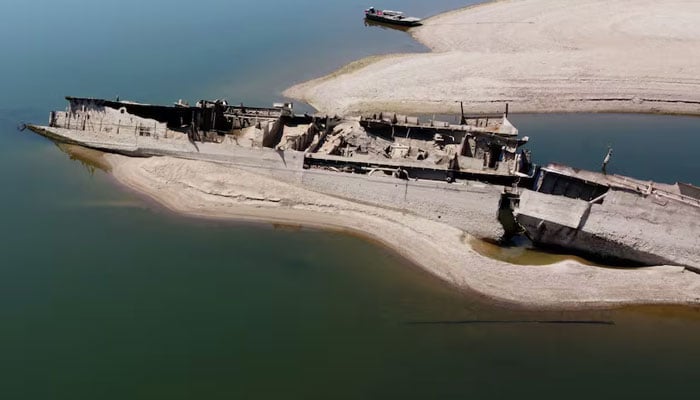
    Severe heat and prolonged drought across Europe have caused the Danube River to fall to record-low levels, exposing the wreckage of German warships that sank during World War II. The wrecks have emerged near the border between Serbia and Romania, offering a rare glimpse into one of the lesser-known chapters of the war. The vessels sank in 1944, when Nazi Germany attempted to prevent advancing Soviet forces from moving further west along the Danube. According to foreign media reports, German forces deliberately scuttled dozens of warships in the river as Soviet troops advanced through Eastern Europe. The wrecks remained hidden beneath the water for decades, but the dramatic decline in the Danube’s water level has now brought parts of the vessels back into view. The discovery highlights the wider impact of Europe’s increasingly severe heat and drought conditions. With water levels dropping sharply, the Danube has exposed not only historic shipwrecks but also other submerged remains that normally stay hidden beneath the river. The newly visible wrecks are drawing attention from historians and researchers, while also underscoring how extreme weather can unexpectedly reveal traces of the past.

  • |

    Indian activist held over shocking protest comments

    Indian political commentator and social activist T.G. Mohandas has been detained by police over controversial remarks about students taking part in a protest. Police reportedly took Mohandas into custody from his residence on Sunday evening. A cybercrime police team reached his home with local police officers. He was present when the team arrived. Authorities are investigating remarks made by Mohandas in a video shared on his YouTube channel. Police also collected information about his YouTube account and digital devices allegedly used to record and upload the video. A complaint has reportedly been registered against him. The complaint alleges that the videos published on his channel were capable of disturbing public order. It also accused him of creating fear and unrest through his statements. The controversy began after Mohandas commented on a student protest in Delhi linked to an alleged examination paper leak. In the video, he made offensive remarks about female protesters and claimed that the demonstrations could lead to incidents of sexual violence. He further made a derogatory statement about women participating in the protest. His comments triggered criticism because they appeared to blame or demean potential victims of sexual violence. Mohandas also spoke about how authorities should respond to the demonstrations. He said that if he were in government, he would impose a curfew to disperse the protesters. He further suggested that force could be used if demonstrators refused to leave. His remarks included references to people potentially being killed or permanently injured during a violent crackdown. The comments have drawn attention from law enforcement authorities. Police are now examining the video and other digital material connected to the case. Officials are also questioning Mohandas as part of the investigation. The authorities are expected to determine whether his statements and online content violated laws relating to public order and the spread of fear or unrest. The case has sparked wider discussion over the limits of political commentary and responsibility for statements made on social media. The investigation is continuing, while further details about the allegations and possible legal action are awaited.

  • |

    PhD exams face explosive questions over quality

    A renewed debate over the reliability of PhD examinations has emerged following questions surrounding the doctoral thesis of Professor Jason Arday. Arday submitted his PhD thesis at Liverpool John Moores University in July 2015. The controversy resurfaced after Professor Richard Dawkins publicly questioned whether the thesis had been thoroughly examined. Other commentators have also raised concerns about its academic quality and allegations of plagiarism. The debate has now expanded beyond the individual case. It has prompted questions about how universities assess doctoral research and whether the existing system consistently maintains the required academic standards. A PhD normally represents several years of specialised research. A doctoral thesis can contain tens of thousands of words and often requires extensive academic reading and analysis. The assessment is generally carried out by two examiners. One is usually from the candidate’s university, while the other comes from an external institution. Critics argue that the workload involved in examining a thesis is not always matched by the financial compensation provided to examiners. Examiners are commonly paid a relatively modest fee for reviewing lengthy and complex research. This has raised concerns that some may not devote sufficient time to the process. There are also concerns about inconsistencies in examination decisions. Some candidates have reportedly failed their PhDs despite believing that their research met the required standard. Others have received a pass even when questions remained about the quality of their work. The appeal process can be particularly difficult for unsuccessful candidates. A failed PhD can mean years of research being lost. Students who finance their own studies can also face substantial financial losses. For those hoping to build academic careers, the consequences can be even more serious. Another issue is the selection of examiners. Supervisors often play a role in recommending academics to assess their students’ work. Critics say professional relationships within academia could potentially influence the choice of examiners or the assessment itself. Academic misconduct presents another challenge. Universities can spend considerable time investigating allegations of plagiarism and other forms of cheating. Lengthy investigations can involve hearings, appeals and administrative procedures. The discussion has also highlighted the subjective nature of academic assessment. Different examiners can sometimes reach different conclusions about the same research. In some cases, candidates who fail with one set of examiners may later receive a pass from another panel after an appeal. There is no suggestion that these concerns necessarily apply to Arday’s examination. The available debate does not establish whether his thesis met or failed to meet the required standard. However, the controversy has renewed calls for universities to examine their doctoral assessment systems. Questions include how examiners are selected, whether they receive adequate compensation, how thoroughly theses are reviewed and how allegations of academic misconduct are handled. The wider debate is therefore about more than one doctoral thesis. It raises fundamental questions about the credibility, consistency and accountability of the PhD examination process.

Leave a Reply

Your email address will not be published. Required fields are marked *