usama mir stars
|

Usama Mir stars as Lahore Qalandars down Desert Vi…

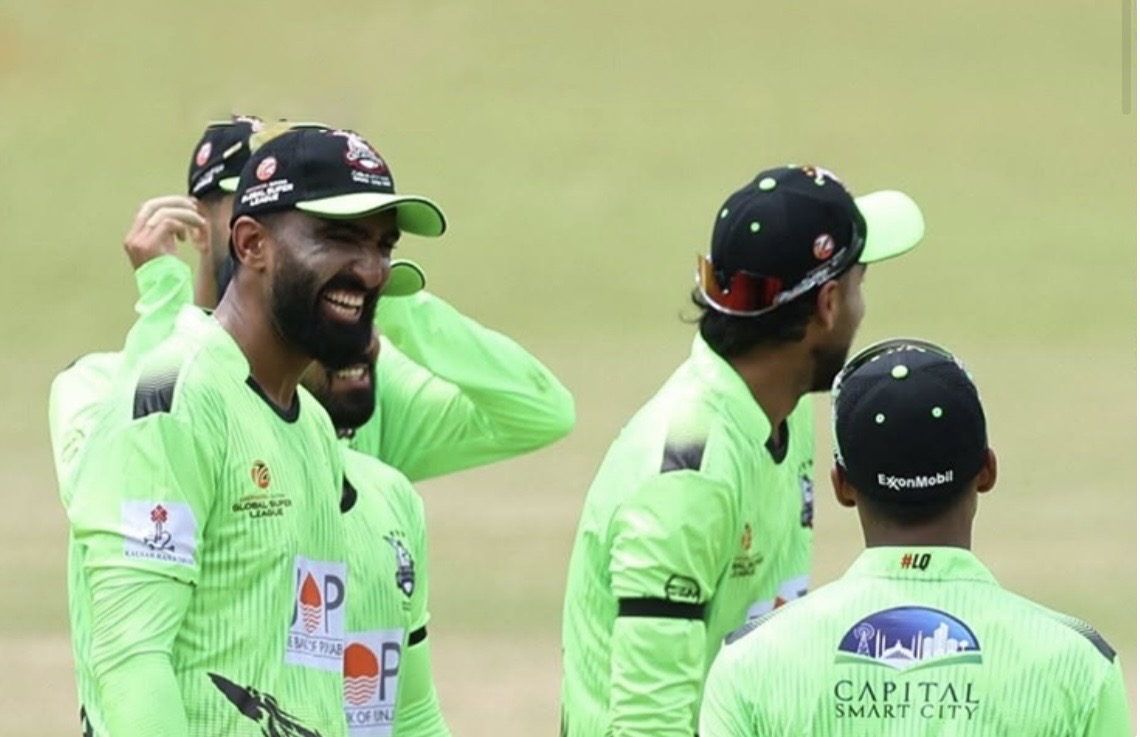
Usama Mir starred with a three-wicket haul as Lahore Qalandars defeated Desert Vipers by 38 runs in the third match of the Global Super League 2026 at the Providence Stadium on Friday. Set a stiff target of 177, Desert Vipers could only muster 138-9 in 20 overs, with Mir leading the bowling attack to restrict the opposition effectively.

Earlier, Parvez Hossain Emon and Michael Bracewell’s gutsy knocks lifted Lahore Qalandars to a strong total. Opting to bat first, the Qalandars piled up 176-4 in 20 overs, largely due to an unbeaten 83-run partnership between Emon and Bracewell. The pair rescued the team from a precarious 93-4 in 13.1 overs and propelled them into a strong position. Opening batters Shayan Jahangir and Shamyl Hussain shared a 37-run stand in five overs before Vipers hit back with quick wickets. Jahangir scored 28 off 30 balls, including a six and two fours, while Hussain only managed nine. Soon after, Abdullah Shafique was caught and bowled for eight, leaving the 2024 PSL champions at 49-3 inside eight overs.

Farhan Yousaf and Parvez Hossain Emon tried to arrest the slide with a 44-run partnership, bringing the total near the 100-run mark. However, Yousaf was dismissed for 22, leaving his side in trouble. At this stage, captain Bracewell arrived and soaked up all the pressure alongside Emon. Bracewell hit 46 not out off 23 balls, striking four boundaries and three sixes, while Emon remained unbeaten on 47 off 33 balls, including three sixes and three fours. For Desert Vipers, Khary Pierre picked up two wickets.

In response, Desert Vipers struggled to build momentum against a disciplined bowling attack. Usama Mir was the standout performer, claiming three wickets to dismantle the middle order. The Vipers’ batting lineup faltered under pressure, with wickets falling at regular intervals. Despite a few cameos, they could not keep up with the required run rate and eventually fell short by 38 runs.

The victory marks a strong start for Lahore Qalandars in the Global Super League, with their batting depth and bowling firepower on full display. The partnership between Emon and Bracewell was the highlight of the match, showcasing their ability to handle pressure and accelerate when needed. Usama Mir’s bowling performance was equally crucial, as he consistently struck at key moments to keep the opposition in check. The Qalandars will look to build on this momentum as the tournament progresses, while Desert Vipers will need to regroup and address their batting concerns ahead of their next fixture. The GSL continues to provide exciting cricketing action, with teams battling for supremacy in the tournament. The match was a testament to the competitive nature of the league, with fans enjoying a thrilling contest between two strong sides. Lahore Qalandars’ comprehensive victory sends a strong message to their rivals, establishing them as one of the teams to beat in the competition. As the tournament unfolds, the Qalandars will aim to maintain their winning form and secure a place in the knockout stages, with the ultimate goal of lifting the trophy.
Similar Posts

  • The Real Cost of the Beautiful Game: Who Actually Wins and Loses Financially at the World Cup?

    Never before has a World Cup reached such massive heights. Every four years, the entire world stops to watch the globe’s biggest sporting spectacle unfold. While millions of passionate fans cheer, a much larger financial game plays out behind the scenes. This silent competition ultimately determines who gets rich and who gets left behind. Hosting […]

  • |

    Paul Pogba suffers fresh injury, future at Monaco in doubt

    MONACO: Paul Pogba’s much-anticipated return to regular football has suffered another setback after the former France international picked up a new thigh injury during Monaco’s training camp in England. The 33-year-old midfielder sustained an injury to his left thigh on Tuesday, just days after Monaco defeated Liverpool in a pre-season friendly. The setback came at England’s national football centre at St George’s Park, where Monaco were continuing preparations for the new campaign. Pogba had only recently returned to group training following a lengthy absence caused by problems with his right knee. His latest injury has now raised fresh questions about whether he will be fit enough to make a meaningful contribution when the Ligue 1 season begins. The 2018 World Cup winner has endured a difficult period since leaving the spotlight of top-level football. After serving an 18-month suspension from football following a doping case, Pogba returned to competitive action with Monaco last season. However, his comeback was limited. He appeared in only six Ligue 1 matches and managed just 115 minutes of football, underlining the physical challenges he has faced since his suspension. Pogba has also featured sparingly during Monaco’s current pre-season campaign, playing only one half of football so far. Sources close to the situation reportedly believe the latest injury means he remains some distance from the fitness level needed to start the Ligue 1 campaign. The Frenchman’s future at Monaco could therefore become a major talking point in the coming weeks. While his experience and quality remain valuable, his ability to stay fit will be crucial if he is to rebuild his career. For Pogba, the latest setback is particularly frustrating as he had been working toward a sustained return. The midfielder will now face another period of recovery and rehabilitation as Monaco assess the seriousness of the injury. With the new Ligue 1 season approaching, Pogba’s immediate priority will be getting back to full fitness. Whether he can overcome another injury setback and finally enjoy a consistent run of football remains one of the intriguing questions surrounding his career.

  • | |

    Trump imposes up to 100% tariff on Chinese drones

    WASHINGTON: US President Donald Trump has announced tariffs of up to 100 per cent on imported drones and certain drone components, escalating Washington’s efforts to reduce dependence on Chinese technology and strengthen America’s domestic unmanned aircraft industry. The White House said the new duties were introduced on national security grounds and would target specific unmanned aircraft systems considered particularly sensitive. The measures cover larger unmanned aerial systems weighing more than 25 kilograms at take-off. Drones equipped with technologies considered important to national security, including thermal imaging systems and drone docking stations, will also face the additional tariffs. Under the new policy, smaller drones will be subject to a 25pc tariff, while larger and more technologically sophisticated systems could face duties of up to 100pc. The structure means the final tariff will depend on a drone’s weight, size and capabilities. The decision comes as the United States seeks to reduce its reliance on Chinese-made drones and strengthen domestic supply chains for critical technologies. Chinese manufacturers have long held a significant position in the global and US drone market, particularly in consumer and commercial unmanned aircraft. The Trump administration argues that drones have become increasingly important to national security, surveillance and other sensitive operations. Officials therefore want to encourage greater production of drones and key components inside the United States. The tariffs could have an immediate impact on the prices of some imported drones, potentially making Chinese-made models significantly more expensive for American buyers. Businesses that rely on drones for commercial, industrial or specialised operations could also face higher costs. At the same time, Washington expects the policy to encourage US manufacturers to expand production and invest in domestic drone technology. The move marks another step in the broader US strategy of limiting dependence on China in strategically important technologies while promoting American manufacturing and supply-chain security.

  • | | |

    Rising fuel taxes add to motorists’ burden

    Consumers are facing a growing burden of taxes and other charges on petrol and high-speed diesel. Official documents show that the difference between the basic cost and retail price of petrol is Rs139.93 per litre. For high-speed diesel, the difference stands at Rs116.10 per litre. The documents show that the basic cost of one litre of petrol is Rs197.69. However, consumers are currently paying Rs327.62 per litre. Several taxes, levies and margins are included in the retail price. These charges significantly increase the amount paid by consumers at fuel stations. Petrol carries a petroleum levy of Rs80 per litre. A climate support levy of Rs5 is also imposed. The price also includes Rs21.24 in customs duty. An Inland Freight Equalisation Margin of Rs7.48 is charged per litre. Oil marketing companies receive a margin of Rs7.87 per litre. Dealers are paid a margin of Rs8.64 per litre. As a result, consumers pay Rs130.23 per litre in combined levies, taxes and margins on petrol. The situation is similar for high-speed diesel. Its basic cost is Rs264.76 per litre. However, its retail price has been fixed at Rs380.86 per litre. According to the documents, consumers pay around Rs116 per litre in levies, taxes and different margins on high-speed diesel. The petroleum levy on high-speed diesel is Rs74.28 per litre. The fuel also carries a climate support levy of Rs5 per litre. Customs duty accounts for another Rs15.68 per litre. The Inland Freight Equalisation Margin stands at Rs4.63. Oil marketing companies receive a margin of Rs7.87 per litre. Dealers receive Rs8.64 per litre as their margin. The figures show that taxes, levies and various margins form a significant portion of the final prices of both fuels. The additional charges directly affect motorists and consumers. They also increase transportation and operating costs for businesses that depend heavily on fuel. The rising cost of petrol and diesel can also put pressure on the prices of goods and services. Transport operators, traders and other businesses often pass higher fuel costs on to consumers.

  • | |

    Court rejects Gohar’s FIR plea against PM

    A district and sessions court in Islamabad has dismissed a petition filed by Pakistan Tehreek-e-Insaf (PTI) Chairman Barrister Gohar Ali Khan, who had sought the registration of a criminal case against Prime Minister Shehbaz Sharif, Interior Minister Mohsin Naqvi, and several other senior government officials over the events of the November 26 protest. The court issued a detailed 17-page written judgment, outlining the reasons for rejecting the application. The verdict was authored by Additional Sessions Judge Afzal Majoka, who concluded that the petitioner had failed to provide sufficient evidence to justify the registration of a first information report (FIR). According to the judgment, Barrister Gohar was given multiple opportunities to appear before the court and record his statement as an eyewitness. However, the court noted that he did not record his testimony despite repeated chances. The ruling further stated that the petitioner neither presented eyewitnesses nor submitted legally admissible evidence in support of his allegations. The court observed that the application relied mainly on claims without providing documentary or forensic material required to initiate criminal proceedings. The petition alleged that 12 people lost their lives and more than 38 PTI supporters were injured during the November 26 protest. However, the court noted that no post-mortem reports, death certificates, medical records, digital videos, photographs or other primary evidence were produced to verify the claims. The judgment emphasized that criminal action cannot be initiated against senior public officeholders solely on the basis of verbal allegations. It said there must be credible and legally admissible evidence before the court can direct the registration of an FIR against high-ranking officials. Among those named in the petition were Prime Minister Shehbaz Sharif, Interior Minister Mohsin Naqvi, Information Minister Atta Tarar, Defence Minister Khawaja Asif, Islamabad Inspector General of Police Ali Nasir, DIG Operations Ali Raza, SSP Operations Zeeshan Haider and other officials. The court also observed that if the petitioner believed that government institutions were not cooperating in the investigation, he had legal options available under Pakistani law. These included approaching the courts for further investigative measures, including exhumation where legally justified. The judgment noted that no such legal remedies were pursued.

  • | |

    Pakistan’s olive oil export dream at risk, g…

    LAHORE: Pakistan’s rapidly growing olive oil industry has reached a defining moment, with growers and processors warning that the country’s ambitions to become a major exporter could be undermined unless authorities introduce stricter quality standards, certification systems and stronger market regulation. Industry stakeholders say Pakistan has made significant progress in expanding olive cultivation over the past decade, but the absence of an effective regulatory framework now poses the biggest challenge to long-term growth. Dr. Qurat-ul-Ain Irfan, founder of Meshak Farms in Mardan, believes the focus should now shift from planting more olive trees to protecting product quality and building consumer confidence. “There is no proper implementation framework,” she said, noting that products of varying quality can currently be marketed as olive oil with little monitoring. “Consumers deserve to know whether they are buying premium extra virgin olive oil, blended oil or another edible oil altogether.” According to growers, the lack of routine laboratory testing, nationally recognized grading standards and certification mechanisms has made it difficult for genuine producers to distinguish their products from adulterated or lower-quality alternatives. Pakistan imports an estimated $5-6 billion worth of edible oil annually, making it one of the country’s largest import expenses. Policymakers have promoted olive cultivation as a strategic alternative capable of reducing dependence on imports while creating new export opportunities. Government-backed initiatives have led to the plantation of millions of olive trees, particularly across Potohar, Khyber Pakhtunkhwa and Balochistan, where nearly 10 million acres are considered suitable for olive cultivation. The industry’s latest boost has come through the OliveCulture Scale-Up Project (2024–2027), funded by the Italian Agency for Development Cooperation (AICS) and implemented by CIHEAM Bari, which aims to strengthen Pakistan’s olive value chain from cultivation to processing and marketing. Despite these initiatives, growers argue that commercial olive farming requires long-term investment and stronger policy support. Unlike seasonal crops, olive orchards often take several years before generating meaningful yields and may require 10 to 15 years to reach peak production. Meshak Farms reflects this long-term approach. Established on previously uncultivated land in Mardan, the farm uses imported Arbequina olive saplings, modern drip irrigation systems and internationally recognized cultivation techniques learned through collaboration with Italian experts. Dr. Irfan, who also leads a pharmaceutical company exporting to the United Kingdom and the European Union, said the same principles of traceability, laboratory testing and quality assurance should become standard across Pakistan’s olive industry. She revealed that representatives of an Italian company had expressed interest in sourcing Pakistani olive oil if producers consistently met internationally recognized certifications, including ISO 14000, and maintained premium quality standards. Experts also point to changing global market conditions as an opportunity. Climate change, ageing orchards and declining olive production in parts of the Mediterranean have encouraged international buyers to diversify their supply chains, potentially opening doors for emerging producers like Pakistan. However, industry leaders caution that export ambitions will remain difficult to achieve without mandatory grading systems, accredited testing laboratories, traceability mechanisms and consumer awareness campaigns promoting authentic Pakistani extra virgin olive oil. They also argue that reducing taxes and offering incentives for growers would encourage investment and help lower domestic prices. “The challenge is no longer proving that olives can grow in Pakistan,” Dr. Irfan said. “The real test is whether policy reforms can keep pace with an industry that is ready to compete in international markets.”

Leave a Reply

Your email address will not be published. Required fields are marked *