west indies opt

West Indies opt to bat first in second test against Pakistan 

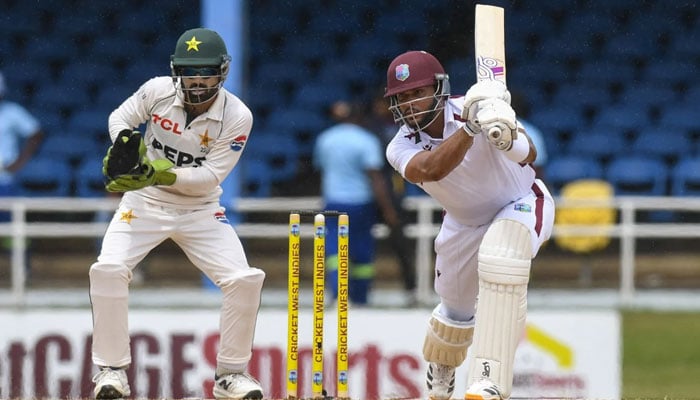
The second and final Test match of the two-match series between Pakistan and the West Indies got underway at the Queen’s Park Oval in Port of Spain, Trinidad, with the hosts winning the toss and electing to bat first.

The opening day was significantly affected by rain, disrupting play during the morning session. Persistent showers allowed only 9.5 overs to be bowled before the lunch interval, limiting the action on the field. Despite the interruptions, the West Indies made a positive start, reaching 49 for the loss of one wicket before lunch.

As play resumed in the second session, the home side continued to build their innings. At the time of reporting, the West Indies had progressed to 150 for the loss of four wickets, putting themselves in a solid position despite losing a few key batters.

Brandon King was the standout performer among the top-order batters, scoring a fluent 46 runs before being dismissed just short of a well-deserved half-century. Debutant Amir Jangoo contributed a valuable 26 runs, helping stabilize the innings after the early breakthrough. Tagenarine Chanderpaul, the son of former West Indies batting great Shivnarine Chanderpaul, managed 15 runs before losing his wicket, while Kevlon Hodge added 10 runs to the total.

Pakistan’s bowlers managed to make regular breakthroughs, preventing the West Indies from establishing large partnerships. However, the rain interruptions and the batting-friendly conditions made it challenging for the visitors to dominate proceedings during the opening day.

Pakistan entered the match with a significantly changed playing XI, making four changes from the team that featured in the opening Test. Captain Shan Masood was ruled out due to injury and was unavailable for selection. In addition, experienced fast bowler Mohammad Abbas, Khurram Shahzad, and all-rounder Aamer Jamal were also left out of the playing XI.

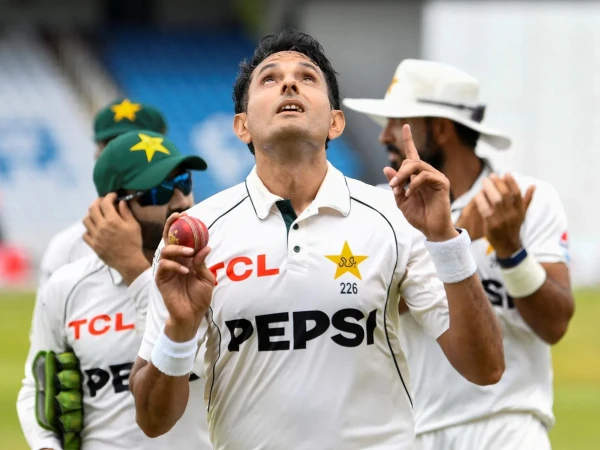
To strengthen the squad, Pakistan handed Test debuts to fast bowlers Awais Zafar and 20-year-old Ubaid Shah, giving both players an opportunity to showcase their talent at the highest level of the game. Their inclusion reflects Pakistan’s intent to build a younger pace attack while providing valuable international experience to emerging players.

The visitors also recalled off-spinner Sajid Khan and opening batter Abdullah Shafique, both of whom returned to the playing XI after missing the previous Test. Pakistan will be hoping that the fresh faces and team changes provide the balance needed to level the series.

The stakes are high in this final Test, as the West Indies currently hold a 1-0 lead in the two-match series following their victory in the opening encounter. A win or a draw in Port of Spain would allow the Caribbean side to secure the series, while Pakistan must register a victory to avoid a series defeat.

With rain still threatening to influence the contest, both teams will be aiming to make the most of the available playing time. As the match progresses, Pakistan’s bowlers will look to wrap up the West Indies innings quickly, while the hosts will aim to post a commanding first-innings total and strengthen their chances of sealing the series.


Similar Posts

  • 525-Foot Foosball table sets World record

    A unique football themed event in New York City celebrated the FIFA World Cup by setting a new Guinness World Record for the world’s longest foosball table. The record was created by Teremana Tequila which built a giant foosball table measuring 525 feet in length. The table was about the same size as 112 standard foosball tables placed end to end. The massive table was installed on a street in Brooklyn on July 11, where dozens of players took part in games at the same time. Its impressive size stretched beyond a full city block attracting large crowds and plenty of attention. Guinness World Records adjudicator Michael Empric attended the event and officially confirmed the achievement after checking all measurements and record requirements. Empric said the event was a success despite the hot weather.  He added that the giant foosball table was an amazing sight and looked even longer than an entire city block. The new record broke the previous world record set in Turkey in 2023 where the longest foosball table measured 497 feet 8.4 inches. Instead of throwing the table away after the event organizers announced they would cut it into several standard sized foosball tables. These tables will be donated to community and recreation centers across the United States giving children and young people more opportunities to enjoy the game. The record setting event not only celebrated football but also showed how sports can bring people together while supporting local communities.

  • |

    Arshad Nadeem opts for training in South Africa

    Olympic javelin throw gold medallist Arshad Nadeem has decided to undergo training in South Africa ahead of major international competitions. According to sources, Nadeem will not participate in the Lausanne Diamond League scheduled for August 21. His name had initially been included in the entry list for the event. The Pakistani javelin thrower is now planning to train in South Africa. He has previously completed training camps in the country on two occasions. Sources said Nadeem will travel to South Africa on the first available flight once he receives his visa. He is expected to use the training camp to prepare for his upcoming international assignments. Following his training in South Africa, Nadeem will compete at the World Athletics Ultimate Championship. The championship is scheduled to take place in Budapest from September 6 to 14. The event will bring together leading athletes from around the world. Nadeem is also expected to compete at the Asian Games after the World Athletics Ultimate Championship. The decision to skip the Lausanne Diamond League is part of his revised competition and training plan. The focus is now on preparing thoroughly for the major championships ahead. Nadeem has emerged as one of Pakistan’s leading athletics stars. He made history by winning the Olympic javelin throw gold medal, becoming a major figure in Pakistan’s international sporting success. His planned training stint in South Africa is expected to provide him with an opportunity to work on his technique, strength and overall competition preparation before returning to international action.

  • |

    Pakistan cricketers to receive CPL NOCs on August 19

    LAHORE: Pakistan’s contracted cricketers heading to the Caribbean Premier League (CPL) will have to wait until August 19 to receive their No-Objection Certificates (NOCs), as the national domestic calendar takes priority. According to sources, the CPL is scheduled to begin on Friday, with the tournament final set to be played on September 20. However, Pakistan players involved in the domestic National Champions Cup will not be released for overseas commitments until the competition concludes. The Champions Cup is being played in Multan from August 11 to 18, meaning the players selected for the tournament are expected to receive their CPL NOCs from the following day. Several Pakistan players have CPL contracts this season, including Saim Ayub, Shadab Khan, Usman Khan, Muaz Sadaqat, Naseem Shah and Sufiyan Muqeem. These players are also representing different teams in the Champions Cup, creating a scheduling clash between domestic and franchise cricket. The decision means the players will join their respective CPL franchises only after completing their domestic commitments. Meanwhile, Usman Tariq and Haseebullah Khan are also set to feature in the Caribbean tournament but are not part of the Champions Cup squad. Their availability is therefore not affected by the domestic competition in the same way. The NOC timeline has attracted attention because the CPL is an important opportunity for Pakistan players to gain experience in overseas franchise cricket. For the players involved, the challenge will now be to make a quick transition from domestic cricket in Multan to the Caribbean conditions. The Pakistan Cricket Board’s approach also underlines its emphasis on ensuring national players remain available for domestic competitions before taking part in overseas leagues. With the CPL running until September 20, Pakistan fans will be closely watching how the country’s representatives perform once they join their respective franchises.

  • |

    Five-wicket star Mohammad Abbas dropped for key Test

    PORT OF SPAIN: Pakistan’s team selection for the second Test against the West Indies has triggered widespread debate after experienced fast bowler Mohammad Abbas was left out of the playing XI despite delivering a match-winning five-wicket haul in the previous Test. The unexpected decision has raised eyebrows among cricket experts and fans, with many describing it as one of the most unusual selection calls in Pakistan’s recent Test history. Abbas was Pakistan’s standout performer in the opening Test at Tarouba, finishing with eight wickets across the match, including a brilliant five-wicket haul in one innings. Despite his efforts, Pakistan suffered a 90-run defeat, largely due to a disappointing batting display. However, instead of retaining their leading bowler, the team management opted to hand Ubaid Shah his Test debut for the series-deciding second match. Pakistan captain Babar Azam defended the move, saying the decision was based on pitch conditions and part of four changes made to the playing XI. According to Babar, the management believed the conditions in Port of Spain required a different bowling combination, and Abbas was rested with those factors in mind. The decision has nevertheless sparked criticism, particularly because bowlers who claim five wickets in an innings are rarely omitted from the very next Test. Cricket statisticians pointed out that this is believed to be the first time since 1980 that a Pakistan bowler has been dropped immediately after taking a five-wicket haul in a Test innings. The last comparable case dates back to Pakistan’s 1979-80 tour of India, when Ehteshamuddin was left out after claiming five wickets in an innings to make room for the returning Imran Khan. The debate intensified after Ubaid Shah endured a difficult start to his Test career. On the opening day of the second Test, the young pacer conceded 56 runs in just nine overs, making him Pakistan’s most expensive bowler of the day despite picking up a wicket. His costly spell has prompted fresh questions over whether the management made the right call by overlooking Abbas, whose experience and consistency have long been valued in red-ball cricket. With the series on the line, Pakistan’s selection strategy is now under intense scrutiny. Whether the bold gamble pays off could have a significant impact on the outcome of the Test and may shape discussions over team selection in the months ahead.

  • |

    Infantino’s future in doubt after FIFA rights controversy

    FIFA president Gianni Infantino is facing growing criticism after abandoning a controversial proposal to sell a stake in the commercial rights of the FIFA World Cup, a move that has raised questions about his leadership and decision-making within world football’s governing body. The proposal sparked strong opposition from several football organizations, particularly regional confederations and professional leagues, who argued that such a major commercial decision should not have been pursued without broader consultation. Critics believe the plan exposed concerns over transparency and governance at FIFA. Claudius Schaefer, the chairman of the organization representing 53 professional men’s and women’s football leagues across Europe and the chief executive of the Swiss Football League, said the handling of the proposal had seriously damaged confidence in FIFA’s leadership. According to Schaefer, the situation would have significant consequences in most organizations, especially when a senior executive advances a major business initiative without informing or involving key governing bodies. He suggested that the controversy has left Infantino’s position under increased scrutiny. The proposal was officially withdrawn after widespread resistance from football stakeholders. The decision came following criticism from various regional football confederations, with UEFA and CONCACAF publicly expressing that they had lost confidence in Infantino’s leadership after the episode. Schaefer argued that the failed proposal reflected a broader concern about FIFA’s priorities. He said the organization appeared increasingly focused on generating greater commercial revenue rather than protecting the long-term interests of football competitions, players, clubs, and domestic leagues. He also warned that expanding commercial opportunities could encourage FIFA to create even larger tournaments and increase the number of international matches. Such developments, he said, would place additional pressure on an already crowded football calendar. Professional leagues have repeatedly voiced concerns over fixture congestion, arguing that players are being asked to participate in too many matches throughout the season. Domestic competitions, they say, often bear the consequences when international tournaments continue to expand. Schaefer emphasized that national leagues remain the foundation of professional football and should not be weakened by decisions aimed primarily at increasing commercial returns. He argued that any future reforms to international competitions must balance financial objectives with the welfare of players and the health of domestic football. Another major point of criticism centered on FIFA’s decision-making process. Schaefer claimed that even members of the FIFA Council—the organization’s highest decision-making body—were reportedly unaware of the proposal before it became public. He described this lack of consultation as surprising and said it raised serious concerns about governance within FIFA. The controversy has intensified calls for greater transparency and accountability in football administration. Many stakeholders believe decisions involving the commercial future of the World Cup should involve extensive discussion with FIFA’s governing bodies, member associations, leagues, and other key partners before being considered. Although FIFA has now withdrawn the proposal, the fallout continues to fuel debate over leadership, governance, and the future direction of world football. With criticism coming from influential football organizations across different regions, pressure remains on Infantino to rebuild trust and demonstrate a more inclusive approach to decision-making on matters affecting the global game.

Leave a Reply

Your email address will not be published. Required fields are marked *