
kevin owens returns
|

Kevin Owens returns in style with SummerSlam victory

Kevin Owens made an unforgettable return to WWE after spending more than a year away from in-ring competition, defeating Sami Zayn, Finn Bálor and Gunther in a thrilling Fatal Four-Way match at SummerSlam 2026 Night Two.

The victory marked a major milestone for the former Universal Champion, who had been sidelined since April 2025 due to a severe neck injury. The injury forced Owens to pull out of a scheduled WrestleMania showdown against Randy Orton and raised concerns about his wrestling future.

After undergoing successful neck fusion surgery in July 2025, Owens spent over a year recovering and rehabilitating before finally receiving medical clearance to return to action. His comeback at Minneapolis’ U.S. Bank Stadium was kept completely under wraps, making it one of the biggest surprises of WWE’s biggest event of the summer.

The match was originally announced as a one-on-one number-one contender’s contest between longtime rivals Sami Zayn and Finn Bálor. However, moments before the bout began, SmackDown General Manager Nick Aldis appeared on stage and announced that Gunther would also be entering the match, turning it into a Triple Threat contest.

Just when fans thought the surprises were over, Kevin Owens’ entrance music suddenly blasted through the arena. The packed crowd erupted with excitement as Aldis revealed Owens as the fourth competitor, officially transforming the contest into a Fatal Four-Way match.

The encounter quickly developed into one of the most exciting matches of the night. Each competitor had moments of dominance, delivering hard-hitting offense and producing several dramatic near falls that kept the audience guessing until the very end.

Gunther looked poised to secure the victory after delivering a thunderous powerbomb to Finn Bálor. Before he could capitalize, Sami Zayn fought back with a trademark Exploder Suplex into the corner, shifting the momentum once again and bringing himself back into contention.

Owens patiently waited for the perfect opportunity to strike. As the action reached its climax, he stunned Gunther with his signature Stunner before immediately turning his attention to Zayn, his longtime friend and former tag-team partner. Owens delivered another devastating Stunner, leaving Zayn unable to recover.

Without hesitation, Owens covered Zayn for the decisive three-count, completing a remarkable comeback in his very first match after returning from injury.

The emotional victory not only showcased Owens’ resilience but also proved that he remains a top contender despite his lengthy absence from WWE programming. Fans celebrated his successful return, with many calling it one of the most memorable moments of SummerSlam 2026.

By winning the Fatal Four-Way contest, Owens also secured a guaranteed future WWE Championship opportunity against reigning champion CM Punk. The result immediately sets up a highly anticipated title clash between two of WWE’s biggest stars, adding another blockbuster rivalry to the company’s championship picture.

After overcoming a career-threatening injury and an extended recovery period, Kevin Owens has officially announced his return to the top of WWE, and his impressive SummerSlam performance suggests that his journey back to championship gold may only be beginning.
Similar Posts

  • | |

    GB to auction hunting permits for Markhor, blue Sh…

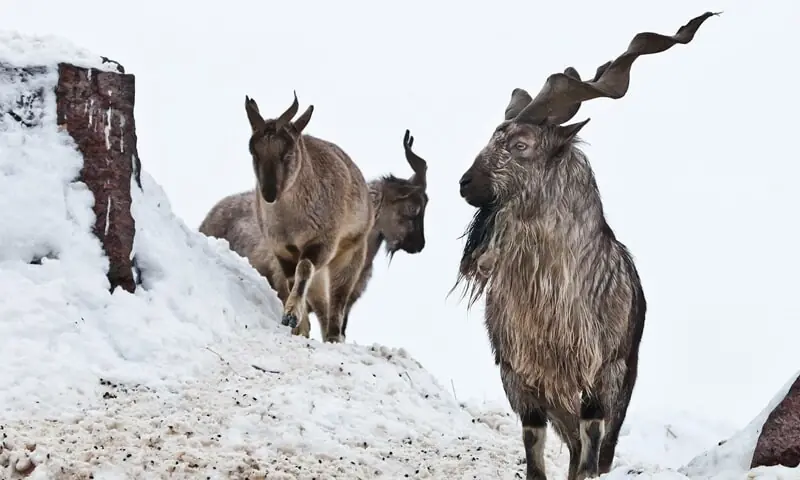
    GILGIT: The Parks and Wildlife Department of Gilgit-Baltistan is set to auction hunting permits for three Astore markhors, 14 blue sheep and 100 Himalayan ibexes under the region’s Trophy Hunting Programme for the 2026-27 season. The base price for an Astore markhor permit has been fixed at $200,000, making it the most expensive permit on offer. The minimum price for a blue sheep permit has been set at $25,000, while permits for Himalayan ibex will start at $11,000. According to the auction notice, four Astore markhors are included in the exportable quota. However, one permit from the previous hunting season has been carried forward, leaving three fresh permits to be auctioned this year. The open auction will take place on September 10 at the Forest Complex in Jutial, Gilgit. The trophy hunting season will begin on October 15, 2026, and continue until April 10, 2027, in accordance with the GB Trophy Hunting Guidelines 2019. Hunting will be permitted only within officially designated conservation areas. The department said the annual hunting quota has been determined following wildlife population surveys conducted by experts. GB Chief Conservator Parks and Wildlife Zakir Hussain said that the department collected approximately Rs350 million through permit auctions last year against a target of Rs550 million. He said several permits remained unused during the 2025-26 season, including those for two Astore markhors, five blue sheep and 10 exportable Himalayan ibexes. The unused permits resulted in an estimated revenue loss of around Rs200 million. According to officials, the cancellation of hunting plans by American and other international hunters was linked to the law-and-order situation following violent protests in Gilgit and Skardu. Local business owners and tourism operators have expressed concern over repeated increases in trophy hunting permit prices. They argue that higher baseline rates have discouraged foreign hunters and negatively affected businesses connected with hunting tourism. Ikram Beg, a local business owner who sells hunting equipment, said the trophy hunting programme was facing significant challenges. He claimed that the Wildlife Department had increased baseline prices by more than 300 per cent over the past two years without adequately incorporating recommendations from major stakeholders. According to Beg, excessive price increases could make Gilgit-Baltistan less competitive in the international trophy hunting market. He warned that declining international participation could reduce government and community revenues while weakening incentives for local residents to participate in wildlife conservation. Beg stressed that trophy hunting should primarily serve as a conservation mechanism rather than simply becoming a source of increased government revenue. He said the programme’s long-term success depends on reasonable pricing, international participation, transparent administration and meaningful financial benefits for local communities. Local stakeholders have called for a review of the permit rates and greater consultation with communities, conservation specialists and industry representatives. They have also demanded transparency and strict adherence to applicable rules and regulations. Although trophy hunting remains controversial internationally, its supporters argue that regulated hunting can generate funds for conservation, discourage illegal hunting and provide financial benefits to communities living near wildlife habitats. In Gilgit-Baltistan, the programme began with community participation in Bar Valley, Nagar, in 1990. Under the existing revenue-sharing model, approximately 80 per cent of licence revenue goes to local communitiesfor wildlife protection and conservation activities. The region’s challenging terrain and harsh weather also make trophy hunting highly demanding. Hunters must navigate steep and rugged mountain slopes while dealing with extremely cold conditions. Gilgit-Baltistan is home to diverse wildlife because of its varied ecosystems and climate. Species found in the region include Marco Polo sheep, ibex, markhor, urial, blue sheep, lynx, snow leopards, brown and black bears, wolves, foxes and golden eagles. However, wildlife experts and conservationists continue to face concerns over illegal hunting, inadequate wildlife management and the effects of climate change, all of which pose long-term threats to the region’s biodiversity.

  • | |

    PTI rejects AJK polls, demands fresh elections

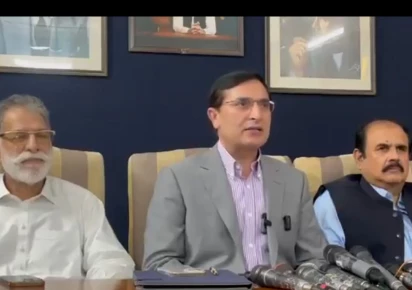
    Pakistan Tehreek-e-Insaf (PTI) has rejected the first phase of the Azad Jammu and Kashmir (AJK) elections. The party has described the July 27 polls as unacceptable and demanded a judicial inquiry into the violence reported in the region. PTI leaders also called for the cancellation of the remaining two phases of the elections. They demanded fresh elections across AJK in a single phase under an independent and impartial election commission. Speaking at a press conference on Wednesday, PTI Chairman Barrister Gohar Ali Khan appeared alongside former AJK prime minister Sardar Qayyum Niazi. The leaders strongly criticised the violence reported in Rawalakot, Mirpur and other areas. Multiple reports of deaths and injuries have emerged since Monday. Videos showing unrest have also circulated on social media, although the reported casualties could not be independently verified. Both security agencies and the Joint Awami Action Committee (JAAC) have reported casualties during clashes. Niazi said Kashmiris were facing what he described as unprecedented oppression. He said the situation was particularly concerning because Kashmiris had historically supported the cause of accession to Pakistan. He claimed protesters had attempted to resolve their grievances through negotiations. According to him, the situation deteriorated after their demands were not addressed. Niazi maintained that the protesters were peaceful. He questioned the use of force against them and urged authorities to avoid further escalation. He also criticised the decision to conduct the AJK elections in three phases. Niazi argued that the region has a relatively small population and questioned why the elections could not have been held on a single day. He said the ongoing violence was damaging Pakistan’s position on the Kashmir issue. According to him, AJK is considered an important base for the wider Kashmir cause. Niazi warned that the unrest could send a negative message internationally. He said Pakistan had previously highlighted alleged human rights violations in Indian-administered Kashmir at international forums. He argued that developments in AJK could make it difficult for Pakistan to effectively present its position on Kashmir before the international community. The former AJK prime minister also rejected the portrayal of protesters as terrorists. He said the same people had previously been engaging with authorities through negotiations. Niazi called for dialogue and urged the government to avoid further use of force. He proposed the establishment of a national government in AJK until conditions returned to normal. He said free and transparent elections should then be held across the region, with PTI participating in the process. Gohar also strongly criticised the July 27 elections. He alleged that the polls had failed to reflect the will of the people. The PTI chairman said using force to silence protesters could not resolve political and public grievances. He argued that listening to citizens was a fundamental part of democracy. Gohar criticised both the Pakistan Peoples Party (PPP) and the Pakistan Muslim League-Nawaz (PML-N) for turning the election dispute into a political contest. He said political parties should focus on the violence and reported casualties rather than exchanging allegations over electoral gains and losses. The PTI leader also pointed to the low voter turnout. He claimed that the limited participation represented public dissatisfaction with the existing political system. Gohar said the Kashmir issue was extremely sensitive and should not be used for political interests. He urged all stakeholders to act responsibly and resolve the crisis through dialogue. PTI has now formally demanded a judicial investigation into the reported violence. The party also wants the remaining election phases, scheduled for August 2 and August 10, cancelled. The party has further called for the resignation of the AJK government and the formation of a national government to manage the situation. PTI wants fresh elections to be held across AJK in a single phase. It has called for the process to be conducted under the supervision of an independent and impartial election commission. The party says dialogue should be prioritised to address public grievances and restore normalcy before a fresh electoral process begins.

  • |

    Kremlin claims capture of two key eastern Ukrainian villages

    Russian military forces have claimed control over two settlements in Ukraine’s eastern Donetsk region, according to statements released by the Russian Defence Ministry via state media. The ministry reported that its troops captured Vasyutinske, located near Kramatorsk, alongside Toretsk, situated southwest of Druzhkivka. Ukrainian authorities have not confirmed the loss of either location, and battlefield reports remain unverified independently. While frontlines across the 1,200-kilometre border have experienced minimal overall shifts in recent months, Russian forces continue an incremental westward push through the region. Ukrainian war-monitoring group DeepState reported additional Russian advances near Illinivka outside Kostiantynivka, as well as movements near Chasiv Yar, west of Bakhmut. The General Staff of the Ukrainian Armed Forces stated that its troops successfully repelled 24 individual assaults around Kostiantynivka and Illinivka. Russian commanders previously claimed control of Kostiantynivka, a statement contested by Ukrainian officials. Ukrainian President Volodymyr Zelenskiy did not address frontline shifts directly in his nightly address, but commended Ukrainian units engaged in heavy combat around Dobropillia, Kostiantynivka, and Kramatorsk.

  • | |

    Kabal bomber identified, probe intensifies

    SWAT: Khyber Pakhtunkhwa Inspector General of Police Zulfiqar Hameed has confirmed that authorities have identified the suicide bomber responsible for the deadly attack near Kabal Police Station in Swat, as investigators continue efforts to uncover the network behind the assault. Speaking to the media in Swat, the provincial police chief announced that a Joint Investigation Team (JIT) would be formed to conduct a comprehensive probe into the bombing. He also confirmed that the families of the police personnel martyred in the attack would receive the government’s martyrs’ compensation package. According to the IGP, intelligence agencies had already been alert to potential security threats, prompting heightened security measures around the police station. He said vigilant police officers intercepted the suicide attacker before he could reach his intended target, triggering the explosion. Zulfiqar Hameed praised the courage of the police personnel and reiterated the force’s commitment to strengthening its operational capabilities. He noted that while terrorist groups continue to reorganize, security forces are actively pursuing militants and will not allow them to regain a foothold in the province. The police chief confirmed that the identity of the suicide bomber has been established, while investigations are ongoing to identify his accomplices and determine the circumstances surrounding the attack. The blast near Kabal Police Station claimed the lives of several people, including police personnel, and left many others injured.

  • | |

    PM Shehbaz calls for faster rightsizing reforms

      Prime Minister Shehbaz Sharif has emphasized the need to improve the efficiency and performance of government institutions by adopting modern technology and enhancing the professional training of public sector employees. He made these remarks while chairing a high-level meeting on the federal government’s rightsizing initiative and measures aimed at improving the overall efficiency and effectiveness of state institutions. The meeting reviewed the progress made under the government’s administrative reform agenda, which seeks to reduce the size of the public sector, eliminate unnecessary expenditures, and ensure more efficient delivery of public services. Addressing the participants, the Prime Minister said that technological innovation and skill development are essential for transforming the public sector into a more responsive, transparent, and efficient system. He stressed that government institutions must embrace modern digital solutions while ensuring that employees receive the training required to adapt to new technologies and administrative practices. Shehbaz Sharif said the government’s rightsizing policy is already producing positive results by reducing unnecessary spending and improving the utilization of public resources. He noted that several major reforms have been implemented under the initiative, including the closure of the Utility Stores Corporation, Pakistan Public Works Department (Pak PWD), and the Pakistan Agricultural Storage and Services Corporation (PASSCO). According to the Prime Minister, these decisions were taken after careful consideration to streamline government operations, eliminate overlapping functions, and reduce the financial burden on the national exchequer. He said the objective of the reforms is to build a leaner and more efficient public sector capable of delivering better services to citizens while ensuring fiscal discipline. The Prime Minister stated that the savings generated through the rightsizing initiative would help strengthen the country’s financial position and allow the government to allocate more resources toward priority sectors such as education, healthcare, infrastructure, and economic development. To ensure transparency and accountability, Shehbaz Sharif directed that all positions and institutions abolished under the rightsizing programme should undergo an independent third-party audit. He said the audit would assess whether the reforms had been implemented effectively and whether the expected financial and administrative benefits had been achieved. The Prime Minister also instructed the relevant authorities to accelerate the implementation of all remaining rightsizing measures. He emphasized that administrative reforms should be carried out efficiently while maintaining transparency and ensuring that public services are not disrupted during the restructuring process. During the meeting, officials briefed the participants on the progress achieved so far. They informed the Prime Minister that vacant positions across various federal ministries and government departments have been abolished as part of the government’s effort to reduce unnecessary staffing and improve administrative efficiency. The meeting was further informed that work is also underway on the privatization of several state-owned enterprises. Officials said the government is taking practical steps to transfer selected public sector entities to the private sector in accordance with its broader economic reform programme. The privatization process aims to reduce the financial burden of loss-making enterprises on the national budget while encouraging greater investment, improved management, and enhanced productivity. Participants also reviewed the overall progress of the government’s institutional reform agenda and discussed future steps to further improve governance and public sector performance. The Prime Minister reiterated that administrative reforms are essential for ensuring sustainable economic growth, strengthening public finances, and delivering better services to the people. Concluding the meeting, Shehbaz Sharif reaffirmed the government’s commitment to continuing structural reforms aimed at creating a modern, efficient, and accountable public sector. He said that through the adoption of technology, improved training, transparent governance, and responsible financial management, Pakistan’s government institutions can become more effective in meeting the needs of citizens and supporting the country’s long-term development goals.

Leave a Reply

Your email address will not be published. Required fields are marked *