shehbaz calls faster
| |

PM Shehbaz calls for faster rightsizing reforms


Prime Minister Shehbaz Sharif has emphasized the need to improve the efficiency and performance of government institutions by adopting modern technology and enhancing the professional training of public sector employees.

He made these remarks while chairing a high-level meeting on the federal government’s rightsizing initiative and measures aimed at improving the overall efficiency and effectiveness of state institutions. The meeting reviewed the progress made under the government’s administrative reform agenda, which seeks to reduce the size of the public sector, eliminate unnecessary expenditures, and ensure more efficient delivery of public services.

Addressing the participants, the Prime Minister said that technological innovation and skill development are essential for transforming the public sector into a more responsive, transparent, and efficient system. He stressed that government institutions must embrace modern digital solutions while ensuring that employees receive the training required to adapt to new technologies and administrative practices.

Shehbaz Sharif said the government’s rightsizing policy is already producing positive results by reducing unnecessary spending and improving the utilization of public resources. He noted that several major reforms have been implemented under the initiative, including the closure of the Utility Stores Corporation, Pakistan Public Works Department (Pak PWD), and the Pakistan Agricultural Storage and Services Corporation (PASSCO).

According to the Prime Minister, these decisions were taken after careful consideration to streamline government operations, eliminate overlapping functions, and reduce the financial burden on the national exchequer. He said the objective of the reforms is to build a leaner and more efficient public sector capable of delivering better services to citizens while ensuring fiscal discipline.

The Prime Minister stated that the savings generated through the rightsizing initiative would help strengthen the country’s financial position and allow the government to allocate more resources toward priority sectors such as education, healthcare, infrastructure, and economic development.

To ensure transparency and accountability, Shehbaz Sharif directed that all positions and institutions abolished under the rightsizing programme should undergo an independent third-party audit. He said the audit would assess whether the reforms had been implemented effectively and whether the expected financial and administrative benefits had been achieved.

The Prime Minister also instructed the relevant authorities to accelerate the implementation of all remaining rightsizing measures. He emphasized that administrative reforms should be carried out efficiently while maintaining transparency and ensuring that public services are not disrupted during the restructuring process.

During the meeting, officials briefed the participants on the progress achieved so far. They informed the Prime Minister that vacant positions across various federal ministries and government departments have been abolished as part of the government’s effort to reduce unnecessary staffing and improve administrative efficiency.

The meeting was further informed that work is also underway on the privatization of several state-owned enterprises. Officials said the government is taking practical steps to transfer selected public sector entities to the private sector in accordance with its broader economic reform programme. The privatization process aims to reduce the financial burden of loss-making enterprises on the national budget while encouraging greater investment, improved management, and enhanced productivity.

Participants also reviewed the overall progress of the government’s institutional reform agenda and discussed future steps to further improve governance and public sector performance. The Prime Minister reiterated that administrative reforms are essential for ensuring sustainable economic growth, strengthening public finances, and delivering better services to the people.

Concluding the meeting, Shehbaz Sharif reaffirmed the government’s commitment to continuing structural reforms aimed at creating a modern, efficient, and accountable public sector. He said that through the adoption of technology, improved training, transparent governance, and responsible financial management, Pakistan’s government institutions can become more effective in meeting the needs of citizens and supporting the country’s long-term development goals.

Similar Posts

  • | | |

    Kriti Sanon responds to Kangana Ranaut’s critici…

    Bollywood actress Kriti Sanon has responded to criticism surrounding a jewellery company’s Raksha Bandhan advertisement after the campaign sparked controversy over her outfit. The advertisement featured Sanon celebrating Raksha Bandhan a Hindu festival during which sisters traditionally tie a sacred thread, known as a rakhi, around their brothers’ wrists. In the campaign Sanon was shown wearing a top and skirt while taking part in the festival celebrations. The advertisement was removed following criticism from some sections of social media users who considered the actress’s outfit inappropriate for a traditional Hindu festival. Responding to the criticism Sanon said that culture and traditions are part of a woman’s heart rather than being determined by the neckline of her clothing. The controversy intensified on Tuesday after Bollywood actress and Bharatiya Janata Party (BJP) Member of Parliament Kangana Ranaut criticized the advertisement. Although Ranaut did not directly mention Sanon’s name in her social media post, her comments appeared to be directed at the actress and the campaign. Ranaut questioned why a woman would choose to wear what she described as a bikini while tying a rakhi to her brother when women have many different clothing options available to them. Her comments quickly attracted attention online with some social media users agreeing with her criticism of Sanon’s outfit. Several users argued that clothing choices should be more sensitive to the cultural and religious significance of traditional festivals. One social media commentator described Sanon’s top as too short and argued that there should be clear limits when portraying Hindu festivals in advertising. The debate has since expanded beyond the advertisement itself raising broader questions about women’s clothing, cultural traditions and the way religious festivals are represented in commercial campaigns. Sanon’s response has also added another dimension to the discussion with the actress emphasizing that cultural identity and traditions should not be judged solely by a woman’s clothing. The controversy highlights the growing influence of social media on advertising campaigns in India where brands can face significant public pressure over the representation of religion, culture and social values. As the debate continues the Raksha Bandhan advertisement has become a wider discussion about personal choice, cultural sensitivity and the expectations placed on women’s appearance during traditional celebrations.

  • |

    US, Saudi Arabia sign major civil nuclear cooperation agreement

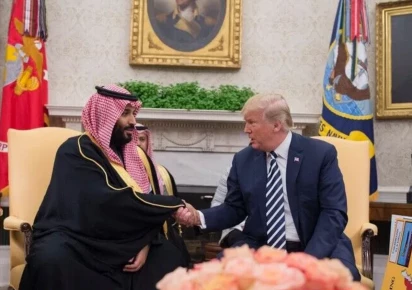
    The United States and Saudi Arabia have signed a major civil nuclear cooperation agreement, opening a new chapter in their strategic partnership and expanding cooperation in the peaceful use of nuclear energy. The agreement was signed by US Energy Secretary Chris Wright and Saudi Energy Minister Prince Abdulaziz bin Salman. Along with the civil nuclear cooperation pact, both countries also signed a bilateral safeguards agreement to ensure that nuclear technology is used only for peaceful and civilian purposes. The agreement establishes the legal framework for long-term cooperation in the civil nuclear sector. It is expected to support multi-billion-dollar investments, strengthen commercial ties, and create opportunities for collaboration on future nuclear energy projects. US officials said the partnership will allow American companies to participate in Saudi Arabia’s growing civil nuclear programme. The agreement is also expected to increase exports of US nuclear technology, equipment, and services while creating new employment opportunities and strengthening industrial supply chains in the United States. The two governments said the agreement reflects their shared commitment to expanding economic cooperation while maintaining the highest international standards for nuclear safety, security, and non-proliferation. Officials stressed that the partnership is designed to ensure that nuclear technology is used exclusively for peaceful purposes and remains under strict international safeguards. US Energy Secretary Chris Wright described the agreement as an important step toward strengthening relations between Washington and Riyadh. He said the partnership would promote economic growth, improve energy cooperation, and enhance security for both countries and their regional allies. He added that the agreement relies on advanced American nuclear technology and scientific expertise while fully complying with international nuclear safety and non-proliferation requirements. Officials also believe the agreement will strengthen the United States’ position in the global civil nuclear industry by expanding overseas markets for American technology and reinforcing its leadership in peaceful nuclear development. For Saudi Arabia, the agreement supports the country’s long-term energy strategy, which aims to diversify energy sources and reduce dependence on oil by developing a civilian nuclear power programme alongside renewable energy projects. The agreement will now be submitted to the US Congress for review before it can enter into force. Following congressional approval, both countries are expected to begin implementing the framework and advance cooperation on future civil nuclear projects.

  • |

    Trump link to Balogun decision triggers FIFA backlash

    ZURICH: A fresh controversy has erupted around the 2026 FIFA World Cup after Norway’s Football Federation announced it is considering filing a formal complaint with FIFA’s Ethics Committee over the governing body’s decision to reverse the automatic suspension of United States forward Folarin Balogun. The dispute centers on FIFA’s decision to suspend Balogun’s one-match ban for 12 months, allowing him to feature in the United States’ Round of 16 clash against Belgium despite receiving a straight red card in an earlier match against Bosnia and Herzegovina. Under FIFA regulations, the dismissal would normally have ruled the striker out of the knockout fixture. However, the suspension was put on hold, a move that has drawn criticism from several football associations and intensified debate over the integrity of disciplinary procedures. According to international media reports, the decision followed reported intervention by US President Donald Trump, a claim that has fueled accusations of political influence in football governance. Although Balogun was cleared to play, the decision ultimately had little impact on the result, with Belgium defeating the United States 4-1 to advance to the quarter-finals. Norwegian Football Federation President Lise Klaveness said the organization is now examining whether to expand an existing ethics complaint against FIFA by including the Balogun case. Klaveness indicated that the issue could be linked with an earlier complaint concerning FIFA’s decision to award Trump a symbolic “Peace Prize,” arguing that both matters raise broader questions about governance, transparency and independence within world football. The controversy has also attracted criticism from Belgium’s Football Federation and European football governing body UEFA, both of which reportedly expressed serious reservations over FIFA’s handling of the disciplinary process. Belgium had sought clarification regarding the decision to allow Balogun to participate, but FIFA reportedly dismissed the request as inadmissible, further adding to frustration among European football officials. The latest dispute has reignited debate over whether external political influence should have any role in decisions affecting international competitions. While FIFA has not publicly addressed the allegations of political pressure, the governing body maintains that its disciplinary and appeals processes operate under established legal frameworks. The controversy comes at a sensitive time for FIFA following the conclusion of the expanded 2026 World Cup, with calls growing for greater transparency in disciplinary decisions involving players and national teams. If Norway proceeds with its complaint, FIFA’s Ethics Committee could face renewed scrutiny over its governance standards and decision-making process, potentially prolonging one of the tournament’s most talked-about off-field controversies.

  • | |

    Father challenges medical report in Mir Raza case

    The mystery surrounding the death of young businessman Mir Raza Ali Khan remains unresolved as investigators continue to examine evidence, while the victim’s family insists he was murdered and has raised questions about the findings of the preliminary medical report. Mir Raza’s father, Hussain Raza, has rejected the possibility of suicide. He claimed his son was killed and alleged that attempts were being made to present the case as a suicide. He expressed concern over the medical report, saying it mentioned only the gunshot injury and did not describe what he believes were signs of physical violence on his son’s body. According to the father, Mir Raza had injuries on his face, hands and other parts of his body. He also claimed his son was shot from behind and questioned why the report did not include details of the alleged injuries. He further asked investigators to explain what happened during the period between his son’s disappearance on July 28 and the recovery of his body the following day. He said Mir Raza had spoken to his sister before leaving home and appeared to be in good spirits. The taxi driver who transported him also reportedly told investigators that Mir Raza seemed relaxed and was listening to music during the journey. The family has appealed to senior authorities for a transparent and impartial investigation. The investigation has made further progress with the recovery of another CCTV recording showing Mir Raza’s movements before his death. The footage reportedly captures him taking his mobile phone out of his pocket and throwing it away. Investigators are conducting forensic and technical analysis of the video to determine its significance. Police said the preliminary medical examination found that Mir Raza died from a gunshot wound to the chest. However, the firearm used in the incident and the spent bullet casing have not yet been recovered, leaving investigators without key physical evidence. As part of the ongoing investigation, police are also looking into Mir Raza’s financial dealings. Initial inquiries suggest he had borrowed money from several individuals. Authorities are preparing a list of those people and are questioning them to determine whether any financial dispute may have contributed to the incident. Investigators have so far included 12 individuals in the inquiry and recorded statements from 15 people connected to the case. Earlier CCTV footage showed Mir Raza leaving his shop in Bahadurabad during the early hours after taking a security guard’s pistol from a drawer. He later returned home, where he left behind his car, smartwatch, house keys and Rs39,000 before booking an online taxi. Further footage showed him traveling alone to Gulistan-e-Jauhar. Investigators believe he switched off his mobile phone near Johar Mor before reaching Block 2, where he was last traced.

  • |

    OGRA increases petrol, diesel prices again

    Islamabad – The Oil and Gas Regulatory Authority (OGRA) has announced another increase in petroleum prices marking the fourth consecutive day of fuel price hikes and issued new rates for petrol and high-speed diesel. According to an OGRA notification, the price of petrol has been increased by Rs. 4.40 per litre bringing the new price to Rs. 331.52 per litre. Similarly, the price of high-speed diesel (HSD) has been raised by Rs. 3.62 per litre taking the new price to Rs. 378.66 per litre. The notification states that the revised prices will come into effect from 12:00 a.m. on the night between July 23 and July 24 after which fuel stations across the country will charge customers according to the new rates. OGRA said the price adjustment was made after taking into account global crude oil prices, import costs and other relevant market factors. The continued increase in petroleum prices is expected to raise transportation costs which could in turn push up the prices of essential commodities. Members of the public and the business community have expressed concern over the repeated increases and urged the government to take effective measures to stabilize fuel prices. It is worth noting that this is the fourth consecutive day that OGRA has increased petroleum prices resulting in a significant rise in fuel costs over the past several days.

  • |

    Brazil recalls ambassador after Milei labels Lula a “thief” at campaign rally

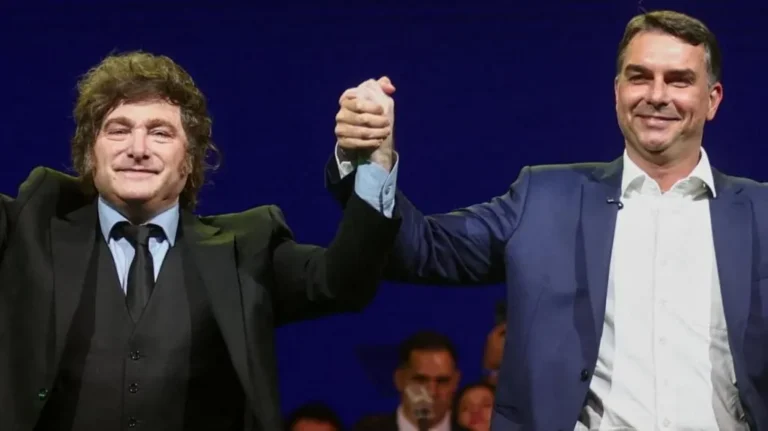
    Relations between Brazil and Argentina have taken another sharp turn after Brazilian President Luiz Inacio Lula da Silva was indirectly attacked by Argentine President Javier Milei during a political rally in Sao Paulo. Brazil responded by recalling its ambassador from Buenos Aires, calling Milei’s remarks an insult to the country’s leadership, institutions, and democracy. Milei traveled to Brazil over the weekend to support Flavio Bolsonaro, who officially launched his campaign for Brazil’s presidential election scheduled for October. Flavio is the son of former Brazilian president Jair Bolsonaro and is representing the right wing Liberal Party after his father was barred from seeking office. During his speech, Milei did not mention Lula by name but referred to “the thief” and “the convict,” comments widely understood to be aimed at the Brazilian president. The remarks referenced Lula’s previous imprisonment on corruption charges before those convictions were later overturned, allowing him to return to politics and win the 2022 presidential election. Standing alongside Flavio Bolsonaro, Milei praised the candidate and said he believed he was the only person capable of defeating Lula in the upcoming election. The Argentine president has maintained close political ties with the Bolsonaro family and has openly supported their conservative agenda. Milei also criticized a senior Brazilian Supreme Court judge who oversaw legal proceedings involving Jair Bolsonaro. Without naming Justice Alexandre de Moraes directly, he used insulting language while referring to the judge. Earlier this month, Moraes rejected Milei’s request to visit the former Brazilian president, who is currently under house arrest in Brasilia. Jair Bolsonaro is serving a prison sentence of more than 27 years after being convicted of plotting a coup to remain in power following his defeat in the 2022 election. Because he is no longer eligible to run for public office, he has endorsed his son Flavio as the candidate for his party in this year’s presidential race. Brazilian officials reacted strongly to Milei’s comments. According to diplomatic sources, the statements were viewed as offensive not only to the country’s president but also to its judiciary, democratic institutions, and the Brazilian people. In response, Brazil recalled its ambassador from Argentina in a diplomatic protest, signaling growing frustration with Milei’s repeated criticism of the Brazilian government. President Lula did not directly address Milei’s speech during a public event on Sunday. However, he appeared to respond indirectly by saying that Brazil would not accept interference from outsiders in its internal affairs. His comments were seen as a clear message that foreign leaders should avoid becoming involved in Brazil’s domestic political disputes. The latest exchange has further strained ties between South America’s two largest economies. Despite their political differences, Brazil and Argentina remain each other’s biggest trading partners, making stable diplomatic relations important for regional trade and economic cooperation. With Brazil’s presidential election approaching, political tensions are expected to remain high. Milei’s public support for Flavio Bolsonaro and his criticism of Lula have added an international dimension to the campaign, increasing pressure on relations between the neighboring countries at a time when cooperation remains vital on economic and regional issues.

Leave a Reply

Your email address will not be published. Required fields are marked *