comes after mvp
| | | |

Who comes after MVP? Pangilinan has successors in mind.

Manuel V. Pangilinan has spent decades assembling one of the country’s most diversified business groups. 

Now, the time to pass the reins on to the next generation is nearing. And he already has a list of names.

“I just spoke to the HR people this morning. I said, we need to identify the first ones down. And name them,” he said in a mix of English and Filipino as reporters huddled around him. “And then the second down from my level, we will name them. I have a few names already, younger people.”

inside track logo

His remarks came during a Meralco briefing on Wednesday, July 29, but the succession question extends far beyond the distribution giant because Pangilinan continues to hold top positions across the wider MVP group.

Unlike the family empires of the Sys, Gokongweis, or Aboitizes, the MVP group is not housed under a single listed conglomerate. It’s a web of companies anchored on telecommunications giants PLDT and Smart, Meralco, and its power generation arm MGen, and Metro Pacific Investments Corporation’s interests in toll roads, Maynilad, hospitals, property, and agriculture.

Pangilinan also chairs Philex Mining and PXP Energy. His media interests, meanwhile, run through MediaQuest Holdings, whose portfolio includes TV5, Cignal, The Philippine Star, BusinessWorld, Radyo5, One News, and One Sports.

To put it in terms familiar to the basketball-loving Pangilinan, succession may be less about singing out one MVP and more about assembling an all-star team to lead his companies across vastly different boards, shareholders, and industries.

The 80-year old tycoon already had some difficulty leaving his biggest posts in the past. He stepped down as PLDT president and chief executive officer in 2021, only to return in 2024 after his successor, Al Panlilio, resigned for health reasons. (READ: Wanted: Manny Pangilinan’s replacement)

But the veteran businessman already has a profile in mind.

“Probably in their 30s and early 40s. And they have to be IT-oriented, right?” he said. “They can’t be the run-of-the-mill legacy guys majored in HRM or home economics.”

The jab at “legacy” managers and non-technology degree programs was blunt. The next crop of leaders will be young and digitally fluent. After all, the group is going big into cutting-edge technologies — everything from AI-ready data centers, large-scale renewable energy projects, and electric vehicle charging networks. (READ: [Finterest] Want to invest in data centers? Watch out for PLDT’s VITRO REIT)

Must Read

Meralco chair Pangilinan: Power industry ‘may not survive’ if asked to absorb system loss


Meralco chair Pangilinan: Power industry ‘may not survive’ if asked to absorb system loss

Meralco: Solar roofs, EV chargers

In the meantime, MVP is still getting busy. He’s already charted out where Meralco’s growth in the next few years could come from.

Pangilinan said the “intrusion of solar power” partly explained tepid electricity-volume growth in the first half. Rooftop systems allow homes and businesses to draw less electricity from the grid, slowly chipping away at the utility’s conventional market.

But instead of resisting that shift, Pangilinan wants Meralco to lean into it. “It’s important that Meralco gets into solarization rooftops in a big way because you don’t need a franchise to solarize Cebu City, Davao City, wherever,” he said.

Rooftop solar would also let Meralco expand outside the geographic boundaries of its distribution franchise. The commercial and industrial market would be the easier first target: there are fewer customers, but each consumes significantly more power. Households offer the larger mass market, although Pangilinan acknowledged that serving them would be operationally harder because of installations and varying local permit requirements.

The other big bet is electric vehicles.

“The company that is best able to build a network of charging stations is Meralco, right? Not only in its franchise area but elsewhere,” Pangilinan said, adding that a separate unit had been created for the business.

Meralco plans to initially pursue companies with large fleets of cars, taxis, buses, or jeepneys. A single customer operating hundreds or thousands of vehicles could create far more electricity demand than scattered individual motorists, making fleet charging a quicker route to scale.

A battle between two jumbo listings

Pangilinan is also standing his ground on VITRO REIT, PLDT’s proposed data center real estate investment trust, even as it risks competing for investor funds with the much larger GCash offering.

VITRO REIT is seeking to raise up to P24.2 billion from an initial portfolio of eight income-generating data centers. The listing would make it the country’s first digital infrastructure REIT.

GCash parent Mynt, meanwhile, is preparing a share sale of as much as P92.3 billion, potentially the largest initial public offering in Philippine history. 

The timing has prompted questions over whether the local market has enough liquidity to absorb both within a tight window.

Asked whether PLDT would consider giving way to the GCash listing, Pangilinan pointed to VITRO’s position in the queue. “Nauna kami. (We were first.) I understand we will be first,” he said. “So far as we’re concerned, we’re pushing the REIT.”

In other matters, Pangilinan may soon have one fewer billionaires in his orbit.

Batangas Representative Leandro Leviste founded SP New Energy Corporation and built a fortune by selling down his holdings to the Meralco group. Meralco now controls the listed solar company and its flagship MTerra Solar project, while Leviste remains a minority shareholder.

It has not been an entirely trouble-free partnership. Leviste’s broader Solar Philippines group was slapped with around P24 billion in penalties after the Department of Energy canceled several contracts over projects it failed to deliver. The Ombudsman has also investigated allegations that a congressional franchise was effectively transferred to the Pangilinan group without congressional approval. Leviste has denied selling an active franchise, arguing that the company holding it had already ceased operations.

Now, Leviste’s remaining financial link to the MVP group could be loosened.

“He’s still there, but I understand he’s talking to several people about disposing his shares — some or all of his shares,” Pangilinan said, keeping his remarks brief. “We’re not party to that discussion.” – Rappler.com

Must Read

[Vantage Point] The Leviste sting: The risks of trading farmland for megawatts


[Vantage Point] The Leviste sting: The risks of trading farmland for megawatts

Similar Posts

  • |

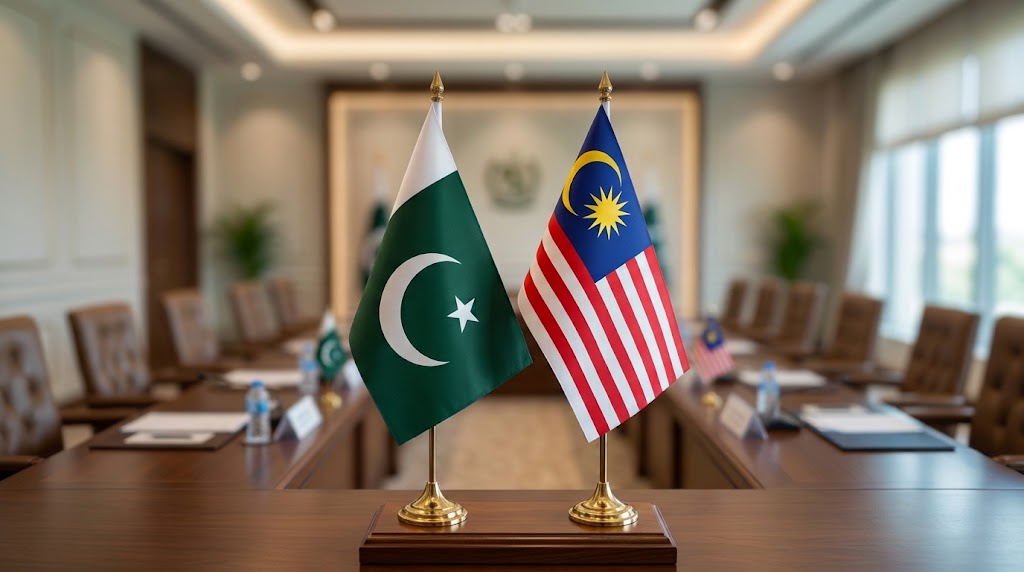
    Pakistan, Malaysia agree to strengthen counter-terrorism and security cooperation

    ISLAMABAD: Pakistan and Malaysia have agreed to deepen cooperation in security and law enforcement, with particular emphasis on intelligence sharing, counter-terrorism, drug trafficking, human smuggling and other transnational crimes. The understanding was reached during a meeting between Federal Interior Minister Mohsin Naqvi and Malaysian Minister of Home Affairs Saifuddin Nasution Ismail in Islamabad on Saturday. The two sides reviewed a range of issues related to bilateral security cooperation and agreed to strengthen institutional coordination between the relevant agencies of both countries. During the meeting, the ministers discussed ways to develop more effective mechanisms for exchanging intelligence and coordinating efforts against terrorist networks, narcotics trafficking and human trafficking. They also agreed to enhance cooperation aimed at preventing illegal immigration and tackling cybercrime, which has emerged as a growing challenge for law enforcement agencies worldwide. The two countries also discussed expanding collaboration in the fields of coast guard operations and professional training. Pakistan expressed interest in learning from Malaysia’s experience in strengthening maritime security and developing the capabilities of its coast guard institutions. A key outcome of the meeting was an agreement to improve cooperation between Pakistan’s National Police Academy and the Royal Malaysia Police College. The initiative is expected to facilitate the exchange of expertise, training programmes and professional experiences between law enforcement personnel from the two countries. The ministers also agreed that a high-level Pakistani delegation would visit Malaysia in the near future. The proposed visit is expected to provide an opportunity to advance discussions on bilateral security cooperation and explore new areas of collaboration between the two countries. Naqvi said Pakistan attached great importance to its relations with Malaysia and was keen to further expand cooperation in areas of mutual interest. He said Malaysia’s experience in the Coast Guard sector could provide valuable lessons for Pakistan and expressed confidence that the Malaysian minister’s visit would help take bilateral relations to a new level. The interior minister also highlighted the potential for increasing people-to-people contacts between Pakistan and Malaysia. He described Malaysia as one of the rapidly developing Muslim-majority countries and an attractive destination for Pakistani tourists. Naqvi stressed the importance of facilitating legitimate travel between the two countries, saying that an increase in employment opportunities and work quotas for Pakistanis in Malaysia could encourage more people to use legal channels for travelling and working abroad. Tourism promotion and the facilitation of visa procedures also formed part of the discussions. Both sides emphasized the need to make travel easier while ensuring that immigration systems remain secure and effective. The meeting comes as Pakistan and Malaysia seek to broaden cooperation beyond traditional diplomatic and economic ties, particularly in dealing with security challenges that increasingly cross national borders. Officials from Pakistan’s Interior Ministry and law enforcement institutions also attended the meeting. Participants included State Minister for Interior Talal Chaudhry, the Interior Secretary, Director General of the Federal Investigation Agency (FIA), Inspector General of the Federal Constabulary (FC), the National Coordinator of the National Counter Terrorism Authority (NACTA), and other senior officials. The two countries are expected to continue consultations through their respective institutions, with the planned Pakistani delegation’s visit to Malaysia likely to provide further momentum to cooperation in counter-terrorism, law enforcement, immigration and maritime security.

  • |

    Goods transporters’ strike enters sixth day as talks With government fail

    The nationwide strike by goods transporters has entered its sixth consecutive day after negotiations with the federal and provincial governments failed to produce a breakthrough. President of the Goods Transporters Association Nabil Mahmood Tariq said the talks had reached a deadlock, with no agreement reached on the key demands of the transport sector. He warned that the strike would continue indefinitely unless the government addressed the concerns raised by transporters. Speaking to Geo News by telephone, Nabil Mahmood Tariq said the negotiations failed because of what he described as the government’s rigid stance. According to him, transporters are particularly concerned about frequent changes in diesel prices, which they say make it difficult to manage transportation costs and business operations. He said the government had also refused to reduce toll taxes or guarantee that existing toll rates would remain unchanged for at least one year. Transporters have maintained that rising operating expenses, including fuel and toll charges, are putting increasing pressure on the sector. The association president said the government had offered limited concessions on customs-related matters and axle-load restrictions, but the proposals were not sufficient to end the strike. He further alleged that authorities had not yet fully assessed the economic consequences of the ongoing shutdown. According to him, the impact would become more visible in the coming days if the dispute remained unresolved. The strike has already begun affecting the movement and supply of essential commodities in several parts of the country. Disruptions in the transportation of fruits and vegetables have raised concerns about shortages and further increases in prices. In Balochistan, the strike has reportedly contributed to higher prices of several food items. In Quetta, for instance, the price of chicken meat has increased from around Rs500 to Rs550 per kilogram amid supply disruptions. Meanwhile, efforts are continuing in Karachi to maintain the supply of vegetables through smaller vehicles. However, transport-sector representatives warn that such arrangements may not be sufficient to meet normal market demand if the strike continues for an extended period. The prolonged protest has raised concerns among traders, consumers and businesses that rely heavily on road transportation. Any further delay in resolving the dispute could increase pressure on supply chains and potentially push up the prices of essential goods.

Leave a Reply

Your email address will not be published. Required fields are marked *