yemen8217s houthis attack
|

Yemen’s Houthis attack Saudi refinery after kingdom signs defense pact

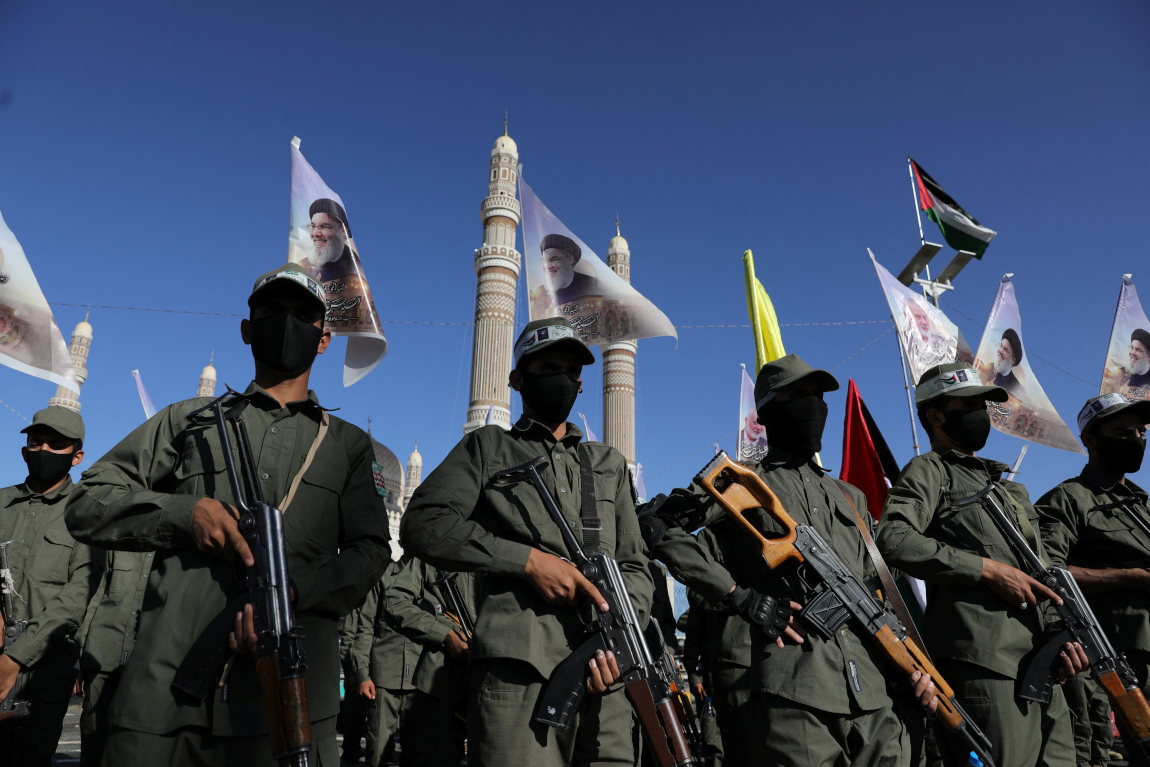
Yemen’s Iran-aligned Houthis have attacked Saudi Aramco’s Jazan refinery, they said on Sunday, August 9, two days after the kingdom signed a defense pact with Turkey and Pakistan in response to growing regional instability from the US-Israeli war on Iran.

The alliance with Sunni Muslim US allies, Turkey, and Pakistan, is intended to strengthen collective deterrence against any act of aggression and stipulates that an armed attack against any of the three would be regarded as an attack on all.

It was not clear whether or how either Pakistan or Turkey would join in any Saudi response to the latest attacks.

Must Read

Houthi attack on Saudi Arabia wounds 11 civilians as kingdom warns of wider threat


Houthi attack on Saudi Arabia wounds 11 civilians as kingdom warns of wider threat

The Houthis declared a naval blockade against Saudi Arabia in the Red Sea last month, citing what they said was a Saudi siege on them, an allegation Riyadh denies.

The Saudi energy ministry said a fire had broken out at the refinery but was later extinguished with no injuries and authorities were dealing with the incident, without giving a cause.

The Houthis used a drone to target the refinery, military spokesperson Yahya Saree posted on X. They had struck Aramco sites before in Jazan, which processes 400,000 barrels of crude oil per day in southwestern Saudi Arabia. They had also hit Yanbu on the Red Sea.

In a separate statement, Saree said the Houthis carried out missile and drone strikes on the Yemeni Red Sea port city of Mocha.

The port, controlled by the Aden-based government, is close to the strategic Bab el-Mandeb strait, which links the southern Red Sea with the Gulf of Aden and the Indian Ocean.

Should it be closed, Saudi Arabia would be deprived of an alternative to the Strait of Hormuz.

Jazan refinery was shut in late July

Three Yemeni government sources told Reuters that air defenses were engaging drones launched by the Houthis towards the commercial quay and storage in the port.

Saree said the Houthi strikes targeted Saudi troops and weapons arsenal in the area. There was no Saudi comment on the attacks in Yemen.

Rashad al-Alimi, head of Yemen’s Saudi-backed presidential council, on Sunday briefed US Mission to Yemen Chargé d’Affaires Neil Hop on the developments, according to a statement.

He said the Houthis’ attack put a responsibility on the international community, foremost among them the US, to “move beyond only containing the Houthi threat to addressing its sources and instruments.”

Seven people killed, Yemeni spokesperson says

The Yemeni military spokesperson said the attack on the port killed seven people.

The Yemeni transportation ministry said in a statement that the attack caused severe damage to the port’s infrastructure.

“This marks yet another assault on a vital civilian facility that serves citizens and contributes to boosting commercial and maritime activity in the Red Sea,” the ministry said.

Iran and its allied Shi’ite Muslim armed groups have been firing on Saudi Arabia and other Gulf states and blockading their energy shipments since the US and Israel attacked the country on February 28 in a major escalation after years of regional tumult.

Talks have dragged on between the US and Iran in pursuit of a peace deal, with access to the Strait of Hormuz, a major conduit for energy supplies, proving a major stumbling block.

Houthi attacks in the Red Sea have aggravated the disruptions of supplies to global markets.

Pakistan’s military, air force, prime minister’s office and information and foreign ministries did not respond to requests for comment and the Turkish government did not respond to a request on Sunday for comment on the implications of the refinery attack.

Turkish Foreign Minister Hakan Fidan said on Friday, as the alliance was announced, that it was not directed against Iran or any other country, but rather served as a general pledge to support the three allies’ security.

Fidan said the allies would decide through consultations what degree, form, and format of support they would ask for in the event of an attack on any of them. – Rappler.com

Similar Posts

  • |

    Wildfires force 43,000 to flee in France

    More than 43,000 people have been evacuated from southwestern France as massive wildfires continue to spread across several regions, threatening residential areas, forests and popular tourist destinations. French authorities have launched one of the country’s largest emergency operations of the year as firefighters work around the clock to contain the rapidly advancing flames. The worst-affected area is located near Arcachon Bay and the Cap Ferret peninsula in the Gironde region. The wildfire has already burned through more than 8,700 hectares of land and continues to spread because of strong winds, dry vegetation and extremely high temperatures. Authorities ordered the complete evacuation of the Cap Ferret peninsula, a major holiday destination on France’s Atlantic coast that attracts thousands of visitors every summer. Residents, tourists and campers were instructed to leave immediately as emergency services expanded evacuation operations. To speed up the evacuation, authorities arranged transport by both road and sea. Special boats were deployed from several coastal villages while vehicles used the peninsula’s only highway leading to the mainland. Emergency officials urged everyone in the affected areas to leave without delay for their own safety. French Interior Minister Laurent Nunez described the Gironde wildfire as the largest fire of the current season. He said around 80 homes have been damaged, including nearly 50 houses that were completely destroyed by the flames. More than 1,000 firefighters, supported by helicopters, military engineering units and civil security teams, are working to control the blaze in Gironde. Hundreds of police officers and emergency personnel have also been deployed to help with evacuations, traffic management and public safety. A second major wildfire is burning near Biscarrosse in the neighbouring Landes region. The fire has destroyed more than 2,500 hectares of forest and forced the evacuation of over 23,000 residents, tourists and campers. Local authorities said the blaze remains out of control after continuing to spread overnight. French President Emmanuel Macron has requested international assistance through the European Union Civil Protection Mechanism. Several European countries have agreed to send additional firefighting aircraft and helicopters to help French authorities contain the fires. Croatia is sending Canadair water-bombing aircraft, while Portugal will provide specialised firefighting planes. The Czech Republic and Slovakia are also deploying heavy helicopters to assist emergency crews. Emergency officials said there have been no confirmed fatalities in the Gironde wildfire so far. However, they warned that weather conditions remain highly dangerous and could make firefighting efforts even more difficult in the coming days. Fire experts say the blazes are spreading unusually quickly because of prolonged heatwaves, severe drought and strong winds. These conditions have left forests and vegetation extremely dry, allowing fires to expand rapidly across large areas. Authorities estimate that nearly 50,000 hectares of land have burned across France since the beginning of this year’s wildfire season, making it one of the country’s most destructive fire seasons in recent years.

  • |

    US Department of Defence orders swift ramp-up in weapons manufacturing as conflict with Iran strains stockpiles

    The United States Department of Defence has called on defence contractors to accelerate weapons production amidst growing anxiety over dwindling military stockpiles as hostilities with Iran persist. Deputy Secretary of Defence Steve Feinberg issued a formal directive on Wednesday, setting a 21-day deadline for defence industry leaders to deliver proposals aimed at driving significantly faster delivery timelines and boosting output for critical capabilities. The directive was initially revealed by The Washington Post following heightened scrutiny regarding the condition of US weapons reserves during the ongoing conflict. Spokesperson for the Department of Defence Sean Parnell verified the authenticity of the directive, noting that the submissions will directly shape the Pentagon’s budget request for fiscal year 2028. “The August 5 memo is real,” Parnell stated. “It will inform the fiscal year 2028 budget submitted to Congress for funding, and it is entirely consistent with our ongoing push to rebuild the defence industrial base.” Parnell added that direct engagement with weapons manufacturers is routine practice, defending the administration’s aggressive measures to expedite procurement schedules. He detailed that Feinberg is actively working to overhaul what he characterized as a broken, outdated, and overly intricate procurement framework, ensuring the military retains the capability to produce equipment at a pace that matches modern threat levels.

  • | |

    Colombia’s death toll from earthquake climbs…

    Rescue crews continue combing through collapsed buildings across western Colombia after a powerful magnitude 7.4 earthquake struck the region on Monday, August 10, with officials confirming the death toll has risen to at least 164 people. Authorities said more than 880 people have sustained injuries, while over 3,200 remain unaccounted for as soldiers, emergency responders and local volunteers work through debris from dozens of collapsed structures. Thousands of residents have been forced from their homes since the quake struck, adding to the scale of the humanitarian response now underway. The earthquake flattened multi story buildings in cities including Pereira and Cali, and severely damaged one of the towers of a historic cathedral in Manizales. The tremor originated at an intermediate depth with its epicenter located near San José del Palmar in the western department of Chocó, causing widespread destruction across Pereira, Cali, Manizales and other communities in Colombia’s coffee growing region. Residential buildings, hospitals, schools and key infrastructure, including several regional airports, all suffered severe damage in the quake. At one city hospital, several upper floors, including sections dedicated to pediatric care, collapsed inward, trapping some patients inside and forcing hospital staff to treat roughly 600 additional patients outdoors on a street littered with debris, according to hospital director Irne Torres Castro, who spoke to a Colombian television network. That same city saw some of the earthquake’s most extensive destruction, with entire residential blocks reduced to piles of concrete and twisted metal. Video circulating online captured buildings shaking violently as residents fled into the streets, while separate footage showed a regional airport swaying dramatically during the quake as large sections of ceiling came down around people sheltering inside. Among the most widely shared images online is footage showing the Cathedral Basilica of Our Lady of the Rosary shaking and partially collapsing. The cathedral, built in the 1920s, holds the distinction of being Colombia’s tallest cathedral and ranks among the highest neo Gothic churches anywhere in the Americas. The disaster struck just days after Abelardo De La Espriella was sworn in as Colombia’s president, immediately confronting his new administration with a major crisis. The earthquake also comes with memories still fresh of a pair of devastating earthquakes that struck neighboring Venezuela in June. Colombia’s national government has declared a state of emergency and mobilized the military, police and specialized rescue units to lead recovery operations, while accepting offers of international assistance as the search for survivors continues. The disaster adds to a string of major seismic events across the region in recent months, underscoring the ongoing vulnerability of Andean nations to powerful earthquakes and the strain such disasters place on emergency infrastructure even in areas with established disaster response systems.

  • |

    Mysterious Cat cutouts installed to scare rare Owls in Florida

        A strange wildlife-related incident has emerged from Cape Coral, Florida, where cat cutouts have reportedly been installed on two vacant plots of land in an apparent attempt to scare away rare burrowing owls. Wildlife experts believe the unusual measure may have been taken to prevent the owls from settling on the properties before construction work begins. The incident has drawn attention because burrowing owls are a protected species in Florida and are considered an important part of the state’s wildlife ecosystem. According to local volunteers, six fake cat cutouts were placed on one of the vacant plots near a burrowing owl’s nest. The life-sized images appear to have been positioned deliberately to create the impression that cats are present in the area. The two plots were recently sold, and wildlife advocates believe the new owners may have adopted the unusual tactic in an effort to discourage additional owls from establishing burrows on the properties. The owners are reportedly preparing the land for future construction, making the presence of protected birds a potential concern. Burrowing owls live underground and are known for making their homes in burrows rather than trees. Unlike many other owl species, they spend considerable time on the ground and around their burrows. Their unusual lifestyle makes them particularly vulnerable to predators, human activity and changes to their habitat. Cats are among the major predators of burrowing owls. As a result, wildlife experts believe the cat cutouts may have been placed on the plots to make the birds feel threatened and encourage them to leave the area. However, the unusual method has raised concerns among wildlife conservationists. In Florida, burrowing owls receive special protection under federal law. Interfering with their burrows, disturbing the birds or attempting to remove them without the required authorization can be illegal. Wildlife conservation volunteers have expressed concern that property owners are taking extreme measures to protect their land from protected species instead of working with relevant authorities and wildlife experts. Conservation groups have emphasized that landowners should seek appropriate guidance before carrying out construction or other activities in areas occupied by burrowing owls. Since the species is legally protected, property owners may be required to obtain permission before disturbing their habitat or taking actions that could affect the birds. The incident has also highlighted the broader challenges faced by wildlife in rapidly developing areas. As vacant plots are sold and developed, animals that have established habitats on the land can come into conflict with construction plans. Conservationists say that protecting wildlife requires balancing development with legal and environmental responsibilities. Volunteers working for wildlife protection organizations have urged residents to take greater responsibility for safeguarding the rare birds. They have specifically appealed to residents to keep their pet cats indoors so that they do not pose a threat to burrowing owls and other vulnerable wildlife. The unusual sight of fake cats on vacant plots has therefore become more than a curious local incident. It has drawn attention to the continuing struggle between property development and wildlife conservation in Florida. Wildlife advocates hope that greater public awareness, responsible pet ownership and cooperation with conservation authorities can help protect burrowing owls and ensure that the rare species continues to survive in its natural habitat.

  • | |

    South Indian actress Shakeela undergoes neck surgery after excessive phone use

      South Indian actress Shakeela has revealed that her excessive use of mobile phones left her with a serious neck problem that eventually required surgery costing around Rs300,000 Indian rupees. The 53-year-old actress shared her experience in a video posted on her YouTube channel and urged people, especially parents, to limit unnecessary mobile phone use. Shakeela, who has worked in Malayalam, Tamil, Kannada and Telugu films, said her habit of playing games and watching videos on her phone for several hours caused significant damage to her neck. She explained that she would often lie on her side in bed for long periods while using her phone. “I used to play games on my phone continuously for four hours while lying on my side in bed,” Shakeela said. She added that she would only get up occasionally to have tea or coffee before returning to her phone. After playing games, she would spend hours watching reels on YouTube and Instagram. According to the actress, maintaining an incorrect posture while using her phone, combined with prolonged screen time, affected important blood vessels in her neck and eventually led to serious health complications. She underwent surgery in Chennai and said that a titanium screw was also used during the procedure. After returning home, doctors advised Shakeela to wear a neck collar until she recovered. She said that following the surgery, she has needed assistance even with basic activities such as getting out of bed and eating. Shakeela stressed that mobile phones are useful devices when used responsibly, but excessive use can have serious consequences. She advised people not to spend unnecessary hours watching videos or playing games, even if the content is entertaining. She also issued a warning to parents, urging them to avoid giving mobile phones to children unnecessarily. According to her, children should use phones only for essential activities and educational or useful content rather than spending long periods watching short videos and playing games. The actress said that people could end up paying a heavy financial and physical price for excessive phone use, adding that her own experience had cost her around Rs300,000 and caused considerable pain and difficulty. Shakeela Begum was born in Chennai. Her mother, Chand Bee, was from Andhra Pradesh, while her father, Chand Basha, was from Tamil Nadu. She began her acting career with a Tamil film in 1995. However, she gained widespread recognition after appearing in the Malayalam film Kinnarathumbikal, released in 2000. Over the years, Shakeela became a well-known name in South Indian cinema, particularly for her work in Malayalam films. Her latest health experience has now prompted her to use her public platform to raise awareness about responsible mobile phone use and the potential health risks associated with prolonged screen time and poor posture.

Leave a Reply

Your email address will not be published. Required fields are marked *