iran ties hormuz
|

Iran ties Hormuz reopening to US concessions on several demands

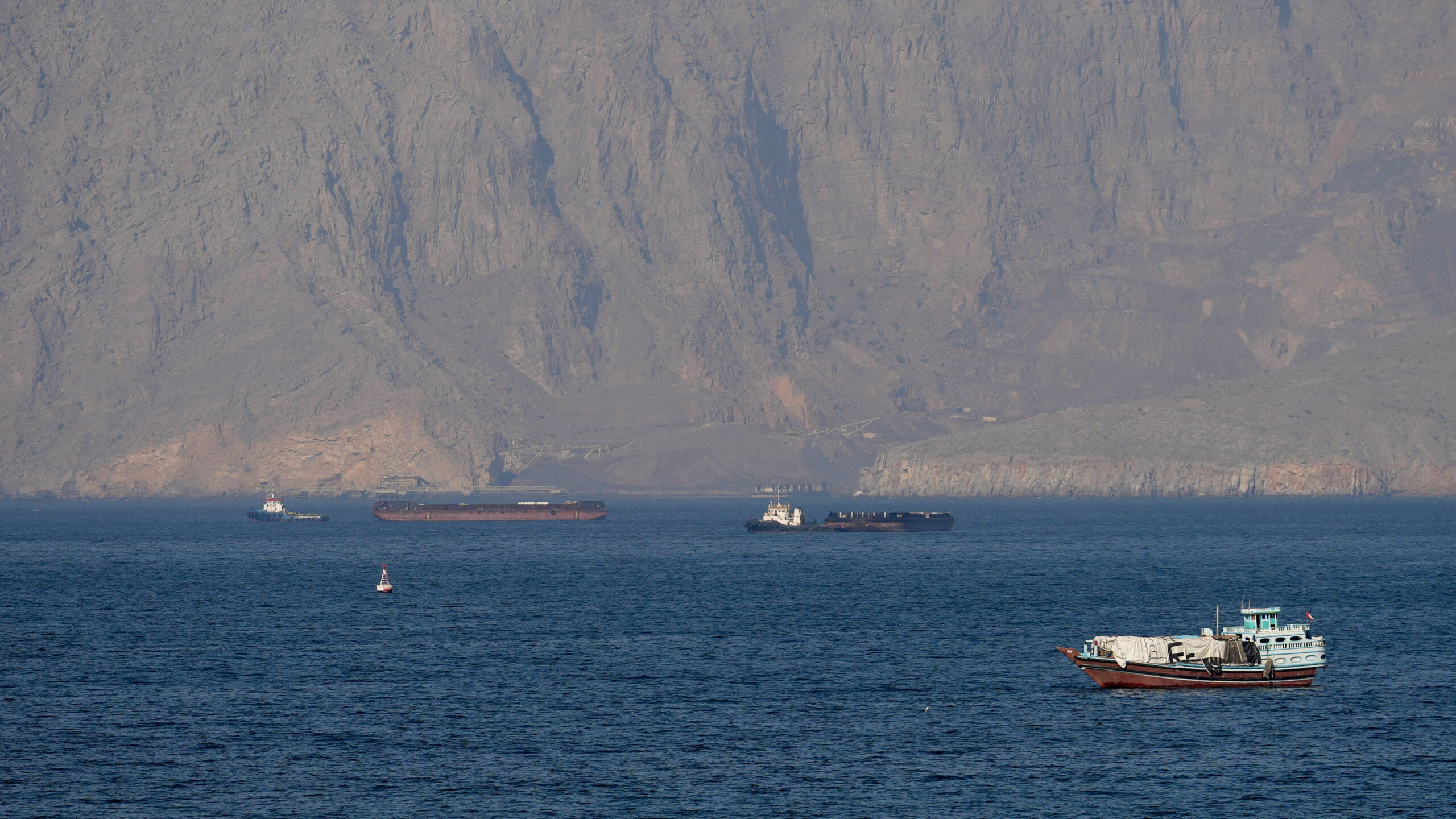
Iran said it was nearing a final pact with Oman defining new shipping lanes between them through the Strait of Hormuz but repeated that the US must meet other conditions, including compensation and an end to sanctions and military threats, before the strategic waterway is reopened.

A US official told Reuters on Friday, August 7, that Iran and Oman were close to a deal that could pave the way for restoring safe passage through the strait, a major conduit for oil and gas shipping before Iran blocked Hormuz in response to US and Israeli attacks on Tehran that began in late February.

Iranian Foreign Minister Abbas Araqchi said on Sunday, August 9, an agreement with Oman on the strait was in its “final stages” but reiterated comments made on Saturday that Tehran would not reopen the channel unless the US met certain demands made by Tehran.

The deal with Iran would set out the new shipping lanes to be used once the US fulfills those conditions and the strait is reopened, Iran’s Mehr news agency quoted him as saying.

Iran and the US are not engaged in direct talks, and Tehran will not start them as long as Washington breaches an interim deal signed in June, Araqchi said, adding that messages were being exchanged through intermediaries.

US President Donald Trump said in an interview with Axios that the US was “low-keying” it with Iran. “We are only semi-negotiating with them. We are just watching Iran with its huge inflation and the fact they have no money.”

Conditions include compensation

Araqchi said reopening the strait would depend in part on the US paying compensation for damage it caused in widespread attacks on Iran.

The secretary of Iran’s top national security body, Mohammad Baqer Zolqadr, also listed ending further US threats against Iran; halting aggression toward Iran and its Lebanese, Palestinian, Yemeni and Iraqi allies; removing a US naval blockade in the Gulf; lifting sanctions on Iran; and releasing frozen Iranian assets.

The United States and Israel launched air strikes on Iran more than five months ago. Trump has said the attacks were aimed at keeping the Islamic Republic from developing nuclear weapons and degrading its ability to threaten the region.

Washington and Tehran agreed to a ceasefire in June, but the US reimposed a blockade on Iranian shipping in the Gulf in July, a move that Tehran said violated the truce, which by then had already broken down.

“Once the deal is announced to restore commercial shipping without impediments, the United States will lift the blockade of Iranian ports,” the US official told Reuters on condition of anonymity.

US actions would be tied to Iran’s implementation of its commitments, the official said.

The US comments indicated delicate sequencing toward a deal that sources had told Reuters appeared to be set to give Tehran control over vessel traffic entering the Gulf through the strait, which shippers have said was not easily workable.

The United Arab Emirates said on Saturday, August 8, that Iran had attacked a ship affiliated with its state oil company. There was no immediate comment from Iran, whose Revolutionary Guard Corps previously has attacked ships that it said tried to cross the strait without Iranian permission.

Houthis attack Saudi refinery

Iranian strikes on Strait of Hormuz shipping have been coupled with increased attacks by its Yemen-based allies, the Houthi rebels, who have targeted ships at another oil chokepoint on the other side of the Arabian Peninsula between the Red Sea and Gulf of Aden.

The Houthis also declared a naval blockade against Saudi Arabia in the Red Sea last month in response to what they said was a Saudi siege on them in Yemen, an allegation denied by Riyadh, which backs Yemen’s internationally recognized government.

Must Read

Yemen’s Houthis attack Saudi refinery after kingdom signs defense pact


Yemen’s Houthis attack Saudi refinery after kingdom signs defense pact

The Yemeni rebel group said they had attacked Saudi Aramco’s Jazan refinery on Sunday, two days after the kingdom signed a defense pact with Sunni Muslim allies Turkey and Pakistan in response to growing regional instability from the US-Israeli war on Shi’ite Iran.

The Saudi energy ministry said a fire had broken out at the refinery but was later extinguished with no injuries and authorities were dealing with the incident, without giving a cause.

Turkish Foreign Minister Hakan Fidan said the new alliance was not directed against Iran or any other country, but rather served as a general pledge to support security. – Rappler.com
Similar Posts

  • |

    Karoline Leavitt to leave White House press post

    WASHINGTON: US President Donald Trump has announced that White House Press Secretary Karoline Leavitt will leave her position at the end of August, saying she wants to spend more time with her young children. Trump praised the 28-year-old spokesperson as one of his most trusted aides and said he respected her decision to step away from one of the most demanding roles in the administration. In a social media post, Trump said Leavitt would continue to advise him from outside the White House and would remain an influential voice within the Republican Party. Leavitt confirmed her departure, describing her time as White House press secretary as an “honor and adventure of a lifetime.” She said balancing motherhood with one of the most demanding jobs in Washington had been both rewarding and challenging. After returning from maternity leave following the birth of her second child, Leavitt said she realised she could not give her two young children the time and attention they deserved while continuing to meet the demands of the press secretary’s role. Leavitt and her husband, Nicholas Riccio, welcomed a daughter in May. The couple also have a two-year-old son. She returned to the White House last month after taking maternity leave. Leavitt became White House press secretary last year and made history as the youngest person to hold the position. During her tenure, she became one of the administration’s most recognisable public figures and frequently defended Trump’s policies during tense exchanges with journalists. Her relationship with sections of the US media was often confrontational. Leavitt accused some journalists of political bias, while supporters of the Trump administration praised her for forcefully presenting the president’s position. Her tenure also included changes to the White House press-access system. Her office took greater control over the press pool and temporarily restricted access for the Associated Press after a dispute over the administration’s preferred terminology for the Gulf of Mexico. Before becoming press secretary, Leavitt had already established close ties with Trump. She worked in his first administration as an assistant press secretary and speechwriter. She later served as communications director for Republican Congresswoman Elise Stefanik and launched an unsuccessful campaign for Congress in New Hampshire in 2022. Although she won a competitive Republican primary, she lost the general election to Democratic Representative Chris Pappas. Leavitt subsequently worked as a spokesperson for MAGA Inc, a pro-Trump fundraising organisation, before joining Trump’s 2024 presidential campaign as national press secretary. She became one of the longest-serving press secretaries in Trump’s two administrations, behind former press secretary Sarah Huckabee Sanders. The White House has yet to announce who will succeed Leavitt. During her maternity leave, several senior administration officials, including Vice President JD Vance, Secretary of State Marco Rubio and Interior Secretary Doug Burgum, took turns addressing reporters. White House Deputy Chief of Staff Stephen Miller, who described Leavitt as a close friend and role model, said her departure would not end their professional relationship. He said they would continue working together and expressed confidence that Leavitt’s career would continue to develop beyond her White House role.

  • | | | |

    Trump administration asks Congress for $87 billion…

    WASHINGTON: The Trump administration has asked Congress to approve nearly $87 billion in emergency funding as the United States faces mounting military costs linked to its escalating confrontation with Iran, according to American officials. The funding request was presented after US Defense Secretary Pete Hegseth delivered a classified briefing to lawmakers, outlining the financial and operational demands of the ongoing conflict. He later addressed members of a Senate committee, arguing that additional resources are essential to sustain military operations and protect US national security interests. During the briefing, Hegseth said the conflict with Iran has already cost the United States approximately $37.5 billion, reflecting the growing financial burden of extended military deployments, air operations and regional security missions. Warning lawmakers about the consequences of delaying the request, the defense secretary said failure to approve the funding would create what he described as one of the most serious security risks facing the country. He also rejected suggestions that Washington was responsible for the current crisis, insisting that Iran’s actions had driven the escalation. The administration’s request comes as military tensions between Washington and Tehran remain high, with both sides exchanging threats and continuing operations across the region. Analysts say the financial demands of the conflict are increasing as the United States seeks to maintain its military presence while supporting allies in the Middle East. Meanwhile, The Washington Post reported that US funding allocated for military operations against Iran is being depleted at a rapid pace. The report suggested that continued operations without fresh congressional approval could place additional strain on defense resources and future military planning. The funding debate is expected to become a major issue on Capitol Hill, where lawmakers are likely to scrutinize both the size of the request and the administration’s broader strategy toward Iran. Some members of Congress are expected to seek greater clarity on military objectives, projected costs and the potential duration of the conflict before approving additional spending. Political observers say the request highlights the increasing economic impact of the confrontation, which is unfolding alongside rising concerns over global energy markets and regional stability. As Congress prepares to debate the proposal, the administration continues to argue that additional funding is necessary to maintain operational readiness and respond to evolving security challenges. The outcome of the request could play a significant role in shaping Washington’s military posture and diplomatic options in the weeks ahead.

  • | |

    Austria opens police station at house where Hitler…

    Austria has opened a police station inside the house in Braunau am Inn where Adolf Hitler was born, closing out years of debate over how to handle the building’s dark history. The 17th century structure once operated as an inn and served as the birthplace of the Nazi dictator in April 1889. Authorities have now completed a substantial renovation that changed the building’s facade, though managing the site has posed a persistent challenge for Austrian officials determined to prevent it from turning into a destination for neo Nazi pilgrimage. Hitler lived in the building, located at Salzburger Vorstadt 15, for only a few weeks before his family relocated to another address in Braunau. The family left the town permanently when Hitler was three years old. He briefly returned to Braunau in 1938 while traveling to Vienna after annexing Austria into Nazi Germany. Interior Minister Gerhard Karner attended the opening ceremony alongside other local officials, which featured police musicians performing on tuba and other brass instruments. Karner said Austria is taking responsibility for what he called the terrible legacy of the past, adding that although deciding the building’s fate proved difficult, he believes the new police station represents a fresh chapter for the site. He said the building will now stand as a place representing democracy, the rule of law, security, freedom and human dignity. A Catholic police chaplain then blessed two crosses that will hang inside the new station. For decades, Austria’s interior ministry rented the building from its former owner, a local woman named Gerlinde Pommer, paying her generous rent in an effort to keep the property from becoming a site for far right tourism. A local charity used the building for years as a day center and workshop for people with special needs, but the organization had to vacate in 2011 after Pommer blocked planned renovations. She also repeatedly declined to sell the property to the government, leaving the building empty for several years while she and authorities disputed terms. In 2016, Austria’s parliament passed legislation allowing the government to seize the property from Pommer, paying her compensation of 812,000 euros. She later challenged the amount in court, arguing it was too low, but ultimately lost the case. Wolfgang Sobotka, who served as interior minister at the time, suggested the building should be demolished and replaced with a new structure altogether, echoing an earlier proposal from a Russian lawmaker who had offered to purchase the house and destroy it. Both ideas drew significant criticism, with opponents arguing that tearing down the building would amount to denying Austria’s Nazi era history. In 2019, the government unveiled plans to convert the building into a police station and launched an EU wide competition inviting architects to submit design proposals. Officials subsequently spent millions of euros renovating the structure, transforming its appearance dramatically from its earlier state. The building, now painted white both inside and out, features extensive oak woodwork throughout, while an original winding staircase and arched entrance hall have been preserved from the earlier structure. The transformation marks a stark contrast to the building’s condition decades ago, when the Lebenshilfe charity operated a small shop in one of its front rooms. Police Chief Inspector Ludwig Heise said he feels fortunate to work in such a modern facility, noting the additional space compared to previous quarters, though he added that beyond its size, the station functions just like any other police facility in Austria. The reopening marks the culmination of a long and often contentious effort by Austrian authorities to neutralize the symbolic weight of Hitler’s birthplace, transforming a site once feared as a potential magnet for extremist sympathizers into a functioning symbol of the democratic institutions Austria has built in the decades since the Second World War.

  • | |

    Hamilton leads Ferrari One-Two in Hungarian grand …

    Lewis Hamilton led teammate Charles Leclerc to a Ferrari one-two in Friday practice at the Hungarian Grand Prix, signaling strong form for the Scuderia at the Hungaroring. Hamilton was 0.148 seconds ahead of Leclerc, with McLaren’s Lando Norris third, 0.499 seconds off the pace, and Red Bull’s Max Verstappen fourth. Ferrari looked in good shape on a track that lends itself to the car’s strong cornering performance. Mercedes, however, appeared to have some work to do, with George Russell in fifth, 0.933 seconds off the pace, and championship leader Kimi Antonelli in 13th. Antonelli did not complete a qualifying simulation lap in the second session after his first attempt was abandoned when Franco Colapinto crashed his Alpine at the last corner, and his second came to grief after an error at the chicane. Antonelli was complaining throughout the session about his car’s balance. Fernando Alonso ended the day 19th fastest in the new Aston Martin, 2.990 seconds off the pace. Team principal Adrian Newey described the first outing for the car, which is new apart from its engine, gearbox, and front suspension, as “promising.” Alonso had a lap nearly 0.4 seconds faster ruled out for track limits at the final corner, but the team made a significant step forward from where they have spent most of the season. Newey said: “Provisional results are promising. It’s only part of the package, so we’ll have some more steps in Zandvoort and then further in Monza and Baku. It’s the first part of our planned upgrade. We’re very short on parts, so we’re being careful with it and trying to learn all about it.” Engine partner Honda is introducing a new engine at the Dutch Grand Prix after the summer break. The day was not all positive for Aston Martin, however, as Alonso’s teammate Lance Stroll spun out of the first session with what initially appeared to be a rear suspension failure. He was unable to take part in the second session because there was not enough time to repair the car. Team representative Pedro de la Rosa confirmed: “It is a suspension failure. We were confident it would not happen in Fernando’s car. That’s why we sent him out. Because of the lack of spares we couldn’t repair his car on time.” Ferrari’s strong performance in practice positions them as the team to beat heading into qualifying, with Hamilton looking comfortable in the car and Leclerc close behind. McLaren and Red Bull will need to find improvements if they are to challenge the Ferraris, while Mercedes face a significant task to unlock pace for qualifying and the race. Aston Martin’s upgrades offer hope for the future, but they remain off the pace of the frontrunners. The Hungaroring, known for its twisty nature, often rewards cars with strong downforce and cornering ability, which played to Ferrari’s strengths. As the weekend progresses, teams will be fine-tuning their setups for qualifying and race day, with the battle for pole position and victory set to be a closely contested affair. The weather conditions could also play a role, with forecasts suggesting the possibility of rain, adding another layer of unpredictability to the Hungarian Grand Prix weekend. Fans are eagerly anticipating the action, with the Hungaroring historically producing exciting races. Ferrari will be looking to convert their practice pace into a strong result, while their rivals will be working hard to close the gap and challenge for the top step of the podium. The stage is set for a thrilling weekend of Formula 1 action in Hungary.

  • |

    Will Scharf named Trump’s new White House counsel

    US President Donald Trump has appointed Will Scharf as the next White House counsel and assistant to the president. Scharf, who currently serves as White House staff secretary, will take over the legal post on September 1, 2026. He will replace David Warrington, who is set to leave the administration and enter the private sector. Scharf is a lawyer and political adviser with close ties to Trump. Before joining the White House, he represented Trump in several major legal matters. He was also involved in the presidential immunity case that reached the US Supreme Court. Scharf previously worked as a federal prosecutor. He also served as a law clerk for federal appeals court judges, giving him experience in both government and federal litigation. His new position will place him at the centre of the Trump administration’s legal strategy. As White House counsel, Scharf will advise the president on legal issues and oversee matters involving executive privilege, judicial appointments and relations with the Justice Department. He will also be involved in responding to legal challenges facing the administration. The position is considered particularly important as Trump prepares for growing political and legal pressure ahead of the 2026 midterm elections. Scharf joined Trump’s legal team in 2023. He worked on the federal election interference case brought by former Special Counsel Jack Smith. His involvement continued as the case reached the Supreme Court. In 2024, the Supreme Court ruled that presidents have broad immunity from criminal prosecution for official acts. The decision became a major development in the legal battles surrounding Trump. After Trump returned to the White House in January 2025, Scharf was appointed staff secretary. In that role, he managed documents and other materials sent to the president for review. He also frequently appeared with Trump during executive-order signing ceremonies. Scharf has also chaired the National Capital Planning Commission. During his tenure, he was involved in the approval process for Trump’s proposed White House ballroom project, which has faced controversy and scrutiny. His appointment comes at a politically sensitive time for the administration. The White House is dealing with legal and political challenges while preparing for increased congressional scrutiny before the midterm elections. Trump praised Scharf after announcing the appointment. He described him as “tough, strong, and smart” and highlighted his experience as a federal prosecutor and his work on Trump’s legal cases.

  • |

     7 killed in India temple stampede

    At least seven people were killed and several others injured after a massive crowd triggered a stampede outside the Ashok Dham Temple in India’s Bihar state. According to Indian media reports, the incident occurred early Monday morning, the third Monday of the Hindu month of Sawan, when a large number of devotees gathered at the temple to offer prayers. District administration officials reached the scene shortly after the incident and began overseeing rescue efforts as well as measures to bring the crowd under control. Officials said the crowd outside the temple suddenly surged after two trains arrived in the area in the morning. The sudden influx placed heavy pressure on the barricades installed at the site, causing one section to collapse. Several people fell over one another, triggering panic and a stampede. Authorities said they had made arrangements in anticipation of a large turnout. However, the unexpected increase in the number of devotees quickly overwhelmed the arrangements and created a chaotic situation. Rescue teams immediately began evacuating the injured, with around 10 to 15 people initially taken to nearby hospitals for medical treatment. Indian media reports have also cited preliminary information suggesting that an electricity pole fell at the scene and some people may have suffered electric shocks. The incident reportedly caused further panic among the crowd and may have contributed to the subsequent stampede. Authorities are continuing to assess the situation and investigate the circumstances surrounding the deaths and injuries.

Leave a Reply

Your email address will not be published. Required fields are marked *