prolonged iran mission
| | |

Prolonged Iran mission puts US sailors under pressure

The prolonged deployment of the US aircraft carrier USS Abraham Lincoln in connection with the Iran conflict has raised concerns over the mental health and wellbeing of personnel serving aboard the vessel.

US media reports say several sailors allegedly attempted to jump overboard during the carrier’s extended deployment in the region.

According to reports, the carrier has remained at sea for more than 250 days, with around 5,000 sailors and Marines reportedly deployed aboard the vessel.

The long period without a regular port visit has reportedly placed additional pressure on crew members. A sailor’s wife was quoted as saying that her husband attempted to jump from the carrier after struggling with the impact of prolonged and continuous duty.

Reports also claim that crew members intervened in several incidents and prevented personnel from going overboard.

The reports have raised wider concerns about the conditions faced by sailors during the extended deployment. Some US media outlets have also reported shortages of food and other basic supplies aboard the carrier.

The situation has prompted US lawmakers to call for an investigation into the reported incidents and the overall conditions aboard the ship.

Senators have sought information about the deployment, including the mental health of personnel, crew fatigue, living conditions and the impact of the prolonged mission on operational readiness.

The US Navy, however, has rejected claims of a rise in suicide attempts or mental health problems among personnel aboard the carrier.

The Navy has maintained that it continues to monitor the wellbeing of sailors and provide appropriate support during the deployment.

The USS Abraham Lincoln’s extended mission comes amid continuing US military operations and heightened tensions involving Iran and the wider Middle East.

The carrier’s unusually long deployment has also sparked questions about how long the US Navy can maintain such an operational tempo without affecting crew welfare, equipment maintenance and future readiness.

The reported incidents have intensified scrutiny of the human cost of prolonged military deployments, particularly for personnel spending months at sea without regular opportunities for rest and recovery

Similar Posts

  • | |

    Sher Afzal Marwat backs new provinces

    Pakistan Tehreek-e-Insaf (PTI) lawmaker Sher Afzal Marwat has expressed support for the creation of new provinces in the country. Speaking to the media in Multan, Marwat said smaller administrative units were necessary for a fairer distribution of resources. He argued that the existing administrative structure should be reviewed to ensure that people in different regions receive their due share of development resources. According to Marwat, creating additional provinces could also bring governance closer to local communities. He said people living in smaller administrative units would have greater opportunities to participate in decision-making and manage their own affairs. The lawmaker stressed that local representation was important for effective governance. He maintained that smaller provinces could help authorities understand and address the specific needs of different regions. Marwat also called for support for the movement seeking the creation of smaller administrative provinces. He said the proposal should be considered as part of efforts to improve governance and ensure a more balanced distribution of resources. The debate over creating new provinces has remained a longstanding political and administrative issue in Pakistan. Supporters argue that smaller provinces could improve administration, strengthen local representation and reduce regional disparities. Opponents, however, have raised concerns about the political, constitutional and financial implications of creating new administrative units.

  • |

    Iranian lawmaker questions Saudi defence pact with Pakistan, Türkiye

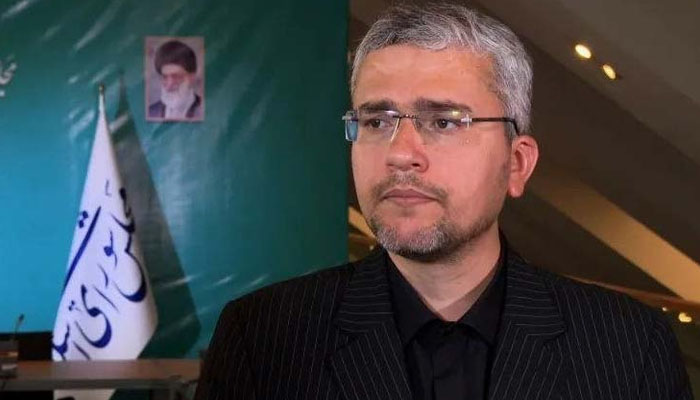
    TEHRAN: Iranian parliamentarian Ebrahim Rezaei has questioned whether Saudi Arabia’s new defence agreement with Pakistan and Türkiye can guarantee the Kingdom’s security. Rezaei, a member of Iran’s Parliament National Security and Foreign Policy Committee, made the remarks in a social media post. He said Saudi Arabia should understand that the agreement with Pakistan and Türkiye would not provide the level of protection Riyadh had failed to obtain despite decades of reliance on the United States. Rezaei described the agreement as a “paper pact” and urged Saudi Arabia to reconsider its policies so that it would not have to seek security guarantees from other countries. His comments came shortly after Saudi Arabia, Pakistan and Türkiye signed a joint defence agreement in Makkah. The agreement was signed amid concerns over potential attacks on Saudi Arabia by Iran-aligned militias in Iraq and Yemen. Saudi officials have reportedly warned of such security threats. Under the new agreement, an attack against any one of the three countries will be considered an attack against all three. The pact aims to strengthen defence cooperation and develop joint capabilities among Saudi Arabia, Pakistan and Türkiye. A trilateral defence summit was held at Al-Safa Palace in Makkah, attended by Saudi Crown Prince Mohammed bin Salman, Turkish President Recep Tayyip Erdogan and Pakistani Prime Minister Shehbaz Sharif. According to Pakistan’s Foreign Office, the three leaders signed the agreement, formally described as the Makkah Defence Joint Agreement.

  • | | |

    Pakistan to lead new Turkey-Saudi defence pact

    ISLAMABAD: Pakistan is set to take the first three-year leadership of a new secretariat established under the defence agreement signed by Pakistan, Türkiye and Saudi Arabia in Makkah on Aug 7, giving Islamabad a prominent role in coordinating the emerging regional security framework. According to Turkish and international media reports, the secretariat will serve as the central mechanism for implementing decisions taken by the three countries and coordinating their growing defence cooperation. After Pakistan’s initial three-year term, leadership is expected to pass to Saudi Arabia and then Türkiye. The agreement is built around a collective-security principle under which an armed attack against one member would be regarded as an attack against all three. However, unlike NATO’s automatic response mechanism, the pact leaves the nature of any response to be determined according to the circumstances and the request of the affected country. A high-level council comprising foreign and defence ministers as well as military chiefs is also expected to oversee the arrangement. The council is expected to meet twice a year, while cooperation could range from intelligence sharing and logistics to direct military assistance when required. The partnership also places a strong emphasis on defence technology. The three countries plan to expand cooperation in unmanned systems, electronic warfare and artificial intelligence, alongside joint military exercises designed to improve coordination among their armed forces. Joint defence production, research and technology transfer are also part of the broader framework. For Pakistan, the first leadership term could prove strategically significant. Islamabad already maintains longstanding defence ties with both Ankara and Riyadh, and its role at the secretariat could give it greater influence in regional security diplomacy. Türkiye has stressed that the agreement is defensive and is not directed against any particular country. Turkish Foreign Minister Hakan Fidan said the pact is intended to strengthen regional security rather than replace existing alliances. With the Middle East facing continued instability, the new arrangement could become an important test of how effectively three regional powers can turn political solidarity into practical defence cooperation.

  • | |

    Daanish schools enrol only 40,000 in 15 years: Edu…

    Punjab Education Minister Rana Sikandar Hayat has raised questions about the performance and accessibility of the Daanish School System. He said education at Daanish schools was expensive. As a result, the system had enrolled only around 40,000 students in 15 years. The minister questioned the effectiveness of earlier education initiatives in the province. He specifically referred to comprehensive and pilot schools established in Punjab. He asked where those schools had gone and why they had failed to deliver the expected results. Rana Sikandar Hayat said the Punjab government was working to reduce the gap between public and private education. For this purpose, the government had moved towards a public-private partnership model. He said the approach could help improve the quality of education and increase access for children. The provincial minister also highlighted the enrolment performance of the Nawaz Sharif School of Eminence programme. He said these schools had recorded an average enrolment of around 112 per cent so far. Rana Sikandar Hayat also spoke about the issue of inaccurate student records in government schools. He claimed that authorities had removed around 1.5 million ghost students from government school records across Punjab. The minister said the province still faced a major education challenge. Around 25 per cent of children in Punjab remain out of school, according to him. He said the dropout problem becomes particularly serious when students reach the high-school level. A significant number of children leave education after reaching secondary-level schools, he said. This affects the overall literacy and education indicators of the province. The minister said the government was now focusing on bringing children who are outside the education system back into schools. He said schools operating under outsourcing arrangements had been given a specific target. They would be required to enrol 5 per cent of children currently deprived of education. The initiative is aimed at increasing school enrolment and reducing the number of children who remain outside the formal education system. Rana Sikandar Hayat said improving access to education required both enrolment and retention. Bringing children into schools would not be enough if they later dropped out. He stressed the need to strengthen the education system and ensure that children continue their studies through higher grades. The minister’s remarks highlight the challenges facing Punjab’s education sector. Despite having a large network of schools, the province continues to deal with out-of-school children, inaccurate enrolment records and high dropout rates. The government is now looking towards partnerships with the private sector and reforms in public schools to address these problems. The minister said the ultimate objective was to provide more children with access to quality education and reduce the divide between public and private schooling.

  • | |

    PTI rejects AJK polls, demands fresh elections

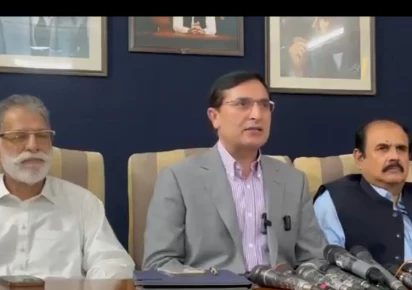
    Pakistan Tehreek-e-Insaf (PTI) has rejected the first phase of the Azad Jammu and Kashmir (AJK) elections. The party has described the July 27 polls as unacceptable and demanded a judicial inquiry into the violence reported in the region. PTI leaders also called for the cancellation of the remaining two phases of the elections. They demanded fresh elections across AJK in a single phase under an independent and impartial election commission. Speaking at a press conference on Wednesday, PTI Chairman Barrister Gohar Ali Khan appeared alongside former AJK prime minister Sardar Qayyum Niazi. The leaders strongly criticised the violence reported in Rawalakot, Mirpur and other areas. Multiple reports of deaths and injuries have emerged since Monday. Videos showing unrest have also circulated on social media, although the reported casualties could not be independently verified. Both security agencies and the Joint Awami Action Committee (JAAC) have reported casualties during clashes. Niazi said Kashmiris were facing what he described as unprecedented oppression. He said the situation was particularly concerning because Kashmiris had historically supported the cause of accession to Pakistan. He claimed protesters had attempted to resolve their grievances through negotiations. According to him, the situation deteriorated after their demands were not addressed. Niazi maintained that the protesters were peaceful. He questioned the use of force against them and urged authorities to avoid further escalation. He also criticised the decision to conduct the AJK elections in three phases. Niazi argued that the region has a relatively small population and questioned why the elections could not have been held on a single day. He said the ongoing violence was damaging Pakistan’s position on the Kashmir issue. According to him, AJK is considered an important base for the wider Kashmir cause. Niazi warned that the unrest could send a negative message internationally. He said Pakistan had previously highlighted alleged human rights violations in Indian-administered Kashmir at international forums. He argued that developments in AJK could make it difficult for Pakistan to effectively present its position on Kashmir before the international community. The former AJK prime minister also rejected the portrayal of protesters as terrorists. He said the same people had previously been engaging with authorities through negotiations. Niazi called for dialogue and urged the government to avoid further use of force. He proposed the establishment of a national government in AJK until conditions returned to normal. He said free and transparent elections should then be held across the region, with PTI participating in the process. Gohar also strongly criticised the July 27 elections. He alleged that the polls had failed to reflect the will of the people. The PTI chairman said using force to silence protesters could not resolve political and public grievances. He argued that listening to citizens was a fundamental part of democracy. Gohar criticised both the Pakistan Peoples Party (PPP) and the Pakistan Muslim League-Nawaz (PML-N) for turning the election dispute into a political contest. He said political parties should focus on the violence and reported casualties rather than exchanging allegations over electoral gains and losses. The PTI leader also pointed to the low voter turnout. He claimed that the limited participation represented public dissatisfaction with the existing political system. Gohar said the Kashmir issue was extremely sensitive and should not be used for political interests. He urged all stakeholders to act responsibly and resolve the crisis through dialogue. PTI has now formally demanded a judicial investigation into the reported violence. The party also wants the remaining election phases, scheduled for August 2 and August 10, cancelled. The party has further called for the resignation of the AJK government and the formation of a national government to manage the situation. PTI wants fresh elections to be held across AJK in a single phase. It has called for the process to be conducted under the supervision of an independent and impartial election commission. The party says dialogue should be prioritised to address public grievances and restore normalcy before a fresh electoral process begins.

  • |

    Mali junta pardons French national sentenced over alleged coup plot

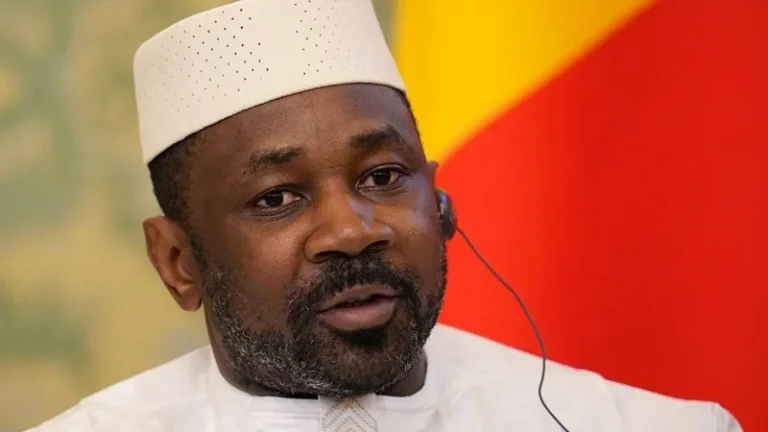
    Malian junta leader President Assimi Goïta has granted a presidential pardon to French national Yann Vezilier, who was serving a 20-year prison sentence following allegations of orchestrating a coup attempt against the military government. Vezilier was detained last year alongside several Malian military officers and political figures. Authorities accused him of acting on behalf of French intelligence services to destabilize the regime in Bamako. France’s Foreign Ministry consistently rejected the espionage allegations as unfounded. Malian state officials announced that the clemency order includes Vezilier’s immediate deportation from Malian territory. The unexpected decision comes during a period of ongoing political instability and severe security challenges, with insurgent groups expanding blockades around key cities, including the capital, Bamako.

Leave a Reply

Your email address will not be published. Required fields are marked *