A Look at period Road Tests: Sports Cars Illustrated Drives the Bocar XP-6
“The surprise comes when the road is clear or a fine track like Continental is spread out ahead. This Bocar hurls itself forward with an effortless violence at any speed and in any gear. It just doesn’t care.”
-Karl E. Ludvigsen, Sports Cars Illustrated Editor
Click above to open the article in a full-window viewer, or hit the “share” arrow to download the PDF. Scans of individual pages can be viewed in the gallery below.
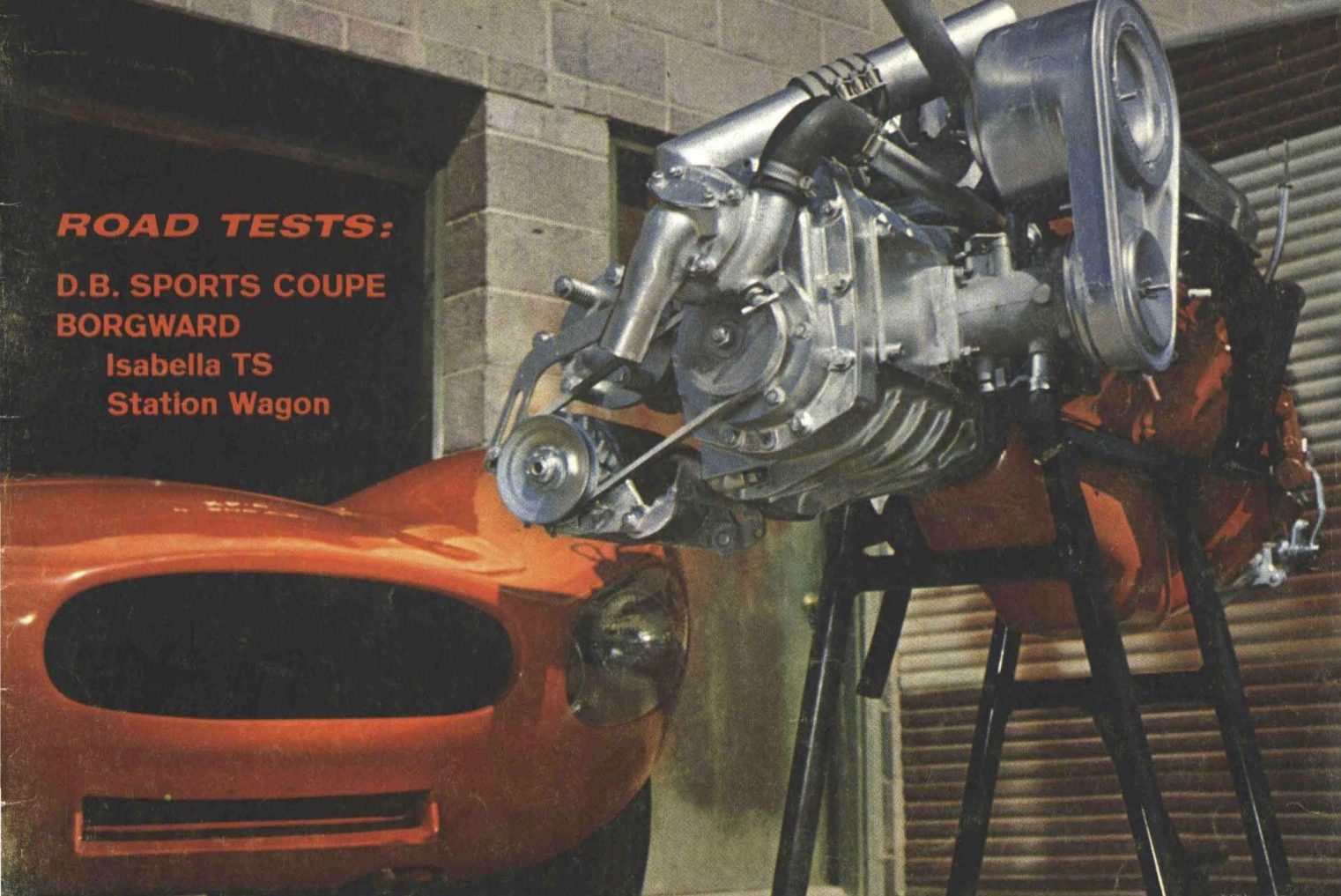
This article about the Bocar XP-6 was clipped from the January 1960 issue of Sports Cars Illustrated, and initially appeared here while discussing the Bocar XP-7R from 911r in the Weekly Weird and Wonderful a few months back. We found ourselves coming back to that car repeatedly, and decided that Bocar needed to be presented all unto itself. The piece, written and photographed by SCI editor Karl E. Ludvigsen, showcased Bob Carnes’ latest Bocar creation at the time, and included a some interesting background on his now-obscure operation.


The XP-6 was the culmination of Carnes’ work up to that point, and was, perhaps not surprisingly, the sixth model built under the Bocar name. It featured a longer wheelbase than that of the previous XP-5 at 104 inches, which conveniently accommodated its most notable addition: a massive GMC 4-71 blower situated proud of its small-block Chevy host. The piece, entitled “This is a Sports Car,” includes technical specifications and a glowing review of the XP-6’s driving characteristics. Carnes initially described it to the author as “the fastest, safest sports car in the world,” and Ludvigsen affirmed it to be quick, stable, and well-built to the point of being over-engineered—rare traits for a car produced in only the smallest handfuls. Ludvigsen was allowed ample driving time on street, strip, and road course, and became an instant Bocar evangelist.

Ray Brock for Hot Rod, via The Petersen Archive
“The lengthy XP-6 engine aggregate is placed as far back in the chassis as is practical, meaning that the Chevy block nestles close by the passengers’ kneecaps. Once the engine’s warm, the cockpit walls tend to heat up too, a problem that’s assuaged only slightly by reflecting aluminum sheets that have been placed along the engine’s flanks. A distinctive Carnes Technique is the offsetting of the engine 1.5 inches to the right to provide perfect lateral balance with only the driver aboard for racing. Whether or not this was responsible, I don’t know, but the XP-6 was one of the few cars I’ve driven whose handling seemed to improve immensely when the passenger stepped out.”
Carnes danced between naturally aspirated and supercharged versions for Bocar’s subsequent iteration, the XP-7. The range-topping supercharged XP-7R differed very little from the XP-6. If Ludvigsen’s descriptions make you want to experience the visceral sensations of the Bocar more directly, we’ll leave you with a driving video that borders on sensory overload, borrowed from the listing of the ’59 XP-7R that recently sold on the site. Enjoy!
Editorial content and images are the property of Car and Driver/Sports Cars Illustrated and Hearst Media.