The Voice Behind TopDog Law Has Much Bigger Plans — Explained
If you have listened to the radio lately, there is a pretty good chance you have heard Terrell “Lucky” John, even if you did not know his name at the time. Lucky is the unmistakable voice behind the TopDog Law commercials that somehow manage to turn personal injury advertising into something closer to a miniature radio drama. They are loud, theatrical, sometimes ridiculous, and almost impossible to confuse with anything else playing during a commercial break.
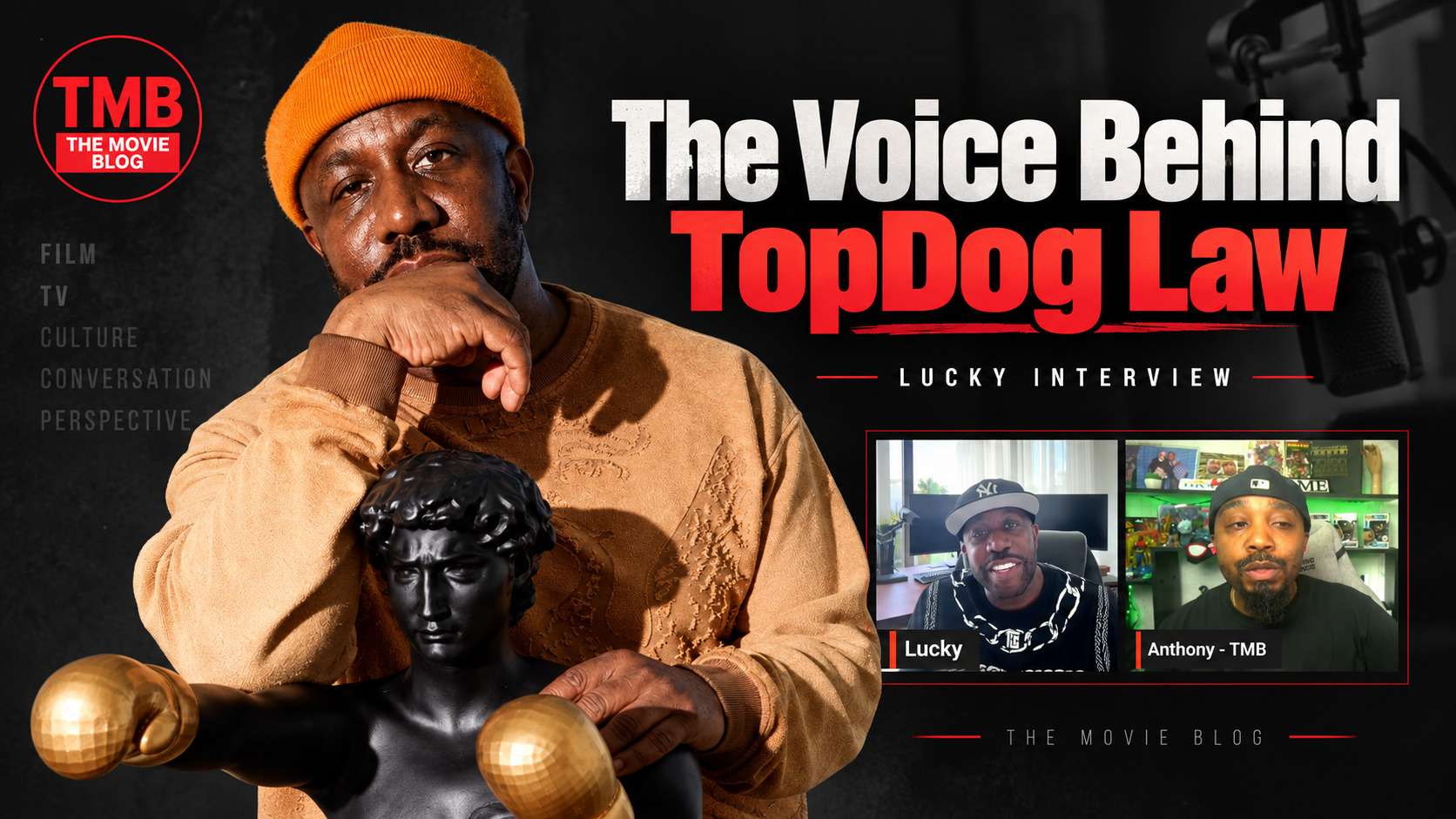
I recently sat down with Lucky for The Movie Blog and The New Blerd Order to talk about how he creates those ads, how he turned an unusual voice into a career, and where he hopes that voice can take him next. One of the first things I learned was that the commercials are not created the way I assumed they were. Lucky is not sitting in a booth reading carefully scripted copy that somebody else handed him. In fact, he told me that he does not really write the commercials at all.
“I don’t write these commercials,” Lucky explained. “Everything is off the top of my head.”
According to Lucky, the average commercial is finished in roughly five to ten minutes, and some are recorded almost entirely in one take. Once he explained how he works, the exaggerated personalities and unpredictable storytelling in the TopDog spots started making a lot more sense.
Lucky Builds His Commercials Around Music
Lucky approaches advertising more like a musician than a traditional commercial voice actor. Instead of recording a script first and having music added afterward, he usually begins by searching for an instrumental track that gives him a feeling or sparks an idea.
“I sit there, I find a music bed that I like, I put it on,” Lucky said. “My commercial is done like a song where I got to hear the music.”
From there, the music becomes the foundation for whatever story he is about to create. If the track slowly builds, Lucky builds the story with it. If the music feels emotional or dramatic, he starts imagining a scenario that matches that tone. He told me that he can actually visualize what is happening as he performs, allowing the commercial to develop almost like a scene in his head rather than a conventional advertisement.
There Was No Backup Plan
Turning that talent into an actual career required a much bigger commitment during the pandemic. Lucky has previously spoken about investing his last $12,000 into building a home studio, and I wanted to know what the backup plan was if that investment failed.
His answer was refreshingly simple.
“It wasn’t no Plan B… I knew that I could make some type of money if I had my own in-home studio and I wouldn’t have to give the studio that I’m going to money,” he explained.
What he did not know was that a much larger opportunity was around the corner.
“I didn’t know that the big call was coming.”
That detail is what makes the story more interesting than the usual “bet on yourself” version people tell after everything works out. Lucky did not know TopDog Law was coming. He was not investing $12,000 because he already had a major contract waiting for him. He had evidence that people were willing to pay for his talent, and he decided to build the infrastructure around that talent before he knew how far it could go.
Lucky Has Bigger Plans Than TopDog Law
What interested me most during the conversation was that Lucky clearly does not view TopDog Law as the final destination. The commercials may have made his voice recognizable, but he sees them as a foundation for much larger opportunities in entertainment and advertising.
Voice acting is one of those goals, particularly animation. When I asked him what kind of role he would want, Lucky immediately brought up one of the most recognizable animated performances of the last several decades.
“You know the donkey on Shrek?” he asked. “I would kill that.”
It was easy to understand why that kind of role appeals to him. Lucky is already doing character work every time he records a commercial, even if the audience thinks of it as advertising rather than acting. The idea of taking that same energy and putting it into an animated character does not feel like a dramatic career pivot so much as a logical extension of what he is already doing.
His ambitions do not stop with animation. Lucky talked about wanting to do Super Bowl commercials, promote Monday Night Football, and become a recognizable voice in major pay-per-view boxing events. He is thinking less about becoming the voice of one successful company and more about becoming the kind of personality that can move between brands, entertainment, sports, and culture.
“I’m looking to take over the world, honestly,” he said.
Considering where Lucky started, it is hard to dismiss the ambition. He took a voice people once noticed because it sounded different, turned it into a character, built a business around it, and helped make that character recognizable to millions of listeners. The next challenge is making sure people eventually hear that voice and think of Lucky first, regardless of which company happens to be paying for the commercial.
For somebody who built his career by figuring out how to make people listen, that may be exactly the kind of challenge he wants.