pure joy private
| |

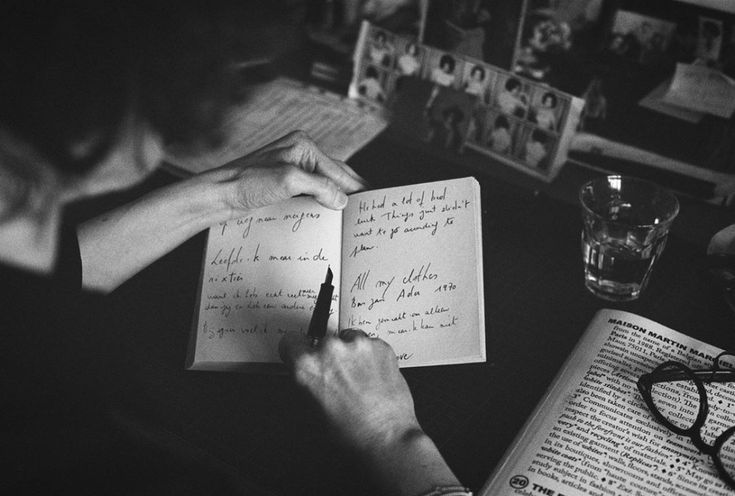
The pure joy of private writing

Recent archival developments in the literary world have reignited a timeless debate about the nature of creation. When the personal archives, diaries, and private notebooks of legendary literary figures are cataloged and opened to the public, readers gain an intimate glimpse into a process entirely free from external expectation.

Raw Honesty

In an era dominated by social media algorithms, content metrics, and immediate digital validation, the contemporary act of writing has become increasingly public. Writers are frequently urged to build personal brands, cultivate audiences before completing a single chapter, and measure the value of their thoughts by engagement metrics. Yet, a look across literary history suggests that forcing self-expression through the filter of public consumption often strips writing of its essential power: raw honesty.

The Freedom of the Unseen Page

When Franz Kafka famously instructed his close friend Max Brod to burn all his unpublished manuscripts and private journals upon his death, he was asserting a radical boundary. Though Brod ultimately defied those wishes giving the world masterpieces like The Trial and The Castle, Kafka’s mandate highlighted a fundamental truth about his relationship with the written word. For Kafka, writing was not a trade, a performance, or a search for acclaim. Rather, it was a urgent, internal necessity. He wrote to process his existential anxiety and negotiate his place in a confusing world.

Revolutionary Contribution to Modern Poetry

Similarly, Emily Dickinson spent her life in relative reclusion in Amherst, Massachusetts, quietly composing over 1,700 poems. She bound them carefully with thread and tucked them away in a wooden chest, largely indifferent to the literary establishment of her era. Freed from the pressure of publisher deadlines, critical reviews, or popular trends, Dickinson invented an entirely original poetic structure. Unconventional in its punctuation, bold in its metaphors, and uncompromising in its vision. she didn’t customise her voice to suit 19th-century publishing standards. That’s her revolutionary contribution to modern poetry is still there.

Why Private Writing Rescues Creativity

Writing for an audience activates self-censorship. When you write exclusively for yourself, the fear of judgment vanishes. This phenomenon allows uncomfortable truths and unrefined ideas to flow onto the page.

Modern culture fixates on output. For instance, the finished book, the polished essay, the published post. Writing privately restores focus to the immediate sensation of thinking on paper. It is transforming the craft from a task into a sanctuary.

A writer’s authentic voice is rarely found by attempting to match market trends. It emerges in the quiet margins of private journals, where syntax and thought patterns develop naturally without external influence.

Reclaiming the Personal Journal in a Public World

Reclaiming the joy of private writing does not require abandoning public work altogether. Instead, it requires establishing a sacred space where performance is forbidden. Writing for an audience of one remains one of the most effective ways to sharpen thought and restore mental clarity.


The enduring fascination with published literary archives proves an intriguing paradox. The writing that captivates us most deeply is often the very writing that was never meant for our eyes. We unlock the true alchemy of the written word by letting go of the need for an audience. A private conversation between the self and the page.

Similar Posts

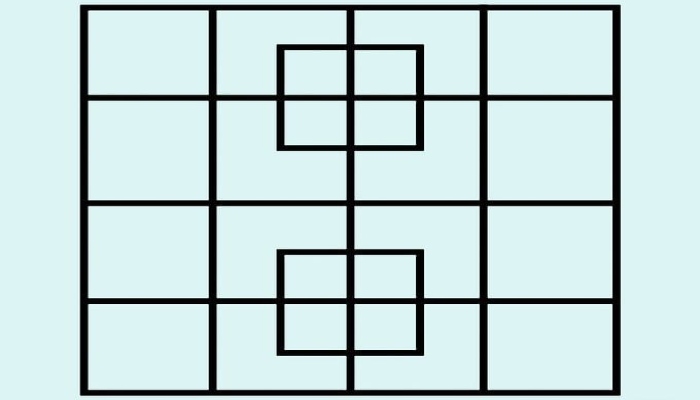
  • How many squares can you spot?

    Most people enjoy solving puzzles but picture puzzles can be even more fun and challenging. Look carefully at the image and try to count how many squares are hidden in it. At first the puzzle may look simple but it can be surprisingly difficult even for people who are good at solving puzzles. To find the correct answer you need to pay close attention to every part of the picture. A little knowledge of geometry can also help. Remember a square is a shape with four equal sides. There are many small and large squares hidden in the image so counting them all is not as easy as it looks.  You may need to check the picture from left to right and then from top to bottom. If you are still confused don’t worry you are not alone.  The puzzle is designed to make you think carefully. After counting all the squares the total comes to 40. So, the answer is 40 squares.

  • Baby Shark star makes K-Pop comeback

    Park Ji-won, who became famous as a child after appearing in the viral “Baby Shark Dance” video has returned to the music world after nearly a decade. Now known as “Baby Shark Boy,” Park is starting a new journey as a K-pop singer. He has released his first digital single “WAVE.” Park appeared in the “Baby Shark Dance” video when he was just seven years old.  The video later became the most watched video in YouTube history gaining billions of views around the world. His new solo music project is supported by The Pinkfong Company, the owner of the “Baby Shark” copyright. Park said he is thankful that people still remember him after so many years. He believes the love for “Baby Shark” inspired him to reconnect with people through music. The “Baby Shark” song was released in 2016 and its famous video has now crossed 17.2 billion views.  The song became a worldwide hit, inspiring dance trends parodies and countless social media posts. “Baby Shark” has even been played at the White House while famous figures such as Donald Trump and Elon Musk have mentioned the popular song. After his early success, Park also appeared in other Pinkfong projects. His new single “WAVE” begins with a sound that reminds listeners of “Baby Shark” before moving into a modern electro pop style.  Park also helped write the lyrics for the song. After becoming famous as a child Park is now ready to build a new identity in the K-pop world.

  • |

    The memory of water

    Water remembers. It is humans who forget. This declaration serves as a poetic lens through which we can view one of the most pressing news events of our time. The events about the global climate crisis and the reshaping of ancient hydrological cycles. As modern reports routinely highlight record-breaking droughts, flash floods and melting glaciers across continents, we are confronted with a truth. Nature carries an indelible memory of every environmental transformation. However, human civilization continually acts surprised by the predictable consequences of its own actions. The quote captures a moment of brutal contradiction in ancient Nineveh. King Ashurbanipal was the ruler of the vast Neo-Assyrian Empire, beloved heir of Esarhaddon, and founder of a library that preserved thousands of cuneiform tablets. He committed a horrific act of violence by executing his former mentor. A single raindrop bears witness to this cruelty embedded unseen within the king’s hair. The heat rises and the droplet evaporates into the atmosphere. It does not truly vanish. However, it transforms, rising to the skies to fall upon the earth once more. When we examine contemporary environmental journalism, specifically reports detailing how rising global temperatures are altering oceanic currents and atmospheric rivers, we see the modern echo of Ashurbanipal’s raindrop. Scientists continuously warn that the water cycle operates as earth’s immortal memory bank. The water that falls over our cities today is the exact same substance that quenched the thirst of ancient empires. The very water flooded historical valleys and bore witness to human triumphs and atrocities alike. Water absorbs every thermal change, industrial pollutant and  shift in atmospheric pressure. Moreover, water holds that memory until it returns to the land as an uncontrollable tempest or a prolonged drought. The tragedy of human civilization lies in our collective amnesia. Ashurbanipal built an immortal storehouse of knowledge while remaining blind to the moral and environmental legacy of his own destruction. Similarly, modern society continues to treat water as a passive resource. Headlines every week record the fallout: drying riverbeds like the Colorado and the Euphrates and torrential monsoons displacing millions. Yet, humanity consistently responds to these events as isolated shocks rather than logical consequences of long-term ecological neglect.   Water does not forget the heat we introduce to the oceans. Rather, it responds by fueling violent storms. It does not forget the destruction of natural wetlands. Certainly, it responds by flooding our concrete infrastructure. The physical laws governing our planet ensure that every action leaves a permanent imprint upon the atmosphere. Human societies must learn to remember as water does: respecting history, recognizing cycles and anticipating consequences. So that we won’t remain caught in a cycle of self-inflicted crises or perpetually surprised by a natural world that simply never forgets.

  • Lack of dustbin in Chahsar

    Through the columns of your newspaper, I would like to highlight the lack of proper waste-disposal facilities in Chahsar, Turbat. There are very few large dustbins placed along the roads where residents can dispose of household garbage and in many areas people have no nearby option at all. At present, only a few such dustbins can be found in the locality which is insufficient for a large and growing population. Dustbins should be placed at reasonable intervals, perhaps around every 40 metres in populated areas, so that residents can keep their surroundings clean and the waste can be collected regularly by municipal trucks. If there is no designated place to dispose of household waste people are left with very limited choices, and garbage inevitably ends up on roadsides or vacant plots. The concerned authorities are requested to increase the number of dustbins in Chahsar and ensure their regular collection. Clean surroundings require not only public responsibility but also proper municipal facilities.

  • 6 Foods for better sleep

    If you often stay awake late at night without any reason it is important to know that not getting enough sleep can increase the risk of serious health problems. Poor sleep has been linked to heart disease stroke and other long term illnesses. If you struggle to fall asleep even when you are tired a few simple changes to your diet may help. Some foods contain natural nutrients that support better sleep and may help you fall asleep more easily. •Bananas Bananas are rich in tryptophan an amino acid that helps the body produce melatonin the hormone that controls sleep. They also contain magnesium which helps relax muscles and supports restful sleep. • Warm milk A glass of warm milk before bed is a popular bedtime drink. Milk contains tryptophan which may help the brain produce more melatonin and improve sleep quality. • Honey A spoonful of honey before bedtime may help you sleep better. Honey contains small amounts of tryptophan and its natural sugars may help the body use this amino acid more effectively. • Jalebi Some people believe that eating jalebi before bed can make you sleepy because it raises blood sugar and insulin levels. However there is limited scientific evidence to support this and eating sugary foods at night is generally not recommended as a regular sleep aid. • Cherries Cherries especially tart cherries are a natural source of melatonin. Research suggests that drinking cherry juice may improve sleep quality and help some people sleep longer. • Almonds Almonds are rich in magnesium a mineral that supports healthy sleep and muscle relaxation. Studies suggest that low magnesium levels may contribute to sleep problems. While these foods may support better sleep they are not a cure for chronic insomnia. If you have ongoing sleep problems it is best to speak with a healthcare professional to find the underlying cause.

  • From metamorphosis to mass rebellion:  India’s “Cockroach Janta Party” 

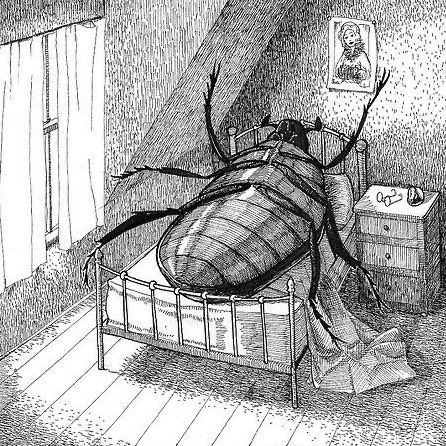
    When Franz Kafka penned The Metamorphosis in 1915, he captured the existential horror of Gregor Samsa. A dutiful young clerk who wakes up transformed into a monstrous insect (Ungeziefer). Gregor’s tragedy is not his physical revulsion. It’s how his transformation strips him of human dignity in the eyes of authority and his own family. Reduced to an unwanted pest, Gregor is isolated, degraded, and ultimately left to die as a useless burden to a capitalist system. In May 2026, a similar socio-political dynamic unfolded in real life. It triggered a political phenomenon in India and then, the rise of the Cockroach Janta Party (CJP). The movement was born out of an explosive judicial exchange. While hearing a routine legal petition, Chief Justice of India Surya Kant directed frustration toward unemployed youth, activists, and independent journalists. Dismissing their systemic critiques, he referred to them as parasites of society. He likened jobless young citizens who take to social media or activism to cockroaches who lack professional stability. The remark hit across a country where nearly 40% of young graduates face severe unemployment and widespread examination leaks (such as the NEET-UG) continuously derail youth aspirations. Rather than slinking into the shadows like Kafka’s Gregor, the affected youth weaponized the insult.  Institutional View: Youth = “Cockroaches / Parasites” Resistance Response: Subversion through Satire & Mass Action  Ultimate Outcome: An “Exterminator’s Nightmare” (Mass Force) Within 24 hours of the courtroom remarks, communications strategist Abhijeet Dipke launched the Cockroach Janta Party. A satirical parody on the ruling Bharatiya Janata Party (BJP). The platform’s initial setup was steeped in self-deprecating irony. The Tagline: “Voice of the Lazy & Unemployed“. Membership Criteria: Open to anyone who identified as unemployed, lazy, chronically online, and able to rant professionally. The Digital Explosion: Within days, the CJP’s social media handle amassed over 22 million followers, eclipsing the official accounts of major political parties. Opposition figures, MPs, and prominent activists joined in, amplifying its reach. The CJP represents a classic instance of subversive identity reclaim. Much like marginalized movements throughout history, Indian youth embraced the dehumanizing label assigned to them by elite institutions. By self-identifying as cockroaches, they exposed the establishment’s disdain for citizens struggling under economic stagnation and institutional failure. What began as a digital meme swiftly morphed into a formidable political force. The CJP mobilized offline.  Aligned with education-reform hunger strikes led by activists like Sonam Wangchuk and demanding the resignation of key government ministers over exam leaks. Just as Kafka’s protagonist faced violence when he tried to step out of his room, the state met the Cockroach march toward Parliament with heavy-handed resistance. The state put blockades, tear gas, and account withholdings under national security provisions. Ultimately, the Cockroach Janta Party illustrates the ultimate inversion of Kafka’s tragedy. Gregor Samsa died alone in silent isolation. Whereas millions of young adults proved that when an entire generation is labeled as vermin, they do not quietly perish. They swarm.  

Leave a Reply

Your email address will not be published. Required fields are marked *