accused architect rohingya
|

Accused architect of Rohingya persecution Min Aung Hlaing arrives in Thailand for official state visit

Myanmar’s military leader Min Aung Hlaing has arrived in Thailand for an official state visit, marking his first international trip to a neighbouring democracy since assuming the role of civilian president following highly contested national elections.

The visit comes despite international condemnation surrounding Min Aung Hlaing’s role as the chief commander responsible for the 2017 campaign of mass violence and expulsion against Muslim Rohingyas in Rakhine State.

Already subject to Western sanctions and target of an International Criminal Court arrest warrant application for crimes against humanity, the former general faces renewed calls for accountability.

Human rights organisations, including the Burmese Rohingya Organisation UK, have petitioned international judiciaries to coordinate with Thai authorities to execute active arrest warrants regarding acts of genocide and persecution.

Thai Prime Minister Anutin Charnvirakul received Min Aung Hlaing with full diplomatic honours at Government House in Bangkok, including an official guard of honour and a scheduled state dinner. The two leaders are set to preside over a bilateral business forum aimed at bolstering economic ties, cross-border security, and trade infrastructure between the nations.

Thailand’s formal reception of Min Aung Hlaing highlights a policy of “calibrated re-engagement” with Naypyidaw, separating Bangkok from several Association of South East Asian Nations (ASEAN) members that continue to exclude Myanmar’s leadership over unfulfilled peace commitments.

While Thai officials maintain that direct high-level dialogue is essential to address shared border concerns and transnational crime, rights campaigners argue that hosting the general grants undeserved diplomatic legitimacy to an administration accused of severe human rights violations.

Similar Posts

  • |

    Pakistan posts Rs3.6tr primary surplus as fiscal position improves in FY2025-26

    ISLAMABAD: Pakistan closed the financial year 2025-26 with a primary budget surplus of around Rs3.6 trillion, marking the third consecutive year of a surplus and allowing the country to comfortably meet a key fiscal condition agreed with the International Monetary Fund (IMF). The improvement came despite the government falling short of its tax collection targets, with stronger petroleum levy receipts, tighter expenditure controls and lower-than-expected debt servicing costs helping offset the revenue shortfall. According to the latest fiscal operations data released by the Ministry of Finance, the unadjusted primary surplus reached Rs3.63 trillion, equivalent to 2.6% of the country’s gross domestic product (GDP). The figure was approximately Rs464 billion higher than the IMF’s target of Rs3.16 trillion. The primary balance is considered an important indicator under Pakistan’s IMF programme because it measures the government’s fiscal position before interest payments on public debt. The latest figures indicate that the government maintained fiscal discipline despite continued pressure on revenues and expenditure. Overall fiscal deficit below target Pakistan’s overall budget deficit, after accounting for provincial cash surpluses, stood at approximately Rs3.3 trillion during FY2025-26. This was around Rs1.7 trillion lower than the amount initially projected in the federal budget. The federal government’s own deficit was recorded at Rs4.8 trillion, also significantly below the budgeted level. The better-than-expected outcome was primarily attributed to lower interest payments, stronger petroleum levy receipts and restrained development expenditure. Interest payments were around Rs1.3 trillion below the amount originally allocated in the budget. The government also collected approximately Rs101 billion more than its petroleum levy target, while federal development spending remained Rs82 billion below the initially approved allocation. The fiscal improvement also contributed to a moderation in the growth of public debt. Public debt increased by around 7% during the year, bringing some relief after several years of double-digit debt expansion. Provinces narrowly miss IMF cash surplus target The four provincial governments collectively generated a cash surplus of around Rs1.45 trillion during the fiscal year. Although the amount fell marginally short of the IMF’s combined requirement, the shortfall was only around Rs14 billion. Punjab contributed the largest share, recording a cash surplus of approximately Rs914 billion. Sindh posted a surplus of around Rs350 billion, followed by Khyber-Pakhtunkhwa with Rs165 billion and Balochistan with approximately Rs21 billion. Provincial governments, meanwhile, performed slightly better on revenue collection. Their combined tax receipts exceeded the IMF condition by around Rs18 billion, with collections crossing Rs1.2 trillion. FBR misses tax target Despite the overall improvement in the fiscal position, tax collection remained a major area of concern. The Federal Board of Revenue collected approximately Rs13 trillion during FY2025-26, falling nearly Rs1 trillion short of the IMF’s revised target. FBR tax receipts increased by about 11% compared with the previous year. However, this increase was broadly in line with nominal GDP growth, indicating that the tax-to-GDP ratio remained largely unchanged at around 10.3%. The figures suggest that additional revenue expected from new taxation and enforcement measures did not fully materialise. The government had anticipated around Rs700 billion in additional revenue from such measures. Non-tax revenue also remained below expectations by approximately Rs63 billion. Total non-tax receipts stood close to Rs5.1 trillion, including around Rs2.4 trillion in profits transferred by the central bank. Petroleum levy becomes key revenue source A major contributor to the stronger fiscal outcome was the petroleum levy. Collections under the petroleum levy climbed to around Rs1.567 trillion, representing an increase of approximately 28% over the previous year. The amount was also Rs101 billion above the target agreed with the IMF. The additional collection effectively represented roughly 25 days of petroleum price relief at a levy rate of Rs80 per litre on petrol and high-speed diesel. For the current financial year, the government has committed to collecting approximately Rs1.7 trillion through the petroleum levy. Meeting this objective is expected to require maintaining the levy at around Rs80 per litre, subject to the applicable petroleum pricing mechanism and market conditions. Development spending remains restrained The government’s fiscal consolidation strategy also affected development expenditure. Federal development spending was recorded at around Rs918 billion, approximately Rs82 billion below the originally approved budget allocation. However, the amount was still around Rs100 billion higher than the subsequently revised allocation. The figures reflect the government’s efforts to contain expenditure and prioritise fiscal targets amid pressure from debt servicing and revenue mobilisation. Debt servicing costs fall Lower-than-expected debt servicing provided another significant boost to the government’s fiscal position. The Ministry of Finance reported that debt servicing remained around Rs6.95 trillion during the year, compared with the budgeted amount of approximately Rs8.2 trillion. The government attributed the savings to tight fiscal management, improved cash handling and the early retirement of around Rs1.9 trillion in domestic debt. These measures helped reduce domestic debt servicing costs by nearly Rs1.97 trillion compared with the original estimates. Statistical discrepancy highlighted The fiscal operations report also identified a statistical discrepancy of around Rs853 billion across the federal and provincial accounts. According to the Ministry of Finance, the discrepancy was linked largely to changes in cash balances and differences in the recording and reporting of financial data. The negative discrepancy indicated that cash inflows were higher than recorded outflows. At the federal level, the discrepancy stood at approximately Rs448 billion. The ministry attributed the difference mainly to changes in commercial bank deposits as well as variations in reporting and accounting adjustments involving the State Bank of Pakistan, FBR and Economic Affairs Division. Provincial accounts showed a combined statistical discrepancy of approximately Rs405 billion. Punjab accounted for around Rs266 billion, Khyber-Pakhtunkhwa Rs95 billion, Balochistan Rs72 billion and Sindh around Rs28 billion. The ministry said movements in commercial bank deposits were among the principal factors behind the provincial differences. IMF review ahead The improved fiscal performance is expected to strengthen Pakistan’s position ahead of the next IMF assessment. An IMF mission is expected to visit Islamabad in the third week of September to review Pakistan’s economic performance during the previous fiscal year. The mission is also expected to

  • | |

    Wanted terrorist commander killed in Bannu operati…

    BANNU: A highly wanted terrorist commander carrying a bounty of Rs6 million has been killed during an intelligence-based operation (IBO) in Bannu, police said on Thursday. The slain militant was identified as Naseer Muhammad, alias Geedarh, according to Bannu District Police Officer (DPO) Captain (Retd.) Muhammad Furqan Bilal. The operation was jointly conducted by Bannu Police and the Counter Terrorism Department (CTD) following intelligence reports about the presence and movement of suspected terrorists in the area. Police said security teams launched targeted actions in Akbar Ali Khan Kili, Sada Khel, Sadarwan and surrounding areas under the supervision of DPO Bilal. Search and surveillance activities were also carried out during the operation. Security was strengthened in different parts of Bannu Township and areas falling within the Domel police jurisdiction. Authorities said further information about the operation and the identity and activities of the slain terrorist would be released after the operation was fully completed. The latest action is part of intensified counterterrorism operations in Bannu, where security forces have carried out several intelligence-based raids in recent weeks. On August 10, a joint operation in the Miryan area resulted in the killing of a suspected terrorist and the detention of eight others. District police, CTD, Elite Force and Pakistan Army personnel participated in that operation. According to police, the suspect killed during the August 10 operation was allegedly attempting to plant an improvised explosive device when security personnel intercepted him. Weapons and ammunition were also recovered. A similar operation was conducted in Bannu on July 20, when another suspected terrorist was killed and eight others were detained by a joint security team. The latest operation comes amid continued security concerns across Khyber-Pakhtunkhwa. The province has witnessed a series of attacks targeting police, security personnel and public infrastructure in recent months. On July 15, terrorists attacked the Miryan police station in Bannu using an explosives-laden vehicle before engaging security personnel in a prolonged gun battle. The attack left several police officers and civilians injured. Security officials have since increased surveillance and intelligence-based operations across sensitive areas of the district. Bannu and other parts of southern K-P have remained particularly vulnerable because of their proximity to the Afghan border and the continued threat posed by militant networks. The federal government has repeatedly called on Afghan authorities to prevent militant groups from using Afghan territory to plan and carry out attacks against Pakistan. The security situation has also resulted in increased operations targeting suspected militant hideouts, movement routes and support networks. Earlier incidents in Bannu included attacks on public infrastructure and attempts to damage key transport links through explosives.

  • |

    45,000 attend arbaeen procession in Dearborn

    More than 45,000 mourners gathered in Dearborn, Michigan, for a major procession marking Arbaeen, the 40th day of mourning following the martyrdom of Imam Hussain (RA) and his companions at the Battle of Karbala. The large gathering brought together members of the Shia Muslim community from Dearborn and other parts of Michigan, with participants filling the city’s streets to pay tribute to Imam Hussain (RA) and remember the sacrifices made at Karbala. During the procession, mourners recited elegies and took part in traditional mourning rituals, expressing grief and devotion while commemorating the events of Karbala. The gathering also served as an opportunity for participants to reflect on the values associated with Imam Hussain (RA), including justice, courage, sacrifice, and standing against oppression. The procession featured a strong display of religious devotion as thousands of participants marched through the streets in an atmosphere of mourning and remembrance. Families and community members joined the event, making it a significant religious gathering for the local Muslim population. Organizers described the event as the largest Arbaeen gathering of its kind in the history of the United States. They said the growing number of participants demonstrates the increasing scale of the annual commemoration and the strong connection of the community with the religious and historical significance of Karbala. The turnout also marked a notable increase compared with last year’s event. Around 40,000 people reportedly attended the Arbaeen procession in Dearborn in the previous year, while this year’s gathering attracted more than 45,000 participants. Arbaeen holds deep religious importance for Shia Muslims worldwide. It marks the completion of 40 days of mourning for Imam Hussain (RA), who was martyred alongside members of his family and companions at Karbala in 680 AD. Millions of people participate in Arbaeen commemorations across different countries, with the annual pilgrimage in Iraq drawing one of the world’s largest religious gatherings. The Dearborn procession has become an important annual event for the city’s Shia Muslim community, allowing participants to come together to remember the tragedy of Karbala and honor the legacy of Imam Hussain (RA).

  • | |

    UN raises alarm, 2 aid mission staff detained in A…

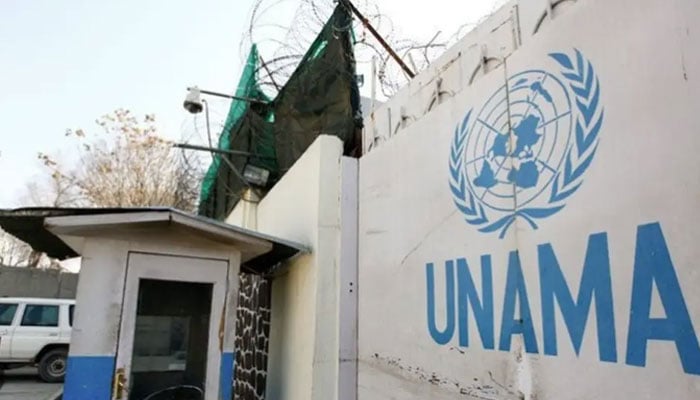
    NEW YORK: The United Nations has called for the immediate protection of its personnel in Afghanistan after two staff members of the UN aid mission were detained by the country’s intelligence authorities. The UN said the two personnel were taken into custody but have not been informed of the allegations or charges against them. The organisation also said it has so far been denied access to the detained staff members. UN Secretary-General Antonio Guterres expressed concern over the detentions and urged Afghan authorities to respect the special legal status of UN personnel. Guterres called on the Taliban authorities to fully uphold the privileges and immunities granted to the United Nations and its staff under international agreements. The UN has continued to provide humanitarian assistance in Afghanistan despite the country’s difficult security and political environment. The detention of its personnel has raised concerns about the ability of international organisations to operate safely and independently in the country. The circumstances surrounding the arrests and the identities of the detained personnel have not been disclosed publicly, while the United Nations continues to seek access to them.

  • |

    President Zelenskiy reassigns Rustem Umerov to head foreign intelligence in ongoing administration reshuffle

    Ukrainian President Volodymyr Zelenskiy has appointed Rustem Umerov, former Defence Minister and head of the National Security and Defence Council, as the country’s new chief of foreign intelligence. Despite taking on the intelligence portfolio, Umerov will retain his role leading Ukraine’s peace delegation in negotiations aimed at ending the conflict with Russia. The personnel shift is part of a broader cabinet restructuring initiated in July that saw former Interior Minister Ihor Klymenko named to head the Security Council, while former Defence Minister Mykhailo Fedorov and top military commander Oleksandr Syrskiy were relieved of their positions. The decision to remove Fedorov, an advocate for digital and drone warfare, sparked public criticism and street demonstrations calling for his reinstatement. While critics argue the reshuffle repeatedly shifts a small circle of close political allies between senior posts, government officials maintain the structural changes are designed to optimize national defense preparations ahead of anticipated winter strikes on energy infrastructure.

  • | |

    Tamil Nadu CM Vijay’s wife withdraws divorce petition

    CHENNAI, August 7, 2026: Sangeetha, the wife of popular actor and Tamil Nadu Chief Minister C Joseph Vijay, has withdrawn her divorce petition filed before a family court. According to Indian media reports, Sangeetha appeared before the court through video conference on Friday and informed the judge that she no longer wished to pursue the divorce case. Based on her statement, the court allowed her to withdraw the petition and disposed of the case. According to the court order, Sangeetha had formally submitted an application seeking withdrawal of the petition. The court recorded her statement, while Vijay’s lawyer raised no objection to the withdrawal. The court also allowed Sangeetha to file a fresh petition in the future if necessary. Sangeetha had filed for divorce in February 2026. In her petition, she had alleged that Vijay was involved in a relationship with a female actor. She claimed that she became aware of the alleged relationship in 2021. According to her, Vijay had promised to end the relationship but allegedly failed to do so. The petition further alleged that Vijay gradually excluded Sangeetha from his personal and professional life. She claimed that he continued to appear publicly and travel abroad with the actress. Sangeetha also stated that photographs of Vijay and the actress were repeatedly shared on social media. She alleged that Vijay neither denied nor objected to the circulation of the pictures. According to the petition, Sangeetha said the situation caused severe emotional distress and humiliation to her and their two children, Jason Sanjay and Divya Sasha. She also alleged that Vijay withdrew previously available facilities, imposed financial restrictions and limited her movements. Sangeetha further claimed that Vijay’s behaviour and social media controversies surrounding him in 2024 caused her significant emotional trauma. She maintained that their marriage had effectively ended and existed only on paper. She alleged that the relationship had subjected her to prolonged emotional distress, humiliation and suffering.

Leave a Reply

Your email address will not be published. Required fields are marked *