pakistanunited states relations

Pakistan–United States Relations: From Strategic…

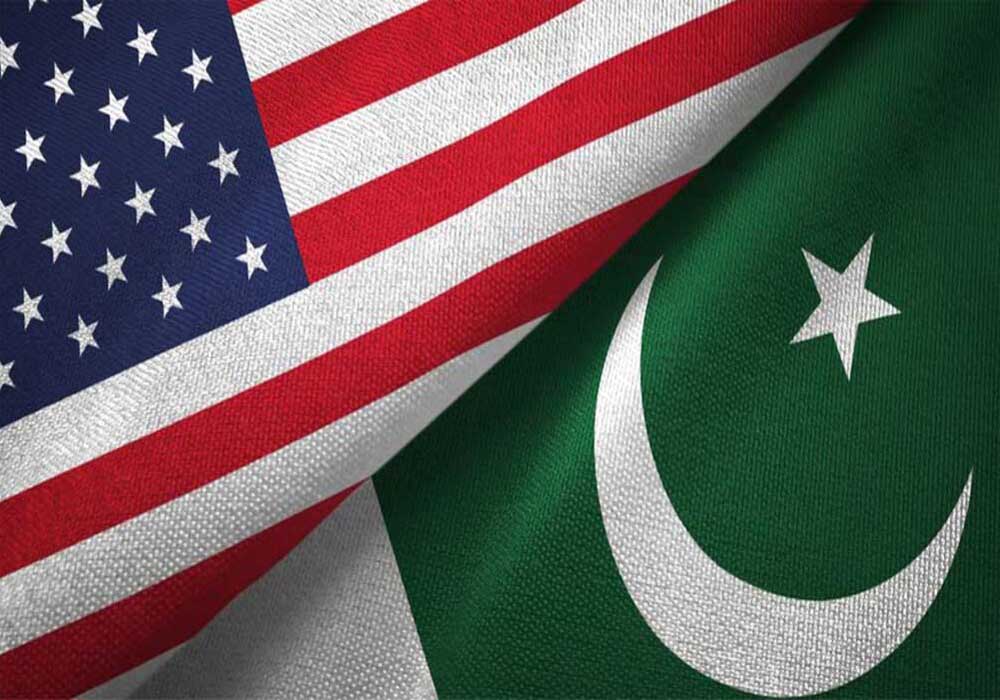
Pakistan and the United States have maintained one of the most consequential yet complex bilateral relationships in South Asia. Over more than seven decades, the relationship has witnessed periods of close strategic cooperation, moments of mutual disappointment, and repeated efforts at rebuilding trust. Today, amid shifting geopolitical realities, economic transformation, and emerging technological opportunities, both countries have a rare chance to redefine their partnership based on equality, mutual respect, and long-term shared interests rather than short-term strategic expediency.

Pakistan recognized the United States soon after its independence in 1947, and diplomatic relations were formally established in 1948. During the Cold War, Pakistan emerged as an important security partner, joining U.S.-backed regional alliances such as SEATO and CENTO. The relationship deepened further during the Soviet intervention in Afghanistan in the 1980s, when both countries cooperated closely in support of the Afghan resistance.

Following the end of the Cold War, however, strategic priorities diverged. The imposition of sanctions under the Pressler Amendment, differences over nuclear policy, and declining geopolitical convergence created a period of mistrust. After the tragic events of September 11, 2001, Pakistan again became a frontline partner in global counterterrorism efforts. While this cooperation produced significant security outcomes, it also imposed enormous economic, human, and social costs on Pakistan. Differences over regional security, Afghanistan, drone operations, and counterterrorism strategies periodically strained bilateral ties.

Despite these fluctuations, the relationship never completely lost its strategic relevance. Both countries continued cooperation in defense, education, health, agriculture, energy, and people-to-people exchanges. Millions of Pakistani-Americans have served as an enduring bridge between the two societies, making valuable contributions to American economic, academic, technological, and public life while strengthening bilateral understanding.

Recent diplomatic engagement indicates that both Islamabad and Washington recognize the need to move beyond a security-centric relationship. The visit of senior members of the U.S. Congress and American business leaders to Pakistan, alongside growing high-level diplomatic exchanges, demonstrates renewed interest in expanding cooperation across multiple sectors. Pakistan’s leadership has correctly emphasized that mature strategic partnerships are increasingly measured not by military cooperation alone but by the depth of economic, technological, and commercial engagement.

Economic cooperation offers perhaps the greatest untapped potential. The United States remains Pakistan’s largest single-country export destination, while bilateral trade has continued to grow steadily. Pakistan imports American cotton, soybeans, advanced technology, and industrial equipment, while exporting textiles, apparel, surgical instruments, sporting goods, agricultural products, and information technology services. However, the current trade volume remains far below its potential. Expanding bilateral trade toward the proposed target of $20 billion over the coming years would benefit businesses, workers, and consumers in both countries.

Pakistan’s improving macroeconomic stability, structural reforms, investment facilitation through the Special Investment Facilitation Council (SIFC), expanding digital economy, growing technology sector, critical minerals, renewable energy projects, and improved logistics infrastructure provide new opportunities for American investors. The recent financing support for the Reko Diq mining project demonstrates that confidence in Pakistan’s long-term economic prospects is increasing.

At the same time, the relationship should not overlook cooperation in emerging sectors such as artificial intelligence, cybersecurity, higher education, climate resilience, healthcare, agricultural modernization, clean energy, semiconductor supply chains, and digital entrepreneurship. These areas represent the future of global competitiveness and can become new pillars of bilateral cooperation.

Yet lasting partnerships require addressing historical shortcomings. For decades, Pakistan-U.S. relations have often been shaped by transactional calculations linked to immediate regional crises. This cyclical engagement has produced recurring trust deficits whenever strategic priorities shifted. Both sides should now avoid allowing temporary geopolitical developments to define a relationship with far broader potential.

Several steps can help transform bilateral relations into a more durable partnership. First, both governments should institutionalize regular strategic dialogue covering trade, investment, technology, education, climate, and regional security. Second, expanding private-sector investment should become a central objective alongside government-to-government cooperation. Third, greater parliamentary exchanges, academic collaboration, and cultural diplomacy can reduce misconceptions and strengthen public understanding. Fourth, both countries should respect each other’s sovereignty, security concerns, and national priorities while managing differences through sustained dialogue. Finally, cooperation should increasingly be guided by equality, transparency, reciprocity, and mutual benefit rather than dependency or short-term geopolitical calculations.

The Pakistan-United States relationship has survived changing global orders because it rests on shared interests that extend beyond any single issue or region. In today’s interconnected world, economic resilience, technological innovation, and regional stability require partnerships built on trust and consistency. By embracing a forward-looking agenda centered on trade, investment, innovation, and people-to-people ties, Islamabad and Washington can transform a relationship shaped by history into one driven by shared opportunity.

The future of Pakistan-U.S. relations need not be defined by the ups and downs of the past. It can instead become a model of pragmatic cooperation—one based on sincerity, equality, mutual respect, and a common commitment to peace, stability, and shared prosperity.

 Author: Prof. Engr. Zamir Ahmed Awan,  Sinologist – Diplomat – Advisor – Consultant, Founding Chair, Global Silk Route research Alliance.

Similar Posts

  • The exile who remained intellectually at home

    The passing of Professor Amin Mughal in London on August 12, 2026, at the age of 91, has left me with an overwhelming sense of personal bereavement. I have lost a mentor, friend and former colleague; Pakistan has lost one of the last representatives of a generation for whom progressive politics was inseparable from humanism, scholarship, intellectual integrity and personal courage. Harris Khalique called his departure “یہ ماتمِ وقت کی گھڑی ہے”—an hour for mourning the times—and described him as “the last of the Mohicans who touched so many lives.” These words capture the magnitude of the loss. Professor Mughal belonged to a generation that imagined Pakistan as a democratic, pluralistic and egalitarian state—not as a security-dominated order governed by fear, dogma and privilege. Born in Punjab in 1935, he taught English at Islamia College, Civil Lines, Lahore. His teaching career there ended because of his trade union activities. For Professor Mughal, principles were never dispensable instruments of convenience. Losing employment did not silence him. Along with Professor Manzoor Ahmed, he helped establish Shah Hussain College, transforming an act of official victimisation into another avenue for education and intellectual resistance. As a leader of the National Awami Party, he was imprisoned more than once. His politics sprang from compassion for workers, peasants, minorities and all those denied dignity by structures of power. It was not the doctrinaire radicalism of slogans. It was a deeply humane commitment to freedom from exploitation, arbitrary authority and cultural suffocation. He was associated with Lail-o-Nahar and later with the weekly Viewpoint, edited by the legendary Mazhar Ali Khan. I had the privilege of working with Professor Mughal at Viewpoint from 1979 to 1984. Its modest office at 4-Lawrence Road, Lahore, became my real university. Mazhar Ali Khan, I.A. Rehman, Zafar Iqbal Mirza—affectionately known as ZIM—Alys Faiz and Amin Mughal represented journalism as a public trust rather than a commercial enterprise. Reflecting on those formative years in my tribute to ZIM, I wrote: “Amin Mughal and Alys Faiz were so proficient in writing that few could match their stature. They also taught me the art of journalism with great affection and dedication.” That remains one of the greatest blessings of my life. Professor Mughal taught by example. His scholarship was vast, his editing precise and his intellectual standards uncompromising. He corrected younger colleagues without belittling them and encouraged inquiry without demanding conformity. The Viewpoint collective stood firm during General Ziaul Haq’s brutal dictatorship, when truth invited censorship, dismissal, imprisonment or exile. Literature and journalism became important sites of resistance during those years. Professor Mughal understood that control over language, culture and historical memory was central to authoritarian rule. His engagement with Urdu and Punjabi literature was therefore never merely aesthetic; it was part of a larger struggle to recover suppressed voices and alternative visions of Pakistan. Forced into political exile in 1984, he settled in London and never returned to Pakistan. Exile, however, could not sever his intellectual or emotional relationship with his homeland. He worked for Daily Jang and, in the early 1990s, edited the Urdu daily Awaaz. Although the newspaper survived for only a little over a year, it represented another attempt to provide Britain’s Pakistani community with a serious and progressive public forum. Writing in The News on Sunday in 2008, Arif Azad recalled Professor Mughal as looking “his usual sharp and buoyant self, dressed in impeccable attire as is his wont.” He described him as belonging to “the vanishing breed of left-wing Pakistan intellectuals” in whom one could still discern the lofty and humane aspirations associated with Pakistan’s early journey. The description was exact. Professor Mughal’s impeccable dress reflected something deeper: an inner discipline, dignity and refusal to be diminished by adversity. Political persecution could deprive him of employment and homeland, but it could not deprive him of intellectual independence or personal grace. His Finchley home gradually became, in Arif Azad’s memorable formulation, “a port of call” for visiting writers, politicians and political and cultural activists from both sides of the border. For decades it served as an informal salon, archive and classroom. Generations of visitors encountered there a formidable memory, an incisive mind and a host of unfailing generosity. Even when he withdrew from active engagement in South Asian politics, he remained an enduring reference point for politically conscious Pakistanis in Britain. His interests ranged across philosophy, literature, history, political economy and contemporary affairs. He wrote perceptively on Bhagat Singh and, following Benazir Bhutto’s assassination, produced After Benazir Bhutto: Some reflections. Although he had opposed her politics, he recognised her courage and wrote that in the imagination of the masses she had acquired a mystical significance destined to inspire future struggles. That ability to rise above personal political preference and acknowledge truth distinguished him as a genuine intellectual. Professor Mughal’s life reminds us that exile is not merely physical displacement. It is also the condition imposed upon ideas that a state refuses to accommodate. Pakistan expelled or marginalised many of its finest minds and then wondered why intolerance, intellectual poverty and historical amnesia prevailed. Professor Mughal remained physically in London, but intellectually he never ceased to inhabit the Pakistan for which he had struggled. One by one, the great teachers of my Viewpoint years have departed. Their passing makes the country feel lonelier and its moral landscape immeasurably poorer. Professor Amin Mughal leaves no office, fortune or monument carrying his name. His true legacy survives in the minds he liberated, the writers he encouraged, the causes he defended and the generations he taught to question received wisdom. Farewell, dear mentor and friend. You lived in exile, but your ideas never left us. They will remain at home wherever people struggle for a democratic, pluralistic, just and humane Pakistan.

  • The Fortress Endures: Pakistan and the Vision of I…

    Pakistan stands as a living testament to an enduring spiritual and ideological conviction. From its very inception, the rallying cry that unified millions were both simple and profound: “What does Pakistan mean? La ilaha illallah.” Under this banner of faith in the Oneness of Allah, the nation emerged on the world map in 14 August 1947, as a homeland for Muslims of the Subcontinent, guided by the vision of Quaid-e-Azam Muhammad Ali Jinnah and the philosophical foresight of Allama Iqbal. It was not merely a political endeavour but the realisation of a distinct national identity rooted in Islamic ideals of justice, sovereignty, and unity. Yet the path was fraught with peril. Even before the new state could draw breath, formidable obstacles arose—economic collapse, mass migrations, and external scepticism. Many predicted that its borders would soon dissolve under pressure, but divine will ordained otherwise. Like a ship battling turbulent seas, Pakistan endured and reached the shores of stability through resilience and faith. As the country gained its footing, a landmark gathering in Lahore in February 1974 marked a turning point. The Second Islamic Summit Conference brought together leaders from 38 Muslim nations, including King Faisal of Saudi Arabia, Anwar Sadat of Egypt, and Muammar Gaddafi. Hosted by Prime Minister Zulfikar Ali Bhutto, this assembly transformed individual aspirations into collective strength. Muslims, like fingers joining to form a mighty fist, stood united on a common platform. The summit addressed the aftermath of the 1973 Arab-Israeli war, supported Palestinian and Arab causes, and elevated Pakistan’s stature as a bridge among Islamic nations. From this unity flowed a shared mission that propelled the country forward. Throughout its history, Pakistan has answered calls for global security and the stability of the Islamic world. It earned the honourable distinction of the Fortress of Islam, particularly through its longstanding commitment to safeguarding the Haramain Sharifain. Pakistani troops have served in Saudi Arabia since the 1970s, with deployments in training, advisory, and protective roles—often numbering over 10,000 at peaks, including during the 1990-91 Gulf War. This sacred duty reflects not mere strategy but a religious obligation deeply felt by the nation.  Adversaries, notably neighbouring India, seized every opportunity to portray Pakistan as a failing state. Yet at moments of trial, unseen help arrived. In May 2025, Pakistan demonstrated military prowess that astonished observers, restoring its lost prestige through resolute leadership that honoured the divine trust placed upon it. A landmark Strategic Mutual Defence Agreement with Saudi Arabia, signed on 17 September 2025 in Riyadh by Prime Minister Shehbaz Sharif and Crown Prince Mohammed bin Salman, formalised decades of brotherhood. This pact declares that any aggression against one is an aggression against both, encompassing comprehensive cooperation in defence, training, technology, and joint deterrence. Reports suggest potential deployment of up to thousands of Pakistani personnel and assets, including JF-17 aircraft, underscoring Pakistan’s role as a steadfast guardian.  Building upon this success, Pakistan has played a constructive mediating role in Gulf tensions, earning widespread appreciation for its balanced diplomacy. Cooperation with Turkey has deepened through bilateral deals in defence and trade, while Kuwait and other regional states have expressed interest in similar partnerships. Pakistan’s armed forces, with approximately 650,000–685,000 active personnel—one of the world’s largest standing armies—alongside an estimated hundreds of nuclear warheads and modern platforms like JF-17 fighters and advanced missiles, provide credible strength to these endeavours.  Looking to the future, Pakistan’s perspective remains one of hope anchored in unity and good intentions. The day is not distant when an alliance of Islamic countries, forged through mutual respect and shared values, may emerge—bearing precedents in the European Union or NATO yet rooted firmly in Islamic principles of solidarity. Such a framework would face formidable obstacles: historical differences, external influences, and economic disparities. Yet with the spirit that carried Pakistan through partition, the 1971 trials, and recent triumphs, it remains achievable. Pakistan, with its strategic location, military capability, and diplomatic bridges—linking South Asia, the Gulf, and beyond—can serve as a pivotal node in this vision. It continues to champion economic cooperation within the OIC, advocate for peace with justice on issues like Palestine and Kashmir, and promote connectivity that benefits the wider ummah. Pakistan’s journey, from ideological birth to its current resurgence, exemplifies faith sustained against the odds. As it advances, the nation carries not only the aspirations of its 250 million people but the hopes of many who see in its endurance a beacon for the Muslim world. With trust in Allah, unity among its ranks, and steadfast resolve, Pakistan is poised to fulfil a greater role in fostering stability, prosperity, and brotherhood across Islamic lands. The future beckons with challenge and opportunity alike; guided by its founding principles, the nation shall meet both with honour.

  • Petroleum Minister’s diagnosis & indictment

    Federal Minister for Petroleum Ali Pervaiz Malik has made an unusually candid assessment of Pakistan’s energy sector. Speaking at the Energy Conference 2026, he conceded that inconsistent policies discourage exploration, petroleum has been subjected to “exorbitant taxation”, domestic refineries remain in a dilapidated condition, gas-sector liquidity is impaired, circular debt remains a central concern, and structural reform requires competition, unbundling and private participation. These admissions deserve attention because they come from inside the government. They also raise an unavoidable question: if the government understands the structural weaknesses so clearly, why does its own fiscal and administrative policy continue to aggravate them? The minister’s strongest observation was that the Petroleum Division cannot remain the instrument upon which excessive taxation and financial interventions are loaded merely to meet budgetary requirements. The diagnosis is correct; the choice of victim is not. A government division does not bear taxation. Consumers, farmers, transporters, manufacturers and exporters do. Pakistan collected a record Rs. 1.567 trillion through petroleum levy during the fiscal year (FY) 2025-26, exceeding the budgeted target by about Rs. 99 billion. Petroleum products are nominally exempt from general sales tax, but motorists should not confuse exemption with relief. The levy, customs duty and the new climate support levy together impose an enormous burden at the pump.  An analysis of notified prices and consumption estimated that these petroleum charges generated around Rs. 166 billion in July 2026 alone—equivalent to roughly one-fifth of that month’s collection of Federal Board of Revenue (FBR). On petrol, government imposts exceeded Rs. 100 per litre during parts of August. [Ministry of Finance fiscal operations; OGRA notified prices] This is not energy policy. It is fiscal opportunism. Petroleum levy is especially attractive to Islamabad because, unlike federal taxes included in the divisible pool, its proceeds are retained by the federal government. Replacing sales tax with levy does not broaden the tax base or improve its progressivity [Bankruptcy of ideas—VII: The Petroleum (Levy) State, June 18, Minute Mirror, 2026].  It merely enables the federation to collect revenue without sharing it under the National Finance Commission mechanism. Provinces lose their constitutional share while the entire economy absorbs higher transport, agricultural and production costs. The levy is also excessively regressive. A litre consumed by a motorcyclist, rickshaw driver or small farmer attracts the same fixed charge as one consumed by the owner of a luxury vehicle. Diesel taxation travels through freight into the price of flour, vegetables, medicines and construction materials. The poorest household may not own a vehicle, but it still pays petroleum levy indirectly on almost everything it buys. The minister should have said plainly that Pakistan’s narrow and inequitable tax system is being sustained by taxing mobility and production. Powerful retailers, speculative real-estate interests, large landowners and beneficiaries of untaxed or lightly taxed wealth remain inadequately documented. The salaried class, formal businesses and petroleum consumers are repeatedly squeezed because they are visible and collection is easy. The minister also called for consistent and predictable policies to attract investment in high-risk onshore and offshore exploration. No serious investor can disagree. Exploration requires large sunk expenditure, long lead times and the possibility of complete failure. Pakistan cannot invite investors with one policy, reinterpret its terms through another notification, delay payments, restrict remittances and then wonder why exploration interest remains weak. The Pakistan Economic Survey 2025-26 acknowledges constrained domestic petroleum production, continued import dependence, suboptimal refinery utilisation and the effect of international instability on the import bill. These are not new discoveries. Governments have been promising energy security, refinery upgrading and accelerated exploration for decades. The institutional cycle remains familiar: announce a policy, delay agreements, accumulate liabilities, offer concessions, change fiscal terms and launch another policy. Offshore exploration is important, but it must not become another slogan. A dry well is a commercial risk; unstable contracts, delayed decisions and politicised administration are sovereign risks created by the state. Pakistan cannot remove geological uncertainty, but it can remove bureaucratic caprice. That requires published contractual frameworks, credible dispute resolution, transparent bidding, assured repatriation rules and protection against retrospective fiscal changes. The minister’s claim that the flow of circular debt has been maintained near zero without increasing consumer prices also needs closer examination. Circular debt is not eliminated merely because its current flow is temporarily contained. Arrears can be shifted through subsidies, delayed payments, financing arrangements, tariff adjustments, accounting recognition or government guarantees. The stock remains a claim on citizens even when it disappears from a ministry’s preferred flow indicator. Gas-sector circular debt reflects delayed tariff adjustments, expensive imported LNG, diversion of gas between consumer categories, distribution losses, theft, weak recoveries, unpaid subsidies and government-directed supplies without timely budgetary compensation. It impairs the liquidity of exploration and production companies, which then lack funds for new exploration. The state taxes petroleum to repair its budget while withholding or delaying money owed within the energy chain. This is fiscal cannibalism: one part of the sector is consumed to keep another functioning. The condition of local refineries provides another indictment. The minister rightly asked why they remain “dilapidated” and have not become deep-conversion facilities. Old hydro skimming refineries produce an output mix increasingly misaligned with domestic demand, including excess furnace oil and insufficient quantities of cleaner, higher-value fuels. Modernisation requires billions of dollars, technological planning and certainty over tariffs, duties, pricing and product specifications. Refineries, however, have enjoyed various forms of protection and deemed-duty support in the past. Any new incentive must be conditional. Public support cannot become a permanent reward for postponing investment.  Each refinery agreement should disclose the investment commitment, financing plan, completion milestones, product-quality improvements, environmental obligations and consequences of default. Consumers should not finance refinery upgrades through protected margins without enforceable delivery. The proposed unbundling of the gas sector—separating infrastructure from commodity trading—can improve transparency. An independent network operator, regulated access charges and genuine third-party access could allow producers and large consumers to contract without forcing every transaction through an opaque state monopoly. But changing organisational boxes will not cure political pricing, excessive losses, poor

  • Who Owns Your Digital Self? The Emerging Market fo…

    For years, people uploaded photographs, videos and voice recordings believing they were sharing moments or building audiences. What many did not realise was that public material could become training data for artificial intelligence. Large AI systems may be developed using datasets containing personal information collected from websites and platforms. European regulators acknowledge that AI models can be trained on personal data, while the UK Information Commissioner says developers still need a lawful basis even when information comes from the open web. Training a general model and cloning a person are not identical. The first learns patterns across datasets; the second uses targeted samples to reproduce an identifiable voice or appearance. Yet both raise the same question: who authorised the use? A new proposition is emerging: instead of companies quietly collecting human material, people may knowingly license their faces, voices and movements for AI development or commercial digital replicas. In return, they could receive a one-time payment, royalties or a fee whenever their synthetic identity is used. This is beginning. Shutterstock operates a contributor fund that compensates contributors when material from its library is licensed for AI model development. SAG-AFTRA has negotiated protections for digital replicas. The voice platform Narrativ allows performers to set prices and advertising preferences for AI-generated versions of their voices, with payment for approved uses. At first glance, this is progress. People’s data has already been feeding digital systems, often without their knowledge, meaningful choice or financial benefit. A transparent marketplace could be fairer. At least individuals would know that a voice sample or facial scan was being collected. There would be a contract, and some value created from human identity could return to the human being. It could also create work. A person might license a recorded voice for educational narration in several languages. A model could approve a digital replica for advertisements without attending repeated shoots. People far from production centres might gain opportunities previously unavailable to them. But payment is not the same as protection. A person offered a modest amount may sign away far more than they understand. A broadly written agreement could allow a company to reproduce a face or voice for years, transfer it to other businesses, train additional models and place the replica in contexts the person would never endorse. The human receives one payment; the synthetic version may generate revenue indefinitely. Faces and voices are not ordinary digital products. A password can be changed after a breach. A face cannot. A cloned voice can imitate a family member, support a fraudulent request or manufacture a statement that was never made. The US Federal Trade Commission has warned that scammers can create convincing voice clones from short audio clips found online. The answer is not to ban every voluntary AI licence. It is to establish non-negotiable human protections. Consent must be specific, informed and renewable. Companies should state whether material will be used for training, identity replication or both. Agreements must define the product, audience, country, platform and time period. Permission for an educational video must not silently become permission for political advertising, gambling, medical claims, intimate material or religious messaging. Compensation should continue when the replica continues earning. Where a digital identity is repeatedly used, the person should receive royalties or per-use payments, not merely a small initial fee. Individuals should be able to set minimum prices, reject industries and see where their replica appeared. There must also be a genuine right to stop future use. Companies should delete source files, block new generations and notify third parties when a licence ends. Independent audits should test compliance. Strong security and penalties for leaks are essential because biometric material cannot simply be replaced. Every synthetic performance should carry visible disclosure and a machine-readable marker. The European Union’s transparency rules, applicable from 2 August 2026, require certain AI-generated or manipulated material to be identifiable and deepfakes to be disclosed. Labels will not prevent every abuse, but they help preserve the distinction between human action and machine-generated imitation. Children need stronger protection. Parents should not be able to permanently commercialise a child’s future identity. Any limited agreement should expire and require the individual’s fresh consent upon adulthood. Pakistan should treat this as urgent. As of 2026, the country still lacks a comprehensive enacted personal data protection law. This creates vulnerability just as international companies may seek diverse and comparatively inexpensive populations for AI training.  The greatest risk is not that humans will earn from AI. Fairly sharing value could correct years of silent extraction. The danger is that people will exchange permanent control for temporary payment. As AI advances, societies must recognise the face, voice and digital personality as extensions of the human person, not raw material waiting to be harvested. Without consent, continuing compensation, traceability and the power to say no, we may lose more than jobs or privacy. We may lose the trust that allows us to believe what we see, hear and recognise. AI should expand human possibility, not gradually replace human ownership of the self.

  • Trump reopens the Saudi nuclear deal

    For a few hours this week, it looked like Washington and Riyadh had quietly closed one of the more consequential files of Donald Trump’s second term. On Wednesday, US Energy Secretary Chris Wright and his Saudi counterpart signed a civil nuclear cooperation agreement, a deal years in the making, offering American firms a foothold in a market Riyadh has long promised and long withheld. Then, a day later, the president reopened it himself. In a Truth Social post on Thursday, Trump declared the agreement “will be approved,” but added that it was “totally subject to Saudi Arabia joining the very respected and successful Abraham Accords.” He also inserted a second condition that had not been part of the signed text: no enrichment of nuclear material on Saudi soil. Within hours, press secretary Karoline Leavitt was telling reporters the deal was simply “off” unless the kingdom normalised relations with Israel, even though, by her own account, the president had not actually spoken to Crown Prince Mohammed bin Salman since posting the ultimatum. It is worth sitting with how unusual this is. A nuclear cooperation agreement, negotiated over years and signed by cabinet level officials on both sides, was retroactively rewritten by a presidential social media post, with the Saudi government left to respond through silence, and American wire services unable to get so much as a background comment out of Riyadh. Steven Cook, a Middle East scholar quoted by NPR, put the underlying question bluntly: whether “a social post supersede a signed diplomatic agreement.” That a serious foreign policy analyst even has to ask the question tells its own story about how this White House does business. The Saudi position, however, is not new, and it is not merely stubbornness. The kingdom has said for years, through King Salman and now through the Crown Prince, that normalisation with Israel requires a credible pathway to Palestinian statehood. That position survived the first Trump term’s Abraham Accords push, the Biden administration’s own normalisation efforts, and it hardened further after the October 2023 Hamas attack on Israel and the war in Gaza that followed. Riyadh’s calculus is also generational: across the Arab and Muslim world, sympathy for the Palestinian cause remains a live political fact that no government, however close to Washington, can casually override. There is also an Israeli dimension worth naming honestly. Israel’s own unease was never really about Saudi Arabia’s civilian nuclear ambitions; officials have signalled for months that they had made peace with the idea, provided it came bundled with normalisation. What Israeli commentators and officials appear to actually fear is a Saudi Arabia empowered, prestige laden, and unbound to the Accords: a regional heavyweight whose recognition Israel still needs, and has not been granted, absent a resolution nobody has yet found for the Palestinians. That is the crux the deal has now run into, and it is not a problem Trump’s Truth Social account can post its way out of. None of this means the deal is necessarily dead. Trump has a long history of issuing maximalist conditions in public while negotiating something narrower in private, and Saudi Arabia has strong economic and strategic incentives of its own to keep the nuclear track alive. But the manner in which this condition was added, abruptly, publicly, and without prior coordination with Riyadh, is itself a signal worth reading. It suggests an American approach to the region that still assumes the old leverage of the first Abraham Accords era holds unchanged, even as the ground beneath it, in Gaza’s aftermath and in Saudi public opinion, has shifted considerably. Whether Washington adjusts to that reality, or simply keeps repeating the demand more loudly, will say a great deal about how the rest of this file plays out.

  • Shocks and Aftershocks

    In the autumn of 2005, the earth rose in wrath against the ancient hills of Kashmir. On the eighth day of October, a violent convulsion of 7.6 magnitude tore through the region, its epicentre lying a mere 19 kms northeast of Muzaffarabad. The tremor was felt far beyond Pakistan’s borders, reverberating through Afghanistan and Tajikistan, across the valleys of India, and even into the remote expanses of Xinjiang. It proved one of the deadliest natural disasters of that decade, claiming thousands of lives and reducing entire villages to rubble. For months the ground refused to rest; careful records later counted no fewer than 497 aftershocks between October and the following March. During such uncertainty a sobering lesson emerged; buildings erected with care and strength stood firm against the repeated tremors, while those raised hastily or without conscience crumbled into dust and despair. A parallel drama of sudden upheaval and lingering aftershocks has unfolded more recently, though this time the forces at work have been those of human conflict rather than nature’s blind fury. Late in February 2026, long-simmering tensions between Iran and USA erupted into open warfare, with Israel joining the fray in decisive fashion. Large-scale aerial and missile assaults struck hundreds of targets across Iran, homing in upon military bases, nuclear facilities, and centres of leadership. The loss of Iran’s Supreme Leader, Ayatollah Ali Khamenei, in the opening strikes sent shockwaves through the region and beyond. Tehran responded with barrages of missiles and swarms of drones that lit the night skies and struck at targets across several countries. For several weeks in March and April the fighting intensified, leaving thousands dead—most of them in Iran and Lebanon—and threatening to engulf wider circles of involvement involving Hezbollah and other actors. Shipping in the Strait of Hormuz, that vital artery of global energy, faced grave peril, and the world watched anxiously as oil supplies trembled on the edge of disruption. A measure of relief arrived around the middle of June when a MOU was concluded between the United States and Iran. The accord promised a halt to major combat operations, the reopening of the strait to peaceful navigation, and the beginning of serious negotiations concerning Iran’s nuclear program. For a brief season hope flickered that reason might yet prevail. Yet by the seventh and eighth of July the ceasefire had fractured. Iranian forces struck at merchant vessels in the Hormuz passage; the United States answered with fresh waves of airstrikes and the reimposition of a naval blockade. Iran, in turn, launched retaliatory attacks upon American and coalition positions in Bahrain, Kuwait, Jordan, and elsewhere. As July draws toward its close, the pattern of nocturnal American strikes and Iranian counterblows continues, holding the Gulf in a state of restless tension. Though the principal theatre of war lies distant from our frontiers, its aftershocks have travelled with merciless swiftness to the streets and bazaars of Pakistan. The initial convulsion in global oil markets followed hard upon the early phase of hostilities. Petrol prices in Pakistan surged to an unprecedented four hundred and fifty-eight rupees and forty-one paise per litre on the third of April—a record born of disrupted supplies and fevered speculation. Diesel climbed still higher, touching five hundred and twenty rupees and thirty-five paise. The consequences touched every corner of national life; transporters raised their fares, farmers faced higher costs for machinery and transport, and ordinary households tightened their belts as inflation rippled outward. For a time, as diplomatic channels—including Pakistan’s own quiet mediation efforts—bore fruit and the strait began to function once more, prices eased and a measure of stability returned. Yet the renewed outbreak of fighting in July has shattered that fragile calm. Oil prices have again become uncontrollable, climbing under the pressure of uncertainty and fresh speculation. The government, its options narrowed by heavy reliance on international loans and a vulnerable economy, has found itself compelled to adjust domestic fuel rates almost daily, basing decisions as much upon forecasts of future trouble as upon present realities. Thus, the nation has endured a great initial shock followed by persistent aftershocks, much like the Kashmir earthquake two decades earlier. Each fresh tremor in the Gulf sends another wave through our foreign exchange reserves, our transport sector, and the fragile purchasing power of the common citizen. Industries dependent upon steady fuel supplies have curtailed operations; the cost of everyday commodities has risen in sympathy; and the burden has fallen most heavily upon those least able to bear it. Pakistan’s economy, long accustomed to navigating external storms while standing upon borrowed foundations, feels these disturbances with particular acuity. Even in these challenging times, the dry wit of everyday Pakistanis remains unshaken. One recalls an incident from the days when the Daily Pakistan newspaper was under the ownership of Akbar Bhatti. A reporter rushed into the newsroom one afternoon declaring that Bhatti Sahib’s car had met with an accident. Before concern could fully form, another veteran journalist remarked with a knowing smile that this surely meant salaries would not arrive on time that month. The quip, though light, spoke volumes about the precariousness of life and livelihood when those at the helm encounter misfortune. Pakistan has passed through many such seasons of trial—political upheavals, economic tempests, and natural calamities alike. Each time the nation has gathered its scattered strength, mended what could be mended, and pressed onward. The present difficulties arising from the conflict in the Gulf, with their daily toll upon fuel prices and economic confidence, constitute yet another test of our collective endurance. The strong institutions and resilient spirit of the people have served as anchors in the past; they remain our surest hope today. God willing, this too shall pass, and Pakistan shall emerge from these aftershocks steadier and more united, its foundations reinforced by hardship and its future secured by the unyielding will of its citizens.

Leave a Reply

Your email address will not be published. Required fields are marked *