chief justice india

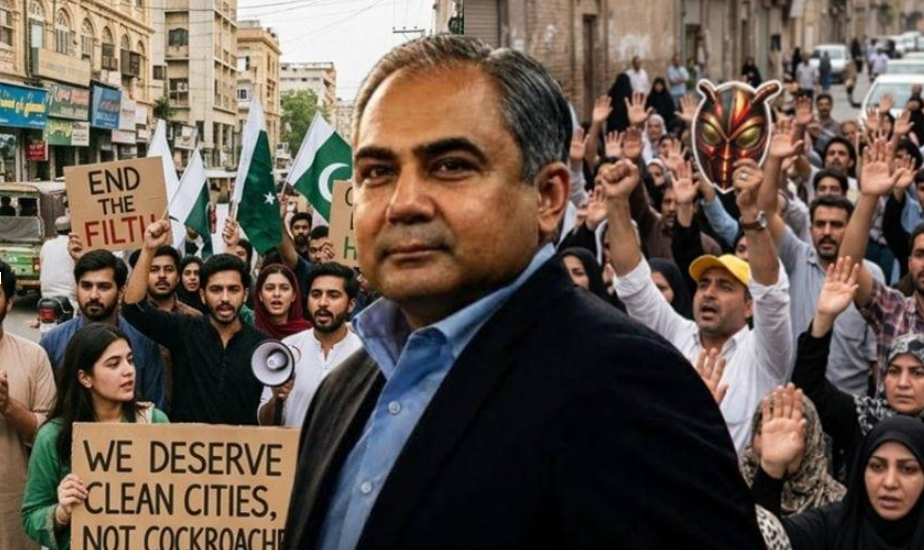
Chief Justice of India versus Cockroach Janta Part…

By Muhammad Imran, Staff Member, SAHSOL-LUMS and Asma Rahmat, Final Year Law Student, SLC, Superior University and Muhammad Ameer Hamza, Final Year Law Student, SLC, Superior University

Introduction: Pakistan appears to be entering yet another phase of constitutional uncertainty, engineering, or manipulation, where political developments, institutional pronouncements, and proposals for structural reforms are converging to reshape the national discourse. Recent statements by senior state functionaries have reignited debate over governance, federalism, constitutional amendments, and the future distribution of political power. Whether these developments represent genuine constitutional reform or another episode of constitutional engineering remains an open question.

The debate was triggered during an Economic Summit when the Federal Interior Minister, Syed Mohsin Naqvi, observed that the existing “hybrid” governance arrangement had exhausted its utility. While acknowledging the efforts of the Prime Minister, he maintained that the present political system could no longer deliver effective governance and therefore required a comprehensive “reset.” He further warned that, unless structural reforms were undertaken, Pakistan risked witnessing the resurgence of what he described as the CJP as “Cockroach Janta Party”; do not take it as Chief Justice of Pakistan (CJP), a political phenomenon which, in his opinion, would be unsustainable.

Within twenty-four hours, Lieutenant General Ahmed Sharif Chaudhry, Director General of ISPR, echoed concerns regarding governance during his media briefing. He emphasized that Parliament bears the constitutional responsibility to devise solutions to persistent governance failures. He further argued that Pakistan’s rapidly expanding population necessitates a serious national debate on the creation of additional provinces to improve administrative efficiency, public service delivery, and democratic accessibility. More significantly, he linked good governance with national security, observing that sustainable counter-terrorism efforts require not only military preparedness but also effective civilian governance and institutional stability.

These successive statements have inevitably fuelled speculation regarding another phase of constitutional restructuring. Following the enactment of the person-specific (Justice Syed Mansoor Ali Shah) Twenty-Seventh Constitutional Amendment, which substantially altered Pakistan’s judicial architecture by establishing the Federal Constitutional Court (FCC) and redistributing the constitutional jurisdiction of the Supreme Court, political circles have begun discussing the possibility of a Twenty-Eighth Constitutional Amendment. Although no formal proposal has yet emerged, reports suggest that the Pakistan People’s Party (PPP) remains cautious about any constitutional initiative that may dilute the federal autonomy secured through the Eighteenth Constitutional Amendment, particularly the post-NFC fiscal arrangement.

Federalism and the NFC Question: Any discussion concerning new provinces inevitably intersects with Pakistan’s fiscal federalism. The Seventh National Finance Commission (NFC) Award and the Eighteenth Amendment fundamentally altered the Federation’s financial architecture by allocating a substantially larger share of federal revenues to the provinces. While these reforms strengthened provincial autonomy, they simultaneously reduced the fiscal capacity of the Federation.

Successive federal governments have therefore expressed concern regarding the shrinking financial resources available to discharge expanding national responsibilities. Similar proposals for revisiting the NFC framework surfaced during the Pakistan Tehreek-e-Insaf (PTI) government; however, they never materialized because constitutional amendments require a two-thirds parliamentary majority—a threshold that remained politically unattainable.

The Politics of New Provinces: The proposal to create additional provinces is hardly novel. For decades, constitutional scholars have argued that Pakistan’s demographic expansion justifies administrative decentralization. Provinces with populations exceeding those of many sovereign states inevitably face governance challenges, administrative inefficiencies, and unequal public service delivery. Yet constitutional necessity has consistently collided with political reality.

Pakistan’s two dominant political parties—the Pakistan Muslim League (Nawaz) (PML-N) and the Pakistan People’s Party (PPP)—have repeatedly expressed conditional support for provincial reorganization while demonstrating limited political willingness to implement it. Their reluctance is attributable not merely to the enormous financial burden of establishing new legislatures, governors’ houses, provincial secretariats, judicial institutions, police organizations, and civil services. More fundamentally, new provinces would inevitably redistribute political influence, electoral constituencies, financial resources, and administrative authority.

The current debate vividly illustrates this contradiction. The PPP has argued that provincial reorganization should begin with Punjab, Pakistan’s largest province by population. The PML-N, whose electoral dominance is centred in Punjab, has shown little enthusiasm for initiating such reforms within its own political base. Consequently, critics contend that the resistance to provincial restructuring reflects electoral calculations as much as constitutional considerations.

Constitutional Amendments versus Constitutional Governance: Pakistan’s constitutional history demonstrates that amendments have frequently been employed as instruments of political expediency rather than mechanisms of democratic consolidation. Whether enacted by military governments or elected administrations, constitutional amendments have often reflected prevailing political necessities instead of broad constitutional consensus.

The central question, therefore, is not whether another constitutional amendment should be enacted, but whether constitutional amendments alone are capable of resolving Pakistan’s chronic governance crisis.

Experience suggests otherwise: No constitutional amendment—regardless of its political significance—can compensate for weak institutions, ineffective governance, deficient accountability, or inconsistent adherence to constitutional norms. Constitutional text may reorganize institutions, but it cannot, by itself, transform political culture.

The Crisis of Democratic Representation: Pakistan’s more profound constitutional challenge lies elsewhere. A constitutional democracy derives its legitimacy from authentic political representation. Citizens must possess the genuine ability to elect representatives through elections that are free, fair, transparent, and universally trusted. Only under such conditions can Parliament legitimately exercise constituent authority on behalf of the people.

Critics of Pakistan’s constitutional evolution have long argued that recurrent political interruptions, institutional interventions, and governance deficits have prevented representative democracy from maturing into a fully autonomous constitutional order. Consequently, civilian supremacy—despite being an essential constitutional aspiration—has often remained institutionally fragile, docile and compliant.

Without addressing the quality and credibility of democratic representation, constitutional amendments risk becoming procedural exercises rather than substantive democratic reforms.

Institutional Power and Constitutional Accountability: Recent political developments have also revived debate regarding the practical distribution of constitutional authority among state institutions.

The Federal Interior Minister’s public assertion that the existing political system had “collapsed,” while continuing to serve in one of the most influential positions within the federal cabinet, generated significant constitutional commentary. Political analysts have interpreted this episode in different ways, but it has undeniably raised broader questions concerning constitutional accountability, institutional autonomy, civilian authority, and the practical operation of Pakistan’s governance framework.

Such debates underscore a larger constitutional reality: stable governance depends not merely upon the formal allocation of powers under the Constitution but also upon consistent respect for constitutional boundaries, democratic conventions, and institutional restraint.

Conclusion

Pakistan undoubtedly requires substantial governance reforms, including administrative decentralization, stronger provincial institutions, enhanced institutional capacity, and, where genuinely necessary, carefully considered constitutional amendments. However, constitutional engineering must not be mistaken for constitutional development. Reorganizing or redistributing institutional powers cannot, by itself, address the structural weaknesses undermining Pakistan’s democratic and constitutional order. The real solution lies in strengthening constitutionalism itself through democratic legitimacy, credible elections, judicial independence, parliamentary supremacy within constitutional limits, fiscal responsibility, institutional accountability, and unwavering adherence to the rule of law. Constitutional democracy cannot flourish through textual amendments alone; it requires institutions to respect both the letter and spirit of the Constitution.

Electoral integrity is central to this process because the electioneering is the first gate of democracy. Unless political parties and relevant state institutions ensure that elections are conducted transparently and impartially, without interference through the Results Transmission System (RTS), Returning Officers (ROs), or irregularities involving Forms 45 and 47, the establishment of genuinely representative government will remain compromised. Elections are not merely administrative exercises; they are the constitutional means through which citizens confer legitimacy upon those who govern them. Their votes must be counted for whom they voted – it will be a peaceful revolution. We need a peaceful revolution; here, peaceful means in accordance with Law and the Constitution. 

This is particularly important for Pakistan’s poor, marginalized, and politically vulnerable citizens, who participate in elections with the hope that their votes can influence government, protect their rights, and improve their lives. Any deliberate compromise of electoral integrity therefore goes beyond procedural irregularity: it undermines public confidence, weakens institutional legitimacy, and betrays citizens’ constitutional faith in democracy. When the sanctity of the vote is compromised, democracy risks becoming an exercise in institutional formalism rather than genuine popular sovereignty. Consequently, successive constitutional amendments—whether the Twenty-Seventh, Twenty-Eighth, or any that may follow—will achieve little if they merely rearrange institutional powers without addressing the causes of political instability, weak governance, and democratic fragility. The durability of a constitutional order depends not on how frequently its text is amended, but on how faithfully its principles are observed.

Ultimately, Pakistan needs not merely more constitutional amendments, but a deeper constitutional commitment. Constitutional development will become meaningful only when institutions respect constitutional limits, elections genuinely reflect the will of the people, courts remain independent, Parliament performs its constitutional functions, governments remain accountable, and citizens—especially the most vulnerable—can trust that their vote, voice, and fundamental rights are protected. Only then can constitutional democracy become a durable instrument of democratic governance, social justice, and political transformation.

Similar Posts

  • Triple alliance and the regional situation

    The effects of the defence agreement between Pakistan and Saudi Arabia were witnessed by the entire world during the recent US-Iran-Israel war. At the same time, there was continuous speculation about whether the scope of this defence agreement could be expanded in the coming days. For years, the defence of major Middle Eastern countries has largely depended on the United States. However, during the recent conflict, the US appeared unable to fully protect either these countries or even some of its own military bases in the region. When Iran attacked Saudi Arabia, Pakistan immediately issued a strong warning, stating that if Iran wanted to protect its own territorial integrity, it should avoid any aggression against Saudi Arabia; otherwise, Pakistan would honour its defence commitments. Soon afterwards, the world witnessed a different situation in areas where Pakistani forces were present. While attacks continued in various parts of the region, areas protected by Pakistani forces experienced a markedly different security environment. Against this backdrop, international newspapers began suggesting that the United States’ influence in the Middle East could be entering a period of decline. As the poet famously said: “Insha Ji, get up and leave now; What is the point of becoming attached to this city?” The peace talks between Iran and the United States, hosted by Pakistan and referred to as the “Islamabad Accord”, created further diplomatic momentum. Shortly after the first meeting, discussions surrounding the Pakistan-Saudi defence agreement began attracting global attention. Influenced by these developments, other countries in the region also started exploring the possibility of joining or cooperating with the defence arrangement. Pakistan is the world’s only nuclear-armed Muslim-majority country. Saudi Arabia is one of the world’s most influential oil-producing states and holds immense religious significance for Muslims worldwide. Türkiye, meanwhile, has established a strong reputation for its drone technology and non-nuclear missile capabilities. The combination of these three countries could have significant strategic consequences for the region. Their growing defence cooperation is unlikely to be viewed favourably by either the United States or Israel. Even before the reported expansion of the defence arrangement, statements from the United States and Israel indicated growing concern. The role of American military bases and radar systems located in several Muslim-majority countries has also come under greater scrutiny, particularly over their alleged role in supporting Israel during the conflict. One US think tank reportedly described the emerging regional landscape as involving two major blocs: a Sunni alliance and a Shia alliance, with Israel and the United States potentially prepared to confront both. Such assessments could be interpreted as an indication of changing strategic dynamics and a possible reduction in American and Israeli influence across parts of the region. As mentioned earlier, several other countries are reportedly watching the development of the Pakistan-Saudi defence partnership closely. Egypt is also said to have participated in preliminary discussions, and its potential inclusion in the future cannot be ruled out. If Egypt joins the arrangement, the strategic balance could become even more significant. Egypt controls the Suez Canal, one of the world’s most important maritime trade routes on which a substantial portion of global commerce depends. It also possesses one of the region’s strongest naval forces and a large fleet of military aircraft. Access to Egyptian territory and strategic waterways could therefore have major implications for the Middle East, Israel and Europe. With Pakistan, Saudi Arabia, Türkiye and potentially Egypt forming a broader strategic group, the combined military capabilities of these countries, supported by Saudi Arabia’s enormous energy resources and financial strength, could create a formidable regional bloc. This is one reason why the emerging defence arrangement is increasingly being compared with Article 5 of the NATO treaty. Under Article 5, an armed attack against one NATO member is considered an attack against all members, triggering a collective commitment to assist the country under attack. NATO invoked Article 5 for the first and only time in its history following the terrorist attacks against the United States on September 11, 2001. In the coming days, countries such as Egypt, Bangladesh, Kuwait and Jordan could potentially become part of broader defence cooperation, although their formal participation would depend on future diplomatic and strategic decisions. At present, Israel, the United States, India and Iran all appear to have concerns about the potential consequences of such an alliance. However, the coming months will reveal its actual structure, scope and strategic impact on the region.

  • Four provinces can no longer govern 240m people

    Regions with structural problems need structural fixes, not more funding formulas. Pakistan’s administrative map was drawn for a country that no longer exists. We have four provinces today, the same number we had 55 years ago, while East Pakistan, which used to be one province, now has eight administrative units and 64 subdivisions or districts. Since then Pakistan’s population has multiplied several times over, but the map has not moved an inch. That mismatch is the primary reason why resources never reach the people who need them. Pakistan’s approach when it comes to managing resources is wrong for a country this size. The population crossed 241 million in 2023, with density around 260 people per square kilometre. On its own, this is a sign of a healthy, growing country, just until we look at how that population is actually distributed. In the last six years alone, the country has added roughly 35 million people, which is a 16 percent increase. Sixty-one percent of that population lives in rural areas, 39 percent in cities like Islamabad, Lahore and Karachi. The alarmingly undeniable fact is that the trend keeps moving one direction, in which young people keep leaving villages for urban areas because those are the only places where jobs, universities and hospitals reliably exist. This migration is certainly not a lifestyle choice. This is bound to happen when four provincial governments are asked to administer a population that is five times larger than the one they were built for. Punjab alone holds 59 percent of the country’s population. It is administered as a single unit, but its population is more than most countries on earth. No provincial government, no matter however competent it is, can deliver electricity, healthcare and education evenly across a population that size from a single provincial capital. The same problem exists in reverse in Balochistan, which covers 48 percent of Pakistan’s landmass but accommodates only 11 to 12 percent of the population, and has absorbed six of the last six years’ 16 points of national population growth despite having the country’s thinnest infrastructure. These two provinces tell the story of two completely different failures. The cause, however, is common: the administrative unit is the wrong size for the job. The numbers underneath this are national rather than regional. Eighty-two percent of Pakistanis have electricity, but that average hides the gap between urban grids and rural darkness; hence urbanisation. The list of problems does not stop here. Take Balochistan, where one doctor serves 10,000 to 10,500 people. Sixty percent of the province lacks clean water, and filtration plants are scarcer still. Moreover, 70 percent of rural communities nationwide lack adequate education, and 44 to 45 percent of people in those communities never reach middle school. The human cost of that distance is specific and repeats itself in province after province. Young doctors trained in these regions leave for Punjab, Sindh and Islamabad. The biggest reason is safety, since their lives can be at risk in remote postings. The second is that a health facility 30 kilometres from the nearest paved road, unable to stock full equipment, offers nothing to build a career on. Vocational training institutes exist in these areas but sit locked, not for lack of funding but because there is no administrative capacity to operate them. These are not Balochistan’s problems alone. They can happen anywhere a provincial government is too large, too centralised, or too distant to reach its own population. Balochistan simply shows the extreme case. If it were split into three or four provinces, governments could actually reach people there. Then there is this issue of financial distribution, and this is where the case for new provinces stops being administrative and becomes constitutional. Pakistan’s own constitution ties resource revenue to the province that produces it. Sindh generates around 70 percent of national revenue and receives back only 24 to 25 percent. Similarly, Balochistan sits on gas fields and mineral wealth that fund the federation, while its own communities remain unconnected to piped gas or reliable power. Calling this a technical funding gap would be wrong because the problem is structural. Provinces too large to manage internally are also too large to track what they are owed, let alone claim it. Regions with structural problems need structural fixes, which again brings us to the dire need for carving out more provinces instead of introducing more funding formulas layered onto the same four units. How many provinces should there be is debatable. There are four now, and making that six or eight is better than staying at four. That would certainly put administration close enough to reach a village 30 kilometres off the highway, and close enough that Punjab’s 59 percent isn’t governed as a single bloc or Balochistan’s 48 percent of the map isn’t governed as an afterthought. Balochistan’s neglect, Punjab’s congestion, Sindh’s revenue grievance, the pressure on Karachi and Lahore are not four different crises but one. And this crisis will not be solved by anyone currently governing under the old map.

  • Privatization of DICSOs. Why Pakistan Should Hand …

    Pakistan is about to privatise three of its distribution companies — FESCO, GEPCO and IESCO — and call it reform. It is not reform. It is triage, dressed up by three institutions that have run out of the credibility to call it anything else. The government picked these three not because they are the future of Pakistan’s grid, but because they are the only ones healthy enough to survive being sold. Their transmission and distribution losses sit around 9–10 percent, low by Pakistani standards, and their books are clean enough to attract a buyer. That is not a privatisation strategy. That is a garage sale of the family’s least broken furniture while the roof still leaks — supervised by the very carpenters who let the roof rot. And look who is showing up to bid. Expressions of interest have come from a handful of Pakistani business houses — conglomerates looking for a new asset class. Not one of them has run a national distribution network at scale, with the theft, the political interference, and the feeder-level rot that defines an ex-WAPDA DISCO. We have seen this film before. It was called K-Electric. At the time of its 2005 privatisation, KE was drawing a subsidy of roughly Rs 8 billion. Two decades later, it needed a Rs163 billion tariff differential subsidy in the FY2026–27 federal budget just to keep its consumers’ bills from reflecting its own inefficiency. Twenty-fold growth in the subsidy bill is not what privatisation was sold as. If that is what “successful” privatisation looks like, Pakistan should be terrified of doing it two, or eleven, more times. The rot is institutional, and it has three addresses. NEPRA has spent years rubber-stamping tariff hikes, capitulating to circular debt, and failing to enforce performance standards on the DISCOs it already regulates — a ceremonial regulator that confuses notifying a tariff with governing a sector. CPPA-G, sitting at the centre of the power purchase and settlement system, has presided over a circular debt mountain that keeps climbing regardless of who is nominally in charge, and has never been made to answer for it. And the Ministry of Power itself has spent a decade approving capacity contracts, rejecting cheaper foreign offers, and rotating leadership through the same small circle of appointees who preside over one crisis and then the next. None of these three institutions has the standing left to supervise a privatisation of this scale. Handing FESCO, GEPCO and IESCO to private buyers while NEPRA still writes the tariff rules, CPPA-G still runs settlement, and the Ministry still calls the shots is not privatisation — it is a death sentence dressed in a share-purchase agreement, executed slowly, one quarterly tariff adjustment at a time, on the very consumers this reform claims to protect. A regulator that could not discipline a state-owned utility is not going to discipline a private one with dollar-indexed tariff protections and lawyers on retainer. Investors bidding for FESCO, GEPCO and IESCO are already demanding exactly that: payment guarantees in US dollars, contractual protection against future renegotiation, and freedom to slash staff. Pakistan is not privatising its grid. It is handing three of its most valuable state assets to whoever negotiates the toughest exit clause, under a regulator, a market operator, and a ministry with no track record of holding anyone to account. There was a better road, and Pakistan turned it down. In 2016, Chinese Smart Grid firms — brought to the table personally (Engineer Arshad H Abbasi) in that effort — offered to bring smart grid technology into Pakistan’s distribution network, the same technology that helped State Grid Corporation of China push national transmission and distribution losses down to roughly the mid-single digits in recent years. The proposal on the table was a shared-risk model: China would modernise the DISCOs into smart grids over a decade, splitting recovered losses fifty-fifty with the state. It would have cost Pakistan almost nothing upfront and aligned China’s incentives directly with reducing theft and technical loss — the two diseases actually killing Pakistan’s grid. The Ministry of Power and the Planning Commission rejected it. A parallel 2015 pitch to interconnect Pakistan’s grid with China’s has sat on the drawing board for over a decade. Meanwhile Pakistan built its way into the LNG and imported-coal trap that now drives the very capacity payments crushing consumers and taxpayers alike — a trap Chinese engineers, who have spent thirty years wiring one of the largest and most loss-efficient grids on earth, would likely have steered Pakistan away from. Compare the region. India already exports power to Nepal, Bhutan and Bangladesh and is deepening links with Sri Lanka and Myanmar. Bhutan alone hosts roughly 3,156 MW of Indian-financed hydropower capacity across five major projects — a model of a regional power partner investing in generation rather than merely trading finished electricity. Pakistan, by contrast, cannot even get its own national grid properly connected into Gilgit-Baltistan or Gwadar, a port city that still runs short of reliable power despite sitting at the centre of a multi-billion-dollar Chinese economic corridor. China already has more than 5,000 MW of committed CPEC power capacity inside Pakistan, selected and negotiated by the Planning Commission, and a demonstrated willingness to build hydropower in difficult terrain. It is time to stop pretending Pakistan can manage this alone. Invite China to finance and build the hydropower across GB, AJK and KPK the way India financed Bhutan, and let Pakistan’s surplus eventually be wheeled toward Afghanistan, toward India, even toward China itself — which still needs to retire coal capacity and would gladly take clean power off a friend’s grid. Because that is what China has been, in a relationship most Pakistanis do not need convincing about: a friend when the ledger was empty, a builder when nobody else would build, a partner sweeter than honey and, on the balance sheet of sixty years of cooperation, standing taller than Everest over every other option on the table. NEPRA and CPPA-G have failed

  • Democratic Technocracy and a New Administrative St…

    A truly democratic-technocratic model for Pakistan should also address the country’s administrative structure. Pakistan is too large and administratively complex to depend on highly centralized decision-making from Islamabad and provincial capitals. A modern governance system should therefore consider the creation of new provinces or constitutionally recognized administrative units, based on population, geography, economic viability, administrative accessibility, historical and cultural considerations, and the ability to provide effective public services. This distribution must not be based on the ground of nationality. In my personal opinion, in Pakistan, there is a very emotional and stimulation mind sets found everywhere, they create prejudice mentality among the whole nation. All provinces names should be on the basis of their respective specialty of that particular area. Sindh, Punjab, Khaiber pakhtoon kha, Balochistan, these names also must be changed to other names. This will remove the nation base mentality. The objective should not be to divide Pakistan on the basis of ethnicity, language or political rivalry. Rather, administrative boundaries should be designed around governance and public welfare. Where existing provinces have become too large to administer effectively, new administrative units could bring government closer to citizens, improve resource allocation, strengthen accountability and allow regional development plans to be tailored to local needs. Here is a very common example, as if there is a school, when strength of the students increases, school starts to produce more campus, this is just because of good administration, to deliver good services, to provide better education to all students equally. So same case is in Pakistan, now the population has been reached out more than 250 million. While, at the time of 1947, the population was 70-75 million, that was combined, west and East Pakistan both, and West Pakistan comprised of only 32-33 million. Now imagine, now the population is more than 250 million and provinces are same. The population has been increases up to 681%. Imagine….! Punjab population was 20 million in 1947, now in 2026 is 127 million. Sindh population was 6 million in 1947 and now in 2026 is 56 million. Similarly KPK was 11 million in 1947 and now is 41 million, Baluchistan was 4.3 million in 1947 and now is 15 million. By these figures, more provinces or administrative units must have been developed many years ago. When we look for cities of Sindh, as the largest opposition found in Sindh against this proposal, we see, Karachi population was 1 million and in 2026 is more than 20 million, Hyderabad was 5-6 lacs, means 500 to 600 thousands, and now in 2026 is 2.4 million. Similarly Tharparker population was almost 300 thousand only, now near to 2 million, Nawabshah, currently is SBA was 500 thousand in 1947 now in 2026 is almost 2 million, Larkana was 420 thousands and now is 1.7 million, Sukkur was 340 thousand in 1947 and now is 1.6 million. If I write the whole country data then we need many pages, so these main examples are presented to elaborate that new provinces or administrative units are compulsory in the country for the betterment of Pakistan and the people of Pakistan. Now, keeping in view the concept of new provinces or new administrative units, under a Democratic Technocracy model, each administrative unit could have an elected political government supported by professional technocratic administration. Citizens would elect their representatives, while key departments would be managed by qualified professionals and career administrators. Health systems could be led by experienced health administrators and public-health professionals; education by education-policy specialists; municipal development by professional urban planners and engineers; finance by qualified public-finance specialists; and agriculture, water, energy and industry by relevant technical experts. In current system, our all ministries have, very unfortunately, absolute irrelevant Persons to run that particular area, except a very few. Now see this model, would create a three-level governance architecture: Federal Government → Provincial/Regional Governments → Empowered Local Governments At the federal level, matters such as defense, foreign affairs, currency, national economic policy and other genuinely national responsibilities would remain centralized. At the regional level, governments would concentrate on sectors such as health, education, agriculture, provincial infrastructure and regional economic development. At the local level, elected governments would become directly responsible for municipal services, sanitation, water supply, local roads, primary healthcare, local education, waste management and other services that directly affect citizens. A New Map for Better Governance Pakistan should therefore be willing to have a serious national debate about whether the present administrative map remains optimal for the country’s future. The creation of additional provinces or administrative regions should be based on objective criteria rather than political convenience. A proposed new unit should undergo an independent feasibility assessment covering: – Population and geographic size – Administrative accessibility – Economic and revenue potential – Existing infrastructure – Healthcare and education requirements – Natural resources – Urban and rural population distribution – Connectivity and transportation – Fiscal sustainability – Public opinion and consultation – Protection of minority and regional rights No new unit should be created merely because a political group demands it, nor should a legitimate administrative reform be rejected simply because existing political interests oppose it. The principle should be simple: “Administrative boundaries should serve citizens-not political elites”. A smaller and more manageable administrative structure, combined with empowered local governments and professional administration, could make it easier to identify responsibility, measure performance and deliver public services. However, creating new provinces alone will not solve Pakistan’s governance problems. A smaller province with the same inefficient institutions would simply reproduce the same problems on a smaller scale. Administrative restructuring must therefore occur simultaneously with civil-service reform, fiscal decentralization, digital governance, merit-based appointments, independent oversight and strong local governments. The ultimate objective should be to create a Pakistan in which every citizen can reach an effective government institution without travelling hundreds of kilometers to a distant provincial capital, while every level of government remains constitutionally accountable to the people. This is where administrative reform and Democratic Technocracy meet: democracy determines representation, technocracy ensures competence,

  • Ending the Insurgency in Months, Not Decades: What…

    I have stood in places most policymakers only read about in briefing papers. I spent time in Afghanistan during the Ashraf Ghani years, and the whole of 2010 in what was then Ex-FATA — a zone so dangerous that even seasoned aid workers called it the place where devils refuse to go. Later, I worked on rehabilitation efforts in Azad Jammu and Kashmir. None of what I am about to argue is theoretical. It is drawn from villages of EX-FATA I walked through, water I watched women carry for miles on donkeys, and children I saw crossing frozen ground without shoes while, an hour’s drive away, the Afghan elite lived behind walls that looked like fortresses. That contrast is the whole story of why the Taliban won. Over two decades, the Western-backed Afghanistan collapsed not primarily on the battlefield but in the space between Kabul’s donor-funded skyline and the rural provinces that never saw a rupee — or a dollar — of that money trickle down. Billions moved through Kabul. Almost none of it moved past it. Into that vacuum, the Taliban did not need to conquer the countryside. They simply had to show up where the state never had, and offer order where there was only neglect. In 2010, in FATA, I watched the same mechanism recruit teenage boys into suicide bombing — and the driving force was rarely ideology in its purest form. It was poverty, weaponised by men who understood exactly how to turn deprivation into obedience. I say this because Pakistan is now watching its own soldiers and citizens bleed in Balochistan, Khyber Pakhtunkhwa, and Azad Jammu and Kashmir, and we keep mistaking the symptom for the disease. In Balochistan, it is poor living conditions and the absence of work that push young men toward the BLA and other militant groups — not some inherited hatred of the state, but the calculation of someone with nothing left to lose. In KPK, mining activity that could employ tens of thousands sits frozen, and extremist preachers walk into that economic silence with a ready-made narrative of grievance, exactly as I watched happen in FATA 16 years ago. In Azad Jammu & Kashmir (AJK), where I subsequently served on the front lines of post-disaster rehabilitation, the work executed under the leadership of General Musharraf and Lieutenant General Nadeem was nothing short of extraordinary. They transformed the region—erecting world-class infrastructure that spanned rural housing, modern hospitals, and state-of-the-art universities. Having witnessed his work firsthand, I can unhesitatingly attest that Lt. Gen. Nadeem exemplified the highest standards of professional integrity and selfless duty in the field. Regrettably, subsequent regimes, particularly the current political regime, failed to capitalize on this monumental achievement. Worse still, political negotiators deliberately suppressed these successes under strict orders to deny General Musharraf the credit he rightly deserved It was neither the foreign conspiracies spun about Modi nor the shadow plays attributed to Netanyahu that brought us to our knees—it was the quiet, deliberate treason of our own. The true architects of our ruin sat comfortably in our own cabinets, presiding over the Ministry of Planning and the Ministry of Petroleum. Let the record be unsealed, and let the ledger of corruption show the reality of our sabotage. While the global solar revolution was gaining unstoppable, undeniable momentum as far back as 2012, our planners turned a blind eye to the sun. Instead, they peddled dirty imported coal and structurally flawed LNG infrastructure, deceitfully masquerading them as national “game-changers.” They were not mistakes; they were choices. They willfully shackled this nation to predatory FSRU contracts, riddled with toxic force majeure loopholes that bled our public treasury dry to enrich foreign syndicates and domestic middlemen. Their actions expose a chilling, unvarnished truth: capital was never the bottleneck. Financial constraints were a myth. The true poverty of this nation was the shameless, treasonous lack of political will to break free from the payout loop and build a sovereign future. According to Pakistan’s own energy regulator, NEPRA, consumers were burdened with roughly Rs1.81 trillion in capacity payments in fiscal year 2024–25 alone — fixed payments to power producers simply for having plants available, regardless of whether they generated a single unit of electricity. That figure made up 61 percent of the country’s entire power purchase cost. On a per-unit basis, Pakistanis paid roughly Rs14.3 for capacity alone, compared to about Rs9.0 for the energy actually consumed. Multiply that pattern across recent years and the country has handed over trillions of rupees to keep idle machinery on standby, while Pakistani manufacturers pay electricity rates nearly double what their competitors pay in India and Vietnam, hollowing out the very industries that could have employed the young men now being recruited by militants instead. Even a third of what has been paid out in capacity charges over the past five years — redirected honestly into youth employment programs in KPK, Balochistan, and AJK — would have done more to end this insurgency than any military operation conducted so far. This is not sentiment. It is arithmetic that any finance ministry could run in an afternoon. And here the accountability question becomes unavoidable. The man who, as federal minister for petroleum and natural resources from 2013 to 2018, championed the LNG import architecture that helped lock Pakistan into the very capacity-payment structure now crushing consumers, later became Prime Minister of Pakistan. He subsequently faced formal NAB proceedings, an indictment, and questions in court over unexplained deposits connected to that period — a matter of public record, still contested by his supporters as political victimization, but investigated nonetheless by the country’s own anti-graft body. I raise this not to relitigate one man’s guilt or innocence in a courtroom I am not sitting in, but to make a structural point: the same energy policy architecture that produced Pakistan’s capacity-payment crisis was built, negotiated, and defended by people who moved seamlessly from ministry to premiership to private life, largely untouched by the consequences their decisions imposed on

  • Jalalpur Canal and Sindh’s Water Rights

    The Indus river, long considered the jugular vein of the people of Sindh, is under assault. The construction of the Jalalpur irrigation canal — and its trial commencement — has gone ahead despite Sindh’s stiff opposition last year, voiced through a peaceful protest movement that carried the province’s strong resentment and anger to the federation. Sindh’s political forces have raised serious concerns and reservations over Punjab’s decision to commence trial operations of the Jalalpur canal, even as the constitutional dispute over new canal projects and Sindh’s water rights remains unresolved. Sindh is already grappling with acute water shortages, the destruction of the Indus Delta, and the collapse of its agricultural economy. To proceed with new upstream canal projects under these conditions is unacceptable to the people of Sindh and amounts to an assault on the rights of the lower riparian province. There is no denying that agriculture is the livelihood of the majority of Sindh’s people, and that this agriculture depends entirely on river water — the Indus being its only source. The crops, fruits, vegetables, and sweet drinking water that sustain Sindh all owe their existence to this one river. Without the Indus, there would have been neither Sindh nor its thousands-year-old civilization. The Sindh government must record its protest before the federal government and urge it to immediately convene a meeting of the Council of Common Interests, taking every constitutional measure available to halt the project. Sadly, we have learnt nothing from our past mistakes and blunders. Why do we remain wedded to narrow-mindedness and shortsighted thinking bound to destroy our very existence? Will this policy bring us success and standing in the comity of nations? Why are our so-called champions of democracy and constitutional supremacy more inclined toward injustice than fair treatment? Will this serve the cause of our unity? The constitution obliges the federal government to convene a meeting of the Council of Common Interests at least once every three months. Yet the federation seems more preoccupied with resolving international conflicts than with addressing the issues confronting the country and defusing tensions between its federating units — even though the latter bear more directly on national stability. Our government strongly condemns India’s aggressive weaponisation of water under Modi. Yet it shows no equal readiness to ensure the judicious and fair distribution of water among its own federating units, as mandated by the Indus River System Authority (IRSA). The construction of the Jalalpur canal in Punjab, in flagrant breach of the decisions taken at last year’s CCI meeting — decisions reached only after massive protests and a strong outcry across Sindh — amounts to diverting Sindh’s water to irrigate the barren lands of its “big brother,” at Sindh’s expense. Unless decisions reached by consensus are implemented in letter and spirit, for the good of the country as a whole, the differences between the federation and the provinces will only widen rather than ease. The Indus, the very source of survival for the people of Sindh, should never be pushed to the wall. Depriving Sindh of its legitimate right to the river, again and again, risks shattering the very foundations of the state. No government has the authority to compromise Azhar Azad crisis and further erode confidence in the federation.

Leave a Reply

Your email address will not be published. Required fields are marked *