ancient roman shipwreck
|

Ancient Roman shipwreck found off Sicily carrying hundreds of 2,000-year-old amphorae

Italian authorities have uncovered an ancient Roman merchant ship off the coast of Sicily, dating back to the 2nd or 1st Century BC.

The vessel was discovered lying 46 metres underwater roughly three nautical miles off Mazara del Vallo.

Measuring 21 metres long and 6 metres wide, the vessel’s cargo holds remain piled with hundreds of well-preserved amphorae, primarily Dressel 1A ceramic jars used during the late Roman Republic to transport commodities such as wine, olive oil, and grain.

Italian Culture Minister Alessandro Giuli described the site as “one of the most important underwater archaeological discoveries of recent years”.

Local fisherman and free-diver Giacomo De Mola first flagged the site after detecting an anomaly on his sonar scanner that resembled a massive reef or rock. Upon diving down to investigate, he encountered the intact cargo mound surrounded by marine life.

Following De Mola’s report, specialist divers from the Carabinieri Command for the Protection of Cultural Heritage (Carabinieri Art Squad), working alongside the Sicilian Region’s Superintendency of the Sea, were dispatched to survey and document the seabed.

Archaeologists also identified two lead anchor stocks alongside the vessel’s structure. Italian maritime authorities have implemented security measures to safeguard the wreckage from illicit looting while further documentation and cargo analysis take place.

Similar Posts

  • |

    US fuel opens a capitalist crack in Cuba

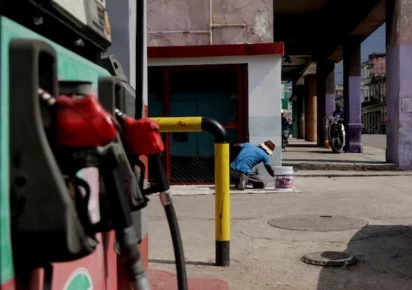
    HAVANA: Gasoline selling for as much as $38 a gallon, diesel advertised on social media and fuel stored inside cramped apartments are offering an unusual glimpse of private enterprise in communist Cuba, where the energy sector has long remained firmly under state control. A US policy allowing American companies to export fuel to private Cuban businesses has triggered an unexpected transformation. As Cuba struggles with shortages, blackouts and a weakened public transport system, imported fuel is creating a growing private market — while also exposing a sharp divide between those who can afford it and millions who cannot. The change follows the collapse of Cuba’s traditional fuel supplies from Venezuela and Mexico after the United States removed Venezuelan President Nicolas Maduro in January. With sanctions discouraging tankers from sailing toward the island, fuel shortages have increasingly affected transport, hospitals, schools and other essential services. Under an exception to Washington’s oil restrictions, however, private Cuban restaurants, retailers, taxi operators and other businesses have been allowed to import fuel. The impact has been striking. Between February and May, around 900,000 barrels of US fuel entered Cuba — enough to meet only about nine days of the country’s energy requirements. Yet those relatively small shipments have helped create a new network of legal wholesalers, private buyers and illegal resellers. Gasoline becomes a luxury For ordinary Cubans, the new fuel market has often brought frustration rather than relief. On a July afternoon in Havana, 53-year-old Amarilis Sanchez waited for hours at a bus stop after attending her daughter’s birthday celebration. Public buses, which normally cost only two pesos, were unreliable. Nearby, taxi drivers offered rides in vintage cars, but one driver quoted Sanchez 1,000 pesos for the journey — roughly 500 times the price of a bus ride. Unable to afford it, Sanchez considered spending the night at her daughter’s home and trying again for a bus the following day. Her experience illustrates how Cuba’s fuel crisis is creating two very different realities: one for people with access to private vehicles and imported fuel, and another for those dependent on the country’s struggling public transport network. Black-market gasoline prices reportedly reached $10 per litre, or about $38 per gallon, during the spring before falling as imports increased. Social media fuels a new market The emerging trade is increasingly visible online. WhatsApp groups and Facebook pages advertise gasoline and diesel, while some sellers store fuel in apartments and small shops despite the dangers posed by fire, explosions and toxic fumes. At one Havana convenience store, a shopkeeper reportedly kept around a dozen 20-litre fuel containers in a backroom, selling gasoline for approximately $5 per litre. Private companies are also moving into the newly emerging legal wholesale market. By late July, almost 200 Cuban businesses had received permission to distribute fuel wholesale to other private companies. One company, A Granel, advertises diesel through social media and charges $2.50 per litre for a 940-litre tank. The promotion reportedly features a model walking through a warehouse of diesel containers while Daddy Yankee’s famous song Gasolina plays in the background — an unusually flashy image for a country where the energy industry has historically been dominated by the state. Are Cuban gas stations next? The transformation could go further. Cuban lawmakers approved a broad package of economic reforms in June aimed at opening the energy sector to private and foreign investment. Prime Minister Manuel Marrero Cruz later announced that Cuba had approved its first foreign investment project focused on importing and selling fuel, although he did not name the company. The reforms have raised the possibility that private operators could eventually take control of some of Cuba’s familiar state-run Cupet petrol stations. For now, however, retail fuel sales remain largely under state control. Some state-owned stations are storing imported fuel but can distribute it only to vehicles belonging to authorised private businesses. Cuban authorities have defended the reforms while rejecting the idea that they represent a move toward large-scale privatisation. President Miguel Diaz-Canel has accused Washington of imposing a “genocidal siege” on Cuba and said economic changes were not being introduced to satisfy the United States. A lifeline with a heavy price The new fuel market has helped prevent some businesses from shutting down completely. During recent power outages, restaurants and shops with generators powered by imported fuel remained illuminated while much of Havana was plunged into darkness. But experts warn that the emerging system could deepen inequality. With the average government salary reportedly around $10 a month, imported gasoline remains unaffordable for most of Cuba’s roughly nine million residents. Cuban sociologist Mayra Espina said the limited fuel supplies had helped prevent “complete paralysis” but warned that the benefits were overwhelmingly concentrated among those able to pay. The result is an extraordinary contradiction: a small opening toward private enterprise is helping Cuba keep parts of its economy running, while simultaneously making access to basic mobility and energy increasingly dependent on wealth. For a country that has spent decades keeping fuel firmly within the state system, Cuba’s new gasoline economy may therefore prove to be more than a temporary response to shortage. It could become an early test of how far Havana is prepared to let capitalism into one of its most tightly controlled sectors.

  • |

    Nine-member team conquers 6,050m Thalo Zom

    PESHAWAR: A nine-member mountaineering team has successfully climbed the 6,050-metre Thalo Zom peak in Khyber-Pakhtunkhwa. The achievement is being seen as an important milestone for mountaineering and adventure tourism in the province. The team completed the difficult expedition after spending eight days on challenging mountain routes. The Khyber-Pakhtunkhwa Tourism Authority said Thalo Zom is one of the most difficult and less frequently climbed peaks in the Hindu Kush mountain range. Its difficult terrain makes the climb demanding even for experienced mountaineers. The expedition started on July 9. The team continued its journey through difficult mountainous terrain before reaching the summit on July 17. After reaching the top, the mountaineers raised the national flag. The moment marked the successful completion of a challenging expedition in one of the region’s difficult mountain areas. The climbers had to pass through difficult routes in Kumrat and Chitral during the expedition. The journey involved steep and rugged terrain. The team also crossed glaciers and areas containing deep cracks in the ice. Glacial crevasses can make high-altitude expeditions particularly dangerous. Mountaineers must carefully choose their routes while crossing such areas. The difficult conditions required careful planning and sustained effort from the team. The eight-day expedition tested the climbers as they moved through remote and challenging parts of the Hindu Kush. The successful ascent also highlights the potential of Khyber-Pakhtunkhwa for adventure tourism. The province is home to several high-altitude mountains and remote valleys. The region’s mountainous landscape attracts climbers and adventure enthusiasts. However, many peaks remain difficult to access because of their rugged terrain and limited routes. The Tourism Authority said Thalo Zom has a notable history in international mountaineering. Australian climbers first reached the summit in 1971. The peak was climbed again in 2019 by Italian mountaineers. The latest expedition adds another successful ascent to the mountain’s history. The achievement also draws attention to the broader tourism potential of Kumrat and Chitral. Both areas are known for their mountainous landscapes and challenging terrain. Successful mountaineering expeditions can help promote lesser-known destinations among domestic and international adventure tourists. They can also bring greater attention to the natural attractions of the province. The latest climb demonstrates the determination and endurance required to reach high-altitude peaks. The team had to overcome glaciers, steep routes and dangerous ice formations during the journey. The successful ascent of Thalo Zom is therefore more than a mountaineering achievement. It also showcases the natural beauty and adventure tourism potential of Khyber-Pakhtunkhwa.

  • |

    India expects weaker August monsoon raising concerns for crops

    India is likely to receive below average rainfall in August after recording near normal monsoon rains in July, according to the country’s weather department. The forecast has raised concerns about crop production and economic activity because millions of farmers depend on seasonal rainfall for agriculture. The India Meteorological Department said rainfall in August is expected to remain below 94 percent of the long period average. Director General Mrutyunjay Mohapatra said the combined rainfall for August and September, which make up the second half of the monsoon season, is also expected to stay below the long term average. The annual monsoon is vital for India’s economy, providing nearly 70 percent of the country’s yearly rainfall. It replenishes reservoirs, rivers and groundwater supplies while supporting agriculture in a country where almost half of all farmland relies entirely on rain instead of irrigation. Farming remains the primary source of income for about half of India’s population. Weather officials said moderate El Nino conditions are currently present in the Pacific Ocean and are expected to strengthen in the coming weeks. The phenomenon could become strong by September, increasing the likelihood of reduced rainfall across parts of India and other areas of Southeast Asia. El Nino is a recurring climate pattern caused by warmer than normal sea surface temperatures in the central and eastern Pacific Ocean. It often disrupts weather systems around the world and has historically been linked to weaker monsoon seasons in India. Previous El Nino years have brought drought conditions that damaged crops, reduced agricultural output and forced the government to restrict exports of certain food grains. Despite the weaker outlook for August, rainfall improved significantly during July. India received one percent more rain than the long period average during the month, helping reduce the overall seasonal rainfall deficit. Since the monsoon began on June 1, the deficit has narrowed to 12.6 percent after reaching 35.4 percent at the end of June. The stronger rainfall in July also helped farmers recover from delays in planting caused by a slow start to the season. Agricultural experts say the improved weather allowed growers to speed up sowing in many regions after an uncertain beginning. However, analysts warn that below normal rainfall during August could still affect the development of crops that have recently been planted. Adequate rainfall during this stage of the growing season is considered essential for healthy crop growth and stable harvests. Government data shows that summer crop planting was nearly 25 percent lower than the previous year at the end of June. Since then, the situation has improved considerably, with the shortfall shrinking to less than five percent as better rainfall encouraged farmers to increase sowing. The latest weather forecast has increased attention on the remainder of the monsoon season, as rainfall over the next two months will play a key role in determining agricultural output, food supplies and overall economic performance in one of the world’s largest farming economies.

  • | |

    Sohail Afridi denied meeting Imran at Adiala Jail

    RAWALPINDI: Khyber-Pakhtunkhwa Chief Minister Sohail Afridi was stopped from meeting Pakistan Tehreek-e-Insaf founder Imran Khan at Adiala Jail on Thursday. Afridi reached the Medicine Factory checkpoint on Adiala Road with several PTI leaders and lawmakers. Police stopped the delegation from moving towards the prison. The chief minister was accompanied by Mena Khan, Shafi Jan, Ahad Shah, Abdul Salam Afridi and Shahid Khattak. Police had earlier blocked Adiala Road from Gorakhpur towards the jail. Traffic was diverted to alternative routes. Afridi questioned the SHO Saddar Beroni about the restrictions. He also asked what instructions had been issued to the authorities. The chief minister remained at the checkpoint until the scheduled meeting time ended. He and the accompanying PTI leaders were not allowed to meet Imran. After the delegation left, police removed the barriers. Traffic on Adiala Road was restored. Speaking to the media, Afridi announced a protest call if he was not allowed to meet the PTI founder. He said PTI workers would come out across the country at 10pm. He urged them to gather at major intersections while carrying the national and party flags. Afridi also asked workers to stay focused on the party’s planned march towards Islamabad on September 27. He claimed that the PTI planned to bring two million people to Islamabad. He said the number could be even higher. The chief minister said the authorities should allow a meeting with Imran before September 28 if they wanted to reduce political tensions. Afridi also criticised the treatment of Imran and PTI since 2022. He accused the authorities of pushing the country towards instability because of political differences and stubbornness. He further criticised other political parties and questioned their role in the country’s political situation. The latest incident comes amid growing concern within PTI over Imran’s health and access to him. The party has repeatedly demanded that its founder be allowed to meet family members, lawyers and party leaders. Imran has remained incarcerated at Adiala Jail since 2023. His wife, Bushra Bibi, is also imprisoned. The PTI founder has faced several legal cases during his imprisonment. He and Bushra Bibi were sentenced to 17 years in prison in the Toshakhana-II case in December 2025. PTI has also raised concerns over Imran’s eyesight and medical treatment. Earlier this year, doctors from the Pakistan Institute of Medical Sciences examined him at the jail. PIMS later confirmed that he had received an anti-VEGF injection for a condition affecting his right eye. A later medical examination indicated improvement in his eyesight following treatment. Imran’s sisters and PTI supporters have also held regular gatherings outside Adiala Jail on designated meeting days. However, access to the former prime minister has remained restricted in recent months. Afridi’s unsuccessful visit on Thursday is likely to further intensify the political confrontation between PTI and the authorities.

  • | |

    Dar, Wang Yi discuss bilateral ties and SCO cooper…

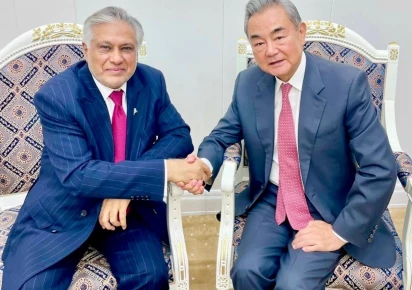
    Deputy Prime Minister and Foreign Minister Ishaq Dar held a meeting with Chinese Foreign Minister Wang Yi on the sidelines of the Shanghai Cooperation Organisation (SCO) Council of Foreign Ministers’ meeting in Cholpon-Ata, Kyrgyzstan. The two leaders reviewed Pakistan-China relations, exchanged views on regional developments and discussed expanding cooperation through multilateral platforms. The meeting reaffirmed the close and longstanding partnership between Pakistan and China. Both sides discussed ways to further strengthen bilateral cooperation in areas of mutual interest, including diplomacy, regional peace, economic collaboration and strategic coordination. During the discussions, Dar thanked Wang Yi for appreciating Pakistan’s diplomatic efforts aimed at promoting regional peace and stability. He said Pakistan remains committed to dialogue, cooperation and peaceful engagement in addressing regional challenges. Wang Yi congratulated Pakistan on its upcoming responsibilities within the Shanghai Cooperation Organisation. He extended his best wishes as Pakistan prepares to assume the chairmanship of the SCO Council of Heads of State for 2026–27 and host the SCO Summit in 2027. He expressed confidence that Pakistan would make a positive contribution to advancing the organisation’s objectives. Both foreign ministers also exchanged views on the regional and international situation. They agreed that continued consultation and cooperation among SCO member states are important for promoting peace, economic development, connectivity and regional stability. Earlier in the day, Dar met Kyrgyz President Sadyr Japarov at the presidential residence in Cholpon-Ata. During the meeting, he conveyed greetings from President Asif Ali Zardari and Prime Minister Shehbaz Sharif and thanked the Kyrgyz leadership for hosting the SCO foreign ministers’ meeting. The meeting with President Japarov focused on regional and global developments as well as the growing role of the SCO in strengthening cooperation among member states. Dar highlighted the importance of maintaining close collaboration as Pakistan prepares to lead the organisation during its upcoming chairmanship. The foreign minister is representing Pakistan at the two-day SCO Council of Foreign Ministers’ meeting, attended by foreign ministers from China, Russia, India, Iran, Kazakhstan, Kyrgyzstan, Tajikistan, Uzbekistan, Belarus and Pakistan. The meeting is reviewing key regional and international issues while preparing the agenda for the next SCO summit.

  • | | |

    1,300-year-old shipwreck hides incredible gold tre…

    Archaeologists have uncovered an extraordinary collection of gold coins and precious jewelry from a sunken Byzantine-era ship near Croatia’s southern coastline, offering new insights into the empire’s maritime history and suggesting that a high-ranking official may have been among the passengers. The ancient shipwreck was first discovered more than a decade ago, but researchers spent several years conducting detailed underwater excavations before releasing their findings. The results, announced on Thursday, indicate that the vessel most likely dates back to the seventh or eighth century AD, making it one of the region’s most significant archaeological discoveries in recent years. According to experts, the remarkable collection of valuables recovered from the wreck suggests that the ship was far more than an ordinary merchant vessel. Instead, archaeologists believe it may have been transporting an influential government official, noble, or other prominent figure, accompanied by attendants or security personnel. Among the most valuable discoveries are gold coins minted during the reigns of four Byzantine emperors from the Heraclian dynasty, which ruled between AD 610 and 711. Researchers also recovered ornate gold fittings from luxury boxes decorated with rubies, emeralds, and pearls, highlighting the wealth and status of those on board. The quality and rarity of the artifacts provide important clues about the Byzantine Empire’s political, economic, and cultural life during the early medieval period. Experts say the recovered objects demonstrate the sophisticated craftsmanship of the era and reveal the importance of maritime travel for government officials and elite members of society. The ongoing archaeological investigation is expected to deepen historians’ understanding of Byzantine trade routes, royal travel, and naval activity across the Adriatic Sea. Researchers hope that further analysis of the ship’s structure, cargo, and recovered artifacts will help reconstruct the vessel’s final journey and explain the circumstances that led to its sinking centuries ago. Officials involved in the excavation described the discovery as a major milestone in underwater archaeology. As conservation work continues, many of the recovered treasures are expected to be carefully preserved and studied, providing valuable information for future research into the Byzantine Empire and its influence across southeastern Europe. The discovery underscores the importance of underwater archaeological exploration and demonstrates how centuries-old shipwrecks continue to reveal remarkable stories about ancient civilizations, their rulers, and the maritime networks that connected them across the Mediterranean world.

Leave a Reply

Your email address will not be published. Required fields are marked *