trump claims limited
| | | | |

Trump claims limited talks with Iran are underway …

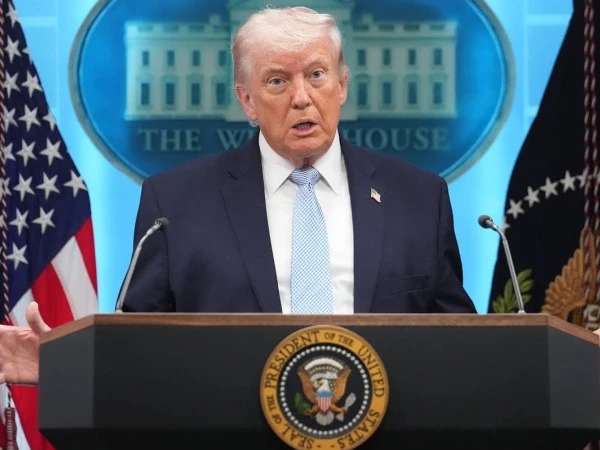
WASHINGTON: US President Donald Trump has claimed that limited negotiations with Iran are currently taking place, while indicating that Washington is not pursuing an aggressive new military escalation against Tehran at this stage.

Trump’s comments come amid continued tensions between the United States and Iran and growing international attention on efforts to reduce the conflict. Recent reports have also indicated that talks involving Iran and Oman have been taking place, although no final agreement has been reached.

According to Trump, the United States is currently keeping a lower profile on the issue and is engaged in what he described as limited negotiations with Iran. He also claimed that Iran is facing severe economic difficulties and suggested that the country is under significant financial pressure.

Trump argued that Iran’s economic situation has deteriorated considerably, making it difficult for the government to meet some of its financial obligations. These remarks were presented as part of his argument for maintaining economic pressure rather than immediately launching another major military campaign.

The US president also referred to the wider impact of the conflict on energy markets and American consumers. Oil prices have remained closely linked to developments surrounding the Strait of Hormuz, a strategically important route for global energy shipments. Recent market reports have shown that investors have been watching diplomatic developments closely as hopes for an agreement affect oil prices.

Trump described the confrontation with Iran as a complicated strategic contest, comparing the situation to a game of chess. He suggested that a solution could eventually be reached through negotiations and pressure.

US officials have reportedly been considering different approaches to the conflict, including diplomatic engagement and economic measures. Recent reporting indicates that progress has been discussed in Iran-Oman talks, although significant issues remain unresolved.

The latest developments come as Washington continues to monitor Iran’s military and economic position while seeking leverage in negotiations.

For global markets, the outcome of the diplomatic efforts could be particularly important. Any agreement that improves the security of shipping through the Strait of Hormuz could influence crude oil prices and energy supplies worldwide.

However, the situation remains fluid, and claims about the extent of direct negotiations have not been uniformly confirmed by all sides. Further diplomatic contacts are expected as the United States and its partners seek a way to reduce tensions and address the broader issues at the center of the conflict.


Similar Posts

  • |

    UN experts urge Canada to protect Sikh Activist

    United Nations human rights experts have called on Canada to strengthen security measures for Sikh activist Moninder Singh, citing repeated warnings from Canadian authorities about credible threats to his life. In a letter sent to the Canadian government on June 3 and released publicly under standard UN procedures, five independent experts expressed concern over allegations of foreign intimidation and reprisals targeting Singh, a Canadian citizen. The experts noted that since 2022, Canadian authorities have issued Singh four separate “duty to warn” notices, informing him of serious and imminent threats to his safety. They urged Ottawa to ensure his protection, safeguard his family, and provide security for others facing similar risks. The letter also called on Canadian authorities to speed up investigations, hold those responsible accountable, provide justice to victims, and take steps to prevent similar incidents in the future. The appeal was signed by UN special rapporteurs responsible for issues related to counterterrorism and human rights, freedom of peaceful assembly, human rights defenders, freedom of religion, and democratic international order. A copy of the communication was also shared with the Indian government. Singh visited Geneva earlier this year to seek international attention over what he described as the targeting of Sikh activists abroad and the broader issue of transnational repression. The case comes amid longstanding tensions between Canada and India following the 2023 killing of Sikh activist Hardeep Singh Nijjar near a Sikh temple in British Columbia. Canadian authorities alleged Indian involvement in the assassination, an accusation New Delhi has consistently denied. The dispute strained diplomatic relations, leading both countries to expel diplomats in 2024. Although bilateral ties have improved under Canadian Prime Minister Mark Carney, concerns over the safety of Sikh activists continue to draw international attention. Singh, who supports the Khalistan movement advocating for an independent Sikh homeland, said the UN experts’ intervention highlights growing concerns over the safety of Sikh voices abroad.

  • | |

    Miley Cyrus begins new chapter after signing with Atlantic records

    Miley Cyrus has officially signed with Atlantic Records, marking the beginning of a new era in her recording career after her recent tenure with Columbia Records, according to The Hollywood Reporter. The move signals a fresh chapter for the Grammy-winning singer-songwriter, who has continued to reinvent herself throughout her career, from her Disney Channel beginnings to becoming one of pop music’s most influential artists. Her latest label change follows the release of Something Beautiful through Columbia Records after an earlier stint with RCA Records. Atlantic Records has long been home to some of the industry’s biggest names, including Ed Sheeran, Bruno Mars, Cardi B, Charli XCX, Coldplay and Rosé. Cyrus now joins the label’s high-profile roster as it continues to represent many of the world’s leading recording artists, adding another globally recognized name to its extensive catalogue of talent. Her arrival also comes months after Ed Sheeran announced that he was leaving Atlantic Records and Asylum Records following a 15-year partnership. In a heartfelt message shared with fans, Sheeran emphasized that the decision was made on good terms, saying it was “not a disgruntled artist leaves record label type situation” and expressing his gratitude for the team that had supported his career throughout the years. His departure marked the end of one of the label’s most successful artist relationships. While no release date has been announced for Cyrus’ next musical project, she has already offered a glimpse into what fans can expect. In a recent interview, the singer revealed that she is working on a 10-song album exploring different forms of love, focusing on self-discovery, healing and human connection. She described the creative process as one of the most natural experiences of her career, saying she entered the studio with a clear artistic vision. Beyond music, Cyrus has also expressed an interest in returning to acting, revealing that she hopes to take on a compelling romantic role after spending recent years focused primarily on recording and performing. With a new record label, fresh creative ambitions and another album already taking shape, Miley Cyrus appears poised to enter another defining chapter of her career. The partnership with Atlantic Records not only marks a significant business move but also signals a new creative direction for one of contemporary pop music’s most enduring and adaptable artists, with fans eagerly awaiting what comes next. https://x.com/billboard/status/2081832043848053209?s=46

  • |

    Rahul Gandhi slams India’s education system, calls it expensive and corruption-ridden

      India’s Leader of the Opposition in the Lok Sabha and senior Congress leader Rahul Gandhi has strongly criticized the country’s education system, describing it as deeply flawed, expensive, and plagued by irregularities. His remarks came while expressing solidarity with students who have been protesting over issues related to entrance examinations and alleged paper leaks. Speaking on the growing concerns surrounding India’s education sector, Rahul Gandhi said he fully supports the feelings, frustrations, and struggles of students. He stated that the anger displayed by young people is understandable, considering the hardships they have been facing in recent years. According to him, the treatment meted out to students has naturally led to widespread dissatisfaction and protests. Rahul Gandhi argued that India’s education system is not only affected by corruption and alleged manipulation but has also become financially unbearable for ordinary families. He said that the cost of appearing in entrance examinations has increased significantly, placing an enormous financial burden on parents and students. He criticized what he described as an education system that forces families to spend huge amounts of money merely to compete for admission to educational institutions. The Congress leader claimed that charging such high fees for entrance examinations amounts to exploiting families who are already making financial sacrifices to secure a better future for their children. He said many parents invest their savings and borrow money in the hope that their children will receive quality education and fair opportunities. However, according to him, the current system fails to reward those sacrifices. Rahul Gandhi further alleged that after collecting large sums of money from students and their families, authorities often announce that examination papers have been leaked or compromised. He said such incidents destroy the trust of students who spend months, and in many cases years, preparing for highly competitive entrance examinations. The cancellation of exams or questions surrounding their credibility not only wastes students’ time but also causes severe emotional stress and uncertainty about their future. He maintained that repeated incidents of paper leaks and examination irregularities have created frustration among young people across the country. In his view, students have every right to raise their voices and demand accountability from the authorities responsible for conducting these examinations. Gandhi said the protests taking place on the streets reflect the genuine concerns of India’s youth rather than being acts of unnecessary agitation. According to Rahul Gandhi, the government should focus on creating a transparent, affordable, and reliable education system that ensures equal opportunities for all students, regardless of their financial background. He emphasized that education should empower young people instead of becoming a source of anxiety, financial hardship, and disappointment. His comments come at a time when debates over examination management, paper leak allegations, and the rising cost of education continue to dominate public discussion in India. Student groups and opposition parties have repeatedly demanded stronger safeguards to prevent examination irregularities and greater accountability from the authorities. Rahul Gandhi concluded by reiterating his support for students, saying their concerns are legitimate and deserve immediate attention. He stressed that the future of the country depends on its youth and that protecting the integrity of the education system should be a national priority.

  • | | | |

    Israeli forces arrest 14 Palestinians in West Bank…

    RAMALLAH: Israeli forces detained at least 14 Palestinians, including a woman, during a series of military raids across the occupied West Bank on Tuesday, while three homes were also demolished, according to local sources. The latest arrests come as tensions continue to rise across the occupied territory, where Israeli military operations, arrests and settler violence have intensified in recent days. The raids targeted several locations, including Nablus, Jenin and Tulkarm, according to reports. Eight detained in Nablus In Nablus, Israeli forces entered the Ras al-Ain neighbourhood and stormed three buildings. Soldiers searched several homes before detaining eight Palestinians, including a woman, local sources said. The operation reportedly involved searches of residential properties, with residents subjected to questioning before the detainees were taken away. The raid was part of a wider military campaign across the northern West Bank, where Israeli forces have repeatedly carried out overnight and early-morning operations. Raids reported in Tubas and Jenin In Tubas province, Israeli troops entered the town of Tammun and remained there for several hours before withdrawing. No arrests were reported from the operation. Meanwhile, in the Jenin area, Israeli forces entered Al-Yamoun, where they arrested a former Palestinian prisoner from Jenin city. Another Palestinian was detained in Deir Ghazaleh, located northeast of Jenin, according to local sources. The arrests added to growing concerns over the continuing military pressure on Palestinian communities in the occupied West Bank. More arrests in Tulkarm Further arrests were reported in the Tulkarm area. Israeli forces detained a Palestinian customs police officer and a young man from Irtah, a suburb south of Tulkarm. Two other Palestinians were also arrested following raids and searches of homes in the village of Far’un. The latest operations come against a backdrop of escalating violence in the West Bank. Reuters reported this week that Palestinian residents have described mounting pressure from military raids and settler attacks, warning that the situation is approaching a breaking point. At the same time, reports of demolitions have added another layer to the tensions. Anadolu Agency reported that three Palestinian homes were demolished during the wider military campaign, with Israeli authorities citing claims related to construction permits. The developments are likely to fuel further concern over the security and humanitarian situation in the occupied West Bank, where repeated raids, arrests, demolitions and clashes have continued to affect Palestinian communities.

  • | |

    Iran says Oman deal nears completion but insists U…

    Iran said on Sunday that a deal with Oman establishing new shipping lanes through the Strait of Hormuz has entered its final stages, though Tehran maintained the critical waterway will remain closed until Washington satisfies a broader set of conditions tied to the ongoing standoff between the two countries. A US official told Reuters on Friday that an agreement between Iran and Oman appeared close and could soon lead to the reopening of the strait, a passage that carried roughly a fifth of global oil and liquefied natural gas shipments before Iran shut it down in response to American and Israeli military strikes earlier this year. Iranian Foreign Minister Abbas Araqchi confirmed on Sunday that negotiations over the strait, which sits between Iran and Oman, had reached their final stages. However, he repeated comments made a day earlier stressing that the waterway would not reopen unless additional conditions set by Tehran were met first. Iran’s Mehr news agency quoted Araqchi as saying the emerging agreement would establish the new shipping lanes to be used once the United States fulfils those conditions and the strait formally reopens. Araqchi said Iran and the United States are not currently engaged in direct talks and that Tehran has no plans to begin them as long as Washington continues to breach an interim agreement the two countries signed in June. He added that messages between the two sides are being exchanged through intermediaries rather than direct contact. Iran demands compensation and sanctions relief The United States launched air strikes against Iran in late February, saying the campaign aimed to prevent the Islamic Republic from acquiring nuclear weapons or using missiles and regional proxy forces to threaten the wider Middle East. Washington and Tehran agreed to a ceasefire in June, but the United States reimposed a blockade on Iranian shipping in the Gulf in July, a move Iran characterised as a violation of a truce that had already shown signs of collapse. A US official, speaking to Reuters on condition of anonymity, said the blockade on Iranian ports would lift once a deal restoring unimpeded commercial shipping is formally announced. The official added that any American actions would remain directly tied to Iran fulfilling its own commitments under the emerging agreement, pointing to a carefully sequenced approach that both sides appear to be navigating cautiously. The arrangement under discussion appeared, according to sources who previously spoke to Reuters, to grant Tehran a degree of control over vessels entering the Gulf through the strait, an arrangement that shipping industry sources have said would be difficult to implement in practice. The precise current status of the agreement remained unclear on Sunday, and Iran’s latest statements suggested several additional factors could still complicate its finalisation. Araqchi said the strait’s reopening would depend in part on the United States providing compensation to Iran for what Tehran describes as widespread attacks on its territory and interests. Mohammad Baqer Zolqadr, secretary of Iran’s top national security body, outlined a broader list of demands, including an end to US threats against Iran, a halt to what Tehran calls aggression against its allies in Lebanon, the Palestinian territories, Yemen and Iraq, the lifting of the shipping blockade and broader sanctions, and the release of frozen Iranian financial assets. Supreme Leader’s condition remains unclear Ultimate decision making authority in Iran rests with Supreme Leader Mojtaba Khamenei, who has not appeared in public since an air strike killed his father and predecessor on February 28, the first day of the joint US and Israeli air campaign against Iran. State media reported on Sunday that Iranian President Masoud Pezeshkian met with Khamenei in late July, and a paramilitary leader promised that footage of the supreme leader would soon be released publicly. Khamenei was reportedly injured in the same strike that killed his father, according to earlier reporting. Separately, the United Arab Emirates said on Saturday that Iran had attacked a vessel affiliated with its state oil company. Iran did not immediately respond to the allegation. The country’s powerful Revolutionary Guards have attacked commercial vessels in the past, arguing that ships transiting the strait without coordinating their passage with Iranian authorities are not protected from such action. Houthi attacks widen regional shipping crisis Iran’s strikes on shipping in the Strait of Hormuz have coincided with intensified attacks from its Yemen based allies, the Houthis, who have targeted vessels at a separate chokepoint located between the Red Sea and the Gulf of Aden on the opposite side of the Arabian Peninsula. The Houthis declared a naval blockade against Saudi Arabia in the Red Sea last month, framing the move as retaliation for what they described as a Saudi imposed siege in Yemen, an accusation the Saudi government has firmly denied. Riyadh continues to back Yemen’s internationally recognised government in the country’s ongoing conflict. The group claimed responsibility for an attack on Saudi Aramco’s Jazan refinery on Sunday, coming just two days after the kingdom signed a defence pact with fellow Sunni Muslim majority nations Turkey and Pakistan amid growing concern over regional instability stemming from the US and Israeli military campaign against Shiite led Iran. Saudi Arabia’s energy ministry confirmed that a fire broke out at the refinery following the attack but was later extinguished without causing any injuries, and that authorities were continuing to manage the aftermath of the incident. The ministry did not specify a cause for the blaze. Houthi military spokesperson Yahya Saree said on social media platform X that the group used a drone to strike the facility. The Houthis have targeted Aramco sites in Jazan before, a refinery that processes approximately 400,000 barrels of crude oil daily in southwestern Saudi Arabia. It remains unclear whether or to what extent Pakistan or Turkey would participate in any Saudi response to the latest attack. Turkish Foreign Minister Hakan Fidan said the newly formed alliance between the three countries was not directed against Iran or any other nation, describing it instead as a general commitment to

  • | |

    Balochistan to bring 1.8 million out-of-school chi…

    The Balochistan government has approved the implementation of a large-scale non-formal education programme aimed at bringing 1.8 million out-of-school children back into the education system. The decision was made during a meeting chaired by the provincial chief secretary, where officials reviewed plans to expand access to education for children who have been unable to attend formal schools due to various social and economic challenges. Under the initiative, children who have missed out on formal education will be provided with alternative learning opportunities through a structured non-formal education system. The programme is designed to help them continue their studies and improve literacy across the province. Officials said the project will be implemented over the next five years. For the current fiscal year, the provincial government has allocated Rs8 billion to launch and support the initiative. The chief secretary said the programme will operate under the supervision of the Social Welfare Department, which will oversee its implementation and ensure educational services reach children in underserved communities. Special priority will be given to children between the ages of 9 and 16, a group considered most vulnerable to dropping out of school or never enrolling in formal education. The initiative is expected to expand educational access, reduce the number of out-of-school children, and improve learning opportunities for thousands of young people across Balochistan.

Leave a Reply

Your email address will not be published. Required fields are marked *