balochistan bring million
| |

Balochistan to bring 1.8 million out-of-school chi…

The Balochistan government has approved the implementation of a large-scale non-formal education programme aimed at bringing 1.8 million out-of-school children back into the education system.

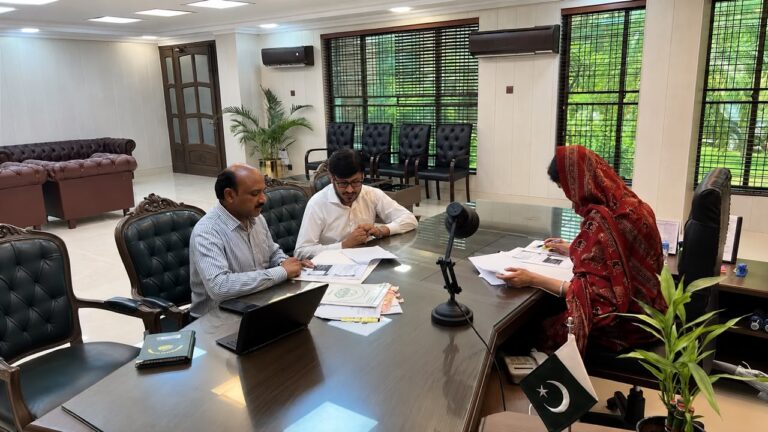
The decision was made during a meeting chaired by the provincial chief secretary, where officials reviewed plans to expand access to education for children who have been unable to attend formal schools due to various social and economic challenges.

Under the initiative, children who have missed out on formal education will be provided with alternative learning opportunities through a structured non-formal education system. The programme is designed to help them continue their studies and improve literacy across the province.

Officials said the project will be implemented over the next five years. For the current fiscal year, the provincial government has allocated Rs8 billion to launch and support the initiative.

The chief secretary said the programme will operate under the supervision of the Social Welfare Department, which will oversee its implementation and ensure educational services reach children in underserved communities.

Special priority will be given to children between the ages of 9 and 16, a group considered most vulnerable to dropping out of school or never enrolling in formal education.

The initiative is expected to expand educational access, reduce the number of out-of-school children, and improve learning opportunities for thousands of young people across Balochistan.

Similar Posts

  • |

    Snapchat cracks down on fully AI-made videos flooding Spotlight

    Snapchat is now drawing a clear line between videos made by humans and those made entirely by machines. The company is betting this move will make its Spotlight feed worth scrolling through again. On Friday, Snap confirmed a major change to its Spotlight recommendation system. Videos that are completely AI-generated will no longer be surfaced through recommendations. Creators can still post this type of content on the platform. However, it will only reach their existing followers going forward. This effectively cuts off the discovery boost that once made Spotlight appealing for fully automated content. Snap isn’t rejecting AI tools altogether, though. Videos edited or enhanced using Snapchat’s own built-in AI features will remain eligible for recommendations. These videos will also carry a visible label, letting viewers know AI played a role in the process. According to Snap, the real issue here comes down to authorship, not the technology itself. Content generated purely from a prompt, without any human involved in filming, performing, or editing, is what’s being pushed out of recommendations. This decision follows similar moves from other major platforms in recent months. YouTube recently revised its monetization policy to exclude videos built around generic, template-based content. That update came after reports last year revealed that several AI-driven creators had built massive followings and earned significant ad revenue through such content. LinkedIn has made changes of its own as well. The platform is now allowing users to report AI-generated posts. At the same time, it’s removing its built-in AI writing prompt that previously encouraged automated post creation. Substack has taken things a step further. The platform introduced a detection system designed to identify AI-generated articles. Speaking on the matter, CEO Chris Best warned that platforms which continue rewarding fake, synthetic content risk starting what he called a race to the bottom. As for Snap, some details remain unclear. The company has not explained exactly how it plans to distinguish fully AI-generated videos from AI-assisted ones at a larger scale. It also hasn’t confirmed whether this policy will eventually expand beyond just Spotlight recommendations into other parts of the app. For now, though, the move adds to a growing pattern across social media. Platforms increasingly appear to be prioritising authentic, human-made content over mass-produced material flooding user feeds every day.

  • | |

    HRW says Israeli strike that killed journalist was war crime

    Human Rights Watch (HRW) has accused Israel of carrying out a deliberate airstrike that killed Lebanese journalist Amal Khalil, saying the attack may amount to a war crime under international law. In a report released on Wednesday, the international rights organisation said the strike targeted Amal Khalil and her camerawoman, Zainab Faraj, while they were covering Israeli military operations in southern Lebanon earlier this year. Amal Khalil, a reporter for the Lebanese newspaper Al-Akhbar, was killed in an Israeli airstrike on April 22 in the town of Al-Tayri. Her colleague, camerawoman Zainab Faraj, was seriously injured in the same attack. According to HRW, the available evidence suggests the Israeli military knew journalists were inside the building before launching the strike. The organisation said information gathered during its investigation indicates the attack was intentional and violated international humanitarian law. The report also referred to requests made by the United Nations Interim Force in Lebanon (UNIFIL) and the International Committee of the Red Cross for access to the area. HRW said these requests support evidence that authorities were aware of the presence of journalists at the location. Human Rights Watch further stated that Amal Khalil remained alive for some time after the strike. However, it alleged that Israeli forces prevented rescue workers from reaching the site, delaying emergency medical assistance that could have improved her chances of survival. The organisation said deliberately targeting journalists performing their professional duties and blocking humanitarian access are serious violations of international law. It added that such actions could constitute war crimes and should be investigated independently. HRW called for a transparent and impartial investigation into the incident and urged those responsible to be held accountable. It also stressed that journalists covering armed conflicts are civilians protected under international humanitarian law and must not be targeted during military operations.

  • | |

    Noreen Niazi’s comments do not reflect PTI polic…

    RAWALPINDI: Pakistan Tehreek-e-Insaf (PTI) Chairman Barrister Gohar Ali Khan has distanced the party from recent remarks made by Imran Khan’s sister, Noreen Niazi, stating that her comments reflected her personal opinion and should not be viewed as the official position of PTI. Speaking to journalists outside Adiala Jail on Tuesday, Gohar said he had been informed that the interview in question was recorded nearly three months ago. He emphasized that Noreen Niazi holds no office within the party and is not involved in PTI’s political decision-making process. Highlighting national security, the PTI chairman described Pakistan’s recent success in Marka-e-Haq as a matter of national pride and credited it as a blessing for the country. He said Pakistan’s response to external threats had demonstrated its strength before the world and warned that any future aggression would be met with an even stronger reaction. Gohar also appealed to political leaders and the public to avoid making controversial statements about the armed forces or the country’s martyrs, stressing that such sensitive issues should remain above political disagreements. Reaffirming PTI’s position on terrorism, he said the party fully supports decisive action against terrorist elements and called for a united national strategy to eliminate the threat through collective efforts and available state resources. On the political front, Gohar confirmed that PTI’s boycott of parliamentary standing committees and the Judicial Commission remains unchanged. Discussing the upcoming Azad Jammu and Kashmir elections, he said the party had received reports that the electoral process had been rescheduled into three phases. Although some members had proposed reconsidering the boycott, no agreement had been reached, and the party’s decision to stay away from the polls remains in force. Separately, prison sources confirmed that former prime minister Imran Khan and his wife, Bushra Bibi, were allowed to meet inside Adiala Jail. The meeting reportedly took place in the prison’s conference room and lasted around 30 minutes. Meanwhile, Imran Khan’s sister Aleema Khan called on PTI lawmakers and senior leaders to actively participate in the party’s anti-government campaign instead of leaving the responsibility to a limited number of workers and family members. Expressing concern over the lack of updates regarding her brother’s condition, she questioned how long the movement could continue without stronger support from the party’s elected representatives and leadership.

  • |

    DC approves Rs4.14 billion District Health Authority budget for FY2026-27

    GUJRAT: Deputy Commissioner and Administrator District Health Authority (DHA) Gujrat Noor-ul-Ain Qureshi has approved a budget of more than Rs4.14 billion for the District Health Authority for the financial year 2026-27, with the largest allocation earmarked for salaries of healthcare workers and a significant share reserved for the uninterrupted supply of medicines in government health facilities. The budget was approved during a meeting chaired by the deputy commissioner at her office on Wednesday. The meeting was attended by Chief Executive Officer Health Dr Syed Atta ul Munim, Deputy Director Budget Health, and other relevant officials, who reviewed the proposed allocations and expenditure plan for the upcoming fiscal year. According to officials, the total approved budget stands at Rs4,141,211,000, covering salaries, medicines, utilities, contractual staff payments, recruitment and repair of health facilities across the district. Officials informed the meeting that Rs3.274 billion has been allocated for salaries and allowances of doctors, nurses, paramedics and other employees serving in the district health system. The allocation constitutes the largest portion of the annual budget and is aimed at ensuring uninterrupted payment of salaries to healthcare staff working in hospitals and primary healthcare facilities. A sum of Rs400 million has been reserved for the procurement and uninterrupted supply of medicines to government healthcare institutions, including the District Headquarters Hospital, Tehsil Headquarters Hospitals, Rural Health Centres (RHCs), Basic Health Units (BHUs) and other public health facilities operating under the District Health Authority. The meeting was further informed that Rs104 million has been allocated for the payment of electricity, gas, water and other utility bills to ensure smooth functioning of health institutions across the district. An additional Rs60 million has been earmarked for payments to doctors serving under the lump-sum pay package, enabling the authority to continue services in facilities where contractual medical professionals are performing duties. Officials also briefed the meeting that the remaining funds would be utilised for Expanded Programme on Immunisation (EPI) recruitments, repair and rehabilitation of healthcare facilities, and other operational requirements aimed at strengthening service delivery throughout the district. Deputy Commissioner Noor-ul-Ain Qureshi directed the health authorities to ensure transparent utilisation of public funds and stressed that every allocation should directly contribute to improving healthcare services for citizens. She emphasised the need for strict financial discipline and instructed officers to closely monitor expenditure throughout the financial year. The meeting also reviewed priority areas requiring financial support and discussed measures to maintain uninterrupted healthcare services in both urban and rural areas of the district. The approval of the annual budget comes as the District Health Authority seeks to improve service delivery, maintain essential medical supplies and address operational needs across Gujrat’s public healthcare network. Officials expressed confidence that timely release and efficient utilisation of funds would help strengthen healthcare services and improve access to treatment for residents across the district during the 2026-27 fiscal year.

  • | |

    Jared Leto faces sexual misconduct allegations

    American actor and musician Jared Leto is facing new public allegations of sexual misconduct after 10 women came forward in a BBC documentary titled _Jared Leto: Hollywood’s Dark Secret_. The film focuses on claims that span more than a decade, between 2002 and 2016. During that period Leto was in his 30s and 40s. He is now 54. The women allege they encountered Leto when they were teenagers or in their early 20s. Four of the women detail what they describe as criminal sexual conduct. One woman said she was sexually assaulted in a motel bathroom when she was 17. Another said Leto threatened her with sexual assault when she was 19. A third alleged she had sex with Leto in California at age 17. In California the legal age of consent is 18, meaning the act would be classified as statutory rape. She told the BBC that when she raised the issue of age, Leto dismissed it. A fourth woman alleged she was groomed by Leto from age 16, including receiving multiple sexually explicit phone calls in which he suggested they have sex. Beyond those four, four other women told the BBC they received repeated phone calls from Leto that were strange and often sexual in nature while they were still young. They said the calls left them uncomfortable and confused at the time. The BBC said it attempted to verify the accounts. According to the broadcaster, friends and family members of several women confirmed they were told about the encounters with Leto at the time they happened. In some cases the BBC said it had reviewed photographs and messages that supported parts of the women’s statements. The documentary also includes testimony from two men who worked with Leto’s band, Thirty Seconds to Mars, for many years. Both described an uneasy atmosphere among crew members regarding Leto’s interactions with young female fans. They said staff observed Leto inviting teenage girls backstage to his dressing room and to the house where the band was recording. “I think everyone thought the age gap was way too big,” one of them said in the film. Leto did not respond to the BBC’s requests for comment ahead of the documentary’s release. Representatives for the actor have not issued a public statement as of press time. The program also references the broader conversation around Leto online. The BBC reported it had counted more than 120 separate allegations posted online over the years relating to Leto’s behavior toward women, some of them dating back more than a decade. Leto is a well-known Hollywood actor and Academy Award winner. His credits include _Dallas Buyers Club_, for which he won Best Supporting Actor, _Suicide Squad_, and the recent _Masters of the Universe_. He is also the lead singer of the rock band Thirty Seconds to Mars. No criminal charges have been filed in connection with the allegations detailed in the documentary.

  • | |

    Supreme Court to hear Imran Khan meeting and treat…

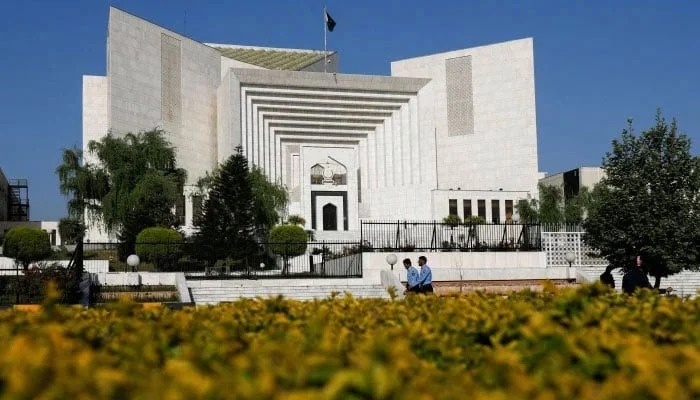
    The Supreme Court of Pakistan has scheduled hearings in cases concerning meetings with former Prime Minister and Pakistan Tehreek-e-Insaf (PTI) founder Imran Khan, as well as matters related to his medical treatment. According to details, the cases will be heard on August 18 by a three-member bench of the Supreme Court. The bench will be headed by Justice Shahid Waheed and will include Justice Naeem Afghan and Justice Ishtiaq Ibrahim. The Supreme Court Registrar’s Office has issued notices to the relevant parties and their lawyers regarding the upcoming hearing. The scheduling of the cases comes amid continued attention surrounding issues related to access to Imran Khan, including meetings with party leaders, lawyers and other relevant individuals. His medical treatment and healthcare arrangements have also remained an important issue in proceedings concerning his detention. The upcoming hearing is expected to bring the relevant legal arguments before the three-member bench. The court will consider the petitions and submissions presented by the concerned parties and their legal representatives. The development is significant for PTI supporters and political circles because questions surrounding meetings with Imran Khan have remained a recurring issue. Any observations or directions issued by the Supreme Court during the hearing could attract considerable political and legal attention. The registrar’s office has formally notified the concerned lawyers, meaning the matter is now set for proceedings before the apex court on August 18. Further developments are expected after the hearing, when the Supreme Court may issue directions or pass orders concerning the matters before it. For now, the key development is that the Imran Khan meeting and treatment cases have officially been fixed for hearing before a three-member Supreme Court bench. The hearing on August 18 will therefore be closely watched, particularly by PTI supporters and legal observers following matters related to Imran Khan’s access to meetings and medical care.

Leave a Reply

Your email address will not be published. Required fields are marked *