punjab ctd arrests
| |

Punjab CTD arrests 18 suspected militants in provi…

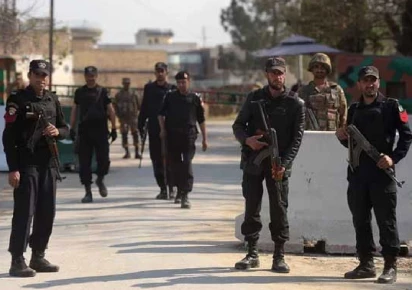
LAHORE: Punjab’s Counter Terrorism Department (CTD) has arrested 18 suspected militants affiliated with various banned organisations during intelligence-based operations across several districts of the province, officials said on Friday.

According to the CTD spokesperson, the operations were carried out as part of efforts to prevent possible terrorist activities and maintain law and order across Punjab. A total of 117 intelligence-based operations were conducted, during which 117 individuals were questioned and 18 suspects were taken into custody.

The arrested suspects were identified as Hassan Abbas Shah, Muhammad Hanif, Samiullah alias Talib Jan, Muhammad Hasnain, Hafiz Muhammad Abdul Latif, Attaullah, Faizullah, Muhammad Shehzad alias Pama, Muhammad Bilal, Muhammad Anas, Tahir, Waqar Ahmed, Muhammad Ahsan, Muhammad Farman, Muhammad Nauman, Umar Farooq, Abdul Wahab and Shaukat Ali. The suspects were reportedly arrested in Faisalabad, Sialkot, Sargodha, Sahiwal, Hafizabad, Gujranwala, Bhakkar, Lahore and Multan.

The CTD said its teams recovered 3.185 kilograms of explosive material, eight detonators, safety fuses, primer cord, four pistols with 21 rounds, along with banned books, prohibited magazines, pamphlets and stickers. Seven mobile phones and Rs42,740 in cash were also seized.

Officials said the suspects were allegedly involved in activities aimed at creating fear among the public and disrupting peace and security. Legal proceedings have been initiated against them, while further investigation is underway to determine their alleged links and activities.

The spokesperson added that, during the past two weeks, the CTD, local police and other law-enforcement agencies conducted 3,357 combing operations across Punjab. More than 121,000 people were checked during these operations, resulting in 274 arrests, 263 cases being registered and 244 recoveries of various kinds.

The CTD said its operations against militants and other elements considered a threat to public security would continue under its objective of ensuring a safer Punjab. Citizens have also been urged to report suspicious activities or information related to terrorism to the CTD Punjab helpline at 0800-11111.

Similar Posts

  • | |

    JI threatens nationwide shutdown over petroleum le…

    Jamaat-i-Islami (JI) Emir Hafiz Naeemur Rehman has warned the government that his party could expand its ongoing protests into a nationwide wheel-jam and shutter-down strike if the petroleum levy is not abolished. Speaking at a press conference in Islamabad on Thursday, Rehman said the nationwide strike could begin after August 26, following 12th Rabiul Awwal. He said the party would also establish protest camps in different parts of the country as part of its campaign. If the government failed to respond to its demands, he warned that JI could consider marching towards Islamabad on foot. The JI chief said he would address the party’s sit-in in Lahore, while a public gathering was scheduled at its Karachi protest site on Friday. Rehman said rising inflation had placed a heavy burden on ordinary citizens. He criticised the petroleum levy, describing it as an unfair additional charge on consumers. According to him, consumers were paying around Rs80 per litre under the levy. He claimed the charge was originally introduced to support the modernisation of Pakistan’s oil refineries but that the government had collected more than Rs8 trillion through it while spending less than Rs100 billion on refinery upgrades. He called for the immediate abolition of the levy and urged Prime Minister Shehbaz Sharif to reduce petrol and diesel prices by Rs130 per litre. The government recently revised fuel prices, reducing the price of high-speed diesel while increasing the price of petrol. Rehman said the JI’s protests in Lahore, Karachi and Peshawar were gaining support from traders, religious scholars, young people and members of civil society. He said the demonstrations had grown beyond the petroleum levy issue and were now highlighting broader public concerns. He said JI would not attend government briefings as part of negotiations. Instead, he demanded that government representatives visit the protesters and engage with them directly. The JI leader also referred to the party’s previous campaign against independent power producers. He claimed that negotiations following that protest resulted in the closure of several power projects and new agreements that saved the national exchequer Rs3.36 trillion. He called for a review of the remaining independent power producers, arguing that negotiations could help bring down electricity costs within 12 to 18 months. Rehman also criticised the government over the country’s growing debt, taxes and electricity prices. He claimed Pakistan’s total debt had reached Rs98 trillion and urged authorities to reduce reliance on interest-based financing. He called for greater austerity in government spending and suggested limiting official vehicles to engines of up to 1,300cc. The JI emir also criticised what he described as excessive privileges for the political elite while ordinary citizens continued to face rising living costs and taxes. On provincial matters, Rehman accused successive governments in Sindh and Punjab of failing to resolve major economic and social problems. He also criticised Punjab’s education policy and raised concerns over the outsourcing of thousands of schools.

  • |

    Messi fined by MLS after tense clash with Philadelphia star

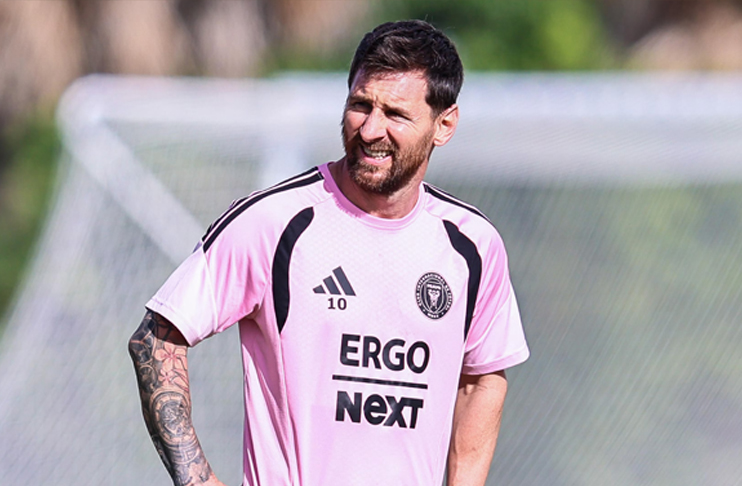
    MIAMI: Lionel Messi has been fined by Major League Soccer after becoming involved in a heated late-game confrontation with Philadelphia Union midfielder Quinn Sullivan during Inter Miami’s 2-2 draw with Philadelphia. The MLS Disciplinary Committee announced the punishment on Friday, saying Messi had violated the league’s policy concerning players putting their hands to the face, head or neck of an opponent. The amount of the fine was not disclosed. Inter Miami teammate Ian Fray was also fined an undisclosed amount for the same violation, adding another disciplinary twist to an already tense encounter. The incident occurred deep into stoppage time on Wednesday, Aug. 19, at Subaru Park. With the ball being played elsewhere, Messi approached Sullivan near the centre circle following an exchange between the players. Messi then made contact with Sullivan around the head and neck area. Sullivan responded by confronting the Argentine star, leading to a tense face-to-face exchange before officials intervened. Referee Filip Dujic had initially not seen the incident because his back was turned. He arrived shortly afterwards to separate the players but did not issue either Messi or Quinn Sullivan a card for the confrontation. The match later descended into further chaos in stoppage time. Quinn Sullivan became involved in another altercation with Inter Miami’s Ian Fray, while Philadelphia’s Cavan Sullivan and Miami midfielder Yannick Bright were also involved in the ensuing scuffle. Cavan Sullivan and Bright were both sent off, turning an already dramatic finish into a disciplinary flashpoint. Cavan Sullivan’s red-card suspension was later overturned on appeal, making him available for Philadelphia’s next match. Despite the controversy, Messi had a major influence on the match itself. He provided an assist before scoring Inter Miami’s second goal in the 26th minute, curling a left-footed effort into the corner. The goal was particularly emotional for the 39-year-old Argentine, as it was his first since returning to action following the death of his father, Jorge Messi. Philadelphia eventually fought back to earn a 2-2 draw, with Neil Pierre scoring in the second half to level the contest. For Messi, the match therefore ended on two very different notes: a memorable goal and assist on the field, followed by an unexpected disciplinary sanction. The MLS fine does not carry a suspension, but it serves as a reminder that even one of football’s biggest stars remains subject to the league’s conduct rules. With the regular season intensifying, both Messi and Inter Miami will now hope the incident remains a footnote rather than becoming a distraction from their push for success.

  • | | |

    Initial report suggests Mir Raza Ali was shot from…

    KARACHI: An initial medical report has reportedly indicated that businessman Mir Raza Ali sustained a gunshot wound from behind, while several signs of physical violence were also found on his body following his exhumation for a fresh post-mortem examination. According to investigation sources, the preliminary report has addressed all 14 questions raised by police surgeon Dr Summaiya Syed during the medical examination. The findings reportedly include a gunshot injury to the rear of the body, fractured ribs and multiple injuries to Ali’s head and face. The report also noted marks of violence on different parts of the deceased’s body. However, investigators have yet to officially receive the medical findings. SSP SIU Samiullah Somroo, who is leading the police investigation, said the investigation team had not been informed about the report or its findings. The exhumation process lasted around three hours and was conducted under the supervision of forensic experts. During the procedure, 17 samples were collected from the body for further examination. Four samples were preserved for DNA testing, while the remaining samples were collected for chemical analysis. Two additional reference samples were obtained from Ali’s parents to assist with DNA matching. Investigators said the collected samples have been preserved and will be submitted to the forensic laboratory at the University of Karachi on Monday. The chemical and DNA examination reports are expected to be available within three to four days. Ali’s body was exhumed earlier as part of efforts to determine the circumstances surrounding his death. After the medical examination was completed, his remains were reburied at a graveyard near Tariq Road. Ali, an IBA graduate and businessman, had returned home from his shop on the night of July 28. He later left the house again, telling his family that he would return within 10 minutes. He did not return, and his body was subsequently recovered from Gulistan-e-Jauhar. His father, Mir Hussain, has maintained that his son was murdered and rejected suggestions that he died by suicide. During the latest proceedings, members of the medical board collected various samples from Ali’s grave as part of the renewed examination. His family members and their lawyer, Jibran Nasir, were present at the graveyard, while a heavy police contingent was deployed to maintain security. The authorities had restored the original eight-member medical board responsible for supervising the exhumation after the family objected to the replacement of the panel with a five-member board. The disagreement had earlier prevented officials from carrying out the scheduled exhumation. Mir Hussain later said he was satisfied with the latest proceedings. He expressed hope that the fresh examination would provide clarity about what happened to his son. The family has also alleged that a fake audio recording attributed to Ali was circulated in an attempt to influence the case and create confusion around the circumstances of his death. The family’s lawyer had earlier raised concerns about changes to the medical board and questioned the decision to replace the original panel. He later said the family was satisfied with the renewed proceedings, which were conducted in the presence of the judicial magistrate, investigation officer and members of the medical team.

  • | |

    What happens to your body if you drink soft drinks…

    Soft drinks have become a regular part of modern lifestyles, with many people enjoying them during meals, celebrations, and social gatherings. While these sugary beverages are refreshing and widely available, health experts warn that drinking them every day can have serious consequences for overall well-being. Regular consumption of soft drinks has been linked to several health problems, making it important to understand the risks and choose healthier alternatives whenever possible. One of the biggest concerns is the high sugar content found in most carbonated beverages. A single can of soft drink often contains a significant amount of added sugar and calories, which can contribute to weight gain over time. Consuming excess sugar regularly increases the risk of obesity, a condition that is closely associated with type 2 diabetes, high blood pressure, and heart disease. Soft drinks may also contribute to dehydration. Although they are liquids, many contain caffeine, which can have a mild diuretic effect in some individuals. Combined with high sugar levels, these beverages may not hydrate the body as effectively as water. As a result, people who rely heavily on soft drinks instead of water may experience headaches, fatigue, constipation, and reduced energy levels. Another area of concern is digestive health. Nutrition experts suggest that excessive intake of sugary and artificially sweetened drinks may affect the balance of beneficial bacteria in the gut. A disrupted gut microbiome can lead to digestive discomfort, increased appetite, changes in metabolism, and difficulty maintaining a healthy weight. Dental health is also at risk. The acids used in carbonated drinks can gradually wear away tooth enamel, making teeth more vulnerable to decay. At the same time, the high sugar content feeds harmful bacteria in the mouth, increasing the likelihood of cavities and gum problems. Drinking these beverages frequently throughout the day can significantly raise the risk of long-term dental damage. Research has also explored possible links between frequent consumption of sugary beverages and chronic illnesses. Studies suggest that high intake of sugar-sweetened drinks is associated with an increased risk of cardiovascular disease and type 2 diabetes. Some research has examined potential connections with certain types of cancer, but scientists continue to investigate these relationships, and more evidence is needed before firm conclusions can be drawn. Health professionals recommend limiting soft drink consumption and choosing healthier options such as water, fresh fruit-infused water, milk, buttermilk, or unsweetened natural juices. Making small dietary changes today can reduce long-term health risks and support a healthier lifestyle for years to come.

  • | |

    Freedom greatest blessing, says LHC justice at Ind…

    RAWALPINDI: Senior Justice of the Lahore High Court Rawalpindi Bench, Sadaqat Ali Khan, has described freedom as the greatest blessing and called on citizens to contribute positively to Pakistan’s progress by following the vision and principles of Quaid-e-Azam Muhammad Ali Jinnah. He was speaking at a grand Independence Day ceremony held at the premises of the Lahore High Court ( LHC) Rawalpindi Bench, attended by Justice Mirza Waqas Rauf, retired judges, senior lawyers and court officials. The ceremony began with a guard of honour for Justice Sadaqat Ali Khan, who later hoisted the national flag alongside fellow judges. Senior judicial officers, representatives of the legal community and other officials also participated in the event. Addressing the gathering, Justice Sadaqat Ali Khan said Pakistan’s independence was achieved through immense sacrifices by the Muslims of the subcontinent under the leadership of Quaid-e-Azam Muhammad Ali Jinnah. He said Independence Day was not merely a celebration of freedom but also a reminder of the determination and struggle that led to the creation of Pakistan. He paid tribute to the heroes who sacrificed their lives and resources for the country’s independence, saying their sacrifices should inspire the nation to work for Pakistan’s development and prosperity. The senior judge stressed that every citizen has a responsibility to play a constructive role in strengthening the country and advancing the ideals envisioned by Quaid-e-Azam.

  • |

    BNP veteran Alamgir elected Bangladesh president

    Bangladesh’s parliament has elected veteran Bangladesh Nationalist Party leader Mirza Fakhrul Islam Alamgir as the country’s new president, marking another major development in the country’s political transition. The 78-year-old politician secured victory in a parliamentary vote on Thursday, defeating retired army Colonel Oli Ahmed, who was backed by the Jamaat-e-Islami-led opposition alliance. Chief Election Commissioner A.M.M. Nasir Uddin announced Alamgir as the winner after he received 255 votes against Ahmed’s 88. Alamgir is expected to take the oath of office on Friday evening. Although the presidency in Bangladesh is largely ceremonial, the president serves as the country’s head of state and commander-in-chief of the armed forces. Executive powers remain with the prime minister and cabinet. Alamgir’s election comes after the BNP returned to power following the February general election. The party and its allies secured a two-thirds majority in parliament, while BNP leader Tarique Rahman became prime minister. The presidential election was triggered by the resignation of Mohammed Shahabuddin, who stepped down last month citing health reasons before completing his five-year term. Shahabuddin, a former Awami League politician and close associate of former prime minister Sheikh Hasina, had become president in 2023. Hasina left Bangladesh and moved to India after a mass uprising removed her government from power in August 2024. She has previously indicated that she plans to return to Bangladesh later this year. Alamgir is one of the BNP’s longest-serving senior figures. He served as the party’s secretary-general from 2016 until being nominated for the presidency. During the Awami League government’s rule, Alamgir emerged as one of the BNP’s most prominent opposition leaders. He faced several arrests and legal cases during his political career. His political journey began after he completed his studies in economics at the University of Dhaka. He initially worked as a teacher before entering politics. Alamgir joined the BNP in the early 1990s and gradually rose through its ranks. He later held several senior government positions and served as local government minister before leaving the position following his nomination for president. His election now places a longtime opposition figure in Bangladesh’s highest constitutional office as the BNP consolidates its political position following its return to government.

Leave a Reply

Your email address will not be published. Required fields are marked *