typewriters synthetic intelligence

From Typewriters to Synthetic Intelligence: Why Hu…

By

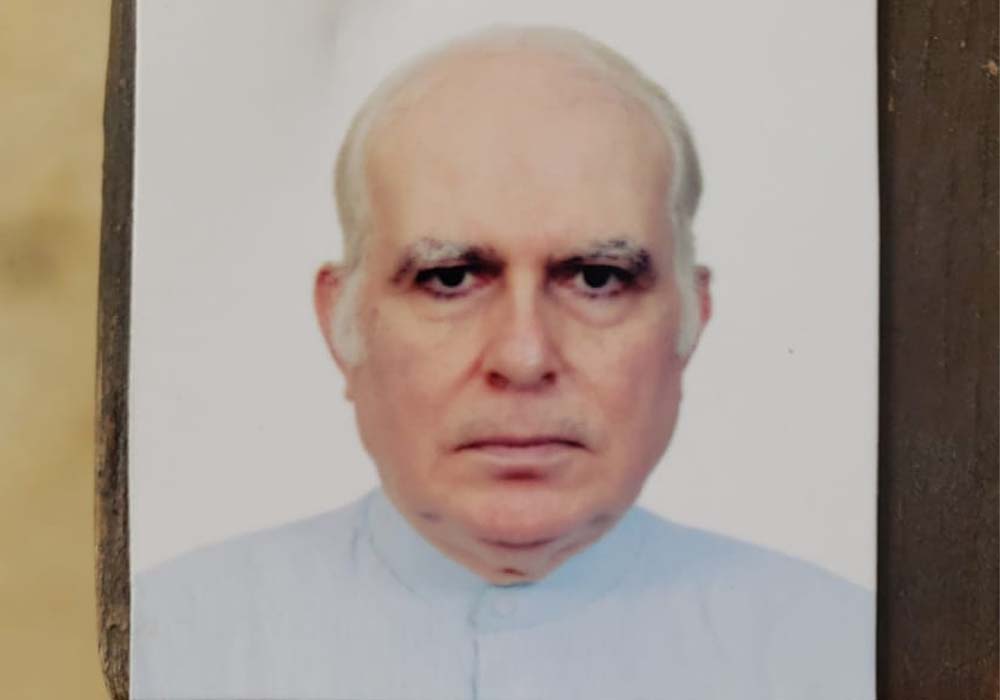
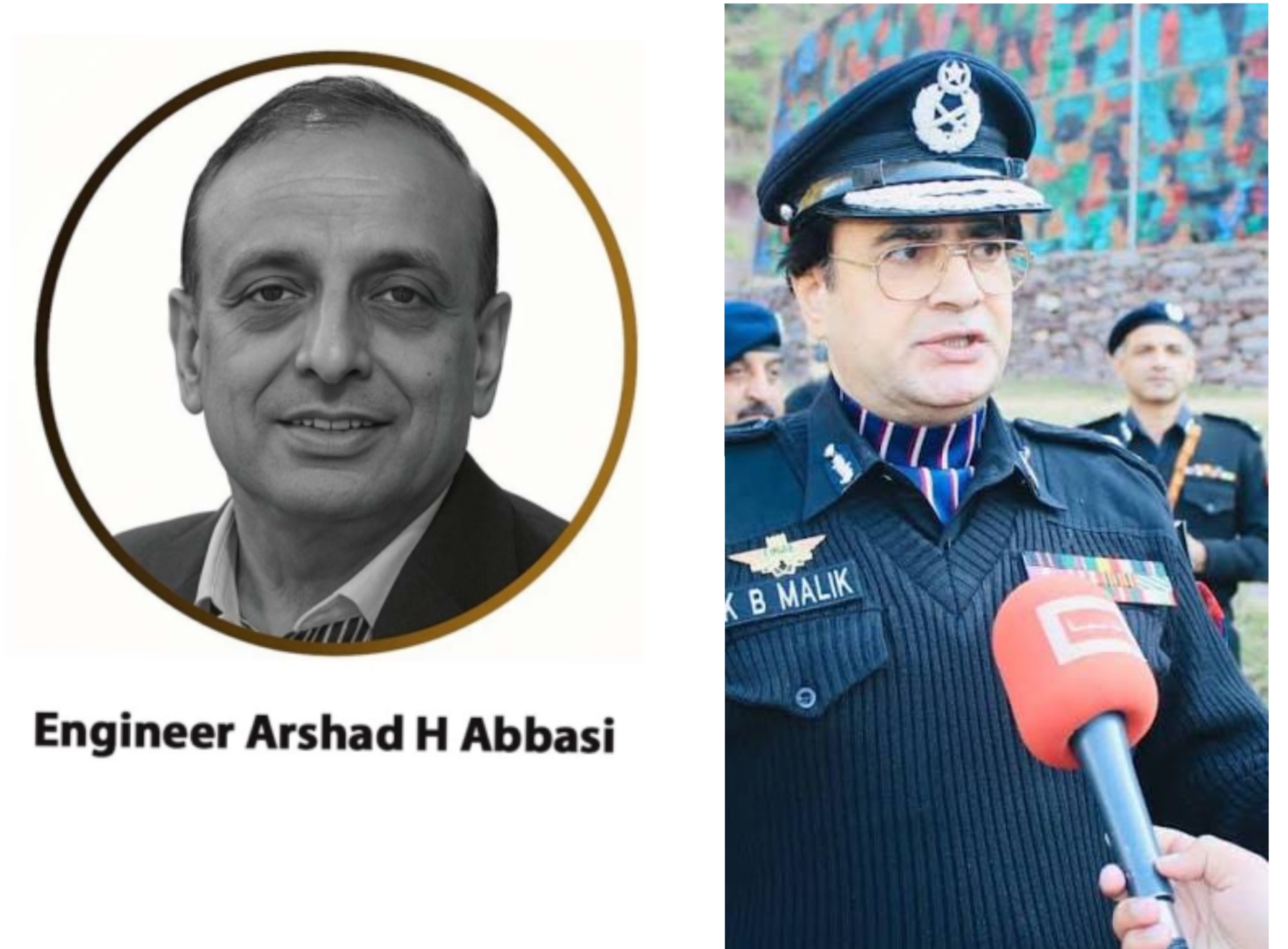
Malik Khuda Bakhsh Awan, former Additional IG Punjab &  Engineer Arshad H. Abbasi

In the early 1990s, operating a manual typewriter was not merely clerical work; it was a test of patience, precision, discipline and endurance. When our office typist disappeared without notice, the responsibility for preparing official reports fell upon us. There was no computer, no backspace and no “undo” button. Every word had to be typed carefully because a serious mistake could mean rewriting an entire page. We still remember spending almost eight hours preparing a single report, only to finish physically and mentally exhausted. Then, during a visit to Dubai on a different occasion, we witnessed Microsoft Office running on a modest personal computer, and it seemed almost magical. Microsoft Word could correct mistakes instantly, paragraphs could be moved without rewriting a page, and Excel could transform rows of figures into calculations, forecasts and financial analysis. We returned home convinced that technology would usher Pakistan into a new age of efficient governance, better engineering and more transparent economic management. In many ways, it did. Typewriters disappeared, computers transformed offices and the internet connected institutions. Yet another lesson gradually became clear: technology can change the tools without changing the people using them. Computers did not automatically eliminate corruption, inefficiency or institutional inertia. A powerful laptop in the hands of an uninterested official remained merely a powerful laptop. The same paradox emerged with PowerPoint. A tool designed to communicate information became, in some institutions, a substitute for serious analysis. Complex national problems were reduced to attractive slides, risks disappeared behind optimistic charts, and weak policies could be made to look impressive. “Death by PowerPoint” became more than a phrase; it became a warning about governance. We saw how major national decisions could be presented as technical successes while their long-term financial, economic and strategic consequences received insufficient scrutiny. The lesson is important because Pakistan is now entering another technological revolution, and this time the technology is far more powerful.

Artificial intelligence is no longer limited to answering questions or completing simple prompts. The next generation is moving towards what we may describe as synthetic intelligence: increasingly autonomous systems that can receive an objective, break it into multiple tasks, use software tools, analyse information, check their own results, identify errors, revise their approach and continue working when a particular step fails. AI is also becoming multimodal, allowing systems to process text, images, sound, video, sensor information and structured data together. The next frontier is the integration of digital intelligence with the physical world through robotics, sensors, autonomous machines, industrial systems, medical technology, logistics and manufacturing. A system may eventually be able to observe a problem, formulate a plan, execute several steps, monitor the consequences and adapt its strategy without continuous human instruction. This is a profound transformation from statistical prediction towards increasingly structured problem-solving and autonomous action. Yet we must be careful about what this technological progress actually means. AI can calculate faster than humans, search more information than humans and identify patterns that humans may miss. It can optimise a supply chain, forecast electricity demand, analyse satellite imagery, detect anomalies in financial accounts and assist engineers in complex modelling. But none of this means that machines have acquired human wisdom. Intelligence and wisdom are not the same. A machine can calculate the most efficient way to distribute water, but it cannot independently determine what constitutes justice between competing communities. It can forecast a food shortage, but it cannot decide the moral priority between those who can pay and those who cannot. It can optimise an energy system, but it cannot decide whether a development project is worth the environmental and social cost. It can generate an economic model, but it cannot experience the hardship of a family facing inflation, unemployment or unaffordable electricity. The danger, therefore, is not simply that machines will become more intelligent. The greater danger is that human beings will begin surrendering judgement to machines. We must never confuse computational power with wisdom, information with understanding, or automation with responsibility.

For Pakistan, this distinction is not an academic argument. It is a matter of national survival. Whatever happens to artificial intelligence during the next 100 years, human beings will still need food, water, energy, shelter and economic security. AI may transform the way these resources are managed, but it cannot abolish their physical foundations. An algorithm cannot manufacture a Himalayan glacier. A chatbot cannot create a river. A computer cannot grow wheat. A digital platform cannot replace a watershed. A robot cannot simply manufacture energy from nothing. AI can help us forecast rainfall, optimise irrigation, monitor groundwater, improve agricultural productivity, manage electricity demand, reduce transmission losses and identify climate risks. It can help us make better decisions, but it cannot remove our dependence on nature.

This is particularly important for Pakistan because our national future is inseparable from the Indus Basin. Agriculture depends on water. Cities depend on reliable water supplies. Industry depends on energy. Food security depends on agriculture. Economic stability depends on affordable energy, productive agriculture, exports and functioning infrastructure. These systems are interconnected. Water affects food. Energy affects water. Food affects inflation. Energy affects industry. Climate change affects all of them. If water security deteriorates, agriculture suffers. If agriculture suffers, food prices rise. If energy becomes unaffordable, industry becomes uncompetitive. If industry weakens, employment and exports decline. If these pressures occur simultaneously, no AI system will magically rescue the country. This is why the belief that technology alone can solve Pakistan’s fundamental problems is dangerous. We have already made this mistake with computers and digitalisation. We must not repeat it with AI. Technology can amplify competence, but it can also amplify incompetence. If dishonest data enters an AI system, the machine may produce sophisticated dishonesty. If flawed assumptions enter the model, AI may produce a highly polished version of a flawed conclusion. If the objective is politically manipulated, the most advanced algorithm cannot convert a bad objective into good governance. The old principle of “garbage in, garbage out” therefore remains relevant, but AI gives that principle a new and more powerful dimension: bad information can now be processed and distributed at extraordinary speed.

Pakistan’s AI strategy must move beyond buying software, setting up AI offices, or teaching basic prompt engineering. We must cultivate a generation capable of collaborating with intelligent machines without becoming intellectually reliant on them.

Our school curriculum must build a strong foundation in mathematics, statistics, science, logic, critical thinking, and ethics. Universities must train specialists who blend AI literacy with deep domain expertise: hydrologists who understand machine learning alongside rivers, glaciers, groundwater, and watersheds; energy experts who combine algorithms with knowledge of power plants, transmission networks, fuel markets, and economics; economists who leverage AI while grasping human behavior and social consequences; and civil servants equipped to interrogate AI-generated reports rather than accept them blindly.

To bridge these fields, Pakistan should establish specialized national centers connecting AI with water security, energy security, agriculture, climate resilience, public finance, health, and governance. These centers must bring together engineers, scientists, economists, lawyers, computer specialists, and experienced public servants.

Concurrently, the government must mandate a clear Human-in-the-Loop policy for high-risk decisions. While AI may advise, analyze, and simulate, human beings must remain responsible for choices involving public money, water allocation, energy policy, major infrastructure, criminal justice, national security, and fundamental rights.

This transformation requires a cultural shift as much as a technological one. Instead of training people to compete in tasks machines perform best, we must teach them to ask better questions, understand consequences, challenge assumptions, make ethical choices, and accept responsibility. Modern tools must not become another decorative layer concealing weak analysis or institutional failure. Pakistan does not need AI systems that merely produce more reports and presentations; it needs an intelligent public sector capable of examining evidence, challenging conventional thinking, and making difficult decisions.

Ultimately, water, food, energy, and economic security cannot be achieved through technology alone. They require judgment about competing interests, long-term consequences, and intergenerational responsibility—a judgment that is uniquely human. Past eras taught us patience through the typewriter, efficiency through the computer, connectivity through the internet, and automation through AI. Emerging synthetic intelligence may teach machines to plan, reason, act, monitor outcomes, and correct themselves, but machines cannot learn what is worth protecting: our rivers, glaciers, agricultural land, food systems, energy security, economic independence, and human dignity.

No algorithm can make these moral choices, assume human accountability, or replace human wisdom entirely. The central challenge for Pakistan is to enhance this irreplaceable human wisdom by fundamentally revising and modernizing the entire curriculum, from primary education all the way through the university degree level. AI cannot replicate or produce transformational thinkers—neither historic scientific icons like Isaac Newton and Albert Einstein, nor leading modern researchers with unmatched global impact, such as Frank B. Hu at Harvard or Michael Grätzel in Switzerland. AI should augment—not replace—the judgment of our engineers, farmers, economists, civil servants, and institutions. The future is not a contest between humans and machines, but a partnership where powerful tools remain under the direction of wise human minds. Pakistan’s ultimate strategic resource in the age of artificial intelligence will not be the machines it possesses, but the wisdom of the people using them. Looking across the horizon of the future, no artificial intelligence, synthetic system, or automated mechanism can ever compete with or surpass true human wisdom over the next one billion years.


 

Similar Posts

  • The Stories of Pakistan’s Unsung Heros

    Every 14th of August we hear the same national narrative. Speeches recall 1947, flags are hoisted, and anthems are played at midnight. The symbolism matters. It reminds us of the cost of independence and the idea of Pakistan. Yet symbolism without substance risks becoming ritual. If we are to understand what independence means in 2026, we must look beyond the ceremony and toward the quiet, persistent work that sustains the nation through every crisis. That work is rarely televised. It is carried out by teachers in under-resourced schools, by health workers walking door to door, by engineers keeping the grid alive during heatwaves, by farmers adapting to erratic weather, and by young people building livelihoods from laptops in small towns. These are the stories of resilience that deserve a central place in our understanding of Pakistan, 79 years after its founding. Resilience is not an abstract virtue. It is a measurable response to constraint. Pakistan has faced recurring fiscal stress, energy shortfalls, climate shocks, and security challenges. In each case, state capacity alone has been insufficient. What has prevented collapse is a dense network of civic and professional effort that fills gaps, innovates under pressure, and restores basic function. Consider education. Official data continues to show millions of children out of school and low learning outcomes. At the same time, thousands of low-fee private schools, community learning centers, and volunteer tutoring initiatives operate in the same neighborhoods. They do not appear in headlines, but they keep children literate, prepare them for exams, and create a pathway, however narrow, to higher education. The same pattern appears in health. Lady Health Workers and polio teams travel on foot in heat and in risk, maintaining immunization coverage and maternal counseling in areas where clinics are distant or overburdened. Their work is repetitive, underpaid, and essential. Without it, disease surveillance and primary care would deteriorate far more rapidly. Economic resilience is visible in the informal sector and in the emerging digital economy. Pakistan’s labor market has never been able to absorb all new entrants through formal jobs alone. In response, millions have created their own employment: workshops, transport, retail, agriculture processing, and services. In the last decade, a new layer has appeared. Freelancers in Lahore, Karachi, Islamabad, Peshawar, Quetta, Multan, and Faisalabad now earn foreign exchange by writing, designing, coding, and providing remote services. They pay no rent for office space, require little imported capital, and learn through online courses. This is not a substitute for industrial policy, but it is a real expansion of opportunity. It represents a form of independence: the ability of an individual to earn without waiting for a large institution to hire them. The state’s role here should be to reduce friction, ensure reliable electricity and internet, and simplify taxation and payment systems, so that this energy is not wasted. Climate resilience is now inseparable from national security. Floods in 2010, 2014, and 2022 displaced millions and damaged infrastructure worth billions. Drought and heatwaves threaten wheat and water. The response has included both engineering and community adaptation. Farmers are experimenting with drought-tolerant varieties and more efficient irrigation. Urban volunteers organize tree planting and waste management in their streets. Provincial and federal programs have attempted large-scale afforestation and watershed management. Progress is uneven and often underfunded, but the impulse is clear: adapt or lose. The most effective adaptations are local, because they are designed around specific soil, rainfall, and social networks. National policy can support them by providing data, credit, and technical extension, but it cannot replace the judgment of people who live on the land. What ties these examples together is a refusal to wait for perfect conditions. Resilience in Pakistan is not optimism. It is a practical calculation that problems will persist, and that action must proceed anyway. This attitude is visible in small businesses that maintain generators and solar panels to cope with load-shedding, in parents who pool money to hire a tutor, and in journalists and lawyers who document cases despite pressure. It is not heroic in the cinematic sense. It is tedious, repetitive, and often thankless. That is precisely why it matters. Nations are built not only in founding moments but in the accumulation of ordinary competence over decades. As we mark 79 years, the task is to recognize this resilience and to institutionalize it. Recognition means collecting data that captures informal work, community schools, and local adaptation, and then designing policy around them. Institutionalization means protecting merit in recruitment, ensuring predictable funding for primary services, and removing regulatory obstacles for small enterprises and freelancers. It also means telling a different story about Pakistan. The dominant story is one of crisis and rescue. The more accurate story is one of persistence and incremental gain. Both are true. But a country that only narrates its crises will train its citizens to expect failure. A country that also narrates its resilience will train its citizens to contribute. Independence, therefore, is not a date. It is a practice. It is the practice of showing up to teach, to heal, to build, to adapt, and to hold institutions accountable when they fall short. The midnight speech reminds us why we began. The morning work determines whether we continue. If we wish to honor 1947, we should honor those who, without fanfare, keep Pakistan functioning every day between 15th August and the next 14th. Their work is not perfect, and it is not sufficient on its own. But it is the foundation on which any serious reform must rest. To see it, to name it, and to support it is the most patriotic act available to us now.

  • A Nation in Focus: The Social Contract and the Mak…

    (When the water rises, who shows up and who is left waiting?) ‎I live in Sabzazar, a neighborhood in Lahore, Pakistan, but part of my heart is always sitting along the banks of the Moxahala Creek back home in Southeast Ohio. When the water rises in Muskingum County or the Punjab plains, who shows up, and who is left waiting? I live in Sabzazar, a neighborhood in Lahore, Pakistan, but part of my heart is always sitting along the banks of the Moxahala Creek back home in Southeast Ohio. ‎ ‎My mother and brother still live right near South Zanesville, just a stone’s throw from Crooksville. When heavy rains hit Perry and Muskingum counties, I don’t need to be there to know what it looks like. I can picture the heavy, chocolate-brown water backing up into the low spots, the damp chill that settles into a basement, the fears of what if the waters reach a house trailer, and that specific, exhausting smell of river mud that takes weeks to scrub out of porch boards and carpet. The worries of if the home has structural damage.. Halfway across the world in Pakistan, the landscape couldn’t look more different. But when monsoon season swells the rivers across the Punjab, the view from the ground is hauntingly identical. ‎ ‎Standing in a flooded doorway feels the same whether you are in Ohio or Lahore. The quiet shock is the same. The ruin of things you worked years to buy is the same. And the very first instinct is to grab your coat, shovel, a chainsaw and a pair of boots and go check on the elderly woman next door.. Start hauling wet furniture, debris to the curb and giving comfort, food and basics to those in need is entirely universal. Watching both worlds at once makes you look at governance differently. It strips away abstract political jargon and leaves you asking one fundamental question: When a community is hit with a crisis, does its system build capable people who can act, or does it leave them sitting on their hands, waiting for permission to survive? ‎ ‎What a Small Ohio Village Taught Me About Governance ‎ ‎Growing up around South Zanesville and Crooksville, you learn pretty early that small-town life relies on a very specific kind of quiet, distributed agency. ‎Crooksville isn’t a rich town. It’s a hard-working Appalachian village of under 1,500 people. But when the creek overflows, nobody sits around waiting for a press conference out of Washington, D.C., or a mandate from the state capital in Columbus. ‎ ‎The response moves in waves because the connections are already wired: ‎On the local levels we see neighbor checks on neighbor. The volunteer fire department turns on the sirens, pulls out the high-water gear, and starts the door to door knocks. At the County level we have the Perry County 911 dispatch and Emergency Management Agency (EMA) start tracking water levels and routing equipment where it’s needed most. At the State level, If the county gets overwhelmed, pre set legal triggers immediately call in the Ohio EMA or the National Guard. ‎ ‎Government here doesn’t replace the community’s instinct to help itself; it validates it, organizes it, and backs it up with real resources. The system trusts the people on the ground to know their own roads. Here in Pakistan, the human spirit is just as generous, if not more so. The impulse toward hospitality, neighborly charity, and mutual support runs incredibly deep. When disaster strikes, ordinary citizens open their wallets and their homes without a second thought. It’s just what they do… ‎ ‎And Pakistan’s has one of the world’s top class military engineering, a massive national disaster agency (the NDMA), and incredible private charities. The raw capacity is immense. Yet, too often, there is a however a very heartbreaking disconnect between that high-level power and the family standing in ankle deep water in a local neighborhood. An ordinary citizen here once described the country to me using a metaphor I’ve never forgotten: a child that was never allowed to stand on its own feet. An infant isn’t helpless because it lacks potential. It’s helpless because it hasn’t been given the space to build muscle, fall over, adjust its balance, and try again. If an authority figure picks the child up every single time it tries to pull itself up, the child never learns to walk—not from a lack of ability, but because the environment denied it the chance to build strength. ‎ ‎That is how systemic learned dependency takes root: Central authorities assume total control, bypassing local municipal councils. Neighborhoods are given no real budget or authority to fix their own drainage or organize local response teams. And when a flood comes, citizens have no choice but to wait for distant, top-down relief. The authorities look at the waiting crowd and say, “See? The people can’t manage without us.” ‎We witness power centralized even further, deepening the exact helplessness it claims to fix. Over generations, people adapt to the system they are given. If a system rewards waiting for a political patron, people learn to wait for patrons. If it rewards local initiative, communities build habits of self-reliance. It is very easy to blame culture or public apathy for civic passivity, but that misses the point entirely. Culture simply reflects the structural incentives people are given to survive and adapt. It is nature vs nurture and we have a break down when these two things fail to promote a cohesiveness and inclusion of what is a community and what that actually means. ‎ ‎Across the globe, the relationship between state control and citizen participation varies wildly, proving that central authority does not have to mean public powerlessness. In China, a deeply centralized state framework actively structures and expects local neighborhood committees and civil volunteer groups to manage community-level crises. Across much of Europe, comprehensive state safety nets exist alongside highly empowered municipal councils and professionalized local volunteer forces.

  • Refill the Aral Sea First: A Life Spent Watching W…

    I have stood on the dry floor of the Aral Sea, and I can tell you that no photograph prepares you for it. It is not a desert in the way the Sahara is a desert, ancient and self-consistent. It is a wound — a seabed still faintly shaped like the water that used to cover it, salt crusted white across the sand, rusting fishing trawlers stranded kilometres from any shore, and children playing in the hulls of boats their grandfathers once sailed to catch sturgeon. It is, without exaggeration, the worst environmental tragedy I have ever witnessed with my own eyes. And I have spent thirty years of my life witnessing tragedies of water, in one direction or the other. The Aral Sea was once the fourth-largest inland body of water on Earth, spread across more than 68,000 square kilometres between what is now Uzbekistan and Kazakhstan, fed for centuries by the Amu Darya and Syr Darya rivers. Soviet planners diverted those rivers at massive scale to irrigate cotton fields, and the sea began to die — slowly at first, then catastrophically. More than ninety percent of it is gone. What remains has splintered into four smaller lakes covering barely 3,500 square kilometres. The fishing economy that once fed the region collapsed entirely. The exposed seabed, laced with agricultural pesticide residue and salt, now rises on the wind as toxic dust that settles on crops and in human lungs hundreds of kilometres away. Villages that once sat on the water’s edge now sit stranded in a dead landscape, and the world, for the most part, has forgotten this happened at all. That forgetting is its own quiet tragedy. I did not come to this subject as a tourist of disaster. I have spent three decades campaigning for the preservation of the Himalayan glacier system, including a sustained, and ultimately unsuccessful, effort to see the Siachen Glacier converted into a demilitarised peace park — a proposal grounded in a simple technical fact: Siachen is melting faster than almost any glacier on Earth, in significant part because of the sustained military presence stationed on its ice. I made the case, repeatedly, that removing that military footprint would slow a specific, measurable source of glacial loss, feeding directly into the Indus watershed that sustains hundreds of millions of people downstream. I did not succeed. The glacier continues to melt. The troops remain. I say this not as a complaint but as an honest accounting: I have given a large share of my working life to glacier preservation, and by the plainest measure — ice mass — I have not stopped the loss. That failure has not left me cynical. It has left me convinced that the scale of the response has to match the scale of the crisis, and that we have consistently chosen the smaller response. I think about this every time I look at the Maldives. It is a nation of low coral islands, its highest natural point barely more than two metres above sea level, and it is not speaking in metaphor when its own government has warned that the country could become uninhabitable, and eventually vanish beneath the waves, within this century if sea-level rise is not slowed. I do not think most people outside the region understand how literally existential that threat is. This is not a country that will lose some coastline. This is a country that could, within the lifetime of children alive today, cease to have any land at all. That is the other half of the water crisis I have spent my life watching, and it is the mirror image of the Aral. Where the Aral Sea disappeared because rivers were mismanaged and diverted without thought for the consequences, the oceans are rising because the atmosphere has absorbed decades of greenhouse gas emissions, and the ice sheets and glaciers that once held the planet’s frozen water in reserve are releasing it. Through most of the twentieth century, global sea levels rose at roughly 1.4 millimetres a year — barely perceptible within a human lifetime. Between 2006 and 2015, that rate had already accelerated to roughly 3.6 millimetres a year, and it continues to climb. A rise measured in inches sounds trivial until you understand what it does: it turns rare storm surges into routine flooding, drowns wetlands that once buffered coastal cities, backs up drainage systems and rivers, and makes what used to be called a hundred-year flood into a fixture of ordinary life. New York and Miami already experience “sunny-day flooding,” where nothing more than an unusually high tide sends seawater into city streets with no storm at all. Shanghai, Bangkok, Kolkata, Mumbai, and Dhaka — cities holding tens of millions of people and trillions of dollars of infrastructure — face the same mechanism at a scale that could displace populations larger than most countries. And the danger does not arrive gently. In July 2025, an 8.8-magnitude earthquake off Russia’s Kamchatka Peninsula — among the ten strongest ever recorded — sent tsunami warnings racing across the Pacific, triggering evacuations from Russia to Japan to Hawaii to the western coast of the United States. It was, by fortune more than design, a disaster the world mostly escaped. Scientists have been explicit that higher baseline sea levels make the next such event, and the next cyclone, more destructive than the last one would have been at a lower starting point. We are not simply facing more disasters. We are facing the same disasters arriving on a stage that has been quietly raised beneath them. I do not believe these two crises — a vanished inland sea and a rising global ocean — are separate stories. I believe they are the same failure, viewed from opposite ends of the same hydrological system: a civilisation that has never learned to treat the planet’s water as a single, finite, interconnected balance, to be managed with foresight rather than reordered by short-term convenience and corrected only after

  • Pakistan’s Economy: Challenges and Opportuni…

    A country’s economy is the foundation of its development, sovereignty and national security. A strong economy not only improves the quality of life of its citizens but also strengthens a nation’s standing in the international community. Pakistan’s economy today stands at a critical juncture. While there are encouraging signs of stability, many structural challenges continue to hold back sustainable growth. As a result, the economy has become a central concern for citizens, businesses, investors and policymakers alike. Over the past few years, Pakistan has endured one of its most difficult economic periods. High inflation significantly reduced people’s purchasing power, while repeated increases in electricity and gas tariffs drove up production costs for industries. At the same time, the depreciation of the Pakistani rupee made imports more expensive, placing additional pressure on businesses and households. The burden fell most heavily on middle and low-income families, many of whom struggled to meet even their basic daily needs. Despite these hardships, recent economic indicators offer cautious optimism. Inflation has eased compared to previous highs, foreign exchange reserves have shown improvement, remittances have remained resilient, and efforts to increase exports are beginning to produce positive results. However, stronger macroeconomic indicators alone do not automatically translate into better living standards. Sustainable progress can only be achieved when economic growth creates employment opportunities, revitalises industries and leads to meaningful increases in household incomes. One of Pakistan’s most persistent economic challenges is the lack of policy continuity. Successive governments often replace or abandon the initiatives of their predecessors in favour of new priorities. This inconsistency weakens investor confidence and undermines long-term economic planning. Many successful economies have demonstrated that sustained growth depends on stable national policies that remain consistent regardless of political transitions. Tax reform is another area that demands urgent attention. The country’s tax base remains disproportionately small compared to its population, placing an unfair burden on compliant taxpayers while a significant portion of the economy continues to operate outside the formal tax system. Broadening the tax net, simplifying tax procedures, enhancing transparency and effectively addressing tax evasion would provide the government with greater fiscal space to invest in infrastructure, education and public services. Agriculture continues to be the backbone of Pakistan’s economy, yet the sector faces numerous challenges. Water scarcity, limited adoption of modern farming techniques, rising input costs and the growing impact of climate change have reduced agricultural productivity and increased the hardships faced by farmers. Investing in modern agricultural technologies, improving water management and providing farmers with better financial and technical support could substantially enhance production and boost agricultural exports. Pakistan’s information technology sector also presents remarkable opportunities. With a large and increasingly skilled young population, expanding freelance services and growing participation in the digital economy, the country has significant potential to earn valuable foreign exchange. Realising this potential requires greater investment in digital education, reliable internet infrastructure, research, innovation and an environment that supports entrepreneurship. The energy sector remains equally important to economic growth. High electricity and gas prices continue to increase industrial production costs, reducing the competitiveness of Pakistani products in international markets. Greater investment in renewable energy, reducing transmission losses and improving energy management could help lower costs and strengthen industrial productivity. Foreign direct investment is another key driver of sustainable economic development. Investors are naturally attracted to countries that offer political stability, transparent regulations, an efficient judicial system and a business-friendly environment. Pakistan can significantly improve its investment climate by reducing bureaucratic hurdles, strengthening institutions and implementing investor-friendly policies that encourage long-term confidence. Economic progress, however, is not solely the responsibility of governments. Citizens also have an essential role to play by paying taxes honestly, using energy responsibly, supporting local industries and respecting the rule of law. A resilient economy is built through shared responsibility between the state, businesses and the public. Pakistan is not short of resources or potential. What it needs is better governance, prudent management of available resources, policy consistency and broad national consensus on economic priorities. Continued investment in education, industry, agriculture, exports and human capital can enable the country not only to overcome its economic challenges but also to emerge as a stronger and more competitive economy in the region. The need of the hour is to place long-term economic interests above short-term political considerations. A strong economy is the cornerstone of a strong state. By making informed and consistent policy choices today, Pakistan can lay the foundations for lasting prosperity, economic resilience and a better future for generations to come.

  • Trump Era is over?

    Donald John Trump entered the White House as the 45th President of the world’s oldest constitutional democracy in January 2017. As incumbent he lost the election at the end of his four-year term. He took oath of office as the 47th head of state in January 2025. As there is a two-term constitutional restriction most Presidents falter in the later years of power. It was George Washington, the founding father and the first President who set this tradition of going home after eight years at the helm. Franklin Delano Roosevelt ( FDR ) the 32nd President served from 1933 to 1945 until his death in office. He is the longest serving US President. As his rule stretched over four terms, a constitutional amendment was made to restrict the term in office to two. Since then, craziness of the final term has increased manifold as humans are fond of building their legacy to be remembered for all times to come. Richard Nixon had to resign in his second term on charges of break-in and lying. President Ronald Reagen got involved in the Iran Contra Affair that seriously dented his popularity. Jimmy Carter was a great President who never got a second term. Bill Clinton did well in his first term but then had to face impeachment because of the Monica Lewinsky affair in the second. Bush Sr had single term while Bush Jr started the Afghanistan war which proved to be disastrous. Barrick Hussain Obama promised to end wars but badly failed. In fact, the inferno spread in the entire Middle East. Joe Biden did not run for office for the second term as the first was not very glorious and he was out of steam so he nominated his Vice President for the top slot. Legacy is earned not forced. There are no short cuts to lasting glory. Craziness does not help it only complicates. Capturing and killing head of states in the 21st century indicates brutalized narrow thinking and over simplification of the long-term complexities. Such an approach may have worked in the 18th of 19th century but not anymore. Trump wanted to control oil. He first took control of Venezuela by abducting its President through palace intrigue. Most countries in the Middle East ( ME ) were already subservient. He decided to take control of Iran as was done in the decade of the fifties when Shah was reinstated through CIA action. Mohammaed Mussadiq the elected President was captured and imprisoned. The Pahlavi Dynasty ruled Iran till 1979 when it was over thrown by the Islamic Revolution led by Imam Khomeni. Since then, the country has been struggling for its sovereignty At the behest of the rogue Israeli Prime Minister Benjimin Nathenyau, Trump decided to attack Iran and kill its top leadership through clandestine on the ground information sharing and intrigue. Imam Khamenei, the successor to Imam Khomeni, was assassinated but the regime survived. Iran decided to retaliate. The US bases were the closet targets. Israel looked the other way for self-preservation leaving USA to face the wrath. The vulnerability of the oil rich states was exposed. Reality set-in. Yankees have to go home was the clear verdict. Power structure in the entire ME is gearing for change. Mecca Joint Defense Agreement ( MJDA ) has been signed by Turkey, Pakistan and Saudi Arabia, others may join soon. A reasonable peace agreement can provide the much-needed face saving for Pakistan is on the forefront. The Abraham Accord to legitimize the illegitimate state of Israel has been thrown in the cold storage. After Iran, Trump also sought regime change in Afghanistan which has not happened so far. His heroics have failed to produce results. Losers are rejected by the American public. Congressional elections are scheduled for Nov. The polls are not favorable for the Republicans. If Democrats gain control of the house, Trump may have to face impeachment. It will then be the end of his political ambitions, leaving behind a legacy of ill-planned misadventures for personal glorification. Fall of the most powerful leader of the only super power of the world will certainly have ripple effects. First, it will be the totally dependent and subservient leadership in the ME followed by other friendly regimes. The countdown has started for Trump. Collateral damage has to be understood and contained. I remember the words of the legendary Cricket Captain Hafiz Kardar when Pakistan was at the verge of victory in the Oval cricket test in the decade of the fifties; ” Only rain can save England from defeat “. Pakistan prevailed, Fazal Mahmood emerged as a hero. Since then, there has been no looking back. Pakistan emerged as a major player in the cricketing world. Trump should pray for divine intervention otherwise it is all over for him and his cronies.

  • Are Immigrants the Problem?

    A rise of anti immigration policies have been emerging rapidly across North America and Europe, especially in the United Kingdom and USA. The blue collar politicians and white people living there have expressed their concerns over these often labeled “illegal” immigrants causing crime and stealing the jobs of the “rightful” citizens. If looked closely upon, this is not about illegal immigration, rather it is a form of racism against the blacks, the Indians and rather anyone who is not white.   The United Kingdom had colonized a great part of the world which included the Indian subcontinent and a vast part of Africa along with other European colonizers whom they wanted to “civilize” as for them they were a “savage” race. This colonization resulted in thousands of black and Indian families migrating to Europe, especially the upper class who ought to receive English education and work in the British government.   This seems like a normal history dilemma where colonization led to great migrations and mixing, which the Europeans have now mayhaps forgotten. All over the UK, many rallies of white people have emerged in which they protested against immigration- however they in reality spread their similar racist views. These citizens may not realize the extent to which immigrants aided in growing the economy. If kicked out, the economy will collapse and suffer tremendously.   In recent years these anti immigration policies have caused major hurdles for students all over Asia, South America and Africa who are ambitious enough to study in the ivy leagues and settle abroad- however their visas being rejected have deteriorated their ambitions otherwise. This is being seen as a great disadvantage all over the world especially for the students who are forced into putting a hold on their education.   No more than the student, this poses a great threat to the Western countries themselves. Without the hands and minds of these students who are the future workforce who help stabilize and grow the economy, the countries will often suffer. Unlike most nations, Germany is seen as offering free education to these immigrants which has definitely bore the result making Germany one of the most powerful economies despite the restrictions imposed on them (after world war II).   The other side of this argument initiates from the government of respective countries like Pakistan whom the students and workers emigrate from- their government stating that they are much needed to support their own respective economies. Nevertheless, the great amount of corruption, instability and discrimination are the reasons in the first place for workers to emigrate seeking better secure jobs abroad. It is hard to revive the patriotic heart of civilians when the governments do not work in favour of them.   “France for the French” was said by Jean-Marie Le Pen since the immigrants are apparently threatening the French identity. The same french is spoken in 20 African countries who were forcefully colonized and turned into slaves, the countries who had their own languages (hundreds of them), cultures and identities. So it often seems extremely hypocritical to hear statements such as these.   Consequently, the immigrants framed as criminals are the result of centuries old racist ideologies. They pose no threat but the threat of looking different, which is again ironically hypocritical since white race is a minority in the world. Hence, even in the ripe year of 2026 racism thrives and the rest of the world suffers. Comments like “Immigration is not an opportunity. It is a tragedy.” ( by Marine Le Pen) are made openly without facing any backlash- instead receive grave support. Mayhaps immigration can stop once the British return the koh-e-noor, jewels and trillions of dollars worth of resources stolen from the sub continent.

Leave a Reply

Your email address will not be published. Required fields are marked *