will scharf named
|

Will Scharf named Trump’s new White House counsel

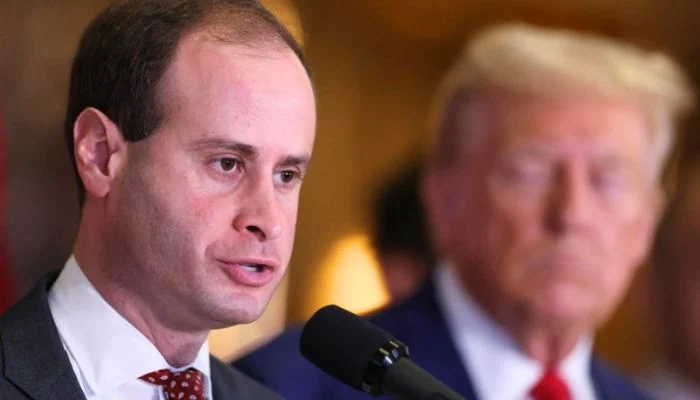
US President Donald Trump has appointed Will Scharf as the next White House counsel and assistant to the president.

Scharf, who currently serves as White House staff secretary, will take over the legal post on September 1, 2026. He will replace David Warrington, who is set to leave the administration and enter the private sector.

Scharf is a lawyer and political adviser with close ties to Trump. Before joining the White House, he represented Trump in several major legal matters. He was also involved in the presidential immunity case that reached the US Supreme Court.

Scharf previously worked as a federal prosecutor. He also served as a law clerk for federal appeals court judges, giving him experience in both government and federal litigation.

His new position will place him at the centre of the Trump administration’s legal strategy. As White House counsel, Scharf will advise the president on legal issues and oversee matters involving executive privilege, judicial appointments and relations with the Justice Department.

He will also be involved in responding to legal challenges facing the administration. The position is considered particularly important as Trump prepares for growing political and legal pressure ahead of the 2026 midterm elections.

Scharf joined Trump’s legal team in 2023. He worked on the federal election interference case brought by former Special Counsel Jack Smith. His involvement continued as the case reached the Supreme Court.

In 2024, the Supreme Court ruled that presidents have broad immunity from criminal prosecution for official acts. The decision became a major development in the legal battles surrounding Trump.

After Trump returned to the White House in January 2025, Scharf was appointed staff secretary. In that role, he managed documents and other materials sent to the president for review. He also frequently appeared with Trump during executive-order signing ceremonies.

Scharf has also chaired the National Capital Planning Commission. During his tenure, he was involved in the approval process for Trump’s proposed White House ballroom project, which has faced controversy and scrutiny.

His appointment comes at a politically sensitive time for the administration. The White House is dealing with legal and political challenges while preparing for increased congressional scrutiny before the midterm elections.

Trump praised Scharf after announcing the appointment. He described him as “tough, strong, and smart” and highlighted his experience as a federal prosecutor and his work on Trump’s legal cases.
Similar Posts

  • | |

    Shahid Afridi voices concern over Karachi’s decline

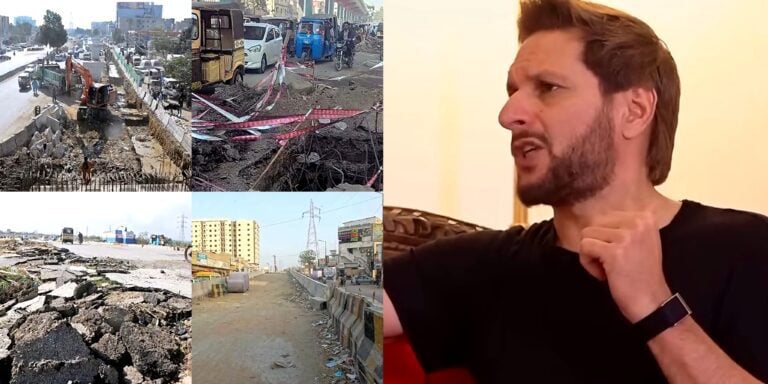
    Shahid Afridi has always had a complicated relationship with Karachi, the city of his origins and the one he eventually left behind. He now lives in Islamabad with his family, a decision he has attributed to the worsening state of roads and cleanliness in the city. But a recent visit to Karachi, his first in several months, brought those feelings rushing back with full force, and he did not hold them in. In a video shared on social media following his visit, Afridi spoke directly to his followers about what he saw during a trip to the Korangi area, and his disappointment was palpable from the very first word. “Day before yesterday, I was visiting the Korangi area,” he said. “Friends, I don’t understand this. We give you billions of rupees’ business and this city provides millions of jobs, but I feel embarrassed seeing the condition of Karachi.” He then described the particular disillusionment that comes from returning to a place with hope, only to find it unchanged. “I came to Karachi after years, thinking there must have been some construction work or development, but it is still the same. It disappoints me.” He named specific areas to illustrate his point, places that residents have long complained about and that appear to have remained in a state of perpetual half-construction. “The areas around Korangi, the side area, university road have been under construction for years,” he said. “The city needs a lot of development, and the authorities need to work on it. Please do something. I hope Karachi gets better.” The appeal was genuine and the frustration behind it real, coming from a man who grew up in the city and clearly retains a deep affection for it even in its current condition. The contrast between Karachi’s economic significance and the state of its infrastructure is one that has been raised by residents, civic activists and public figures for years. Afridi’s remarks gave fresh voice to that long-running complaint. The public reaction, however, was not entirely sympathetic. While some supporters agreed with the substance of his concerns, many commenters pointed to what they saw as a glaring contradiction. Afridi has been vocal in his political commentary and has aligned himself publicly with certain political figures and parties over the years. For many Karachiites, the individuals and systems he has supported are the very ones responsible for the neglect he was now condemning. The criticism was pointed: it is easier to express disappointment from Islamabad than to have consistently held accountable those who could have made a difference. The response reflects a broader frustration that many Pakistanis feel when public figures with platform and influence choose to react rather than act. Shahid Afridi’s concern for Karachi appears genuine. Whether that concern translates into sustained accountability for those in power over the city’s administration is the question his critics were loudly putting back to him.

  • | |

    UEFA welcomes FIFA investment plan withdrawal

    UEFA has welcomed FIFA’s decision to abandon its controversial private investment proposal, calling the move “a victory for the whole game” while declaring that it has lost confidence in FIFA president Gianni Infantino’s leadership. The governing body for European football made the remarks after FIFA officially scrapped plans to sell stakes in its competitions following widespread opposition from football associations around the world. On August 1, FIFA president Gianni Infantino confirmed that the proposal to bring private investors into FIFA tournaments had been withdrawn after facing intense backlash and threats of a boycott. The plan had sparked strong criticism from UEFA, which argued that football’s global competitions should not be treated as commercial assets. Before the proposal was abandoned, UEFA had firmly opposed the idea, stating: “Football is not FIFA’s to sell.” Following FIFA’s decision to withdraw the proposal, UEFA issued another strongly worded statement welcoming the outcome while criticising Infantino’s leadership. The statement read: “The current FIFA leadership has not only lost UEFA’s confidence but also that of many other members of the football family.” UEFA also reminded members of the promises Infantino made when he first sought election as FIFA president in 2016. Quoting his campaign pledge, the organisation said: “When Gianni Infantino asked for the trust and the votes of FIFA’s member associations to elect him as their president in 2016, he said: ‘Of course we have to be transparent.’” The European governing body accused Infantino of failing to live up to that commitment, claiming he had handled FIFA’s finances without sufficient transparency and had treated the organisation’s money as though it belonged to him personally. The controversy began on July 29, when Infantino reportedly offered each of FIFA’s 211 member associations$40 million in exchange for supporting a proposal that would allow private investment in FIFA competitions, including the men’s and women’s World Cups. UEFA responded swiftly by announcing it would boycott future World Cups if the proposal moved forward. The Asian Football Confederation (AFC) also declared that it “stands in solidarity” with UEFA and Concacaf, adding further pressure on FIFA to reconsider the plan. The criticism did not stop there. FIFA chief operating officer Kevin Lamour reportedly admitted that the organisation’s own administration had been “deceived” about the investment project. Meanwhile, FIFA senior adviser on global strategy and governance Carlos Cordeiro resigned over the proposal, describing it as: “A bad deal for football” He also warned that it would: “Mortgage football’s future.” The episode has created fresh uncertainty around Infantino’s leadership ahead of FIFA’s next presidential election. Infantino, who was first elected FIFA president in 2016 after defeating AFC president Sheikh Salman al-Khalifa by 115 votes to 88, is expected to seek another term. FIFA’s next president will be confirmed at the organisation’s 77th Congress in Morocco next March, with candidates required to submit their nominations by November 18. 

  • | |

    Hamza Shehbaz takes charge at PM House

    Former Punjab Chief Minister Hamza Shehbaz has taken charge of his office at the Prime Minister’s House. His new office will be located on the sixth floor of the PM House. According to party sources, Hamza Shehbaz has already started engaging with federal ministers. He held meetings with several federal ministers a day before formally beginning his office work. The meetings focused on political and administrative matters. Hamza Shehbaz is expected to begin his regular office responsibilities from Monday. He will coordinate with government officials and oversee matters assigned to him. Party sources said Hamza Shehbaz will also look after affairs related to the Public Accounts Committee (PAC). The committee deals with matters involving government spending, public funds and financial oversight. He is also expected to establish a committee to address the concerns and problems of party workers. The committee will work on resolving issues raised by workers and improving coordination within the party. His appointment at the PM House is expected to increase his involvement in federal-level political and parliamentary affairs. It will also provide him with a formal platform to coordinate with ministers and other government officials. Hamza Shehbaz has previously served as Punjab chief minister and has remained active in the Pakistan Muslim League-Nawaz (PML-N). His new responsibilities are expected to further strengthen his role in the party’s political and organisational affairs. He will formally start handling his office matters from Monday, while meetings and consultations with government and party officials are expected to continue in the coming days.

  • |

    Umerkot flour millers reject Rs128/kg official rate, seek fresh price review

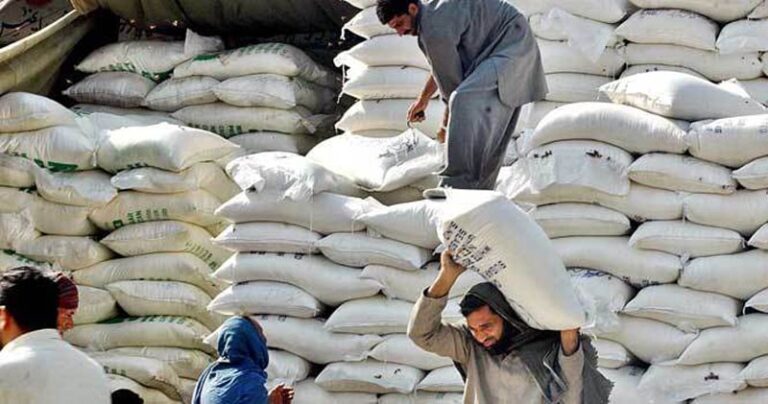
    UMERKOT: Flour mill owners in Umerkot district have rejected the government-fixed price of Rs128 per kilogram, arguing that the sharp increase in wheat prices has pushed their production costs far above the officially notified rate. The millers said the prevailing wheat price in the open market had climbed to around Rs125 per kilogram, while additional expenses related to milling, labour, electricity, transportation and other operations had increased the overall cost of producing flour to nearly Rs140 per kilogram. They maintained that selling flour at Rs128 per kilogram was therefore commercially unsustainable and would force mill owners to operate at a loss. In this regard, representatives of the flour milling industry have submitted written applications to the Mirpurkhas commissioner and the Umerkot deputy commissioner, requesting authorities to reconsider the existing flour price and determine a new rate based on prevailing market conditions and production costs. The mill owners also raised objections to what they described as excessive administrative action against flour mills across the district. They specifically complained about raids and wheat seizures allegedly carried out by assistant commissioners in Umerkot, Kunri, Samaro and Pithoro. According to the millers, government policy allows flour mill owners to maintain wheat stocks of up to 850 bags per stone at their mills or designated warehouses. They alleged that despite the provision, local administrative officials had conducted raids on mills and storage facilities and seized wheat stocks. The mill owners termed the alleged seizures unjustified and said such actions were creating additional difficulties for an already financially pressured industry. They urged the authorities to ensure that enforcement measures were carried out strictly in accordance with the relevant government policy. The millers further called for an investigation into alleged irregularities involving food department inspectors. They demanded that senior provincial officials examine the complaints and take appropriate action if any wrongdoing is established. They appealed to the Sindh chief minister, provincial food secretary, Mirpurkhas commissioner, Umerkot deputy commissioner and other concerned authorities to intervene in the matter and review the officially fixed flour price. The mill owners argued that the price should be determined after taking into account the current cost of wheat as well as electricity, labour, transportation, maintenance and other expenses associated with flour production. They warned that continued enforcement of a price they consider economically unviable could increase financial losses for flour mills and put further pressure on the district’s milling industry. The millers said they were willing to cooperate with the administration in maintaining the availability of flour and preventing unjustified price increases, but stressed that any official pricing mechanism must reflect actual market and production costs. They also urged the provincial government to establish a transparent mechanism for monitoring wheat stocks and flour prices so that disputes between millers and local administrations could be resolved through clear rules rather than repeated raids and seizures.

  • |

    Pakistan railways police recover stolen railway equipment worth millions in Karachi operation

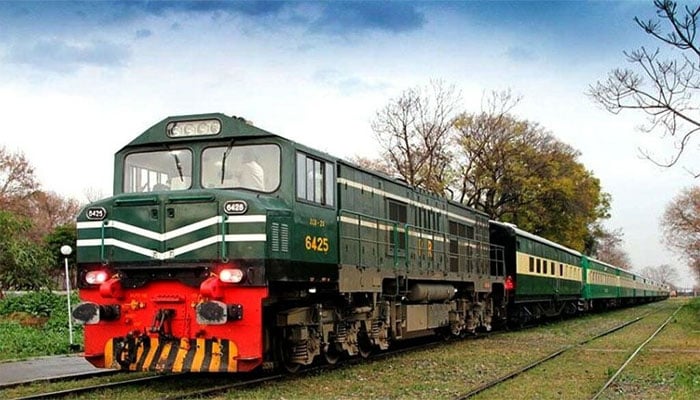
    Karachi: Pakistan Railways Police have recovered a large quantity of stolen railway infrastructure during a targeted operation in Karachi, dealing a significant blow to those involved in the theft and illegal trade of railway assets. According to an official statement issued by the Pakistan Railways Police, the operation resulted in the recovery of approximately 32 tons of stolen railway material, including railway tracks valued at millions of rupees. Authorities described the recovery as an important step towards protecting the country’s railway infrastructure and preventing financial losses to the national exchequer. The raid was conducted in Orangi Town, where police arrested four suspects allegedly involved in stealing railway tracks. Officials also seized specialized equipment believed to have been used for cutting and removing railway tracks, indicating that the suspects were operating in an organized manner. Police said the recovered material has been taken into custody, while the arrested individuals are being interrogated to identify other members of the network and determine whether the group is linked to previous incidents of railway theft in different parts of the country. Inspector General (IG) Pakistan Railways Police said the department is committed to safeguarding national assets and ensuring the security of railway infrastructure. He emphasized that strict action would continue against individuals involved in stealing railway property or causing damage to public assets. The IG further stated that operations against criminal elements targeting railway installations will be intensified in the coming weeks, with enhanced surveillance and intelligence-based raids aimed at dismantling organized theft networks.

  • | |

    Iran warns of global fallout from attacks on infrastructure

    Iranian Supreme Leader Ayatollah Seyyed Ali Khamenei’s senior adviser, Mohammad Mokhber, has issued a strong warning that any attack on Iran’s critical infrastructure could trigger consequences far beyond the immediate military confrontation and potentially threaten the broader international order dominated by the United States and its Western allies. In a statement, Mokhber said the United States approached conflicts primarily through the lens of military power and strategic calculations, while Iran, in his view, responded according to what he called the “logic of history.” He argued that Tehran’s response to any attack would not necessarily remain confined to conventional military targets or the battlefield. Mokhber warned that strikes against Iranian infrastructure could have significant political, economic and geopolitical repercussions. He claimed that such attacks could destabilise the wider international system and challenge the global order that Western powers had developed over the past 250 years. According to the senior adviser, Iran would view attacks on its infrastructure as a major escalation rather than an isolated military action. He suggested that any attempt to damage Iran’s essential infrastructure could produce consequences across multiple areas, potentially affecting global economic networks, international trade and the strategic balance between major powers. Mokhber further argued that the current global system depends on several key pillars, including political leadership, economic institutions and international markets. He warned that if these pillars were seriously weakened or collapsed, the consequences would extend well beyond the countries directly involved in a conflict. He said that once the foundations of what he described as the existing global order begin to break down, there would be no stable command centre for its leadership and no functioning market structure to support what he characterised as the exploitation of global resources. His remarks appeared to suggest that Iran could seek to challenge the wider systems that support US influence if its own territory and infrastructure came under attack. The warning comes amid heightened tensions between Iran and the United States and growing concerns about the possibility of a broader regional confrontation. Any direct strikes on critical infrastructure could increase the risk of further escalation and draw additional countries into the conflict, depending on the scale and nature of the response. Mokhber’s comments also reflect Tehran’s longstanding position that military pressure against Iran could produce consequences that extend beyond the immediate region. Iranian officials have repeatedly warned that attacks on the country could trigger responses affecting wider strategic and economic interests. At the same time, Mokhber’s statement presents Iran’s potential response as part of a broader geopolitical struggle over the future of the international system. By invoking the historical development of the global order, he sought to frame the issue not simply as a dispute between Iran and the United States but as a confrontation that could have implications for the existing balance of global power. His remarks are likely to attract attention amid continuing concerns over regional stability and the possibility that attacks on strategic infrastructure could lead to an unpredictable chain of events. While Mokhber did not provide specific details about what measures Iran might take, his warning conveyed a clear message that Tehran considers attacks on its infrastructure a red line with potentially far-reaching consequences. The statement underscores the growing importance of infrastructure and economic networks in modern conflicts, where the impact of military action can extend beyond traditional battlefields. Damage to energy facilities, transportation networks and other critical systems can affect national economies and international markets, making infrastructure attacks a particularly sensitive issue in periods of heightened geopolitical tension.

Leave a Reply

Your email address will not be published. Required fields are marked *