
father school shooter

Father of School Shooter Apologizes as Police Uncover Boy’s Motives

BANGKOK – The parents of a 14-year-old student who opened fire at Debsirin Nonthaburi School faced police questioning this weekend. The tragic incident, which unfolded on Friday, left nine people dead and sparked national outrage over gun control.

Law enforcement officials summoned the mother and father separately to uncover what led to the brutal massacre. The community remains in deep shock as more details about the teenage shooter’s background slowly come to light.

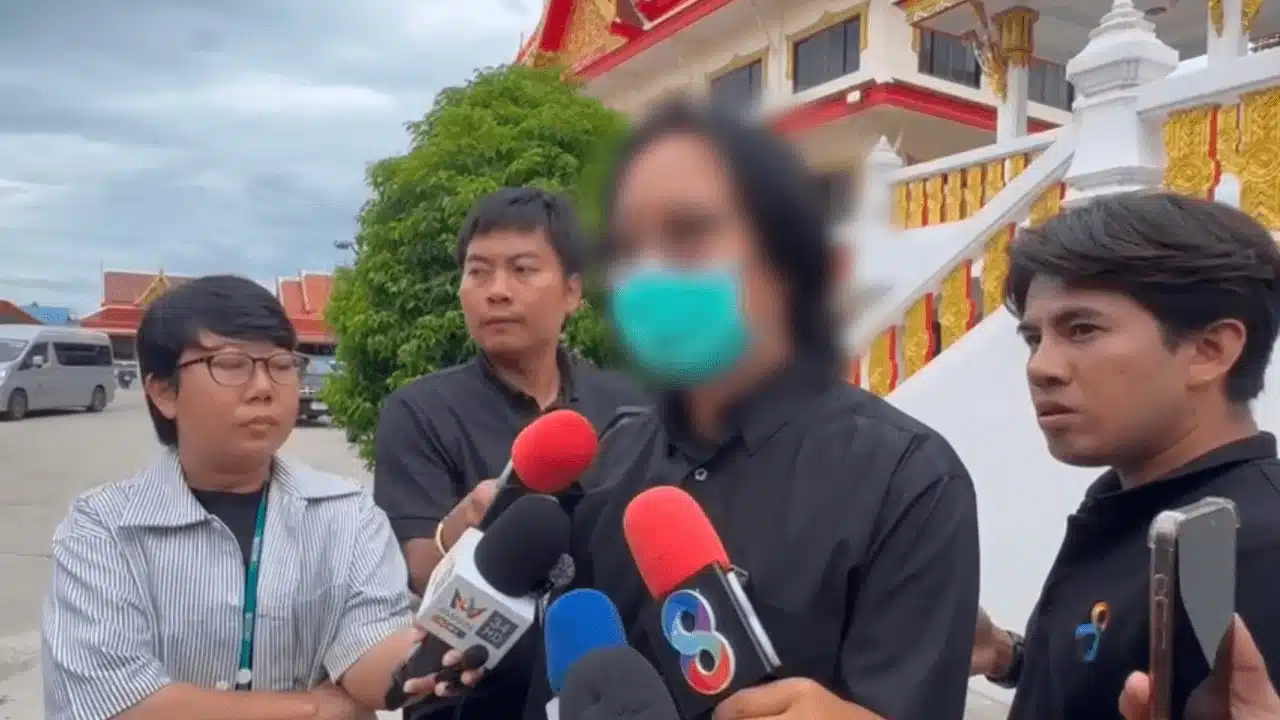
During the police summons, the teenage gunman’s father issued a brief public apology for his son’s devastating actions. “I apologise to society for what my son did. I have not seen him yet,” he told local reporters gathered outside the police station. The boy’s mother, clearly overwhelmed by the grim situation, declined to answer any questions from the media. Both parents are reportedly cooperating with the ongoing police investigation as authorities search for clear answers.

Key Takeaways

  • A 14-year-old student killed his grandparents before fatally shooting six people, including a 12-year-old girl, at his school.
  • The boy’s father publicly apologized, while police continue to investigate motives linked to severe academic stress and bullying.
  • The tragedy has reignited debates over Thailand’s high gun ownership rates and the urgent need for stricter firearm regulations.

The violence began early Friday morning before the suspect even arrived at his secondary school. According to authorities, the 14-year-old first shot and killed the grandparents who had raised him for over a decade. He used a 9mm CZ-75 Compact semi-automatic handgun that belonged to his grandfather, firing at least 26 rounds throughout the day. First responders later discovered another 34 rounds of unspent ammunition in the boy’s possession.

After fleeing his home, the armed teenager traveled directly to Debsirin Nonthaburi School, located just outside of Bangkok. He began firing on the school grounds, ultimately killing five teachers and staff members, including a deputy school director.

Tragically, a 12-year-old student named Naphat Chaima was also critically injured and later died from her severe wounds. The shooter eventually barricaded himself in a computer room, turned the weapon on himself, and died before reaching the hospital.

Following the horrific event, Their Majesties the King and Queen stepped forward to support the affected victims. They have graciously accepted all injured individuals as patients under royal patronage and will care for the deceased. Dozens of grieving students, parents, and teachers have since gathered at local Buddhist temples to mourn the tragic loss of life. Outside the school fence, residents continue to lay bouquets in memory of those who perished.

Searching for the Teenage Shooter’s Motive

Investigators are now working tirelessly to understand what drove a 14-year-old boy to commit such extreme violence. Police officials revealed that the boy had recently watched highly violent videos online and researched firearm usage.

Witnesses also mentioned that the teenager had shown a growing interest in guns over the past two years. Furthermore, a teacher had previously confiscated an air gun from the student just last year, highlighting early warning signs.

Early findings suggest that severe academic pressure and school-related stress played a major role in the unfolding tragedy. Prime Minister Anutin Charnvirakul confirmed that the boy struggled significantly with his academic studies.

One of the teenager’s friends told police that the boy was heavily stressed over failing a Thai language exam and facing a strict grading system. Additionally, some classmates admitted that the boy had been a frequent victim of bullying at school.

Investigators have interviewed over 17 witnesses, including classmates and teachers, to piece together the full story behind the shooting. They are carefully examining the suspect’s personal computer, mobile phone, and social media accounts for further digital clues. Officials hope this comprehensive evidence will finally reveal the true cause of the tragic school shooting.

The Push for Stricter Gun Control Laws

This devastating school shooting has once again brought Thailand’s relaxed gun culture into the global public spotlight. Thailand currently has one of the highest rates of civilian gun ownership in the entire Southeast Asian region. Estimates suggest roughly 10 million firearms are circulating within the country right now, both legal and illegal. This staggering figure means there is approximately one gun for every seven inhabitants in Thailand.

Prime Minister Anutin has promised to introduce much stricter firearms control laws following Friday’s senseless massacre. He strongly emphasized that legally registered gun owners must keep their weapons securely locked away from children. If a minor accesses a firearm, the legal owner could face serious criminal charges as an accomplice to the crime. The government is currently reviewing new legislation to heavily restrict the public carrying of weapons.

Despite these renewed promises from government officials, many citizens remain highly skeptical about real, lasting change. Previous pledges for stricter gun laws have completely failed to prevent repeated mass shootings in recent years. In 2022, a former police officer tragically killed 36 people in a rural nursery attack in northeastern Thailand. Just last year, another 14-year-old boy killed two people at a luxury shopping mall in downtown Bangkok.

The community surrounding Debsirin Nonthaburi School continues to mourn the senseless and heartbreaking loss of life. Concerned parents are now actively demanding better security measures and significantly improved mental health support for vulnerable students.

They argue that schools must thoroughly monitor the emotional well-being of their students to prevent similar horrific events. Until significant societal changes are made, many families fear that this tragic history will simply continue to repeat itself.

Trending News:

School Takes Strict Action After Senior Students Attacked Junior with a Gun

Two Boys From School Shooting Remain in Critical Condition After Surgery


Similar Posts

  • Thailand Braces for Severe Super El Niño Next Year

    BANGKOK, Thailand – Thailand is preparing for the severe impacts of a Super El Niño expected to strike the country this October and persist through the early part of the 2027 rainy season, threatening agricultural output, rice plantations, and national water security. El Niño Drought Forces Water Rationing on Koh Samui The Thai Meteorological Department […]

  • | |

    SC seeks lawyers’ appearance for 49 suspects in …

    The Supreme Court of Pakistan has resumed hearing a case seeking the cancellation of bail granted to 49 suspects allegedly linked to the suicide attack on Chinese engineers in Bisham. A prosecution appeal has been filed before the top court. It seeks the cancellation of bail granted to the suspects in the case. During the hearing, Justice Naeem Akhtar asked whether the suspects were regularly appearing before the trial court. The judge also asked whether the suspects wanted to engage lawyers to represent them in the proceedings. The court directed the suspects to appear at the next hearing with their lawyers. It made it clear that failure to comply with the order could result in the cancellation of their bail. The court did not cancel the bail at the latest hearing. Instead, it gave the suspects an opportunity to ensure their appearance and legal representation. The Supreme Court then adjourned the proceedings until August 20. The case relates to the suicide attack in Bisham, where Chinese engineers were targeted. The incident had raised serious security concerns and prompted investigations into those allegedly involved in the attack. The prosecution has challenged the bail granted to 49 suspects and wants the Supreme Court to overturn the relief provided to them.

  • | |

    26 personnel killed: AJK police blame JAAC

    Azad Jammu and Kashmir (AJK) Police have accused the proscribed Joint Awami Action Committee (JAAC) of deliberately targeting law enforcement agencies during recent unrest in the region. AJK Police spokesperson and Senior Superintendent of Police (SSP) Riaz Mughal made the allegations during a press conference on Wednesday. He said 26 police and other law enforcement personnel had been killed in incidents of unrest across AJK during 2026. He claimed that another 157 personnel had suffered serious injuries, while 629 others sustained minor injuries. Mughal did not provide details of each incident linked to the reported casualties. He questioned how the JAAC protests could be described as peaceful if law enforcement personnel were being killed and injured. The police spokesperson said state institutions did not target people without reason. He claimed that security personnel took action against individuals who attacked law enforcement agencies. His comments came after clashes between protesters and security personnel in Rawalakot and Mirpur earlier this week. The incidents reportedly resulted in several casualties. The JAAC has been protesting for several weeks over various public demands. One of its key demands is the abolition of 12 seats in the AJK Legislative Assembly reserved for refugees from Indian-administered Kashmir. Mughal alleged that protesters had attacked police and Rangers personnel during the unrest. He also claimed that some people had been held captive and that their identity documents had been taken. The SSP urged people to visit AJK and observe the situation independently. He said the nature of the protests and the activities of those participating should be assessed impartially. Mughal further alleged that some protesters were equipped with firearms and claimed that police and other law enforcement personnel had been targeted by snipers. During the briefing, police officials displayed weapons they said had been recovered during operations against protesters. Mughal claimed the weapons had been used against law enforcement personnel. He also referred to previous clashes involving the JAAC. According to Mughal, a confrontation on May 11, 2024, occurred when police attempted to stop protesters travelling towards Muzaffarabad. He said one police officer was killed and around 60 personnel suffered serious injuries. He added that 174 other policemen sustained minor injuries. The SSP also cited unrest in October 2025. He claimed that three police officers were killed, 52 personnel suffered serious injuries and another 357 were injured in the incidents. Mughal described the protesters involved in violent incidents as anti-state elements. He alleged that some were involved in activities that amounted to terrorism. He further claimed that around 70 per cent of the protesters were criminals, including alleged drug dealers who had joined the protests under the JAAC banner. The allegations were made by the police official and were not independently verified. The police spokesperson’s remarks came amid heightened tensions in AJK following several days of protests and clashes. The government has also alleged that militant elements linked to a foreign agenda and allegedly backed by Indian funding were attempting to fuel unrest in the region.

  • Thai Army Accuses Cambodia of Continued Shelling of Civilian Areas

    BANGKOK – The Royal Thai Army has accused Cambodian forces of continuing to target Thai civilian areas with heavy weapons, despite repeated condemnations and reports to the international community. The allegations were made on Thursday as shelling reportedly damaged homes and infrastructure along the border. Cambodian Rocket Fire Injures Seven in Thai Border Villages Colonel […]

  • | | |

    Pakistan to lead new Turkey-Saudi defence pact

    ISLAMABAD: Pakistan is set to take the first three-year leadership of a new secretariat established under the defence agreement signed by Pakistan, Türkiye and Saudi Arabia in Makkah on Aug 7, giving Islamabad a prominent role in coordinating the emerging regional security framework. According to Turkish and international media reports, the secretariat will serve as the central mechanism for implementing decisions taken by the three countries and coordinating their growing defence cooperation. After Pakistan’s initial three-year term, leadership is expected to pass to Saudi Arabia and then Türkiye. The agreement is built around a collective-security principle under which an armed attack against one member would be regarded as an attack against all three. However, unlike NATO’s automatic response mechanism, the pact leaves the nature of any response to be determined according to the circumstances and the request of the affected country. A high-level council comprising foreign and defence ministers as well as military chiefs is also expected to oversee the arrangement. The council is expected to meet twice a year, while cooperation could range from intelligence sharing and logistics to direct military assistance when required. The partnership also places a strong emphasis on defence technology. The three countries plan to expand cooperation in unmanned systems, electronic warfare and artificial intelligence, alongside joint military exercises designed to improve coordination among their armed forces. Joint defence production, research and technology transfer are also part of the broader framework. For Pakistan, the first leadership term could prove strategically significant. Islamabad already maintains longstanding defence ties with both Ankara and Riyadh, and its role at the secretariat could give it greater influence in regional security diplomacy. Türkiye has stressed that the agreement is defensive and is not directed against any particular country. Turkish Foreign Minister Hakan Fidan said the pact is intended to strengthen regional security rather than replace existing alliances. With the Middle East facing continued instability, the new arrangement could become an important test of how effectively three regional powers can turn political solidarity into practical defence cooperation.

  • | | |

    Pakistan, Kazakhstan vow to boost trade and invest…

    Pakistan and Kazakhstan have reaffirmed their commitment to expanding bilateral trade, investment and regional connectivity, as senior leaders from both countries held high-level talks on the sidelines of the Shanghai Cooperation Organisation (SCO) meeting. Pakistan’s Deputy Prime Minister and Foreign Minister Ishaq Dar met Kazakhstan’s Deputy Prime Minister and Foreign Minister Yermek Kosherbayev, where the two sides reviewed the steady progress in bilateral relations following the recent visit of Kazakh President Kassym-Jomart Tokayev to Pakistan. During the meeting, both leaders expressed satisfaction over the positive momentum in diplomatic and economic cooperation. They reiterated their commitment to implementing the understandings reached during President Tokayev’s visit, including the execution of 37 Memorandums of Understanding (MoUs) signed between the two countries. According to Pakistan’s Foreign Office, the discussions focused on enhancing cooperation across a wide range of sectors, including trade, investment, transport, regional connectivity, energy, people-to-people exchanges and collaboration in multilateral forums. The two ministers agreed that stronger economic ties and improved transport links would create new opportunities for businesses and investors while contributing to broader regional integration. Kazakhstan’s Foreign Minister also praised Pakistan’s efforts to promote peace, dialogue and diplomacy in the region. He reaffirmed his country’s desire to further strengthen cooperation with Islamabad and expand engagement in areas of mutual interest. The leaders also exchanged views on regional and international developments, emphasizing their shared commitment to promoting peace, stability and sustainable prosperity through closer cooperation. In another positive diplomatic development, Kosherbayev extended an invitation to Ishaq Dar to visit Kazakhstan, reflecting both countries’ intention to maintain regular high-level engagement. Pakistan and Kazakhstan have significantly accelerated their diplomatic and economic partnership in recent years, with both governments seeking to unlock new avenues for trade and investment. President Tokayev’s recent visit to Pakistan is widely viewed as a turning point in bilateral relations, laying the foundation for long-term collaboration in strategic sectors. The latest meeting underscores the growing partnership between the two countries as they work to transform political goodwill into tangible economic cooperation, strengthen regional connectivity and create new opportunities for sustainable growth across Central and South Asia.

Leave a Reply

Your email address will not be published. Required fields are marked *