brad pitt sees
| |

Brad Pitt sees AI as a tool, not a threat to Hollywood

Brad Pitt has offered a measured view on the growing use of artificial intelligence in Hollywood, saying the technology could help filmmakers produce mid-budget movies more efficiently if it is used responsibly.

The Oscar-winning actor acknowledged that AI has become a controversial subject across the entertainment industry. While many filmmakers, actors and other industry professionals remain concerned about its impact, Pitt believes the technology could have practical benefits when treated as a creative tool rather than a replacement for human talent.

Speaking about the potential financial impact of AI, Pitt said the technology could make it easier to produce films with budgets ranging from around $40 million to $90 million.

According to Pitt, the main value of AI could be in helping filmmakers reduce production costs and bring projects to the screen that might otherwise struggle to secure financing.

However, the actor does not appear convinced that AI can simply reproduce an actor’s performance in a way that replaces the individual behind it.

Discussing the possibility of artificial intelligence recreating his performances, Pitt pointed to the importance of human decisions in filmmaking. He suggested that even if technology can reproduce aspects of an actor’s appearance or performance, the final result would depend heavily on the person directing and shaping the material.

For Pitt, acting is not simply about physical appearance or delivering lines. It also involves personal choices, emotions and discoveries made during the creative process.

He questioned whether an AI-generated performance would necessarily reflect the decisions an actor originally made while developing a character.

His comments come as Hollywood continues to debate how artificial intelligence should be used in film and television.

The technology has raised concerns about the future of acting, writing, visual effects and other creative professions. Industry representatives have been pushing for safeguards to protect performers and creators from having their likenesses, voices or work reproduced without appropriate consent and compensation.

Pitt acknowledged that opposition to AI remains widespread within Hollywood. At the same time, his comments suggest that he sees a distinction between using AI to assist filmmakers and allowing it to replace human creativity.

Similar Posts

  • |

    Bangladesh MP defends controversial second marriage

    A controversy has erupted in Bangladesh after a member of parliament from Jamaat-e-Islami, Ghazi Nazrul Islam, became the center of public debate over his alleged second marriage following the circulation of a viral video on social media. According to Bangladeshi media reports, the video showed Ghazi Nazrul Islam with a young woman whom he later identified as his second wife. The footage quickly spread online, prompting widespread discussion and speculation. A fact-checking organization examined the video and stated that it found no evidence suggesting it had been generated using artificial intelligence or digitally manipulated. Following that assessment, public attention shifted from the authenticity of the video to the identity of the woman and the nature of her relationship with the lawmaker. In a statement, Ghazi Nazrul Islam confirmed that the woman is his second wife. He said the marriage took place on June 17 with the consent of both families and the approval of his first wife. The lawmaker alleged that the viral video had been secretly recorded and later released as part of an extortion attempt and a politically motivated campaign to damage his reputation. His first wife also released a video supporting his account. She confirmed that her husband had married Maryam Begum as his second wife and said the marriage had taken place with her knowledge and consent. Maryam Begum also appeared in a separate video, identifying herself as Ghazi Nazrul Islam’s wife. She said the marriage ceremony was held on June 17 in the presence of both families and the lawmaker’s first wife. Despite these public statements, Bangladeshi media reported that documents related to Maryam Begum later surfaced on social media. The authenticity of those documents has not been independently verified, and neither the lawmaker nor Maryam Begum or her family has publicly addressed the apparent inconsistencies contained in them. According to the documents, Maryam Begum’s marital status was listed as “unmarried.” The papers also reportedly included a recommendation signed by Ghazi Nazrul Islam on June 22—five days after the claimed marriage—in support of her application for a government job. Reports said Maryam Begum had applied for public sector employment and that the MP had endorsed her application. Ghazi Nazrul Islam rejected all allegations arising from the documents. He claimed that on July 13 he visited an office in Dhaka’s Moghbazar area, where both of his wives were present. He alleged that his driver, his second wife’s uncle and several unidentified individuals held him captive, extorted 100,000 taka, demanded additional money and secretly recorded a private video, which was later circulated on social media. Meanwhile, Jamaat-e-Islami Bangladesh said it is gathering information about the incident and will decide on any organizational action once all facts have been established. Assistant Secretary General Ehsanul Haque Mahbub Zubair said the party is reviewing media reports as well as statements from the member of parliament, his two wives and the woman’s father before reaching any conclusion.

  • |

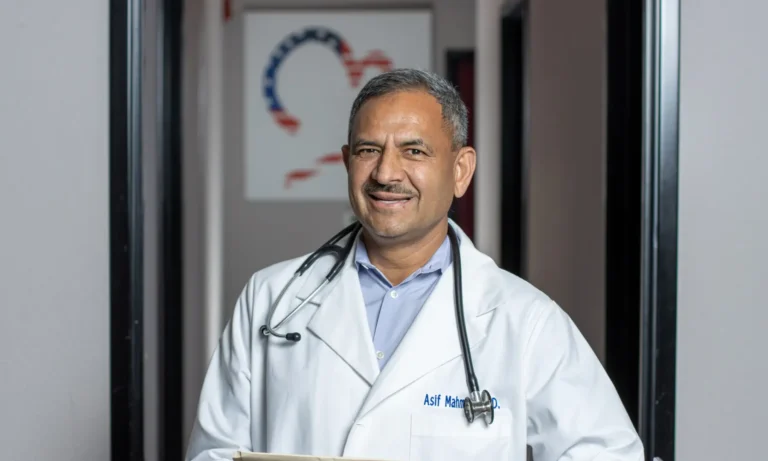
    Pakistani American Dr Asif Mahmood elected chair of US religious freedom commission

    Pakistani American physician and human rights advocate Dr Asif Mahmood has been unanimously elected as chair of the US Commission on International Religious Freedom, becoming the first South Asian to lead the independent bipartisan body. Dr Mahmood, who previously served as the commission’s vice chair, described his election as a great honour and reflected on his journey from a small village in Pakistan to leading one of the world’s leading organisations focused on protecting freedom of religion and belief. In his acceptance remarks, he said he remains committed to defending the rights of people from all religious backgrounds as well as those who do not follow any faith. He expressed hope for a world where religious freedom, human dignity and peaceful coexistence are respected and protected. His appointment follows his reappointment to the commission for a second term in May 2026, extending his service until 2028. Earlier this year, he noted that he was the first Pakistani, the first Muslim and the first Asian American to serve consecutive terms on the commission. The US Commission on International Religious Freedom was established in 1998 under legislation signed by former President Bill Clinton. It serves as an independent advisory body that monitors religious freedom around the world and provides policy recommendations to the White House, the US State Department and Congress. The commission is made up of nine members appointed by the US president and congressional leaders from both major political parties. Dr Mahmood was reappointed by House Minority Leader Hakeem Jeffries and now succeeds former congresswoman Vicky Hartzler as chair. Political observers have described his election as significant because of his Democratic Party affiliation despite receiving his latest appointment during the Trump administration. His leadership is expected to draw international attention, particularly because of his work on religious freedom issues in South Asia. Dr Mahmood has played a leading role in preparing reports examining allegations of religious freedom violations in India. He has publicly called for greater international scrutiny of the treatment of religious minorities and urged the United States to consider stronger measures in response to concerns raised by the commission. The commission has also recommended that US officials seek independent assessments of religious freedom conditions in India and consider targeted measures against individuals or organisations found responsible for serious violations. Those recommendations have generated considerable debate and have been strongly rejected by Indian authorities in the past. Beyond his work on religious freedom, Dr Mahmood has remained active in public service and politics. In 2022, he contested California’s 40th Congressional District as the Democratic candidate but was defeated by Republican incumbent Young Kim. Earlier, he also ran for California Insurance Commissioner and received hundreds of thousands of votes. A native of Kharian in Pakistan’s Punjab province, Dr Mahmood completed his medical education at Sindh Medical College before moving to the United States. He later completed his medical training at the University of Kentucky Medical Center and pursued a fellowship in pulmonary medicine at Harlem Hospital, which is affiliated with Columbia University. He currently serves on the Medical Board of California after being appointed by Governor Gavin Newsom in 2023. Over the years, he has also worked with several humanitarian and community organisations and has received recognition for providing free medical care to patients who could not afford treatment. His election as chair marks another milestone in a career that combines medicine, public service and advocacy for human rights.

  • |

    Maira Khan’s bold social media transformation sparks debate

    Maira Khan is a familiar name in the Pakistani television industry, having appeared in several popular dramas throughout her acting career. She has been part of projects such as Riwaaj, Kisey Awaaz Doon, Cousins, Jalan, Cheekh, and Bewafa, among others. Her performances helped her establish a presence in the entertainment industry, while her appearance on ARY Digital’s reality show Tamasha recently brought her renewed attention from viewers. Apart from television, Maira Khan has also worked in the feature film Durj, a project that received critical appreciation. Over the years, she has remained a subject of public interest, particularly because of her changing appearance, fashion choices, and occasional discussions surrounding cosmetic procedures and her evolving personal style. In recent years, however, Maira has largely stepped away from the Pakistani drama scene. Instead of appearing regularly on television, she is now frequently seen travelling with friends and sharing glimpses of her lifestyle on social media. Her Instagram presence has also become more noticeable, with the former actress posting photographs and reels showcasing her fashion choices and travels. Her recent posts have attracted particular attention because of her preference for Western-style outfits and a more confident approach to fashion. Some of her latest pictures feature outfits that are considerably bolder than the image audiences may remember from her television career. Her transformation has sparked a wide range of reactions across social media, with some people praising her confidence while others have criticised her new appearance. Several social media users have speculated about the reason behind her change in lifestyle and fashion. Some suggested that her reduced presence in Pakistani television dramas may have influenced her decision to pursue a different lifestyle, while others argued that her clothing choices are simply a matter of personal preference. The discussion also took an unexpected turn, with some users questioning her religious identity and making assumptions about her beliefs based on her appearance. Such comments generated further debate, as many people pointed out that a person’s faith cannot be determined simply by their clothing or social media posts. Some critics expressed disappointment over what they described as a shift from her earlier, more modest public image. One commenter said that Pakistani actresses appear to be becoming increasingly bold and prayed for them to receive guidance. Another user wrote that Maira had appeared much more decent in the past. Others shared reminders about morality and the temporary nature of worldly life. At the same time, her supporters believe that Maira has the right to make her own choices regarding fashion, lifestyle, and social media presence. The contrasting reactions demonstrate how strongly Pakistani celebrities continue to be scrutinised for their personal choices, particularly when they adopt a style that differs from their earlier public image.

  • | |

    Balochistan suspends nitrogen fertilizer movement …

    QUETTA: The Balochistan government has imposed a ban on the transportation of nitrogen-based fertilizers across the province for 15 days over concerns that such materials could be misused for sabotage and terrorist activities. According to an official notification issued by the Directorate General of Agriculture Balochistan, the decision was taken in view of the prevailing law and order situation and to ensure the safety of lives and property across the province. The order states that the sale, purchase, supply and distribution of nitrogen-based fertilizers have been suspended with immediate effect. Authorities said the restriction aims to prevent the possible use of these fertilizers in the manufacture of explosive materials and other unlawful activities. The banned products include urea, calcium ammonium nitrate, ammonium nitrate and potassium nitrate. Officials said the restrictions will remain in force until further orders. The notification also directs all dealers, distributors and suppliers to maintain a complete record and inventory of their existing fertilizer stocks. Authorities warned that compliance with the order would be closely monitored and that legal action could be taken against those found violating the restrictions. The provincial government said the temporary measure is part of broader efforts to strengthen security and prevent the misuse of materials that could pose a threat to public safety.

  • | | |

    Audit reveals Rs47bn electricity overbilling

    A government audit has uncovered an alleged Rs47 billion electricity overbilling scandal, raising serious concerns over billing practices by power distribution companies (DISCOs). The findings were presented before a subcommittee of the Public Accounts Committee (PAC), where officials said inflated electricity bills were issued to hundreds of thousands of consumers. Audit officials informed the committee that 278,649 consumers received excessive electricity bills in a single month. According to the findings, the overbilling involved nearly 904 million electricity units, creating a major financial burden for households and businesses across the country. The audit report stated that the Lahore Electric Supply Company (LESCO) accounted for the largest share of the overbilling, with consumers allegedly charged around Rs45 billion beyond actual consumption. The Peshawar Electric Supply Company (PESCO) was identified as the second-largest contributor, with overbilling estimated at Rs1.56 billion. Officials told lawmakers that the inflated bills were mainly caused by incorrect meter readings and misuse of authority by field staff responsible for recording electricity consumption. They alleged that overbilling was used to hide electricity theft, transmission losses and inefficiencies within the distribution system. Consumers who regularly paid their bills were reportedly charged extra, while refunds were usually made only after formal complaints were submitted. The Power Division informed the committee that reforms are being introduced to improve the billing system. Smart electricity meters and transformer-based metering technology are being installed in different regions to reduce human error and improve transparency. Officials said these measures have already helped reduce complaints of overbilling in areas where the new system has been implemented. Members of the Public Accounts Committee expressed concern over the scale of the issue and questioned how many similar cases had gone unnoticed. They said the reported figures likely represent only the cases detected through audits, while many more consumers may have suffered from incorrect billing without being aware of it. Lawmakers highlighted the financial difficulties faced by ordinary citizens because of inflated electricity bills. They said many families had been forced to borrow money or sell personal belongings to pay their electricity charges, adding that such practices have increased public frustration over rising utility costs. The committee was also informed that disciplinary action had been taken against officials found responsible for irregularities. According to the management of LESCO, stronger anti-theft operations and stricter monitoring have significantly reduced electricity theft and eliminated overbilling in its service area. Several officers, including an executive engineer and multiple sub-divisional officers, have been dismissed over misconduct. During the same meeting, another audit report highlighted alleged financial irregularities in the Hyderabad Electric Supply Company (HESCO). The report claimed that Rs1.06 billion was misappropriated through payments made to ghost employees and retired staff, with investigators pointing to possible collusion among officials involved in financial administration.

  • | |

    NCCIA crackdown: 14 suspects arrested in Lahore, M…

    The National Cyber Crime Investigation Agency (NCCIA) Punjab has launched a major crackdown against networks allegedly involved in online financial fraud, identity theft and social media scams, arresting 14 suspects in Lahore and Multan. The operation was carried out under the direction and supervision of NCCIA Punjab Director Muhammad Ali Waseem. Officials said the suspects allegedly defrauded citizens of millions of rupees through various online schemes. In Lahore, the NCCIA arrested four suspects in three separate cases. They were identified as Muhammad Amir, Muhammad Ashfaq, Muhammad Qamar and Ameer Karim. According to initial investigations, the suspects allegedly posed as marriage bureau representatives or close friends to gain victims’ trust. They then allegedly deceived citizens into transferring money. Investigators recovered mobile phones from the suspects and found evidence indicating that victims had been defrauded of significant amounts. In Multan, the NCCIA carried out three separate operations and arrested 10 suspects. They were identified as Muhammad Asghar, Amir Shehzad, Muhammad Kamran, Rizwan Talib, Saqib Ali, Kamran Talib, Iftikhar Manzoor, Muhammad Adnan, Muhammad Sultan and Muhammad Naeem. Investigators said the suspects allegedly used social media platforms and WhatsApp to impersonate officials from customs, police, banks and other government institutions. The suspects allegedly contacted citizens using false claims involving prizes, gifts, donations, bank verification and parcel clearance. They then demanded money from victims under various pretexts. Investigators uncovered one case in which a victim was allegedly defrauded of Rs1 million, while another involved the alleged theft of Rs588,000. The NCCIA said several mobile phones, SIM cards, fake WhatsApp accounts, social media profiles and other digital evidence were recovered during the operations. The seized devices and accounts are being subjected to forensic analysis. Cases have been registered against all 14 suspects under relevant provisions of the Prevention of Electronic Crimes Act (PECA) 2016, as amended in 2025, along with applicable sections of the Pakistan Penal Code.

Leave a Reply

Your email address will not be published. Required fields are marked *