bangladesh defends controversial
|

Bangladesh MP defends controversial second marriage

A controversy has erupted in Bangladesh after a member of parliament from Jamaat-e-Islami, Ghazi Nazrul Islam, became the center of public debate over his alleged second marriage following the circulation of a viral video on social media.

According to Bangladeshi media reports, the video showed Ghazi Nazrul Islam with a young woman whom he later identified as his second wife. The footage quickly spread online, prompting widespread discussion and speculation.

A fact-checking organization examined the video and stated that it found no evidence suggesting it had been generated using artificial intelligence or digitally manipulated. Following that assessment, public attention shifted from the authenticity of the video to the identity of the woman and the nature of her relationship with the lawmaker.

In a statement, Ghazi Nazrul Islam confirmed that the woman is his second wife. He said the marriage took place on June 17 with the consent of both families and the approval of his first wife.

The lawmaker alleged that the viral video had been secretly recorded and later released as part of an extortion attempt and a politically motivated campaign to damage his reputation.

His first wife also released a video supporting his account. She confirmed that her husband had married Maryam Begum as his second wife and said the marriage had taken place with her knowledge and consent.

Maryam Begum also appeared in a separate video, identifying herself as Ghazi Nazrul Islam’s wife. She said the marriage ceremony was held on June 17 in the presence of both families and the lawmaker’s first wife.

Despite these public statements, Bangladeshi media reported that documents related to Maryam Begum later surfaced on social media. The authenticity of those documents has not been independently verified, and neither the lawmaker nor Maryam Begum or her family has publicly addressed the apparent inconsistencies contained in them.

According to the documents, Maryam Begum’s marital status was listed as “unmarried.” The papers also reportedly included a recommendation signed by Ghazi Nazrul Islam on June 22—five days after the claimed marriage—in support of her application for a government job.

Reports said Maryam Begum had applied for public sector employment and that the MP had endorsed her application.

Ghazi Nazrul Islam rejected all allegations arising from the documents. He claimed that on July 13 he visited an office in Dhaka’s Moghbazar area, where both of his wives were present.

He alleged that his driver, his second wife’s uncle and several unidentified individuals held him captive, extorted 100,000 taka, demanded additional money and secretly recorded a private video, which was later circulated on social media.

Meanwhile, Jamaat-e-Islami Bangladesh said it is gathering information about the incident and will decide on any organizational action once all facts have been established.

Assistant Secretary General Ehsanul Haque Mahbub Zubair said the party is reviewing media reports as well as statements from the member of parliament, his two wives and the woman’s father before reaching any conclusion.

Similar Posts

  • | |

    Jennifer Garner recalls intense paparazzi harassment

    Hollywood actor Jennifer Garner has opened up about the intense and terrifying experiences she faced with paparazzi during her marriage to ex-husband Ben Affleck, highlighting the extreme measures photogs took to capture images of her young children. ​The 53-year-old actress recalled how the non-stop presence of relentless photographers created an unsafe and hostile environment for her family on a daily basis. Garner revealed that paparazzi would frequently aggressive crowd her children, causing chaos in public settings to get marketable shots. In several terrifying incidents, photogs physically knocked over children just to snap photos of her three kids—Violet, Seraphina, and Samuel. ​The constant invasion of privacy and safety concerns eventually led Garner to join forces with fellow actor Halle Berry to actively advocate for legal reforms in California. The duo lobbied heavily for state legislation to curb aggressive celebrity photography, resulting in an anti-paparazzi bill that criminalized photographing or videotaping children without parental consent. ​Reflecting on her public life, Garner emphasized the distinct line between her career choice and her family’s right to privacy. While accepting that public scrutiny comes with acting, she noted that her children are private citizens who suffered trauma from being hunted by gangs of aggressive photographers everywhere they went. Her legal advocacy helped set a critical precedent for protecting celebrity children from aggressive press tactics across the entertainment industry.

  • | | | |

    Israeli raids, settlement plans deepen West Bank t…

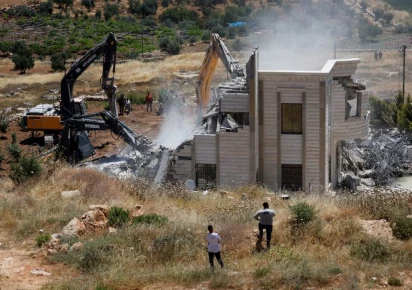
    RAMALLAH: Tensions across the occupied West Bank intensified on Monday as Israeli forces reportedly destroyed water pipelines, detained Palestinians and ordered families to leave their homes ahead of a planned demolition. While a new settlement plan near Jerusalem raised fresh concerns over the expansion of Israeli settlements. The latest developments have added to growing pressure on Palestinian communities already facing restrictions on movement, damage to agricultural land and disruptions to basic services. Palestinian human rights activist Aref Daraghmeh said Israeli forces destroyed water pipelines in the Atouf and Ras al-Ahmar areas of Tubas governorate. The areas, located in the northern Jordan Valley, have experienced repeated military operations in recent months. According to Daraghmeh, agricultural land has been cleared, water networks damaged and artesian wells filled in, causing significant losses for farmers who depend on the land and water supplies for their livelihoods. The destruction of water infrastructure has particular significance in the Jordan Valley, where Palestinian farming communities rely heavily on limited water resources. Brothers detained during raid In another operation in the northern Jordan Valley, Israeli forces detained two Palestinian brothers in the Ein al-Hilweh area, according to local sources cited by Anadolu. Meanwhile, Israeli troops raided the village of Tell, southwest of Nablus, and ordered residents to leave several homes ahead of the planned demolition of a house belonging to Palestinian Farouq Ramadan. Ramadan was killed on July 24 during an attack in the village, according to Palestinian sources. They said he had disarmed and killed one of the attackers before being shot dead. Three other members of his family were also killed and four Palestinians were injured during the incident, the sources said. Near Ramallah, agricultural land east of Jaljaliya village was also set on fire, Palestinian official news agency Wafa reported. Palestinian civil defence crews later brought the blaze under control. Village council head Osama Nazmi said an Israeli outpost had been established in the area about a year ago and that Palestinian homes belonging to residents from nearby Al-Mazraa Al-Sharqiya had subsequently been seized. New settlement plan raises alarm At the same time, Palestinian officials said Israel had advanced plans for a new settlement containing approximately 650 housing units south of Jerusalem. The Palestinian Jerusalem Governorate said Israel’s District Planning and Building Committee had deposited the plan for the proposed “Nofei Rachel” settlement. The project would cover approximately 27 dunams, or 6.7 acres, near Palestinian homes, according to the governorate. Palestinian authorities warned that the consequences would extend beyond the construction of the housing units, arguing that the development could affect Palestinian movement, urban growth and the ability of local communities to expand. They described the plan as part of a broader Israeli policy of expanding settlements and restricting Palestinian development. Israeli rights organisation Ir Amim separately said Israel had advanced three major settlement projects involving more than 3,400 housing units in East Jerusalem in recent weeks. The developments have renewed international concerns about settlement expansion. The United Nations and most countries regard Israeli settlements established in territory occupied since 1967 as illegal under international law. Critics say continued settlement construction threatens the possibility of establishing a viable Palestinian state alongside Israel. West Bank caught in wider conflict The latest events come as the Israeli-Palestinian conflict continues to reverberate across the region. According to figures cited by Palestinian authorities, violence in the West Bank has intensified alongside the wider war that began after the October 2023 Hamas attack on Israel. The situation has also drawn attention to the issue of Palestinian remains held by Israel. Report: Israel holds 1,700 Palestinian bodies Israel is holding the remains of around 1,700 Palestinians for possible use in future exchanges, Israeli newspaper Haaretz reported, citing two unnamed sources familiar with recent discussions within Israel’s security establishment. According to the report, Shin Bet chief David Zini supports retaining the bodies in case Israeli citizens are captured or disappear in the future. The Israeli military is also reportedly supportive of the position. Haaretz reported that most of the remains are believed to belong to Palestinians from Gaza who participated in the October 7, 2023 attack on Israel or subsequent fighting. However, the newspaper also reported that some of the bodies belong to Palestinians who were not involved in combat. The issue has raised legal questions inside Israel. Legal experts cited by Haaretz questioned whether authorities have the power to retain the remains of Palestinians who have not been proven to have taken part in fighting. The Palestinian National Campaign for the Retrieval of Martyrs’ Bodies and Disclosure of the Fate of the Missing said in October 2025 that Israel was holding around 1,500 bodies of Palestinians from Gaza at the Sde Teiman military facility in southern Israel. A crisis extending beyond borders The developments in the West Bank are unfolding against the backdrop of the devastating Gaza conflict. Palestinian health authorities say tens of thousands of Palestinians have been killed and injured since October 2023, while much of Gaza’s infrastructure has been destroyed or severely damaged. The reported destruction of water pipelines in the West Bank, the proposed settlement expansion and the continued disputes over Palestinian remains highlight how the conflict affects not only major political centres but also ordinary families, farmers and communities. For Palestinians living in areas such as Tubas, Nablus and the outskirts of Jerusalem, the immediate concerns are often deeply personal: access to water, the safety of their homes, the ability to farm their land and the uncertainty of what another military raid may bring. As settlement plans move forward and military operations continue, hopes for a reduction in tensions remain overshadowed by developments that are reshaping the landscape of the occupied West Bank.

  • | | |

    Dar targets $20bn Pakistan-US trade

    Deputy Prime Minister and Foreign Minister Ishaq Dar has expressed confidence that Pakistan and the United States can increase bilateral trade in goods to $20 billion within the next five years. Dar said Pakistan’s trade in goods with the US stood at $9.4 billion during the last fiscal year. He described the US as Pakistan’s largest single-country export market. Addressing a US Congressional Delegation and American business representatives, Dar said stronger trade and investment ties could create new opportunities for companies in both countries. He said closer economic cooperation could also generate employment, encourage innovation and support long-term economic growth. Dar highlighted several areas where Pakistan and the US could expand commercial cooperation. These include information technology, artificial intelligence, energy, manufacturing, agriculture and critical minerals. He said Pakistan is already an important buyer of American cotton and soybeans. The country is also becoming a growing market for US hydrocarbons. At the same time, Pakistan’s increasing demand for advanced machinery, technology and capital goods could create opportunities for American manufacturers, he added. Dar said the presence of more than 80 US companies in Pakistan demonstrated growing confidence in the country’s market and economic potential. He welcomed the interest shown by American companies in Pakistan’s technology, energy, critical minerals and defence sectors. The foreign minister also pointed to the US Exim Bank’s $1.25 billion financing for the Reko Diq project as an indication of increasing US confidence in Pakistan’s investment prospects. Dar encouraged American businesses to establish partnerships with Pakistani companies and explore long-term investment opportunities. He said Pakistan had improved its infrastructure over the past decade through modern highways, ports and logistics networks. These developments, he added, had strengthened the country’s position as a potential trade and investment gateway. The government is also working to make the business environment more investor-friendly. Dar said regulatory procedures had been simplified to reduce bureaucratic delays and make licensing and approvals easier. He said Pakistan wanted to deepen cooperation with the US across both goods and services. Technology, AI, energy, manufacturing, critical minerals and agriculture were among the sectors identified for greater collaboration. Dar also highlighted the broader improvement in Pakistan-US relations. He said frequent high-level contacts under Prime Minister Shehbaz Sharif and US President Donald Trump had helped strengthen bilateral engagement. He said his meetings with US Secretary of State Marco Rubio had also focused on strengthening relations and discussing regional developments. The foreign minister stressed that parliamentary engagement was equally important. He said regular interaction between lawmakers could improve mutual understanding and strengthen institutional ties. Dar said Pakistan’s engagement with the US Congress had increased significantly over the past year. The interaction has included lawmakers from both political parties and key congressional committees. The two countries also discussed regional security and stability. Dar said stronger Pakistan-US relations could contribute to peace and stability in the wider region. He also recalled Pakistan’s role in facilitating dialogue between the US and Iran. Dar said Islamabad remained committed to dialogue, diplomacy and peaceful solutions to regional disputes. The foreign minister separately received a US congressional delegation comprising Representatives Ryan Zinke and Michael James Baumgartner. During the meeting, both sides discussed ways to expand cooperation in trade, investment, IT, energy and other areas. The US lawmakers acknowledged the contribution of the Pakistani community to American society and economy. They described the diaspora as an important link between the two countries.

  • |

    13 migrants missing after boat sinks off Tunisia

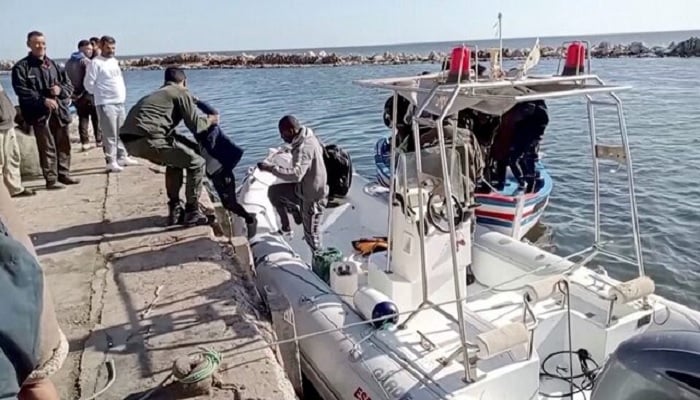
    TUNIS: At least 13 Tunisians are missing after a migrant boat sank off the country’s coast while attempting to reach Italy, according to a migrant rights official. Two people were rescued following the incident, but one of them was reported to be in critical condition. The head of the Tunisian Observatory for Human Rights, Mostafa Abdelkebir, said the boat had departed early Thursday. One of the survivors told rescuers that the passengers had spent hours stranded at sea after the vessel overturned. Rescue efforts were launched after the boat sank, but the whereabouts of the missing migrants remained unknown. The incident highlights the continuing dangers faced by migrants attempting to cross the Mediterranean in overcrowded or poorly equipped vessels. Tunisia has been a major departure point for migrants seeking to reach Europe, particularly Italy. However, the number of departures from the country has declined significantly over the past two years as authorities have strengthened maritime surveillance and border controls. The tighter measures have received financial and technical support from European countries, particularly Italy, as part of efforts to curb irregular migration across the Mediterranean. The European Union’s migration cooperation with Tunisia has also faced criticism from international rights organisations. Human Rights Watch, Amnesty International and other humanitarian groups recently accused the EU-Tunisia arrangement of contributing to serious abuses against migrants and asylum seekers. The organisations have urged the EU to suspend funding for migration and border-control operations involving Tunisian security forces. Tunisian authorities have defended their position, saying the country is facing intense pressure from the growing number of migrants attempting to use its territory as a route towards Europe. The central Mediterranean remains one of the most dangerous migration routes in the world. Migrants from African and Middle Eastern countries frequently attempt the journey in boats that can be overcrowded, poorly maintained or unsuitable for long sea crossings.

  • | | |

    MQM-P pushes for grand national dialogue on new pr…

    KARACHI: The Muttahida Qaumi Movement-Pakistan (MQM-P) has announced plans to approach political parties across the country to launch a “grand national dialogue” on the creation of new provinces and administrative units. Speaking at a press conference on Sunday, MQM-P Chairman Dr Khalid Maqbool Siddiqui said Pakistan needed a serious national discussion on restructuring its administrative system, arguing that the country’s growing population had increased the need for additional provinces. Siddiqui said MQM-P had been advocating the creation of more provinces for decades, maintaining that Pakistan’s existing provincial structure was largely shaped by linguistic considerations rather than purely administrative requirements. He stressed that the party’s demand was not limited to Sindh and that it would support calls for new provinces wherever there was public and political backing. The MQM-P leader urged political parties to sit together and discuss their proposals and reservations instead of treating the issue as a source of political confrontation. He said his party was prepared to take the lead in initiating such a dialogue. Siddiqui also linked the debate over new provinces with the need to strengthen local governments. Referring to Article 140-A of the Constitution, he said provinces were constitutionally required to devolve political, administrative and financial powers to elected local representatives. He criticised the failure to fully implement the provision and recalled that MQM-P had previously approached the Supreme Court over the issue. He argued that creating additional provinces was not unconstitutional and said Parliament could debate the appropriate mechanism for establishing them. He also questioned whether existing provinces should have the sole authority to decide on their own division. MQM-P leader and Health Minister Mustafa Kamal said the party’s proposal was aimed at administrative restructuring rather than dividing communities or territories. He argued that people should have greater control over local leadership and governance, particularly when their cities face serious problems in living standards and public services. The MQM-P campaign follows recent remarks by Interior Minister Syed Mohsin Naqvi, who called for political parties to address major national issues, including the creation of new provinces. His proposal has since generated debate among government figures, lawyers and political circles, giving fresh momentum to the long-running discussion over Pakistan’s provincial structure. The MQM-P leadership said it would also engage legal experts and explore further legal avenues regarding the implementation of constitutional provisions related to local governance.

  • | |

    Ahsan Iqbal highlights importance of Artificial In…

    Federal Minister for Planning, Development, and Special Initiatives Ahsan Iqbal has stated that artificial intelligence (AI) is set to bring extraordinary changes across the world. He emphasized that Pakistan must prepare its youth for the future by providing them with modern education, digital skills, and technological resources, including laptops, to compete in the rapidly changing global environment. Addressing a ceremony at Islamia Degree College Narowal, Ahsan Iqbal said that equipping young people with digital skills has become an urgent necessity in today’s era. He stressed that technology is transforming economies, industries, and workplaces around the world, and nations that fail to adapt to these changes may fall behind in global competition. The federal minister highlighted that science and technology will play a decisive role in shaping the future economy. According to him, investment in scientific research, innovation, and technological development is essential for securing a prosperous future for the country. He stated that countries that focus on research and technological advancement are better positioned to achieve economic growth and development. Ahsan Iqbal said that the modern world is moving rapidly towards digital transformation, where artificial intelligence, automation, and emerging technologies are changing the way people work and communicate. He emphasized that Pakistan’s youth represent a valuable resource, and providing them with the right skills and opportunities can help them contribute significantly to national progress. He further stated that the government is committed to supporting young people by improving access to quality education, digital training programs, and technological facilities. He mentioned that initiatives such as providing laptops and promoting skill development programs are aimed at helping students gain knowledge and abilities required in the modern job market. The minister explained that digital skills are no longer limited to the technology sector but have become important in almost every field, including business, education, communication, healthcare, and industry. He encouraged students to learn new technologies and develop skills that can increase their employment opportunities and enable them to participate in the digital economy. Ahsan Iqbal also highlighted the importance of scientific research and innovation in achieving sustainable development. He said that investment in universities, research institutions, and technology-based projects can help Pakistan create solutions for future challenges and strengthen its position internationally. He stated that nations that successfully integrate technology into their education systems and economic structures will be the ones that succeed in the global arena. According to him, technological awareness and digital readiness are essential for young generations to take advantage of emerging opportunities. The minister urged students to focus on acquiring knowledge, improving their technical abilities, and using technology positively for personal and national development. He said that the youth must be prepared to meet future challenges and benefit from opportunities created by advancements in science and technology. Concluding his remarks, Ahsan Iqbal reiterated that artificial intelligence and digital transformation will shape the future of the world. He emphasized that Pakistan’s progress depends on empowering its young population with modern education, research opportunities, and digital skills. By investing in technology and human resources, the country can build a stronger economy and compete effectively at the international level.

Leave a Reply

Your email address will not be published. Required fields are marked *