pakistani pensioners can
| |

How pakistani pensioners can get a free proof of l…

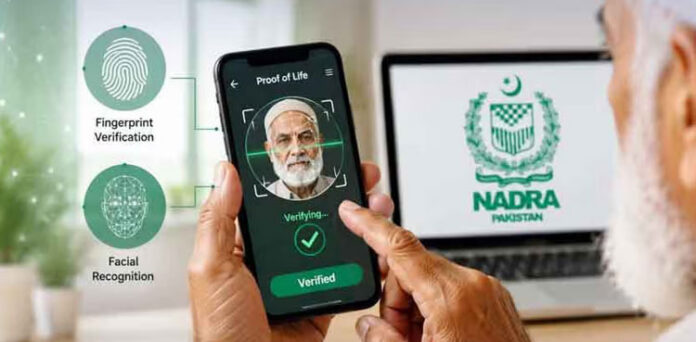
Pakistani pensioners can now obtain their Proof of Life certificate free of charge without having to visit a bank or pension office, thanks to a new digital and nationwide service introduced by the National Database and Registration Authority (NADRA).

The facility is available through the Pak ID mobile app, NADRA Registration Centres, Union Councils, e-Sahulat franchises and NADRA’s mobile services across Pakistan.

The initiative has been introduced on the special directions of Prime Minister Shehbaz Sharif in collaboration with the Ministry of Interior and Narcotics Control Ministry of Defence Controller General of Accounts (CGA) and Military Accountant General (MAG).

The service is particularly aimed at helping elderly bedridden and differently abled pensioners who may find it difficult to travel repeatedly to banks or pension offices to fulfil the Proof of Life requirement.

How to Get Proof of Life from Home

The easiest option for eligible pensioners is the Pak ID mobile app. Pensioners can complete the required identity verification process through the app and obtain their Proof of Life certificate from home.

Pensioners who cannot use the Pak ID app themselves can also receive assistance from a family member. A family member may use their own Pak ID account to complete the prescribed identity verification process for the pensioner.

For those who require in-person assistance, the service is available free of charge at more than 5,000 e-Sahulat franchises across the country. Pensioners can also visit more than 988 NADRA Registration Centres and around 500 Union Councils, where priority services are being provided without requiring them to wait in the regular queue.

Pensioners who cannot easily travel to a service point can use NADRA’s mobile registration vans, biker services and main pack services.

National Pensioners Register

The Proof of Life facility is part of a wider reform initiative under which NADRA has established a National Pensioners Register. In its first phase pensioners administered by CGA and MAG have been included in the database.

The digital register provides pension authorities with a reliable source for verifying a pensioner’s identity and life status. It can also reduce the need for families to repeatedly report the same information to different government departments.

If a pensioner’s death is reported through NADRA’s death notification system or recorded in the Civil Registration Management System, the relevant pension controller can receive a digital notification.

NADRA has also introduced a verification service for authorized banks, allowing them to directly check a pensioner’s Proof of Life status through the National Pensioners Register.

The new system is expected to make pension verification easier while reducing paperwork, repeated physical visits and inconvenience for elderly pensioners.

Similar Posts

  • |

    Shoaib Malik spends quality time with son Izhaan in Dubai

    Former Pakistan cricketer Shoaib Malik is currently in Dubai, where he is enjoying some quality time with his son, Izhaan Mirza Malik. The father-son duo recently shared a playful moment that has captured the attention of social media users, with fans praising their close bond and the fun-filled relationship they appear to share. Shoaib Malik represented Pakistan for more than two decades after making his international debut in 1999. During his lengthy international career, the versatile all-rounder became an important part of the national team and featured in several memorable matches and major tournaments. He was also part of Pakistan’s victorious squad at the 2009 ICC World Twenty20 and played a role in the team’s success in the ICC Champions Trophy. Away from cricket, Malik’s personal life has also remained in the public spotlight. He married Indian tennis star Sania Mirza in 2010 in a high-profile cross-border wedding. The couple welcomed their son, Izhaan, in 2018. After several years together, Malik and Mirza eventually went their separate ways. Malik later married Pakistani actress Sana Javed. Despite the changes in his personal life, Malik continues to make time for his son. His recent meeting with Izhaan in Dubai has offered fans another glimpse into their relationship. During their previous meetup, the father and son decided to enjoy a short football match. Izhaan unfortunately lost the game, but the young boy was not ready to give up. When they met again, he came prepared for a rematch and confidently challenged his father. Izhaan admitted that he had experienced a bad day during their previous football game but insisted that things would be different this time. He set himself an ambitious target, saying he would score four goals in 10 attempts. He also came up with an exciting reward for himself if he managed to succeed. According to the challenge, if Izhaan won, his father would take him to the cinema to watch the upcoming Spider-Man movie. The playful competition between the two has given fans an adorable look at their time together. The interaction quickly attracted attention online, with social media users enjoying the lighthearted exchange between Malik and his son. Many fans praised the former cricketer for spending time with Izhaan and appreciated the strong bond between the two. Several users also pointed out how much Izhaan resembles his famous father, with some saying the young boy appears to have inherited Malik’s features. Others jokingly encouraged Malik to let his son win the football challenge so that Izhaan could enjoy his promised cinema outing. The father-son moment has resonated with fans because of its simple and playful nature. Rather than focusing on Malik’s cricketing achievements or his high-profile personal life, the interaction showed him enjoying an ordinary and meaningful moment with his son. As Malik continues to spend time with Izhaan in Dubai, their latest football challenge has become another sweet reminder of the special bond between a father and his child.

  • | |

    US lawmakers discuss stronger Pakistan-US cooperat…

    ISLAMABAD: Deputy Prime Minister and Foreign Minister Ishaq Dar met a US Congressional delegation in Islamabad on Tuesday. The two sides discussed ways to strengthen relations between Pakistan and the United States. The delegation included US Representatives Ryan Zinke and Michael Baumgartner. Dar welcomed the lawmakers and said Pakistan-US relations were gaining positive momentum. The meeting focused on several areas of mutual interest. These included trade, investment, information technology and energy. Both sides discussed opportunities to expand cooperation in these sectors. They also explored ways to increase economic and commercial engagement between the two countries. Dar stressed the importance of regular parliamentary exchanges. He said continued contact between lawmakers could help build mutual trust and improve understanding between Pakistan and the US. The foreign minister also highlighted the importance of stronger institutional links. He said regular engagement could help both countries develop closer and more productive relations. The visiting US lawmakers praised the role of the Pakistani community in the United States. They acknowledged the diaspora’s contributions to the US economy and society. The Pakistani community was also described as an important bridge between the two countries. Its role can help promote stronger people-to-people and economic ties. Regional and international issues were also discussed during the meeting. The two sides exchanged views on developments affecting regional peace and security. The US delegation appreciated Pakistan’s efforts to promote regional peace and stability. Pakistani officials said Islamabad remained committed to dialogue and peaceful solutions to regional challenges. The meeting comes as Pakistan seeks to expand its economic engagement with the United States. Islamabad has been encouraging greater investment and cooperation in emerging sectors. Trade and investment remain key areas of focus in the evolving relationship. Pakistan is particularly interested in attracting US investment in technology, energy and other high-growth sectors.

  • |

    Trump backs Infantino as FIFA power struggle intensifies

    WASHINGTON: US President Donald Trump has thrown his support behind embattled FIFA president Gianni Infantino, warning that removing the football chief would be a “terrible mistake” as opposition to Infantino grows within several major football confederations. Trump’s intervention came after UEFA, CONCACAF and the Asian Football Confederation (AFC) jointly criticised Infantino in an unusually strong open letter, accusing him of damaging trust and placing his authority above the wider football community. “If, for any reason, they even considered replacing President Gianni Infantino,” Trump said on Truth Social, “FIFA would be making a terrible mistake.” The US president described Infantino as “fantastic” and praised his leadership of the expanded 2026 World Cup, which was hosted by the United States, Canada and Mexico. Trump also argued that the tournament had been the most successful World Cup ever and warned that FIFA could struggle to maintain the same level of success and profitability without Infantino. The public backing is significant because Infantino is facing growing resistance over a controversial proposal to bring private investment into FIFA competitions, including the World Cup. The plan was eventually withdrawn after fierce opposition from European football authorities. UEFA had threatened to boycott future World Cups if the investment proposal went ahead, describing the arrangement as an opaque and questionable deal. The pressure ultimately played a major role in Infantino abandoning the plan. The FIFA president received renewed support from senior officials during an emergency meeting in Morocco last week. However, UEFA, CONCACAF and AFC dismissed that backing, arguing that the meeting did not address the concerns raised by the confederations. The three bodies accused Infantino of failing to uphold the principles of accountability and collective leadership. They stressed that football’s governing structure should not revolve around one individual. The dispute could have major consequences ahead of the FIFA presidential election scheduled for March 2027. Infantino, who has led FIFA for a decade, is seeking a fourth and final term. Candidates must declare their intentions by November 18. CONCACAF president Victor Montagliani is regarded as a potential challenger, although Infantino continues to enjoy support from several influential football bodies. The Confederation of African Football has backed him, while South American governing body CONMEBOL remains broadly supportive. Several individual national associations have also expressed support. However, FIFA’s voting system means individual member associations—not confederations—will ultimately decide the election. Infantino’s position had appeared secure after the successful 48-team World Cup, but the private investment controversy has dramatically changed the political landscape. The latest confrontation has therefore turned the road to the 2027 FIFA election into an increasingly intense power struggle, with Trump now openly backing Infantino while several major football authorities demand greater accountability and collective decision-making.

  • |

    Musafir Cafe season 2 officially announced by Netflix

    Netflix has officially renewed Musafir Cafe for a second season, promising to continue the emotional journey of love, relationships and unresolved feelings that made the first installment popular among viewers. The streaming platform confirmed that Vikrant Massey, Vedika Pinto and Mahima Makwana will reprise their lead roles, returning as Chander, Sudha and Preeti for the next chapter of the romantic drama. The announcement was made through a special promotional video, offering fans their first confirmation that the story will move forward. While the teaser did not reveal any major plot details, it hinted that the upcoming season will pick up where the previous one ended, exploring the next stage of the characters’ personal and emotional lives. The first season of Musafir Cafe focused on the complexities of modern relationships, highlighting the emotional struggles, difficult choices and evolving connections between its three central characters. Its ending sparked widespread discussions among viewers, with many debating the future of Chander, Sudha and Preeti and wondering how their unfinished stories would unfold. Speaking about the show’s renewal, Tanya Bami, Series Head at Netflix India, said that Musafir Cafe had resonated deeply with audiences across the country. She noted that viewers connected strongly with the characters, memorable dialogues and music, while conversations surrounding the ending generated significant buzz on social media. According to her, the overwhelming response encouraged the platform to continue the story with a second season. Creator and writer Sharanya Rajgopal also expressed gratitude for the appreciation the series received. She said the love shown by audiences had been overwhelming and that, as a storyteller, there could be no greater reward than seeing fictional characters become meaningful to viewers. She added that the audience’s support inspired the creative team to continue Chander, Sudha and Preeti’s journey in a new chapter. Although Netflix has kept the storyline under wraps, expectations are high that Season 2 will further explore the emotional consequences of the characters’ earlier decisions. Fans are anticipating new challenges, evolving relationships and deeper emotional conflicts as the story progresses. The returning cast includes Vikrant Massey, Vedika Pinto and Mahima Makwana in the lead roles. They will once again be joined by a talented supporting ensemble featuring Adil Hussain, Rajeev Siddhartha, Anubha Fatehpuria, Loveleen Mishra and Sadia Siddiqui, all of whom played significant roles in the first season. Musafir Cafe was created and written by Sharanya Rajgopal and directed by Ruchir Arun. The series is based on characters from a novel by Divya Prakash Dubey and is produced by Terribly Tiny Tales (TTT) in collaboration with Homemade Stories. An official release date for the second season has not yet been announced. However, with the original cast returning and the creative team back on board, viewers can expect another heartfelt chapter exploring love, longing and the emotional complexities of human relationships.

  • |

    Pakistan refineries ready to sign long-delayed upgrade agreements 

    Pakistan’s oil refineries have agreed to move ahead with long-delayed agreements for upgrading their ageing plants, even as they continue to raise objections over a new financial penalty linked to the petroleum policy. Under the revised arrangement, refineries will be required to surrender 2.5 percent of the deemed duty retained on diesel for the period of delay. Industry representatives have termed the condition unfair, arguing that the delays were largely beyond their control and should not result in a financial burden on the refineries. Despite the disagreement over the penalty, refinery companies have indicated that they do not intend to hold up the signing of the agreements and are prepared to proceed with the modernization programme. The government’s Brownfield Refinery Policy, originally approved in August 2023, was introduced to encourage investment in the modernization and expansion of Pakistan’s existing refining capacity. The policy has subsequently been amended twice in an effort to address implementation issues and facilitate investment in the sector. Petroleum Minister Ali Pervaiz Malik has indicated that the long-pending agreements will be finalized shortly, while officials in the Petroleum Division are expecting the documents to be signed by the end of August. Agreements to Be Signed With ISGS A key change under the revised mechanism is that the upgrade agreements will now be executed with Interstate Gas Systems (ISGS), which operates under the Petroleum Division. Previously, the agreements were expected to be concluded through the Oil and Gas Regulatory Authority (Ogra). The change in the implementing entity is part of the government’s efforts to move the refinery-upgrade programme forward after delays in finalizing the contractual framework. Industry representatives, however, have maintained that refinery companies had already taken substantial steps to comply with the earlier arrangements and should not be penalized for delays that occurred afterward. Refineries Object to 2.5% Penalty Adil Khattak, Chief Executive Officer of Attock Refinery Limited and Chairperson of the Energy Committee of the Overseas Investors Chamber of Commerce and Industry, said Attock Refinery and National Refinery had completed several important formalities ahead of the previous deadline of October 22, 2024. According to Khattak, the companies had initialed agreements with Ogra, secured approval from their respective boards and arranged Rs1 billion bank guarantees each as part of the requirements. He said the companies were nevertheless being asked under the revised arrangement to surrender 2.5 percent of the deemed duty retained on diesel for the period between the previous deadline and the signing of the new agreements. The financial implications could be substantial. Khattak said Attock Refinery alone could face a penalty of around Rs7.5 million for every day of delay, increasing the industry’s concerns over the cost of the prolonged implementation process. Refineries argue that imposing the financial charge is inappropriate because they had already completed the required formalities within the earlier timeframe and were not responsible for subsequent delays in finalizing the agreements. Draft Agreements Circulated The Petroleum Division has now circulated draft upgrade agreements among the refineries, marking another step towards implementation of the long-delayed modernization programme. Officials are expected to hold further consultations with the Ministry of Finance, Controller of Accounts and ISGS before the agreements are finalized. Although refinery companies have reservations about the penalty clause, industry representatives have indicated that the disagreement will not prevent them from signing the agreements. The refineries are instead seeking a resolution of the financial issue separately while allowing the broader modernization programme to proceed. Upgrade Seen as Critical for Energy Security The modernization of Pakistan’s refining sector has gained greater importance as the country remains heavily dependent on imported petroleum products to meet domestic demand. Khattak estimated that delays in upgrading local refineries are costing Pakistan approximately $1.5 billion annually through additional fuel imports and the resulting foreign exchange outflows. Industry officials argue that upgrading domestic plants would allow refineries to produce a greater proportion of higher-value petroleum products while reducing dependence on imports. The issue has also acquired greater significance amid repeated disruptions and uncertainty in international energy markets. Greater domestic refining capacity and improved processing technology could provide Pakistan with an additional buffer against external supply shocks and volatile global fuel prices. Attock Refinery Moves Toward Financing Attock Refinery has already made considerable progress on the technical side of its proposed modernization project. The company has largely completed its front-end engineering and design work and has begun discussions with banks to arrange financing for the planned investment. The next stage will depend on the finalization of the government agreement and the completion of financing arrangements. For Pakistan, the successful implementation of the brownfield refinery upgrade programme could help improve domestic fuel production, reduce import dependence and ease pressure on foreign exchange reserves. However, industry stakeholders say timely decisions on the remaining contractual and financial issues will be essential if the government wants to avoid further delays in a programme that was originally launched several years ago.

  • |

    Pakistan’s health system requires lasting reform

    By Raja Ashraf A country’s healthcare system is judged not only by the number of hospitals it has but also by whether people can access timely, affordable, and quality medical care. In Pakistan, public confidence in the health sector has weakened due to persistent challenges, including shortages of healthcare professionals, rising medicine prices, under-resourced hospitals, and the continued presence of unqualified medical practitioners. These issues require comprehensive and long-term reforms rather than short-term policy responses Healthcare is a fundamental right closely linked to Article 9 of Pakistan’s Constitution, which guarantees the right to life. The Supreme Court has interpreted this provision to include access to essential healthcare services. Pakistan is also a signatory to the International Covenant on Economic, Social and Cultural Rights, which commits the country to progressively ensuring the highest attainable standard of physical and mental health for its citizens. One of the most pressing concerns is the shortage of qualified doctors in rural and underserved regions. Although medical institutions produce thousands of graduates every year, many public health facilities outside major cities continue to face vacant positions. As a result, many communities struggle to obtain even basic healthcare services and are often forced to travel long distances for treatment. The migration of doctors, nurses, and other healthcare professionals to foreign countries has further weakened the healthcare system. Better salaries, improved working conditions, career opportunities, and greater security abroad encourage many skilled professionals to leave Pakistan, creating significant gaps in public hospitals and specialized medical services. The pharmaceutical sector also faces increasing challenges. Some multinational pharmaceutical companies have reduced their presence in Pakistan, raising concerns about future medicine availability and investor confidence. While local pharmaceutical manufacturers continue to meet much of the country’s demand, policymakers must create a stable regulatory and economic environment that supports both domestic production and responsible international investment. The rising cost of medicines has become another major burden for families already affected by inflation. Patients suffering from chronic illnesses such as diabetes, hypertension, and cardiovascular diseases often require lifelong treatment, making affordability a growing concern. At the same time, the continued circulation of counterfeit and substandard medicines highlights weaknesses in regulation and quality control, despite improvements in oversight by regulatory authorities. Public hospitals also frequently experience shortages of essential medicines and emergency supplies, forcing patients to purchase drugs from private pharmacies. This increases treatment costs and can delay critical medical care during emergencies. Ensuring uninterrupted medicine supplies in government hospitals should remain a national priority. Another persistent issue is the presence of unqualified medical practitioners, commonly known as quacks, particularly in areas where licensed healthcare providers are scarce. Tackling this problem requires stronger enforcement of existing laws alongside improved access to qualified medical professionals. Pakistan’s healthcare challenges extend beyond these issues to include inadequate public health funding, ageing hospital infrastructure, weak primary healthcare services, limited mental health facilities, and uneven implementation of health policies across provinces. Addressing these problems requires a comprehensive national strategy focused on increasing healthcare investment, improving working conditions for medical professionals, strengthening medicine regulation, modernizing pharmaceutical oversight, expanding preventive care, and reinforcing primary healthcare services. Investing in healthcare is not merely a public expense—it is an investment in human capital, economic growth, and national development. Pakistan possesses skilled healthcare professionals, reputable medical institutions, and a capable pharmaceutical industry. With sound policymaking, stronger governance, and sustained investment, these strengths can be transformed into a healthcare system that guarantees every citizen safe, affordable, and quality healthcare. The need for reform is no longer in question; the real challenge is ensuring that action is not delayed any further.

Leave a Reply

Your email address will not be published. Required fields are marked *