pic penalizes rawalpindi

PIC penalizes Rawalpindi Cantonment Board Chief Engineer

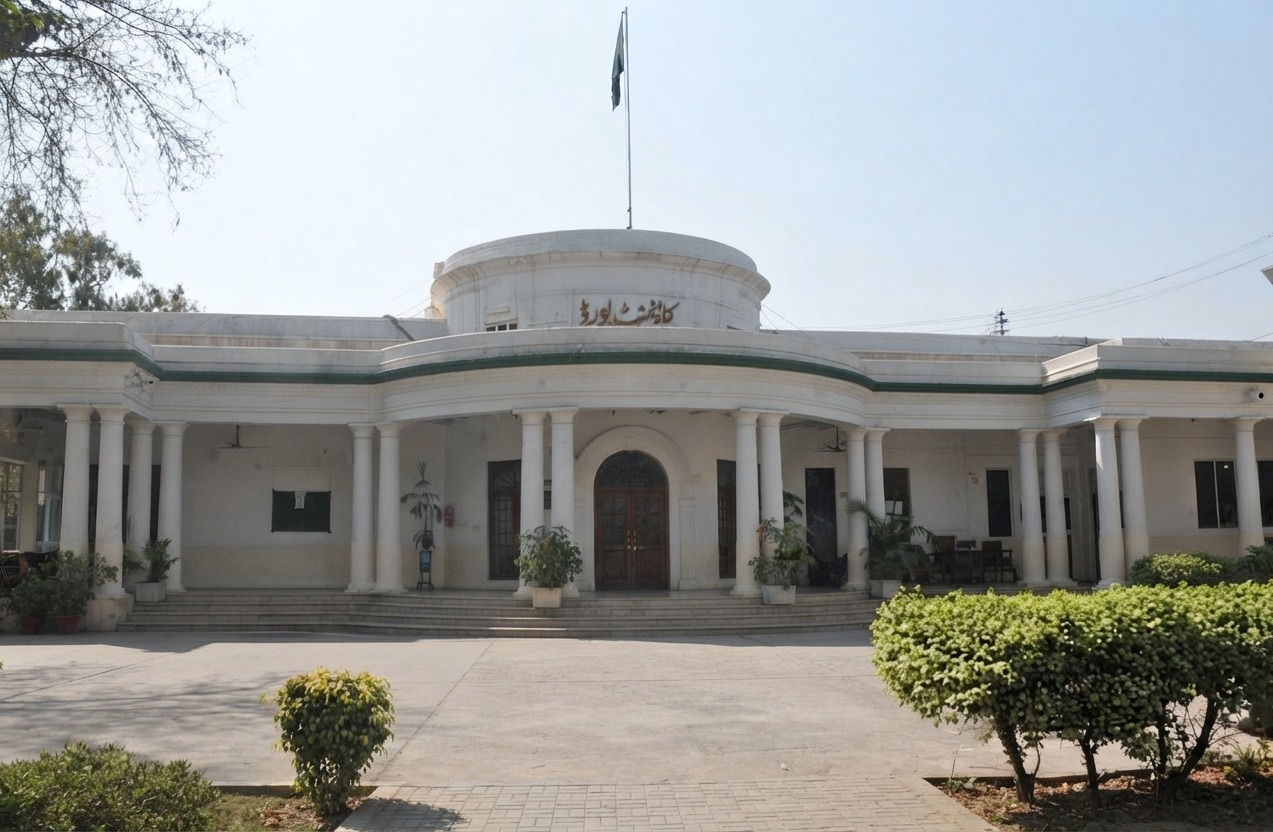
ISLAMABAD: The Pakistan Information Commission (PIC) has imposed a penalty equivalent to 30 days’ salary on Atiq Ur Rahman, Chief Engineer, Rawalpindi Cantonment Board, under Section 20(1)(f) of the Right of Access to Information Act, 2017.

The Commission issued the penalty after noting the continued failure to submit a written response to the rejoinder and show cause notice and the non-appearance of the Chief Engineer before the Commission.

Order of the Commission states that on July 7, 2026, no one appeared before the Commission to file a reply to the rejoinder. Consequently, a show cause notice was issued to Atiq Ur Rahman, directing him to submit a written reply to the notice as well as a response to the rejoinder.

On July 28, 2026, Atiq Ur Rahman appeared in person before the Commission. On his request, he was granted an opportunity to file both the reply to the rejoinder and the reply to the show cause notice.

However, on the subsequent date of hearing, the Commission noted that neither a written reply had been received nor had anyone appeared before it on behalf of the concerned official.

The Commission further noted that its office attempted to contact Atiq Ur Rahman on his official telephone number, but the call reportedly remained unanswered.

In its order, the Commission observed that the failure to submit a response to the show cause notice and the non-appearance before the Commission reflected an irresponsible attitude. It further held that the continued failure to respond demonstrated that there was no defence presented by the Chief Engineer and that sufficient grounds existed to proceed against him under Section 20(1)(f) of the Right of Access to Information Act, 2017.

The Commission concluded that the delay in submitting a reply to the rejoinder had been deliberate and had affected the timely disposal of the appeal. It therefore imposed a penalty equivalent to 30 days’ salary on Atiq Ur Rahman.

The Commission has directed the Director General, Military Land and Cantonment Department; the Accountant General, Pakistan Military Accounts Department; and the Chief Executive Officer (CEO), Rawalpindi Cantonment Board, to deduct the equivalent of 30 days’ salary from Atiq Ur Rahman’s salary. They have also been directed to submit a compliance report before the next date of hearing.

In addition, the CEO, Rawalpindi Cantonment Board, has been directed to submit a written reply to the rejoinder. The Commission warned that, in the absence of such a reply, the appeal would be decided in accordance with the law.
The matter has been adjourned until September 2, 2026, when the case is scheduled to be taken up again.
Similar Posts

  • | |

    CM Maryam Nawaz directs crackdown on corrupt SHOs

      Lahore: Punjab Chief Minister Maryam Nawaz Sharif has ordered the provincial police authorities to take strict action against officers with records of corruption and misconduct, directing that such officials should not be appointed as Station House Officers (SHOs).   According to sources familiar with the development and officials in the Chief Minister’s Office, Maryam Nawaz has instructed Inspector General of Police Punjab to thoroughly screen officers holding important field positions and remove those found to have questionable records. The IG Punjab has been given one week to complete the process and submit a progress report to the Chief Minister’s Office. The Chief Minister stressed that officers known for corruption should not be given charge of police stations anywhere in Punjab. She directed the police leadership to ensure that appointments to the SHO position are based on integrity, professional conduct and performance rather than influence or other considerations.   Under the new instructions, police officers facing credible allegations or having a record of corruption will not be considered for appointment as SHOs. The police hierarchy has also been directed to identify and remove what the government described as “bad elements” from key positions. Maryam Nawaz further ordered the police department to adopt a zero-tolerance approach toward crimes against women and children. She called for immediate action against suspects involved in such offences and emphasized that cases involving vulnerable groups should be handled promptly and professionally. The Chief Minister’s latest instructions are being viewed as another step toward her administration’s efforts to improve policing and strengthen public confidence in law-enforcement institutions. She has previously emphasized the need for a people-friendly police force that provides services to citizens without discrimination, corruption or unnecessary interference. The Punjab government has also introduced and promoted measures aimed at improving police accountability and public service delivery, including digital mechanisms for handling complaints, performance-oriented postings and action against officers involved in unlawful activities. The latest directive places particular emphasis on the role of SHOs, who serve as the primary point of contact between citizens and the police at the local level. Their conduct and performance can have a direct impact on how people perceive the overall law-and-order system. A senior official in the Home Department said the government’s objective was to restore public confidence by addressing problems within the police structure, particularly at the station level. The instructions have reportedly been conveyed to the IG Punjab and Regional Police Officers (RPOs) for immediate implementation. Police authorities are expected to review the records of officers posted to important positions and take action against those who fail to meet the required standards. Officials are also expected to submit reports detailing the progress made during the seven-day period. The government is closely monitoring the process to ensure that the directives are implemented rather than remaining limited to administrative instructions. The move comes as the Punjab government continues efforts to improve law and order, strengthen police accountability and enhance the delivery of public services across the province. The crackdown on corrupt officers is expected to further intensify scrutiny of police appointments and postings in the coming days.

  • | |

    ‘Patience has run out’: JI warns government

    Jamaat-e-Islami (JI) Emir Hafiz Naeemur Rehman has warned the government of expanding protests across the country if the petroleum levy is not withdrawn. Speaking at a press conference at the party’s ongoing protest camp outside the Punjab chief minister’s residence in Lahore on Tuesday, the JI chief said the demonstrations had entered their 10th day. He said public patience had reached its limit and demanded immediate relief from rising fuel prices and taxes. Rehman warned that the party could announce a nationwide strike, block roads and march towards Islamabad if the government failed to meet its demands. The JI leader said the date for a nationwide shutdown would be announced on 13th Rabi-ul-Awwal. He added that demonstrations would continue during Eid Milad-un-Nabi ﷺ. According to Rehman, the JI had mobilised supporters in all four provinces. He said the protest movement would be expanded if the government continued to ignore public concerns. He criticised the petroleum levy and other fuel-related taxes, saying ordinary citizens were struggling to cope with increasing living costs. He particularly highlighted the difficulties faced by commuters, students, workers and motorcyclists. Rehman also demanded that the price of roti be reduced to Rs10. The JI emir accused the government of placing the burden of economic difficulties on the public. He argued that fuel price increases had added to the financial pressure on households while the government had failed to provide sufficient relief. He also raised concerns about alleged irregularities in coal imported for independent power producers (IPPs). Rehman called for a forensic audit and an independent investigation into coal-related transactions. He claimed that consumers were being made to pay for expensive fuel, electricity that was not produced and costly arrangements involving IPPs. He said the public should not be forced to bear the financial consequences of alleged mismanagement. Rehman recalled the JI’s earlier campaign against IPPs and claimed that public pressure had helped reduce electricity prices by around Rs10 per unit. The JI chief said his party was prepared to intensify its campaign if the government failed to respond. He described a nationwide shutdown, road blockades and a march on Islamabad as possible next steps. “Do not test our resolve,” he warned. Rehman also criticised the political system and questioned the performance of the ruling coalition. He alleged that governments without genuine public support remained unable to address the problems faced by ordinary citizens. He criticised the PPP’s governance in Sindh and raised concerns about what he called political families dominating Punjab. He also questioned the continued delay in holding local government elections. Regarding the Punjab government, the JI leader said its major announcements could not hide failures in dealing with basic public problems. Rehman maintained that the JI’s campaign was aimed at securing relief for the people rather than serving any personal or political interest. He invited the government’s negotiating team to visit the protest camp and clearly explain when the petroleum levy would be abolished. He said the JI would not travel to Islamabad simply to attend another briefing without concrete assurances. The JI emir also commented on a recent incident involving a security official at Sarhad University of Science and Information Technology in Islamabad. He demanded a transparent, merit-based investigation and said legal action should be taken against anyone found responsible, regardless of their position.

  • | |

    Nawaz Sharif heading LHAR to give old Lahore a new…

    Lahore’s old city is going through a major change under a heritage revival plan, and the project has now been placed directly under the leadership of Pakistan Muslim League-(N) leader Muhammad Nawaz Sharif. According to a recent notification issued by the Punjab government’s Local Government and Community Development Department, Nawaz Sharif has been made chairman of the newly formed board of the Lahore Heritage Area Revival project, also known as (LHAR) and patron-in-chief of the Punjab Walled Cities and Heritage Areas Authority (PWCHAA) Earlier, Nawaz Sharif only held the position of chief patron of the project. This meant he could give advice but had no formal powers. Under the new rules, the project’s legal structure has been changed, and a proper board has been formed. This board is now headed directly by the three-time former prime minister. The notification was published in the Punjab Gazette on July 23. It was issued under Section 8-A of the Punjab Walled Cities and Heritage Areas Authority Act 2012. The notification was approved by the governor of Punjab. With this change, the Lahore Heritage Area Revival Board has been formally established. The board now has full executive and administrative powers. Officials say this step was taken to remove bureaucratic delays in restoring the city’s historic fabric. The heritage revival areas cover Mughal, Sikh and colonial-era sites. Details of the ongoing work will be shared soon. Several government departments are working together on the project. These include the Traffic Engineering and Planning Agency, known as TEPA, C&W and PWCHAA. TEPA is handling infrastructure work, such as building basements and parking. The PWCHAA is handling the restoration of old buildings. A major part of the plan is to turn old city streets into pedestrian zones. This includes the route from New Anarkali to Paan Gali in Lohari. It also includes Bora Bazaar, which has Bakshi Market inside it. Another walking route will run from Kacheri Chowk to Anarkali and then onward to Neela Gumbad. To name a few. Many buildings along these routes are old. All of them are being restored as part of the project. One of the biggest parts of the plan is a new public space called Neela Gumbad Square, where a two-floor underground parking garage is being built; it will become a place for families to walk and gather. Fountains and seating areas will be added. The Parks and Horticulture Authority will help plant trees and grass in the area. Other nearby heritage sites are also being restored. These include Ewing Hall and the first Bank of India building. The mosque near Neela Gumbad is also being renovated, while some roads nearby will be closed for traffic. LHAR spokesperson also responded to earlier criticism in media reports, where past reports only mentioned TEPA, even though other departments were also doing important work on the ground. The project now has a monitoring cell in place to track progress and check timely completion. The spokesperson further said that shopkeepers near Neela Gumbad were paid compensation a year before their shops were relocated. The officials had collected data on each shop’s daily business and income before deciding how much compensation to give; this was done so shopkeepers would not lose their livelihood during construction. With Nawaz Sharif now in the driving seat and his past records of completing mega projects on time, officials believe the project will move forward faster. The government says the goal is to restore Lahore’s historic buildings and streets while creating new public spaces for residents and visitors.

  • | |

    Acid traces found as Mir Raza probe widens

    The Sindh government has decided to establish a judicial commission to investigate the death of 25-year-old businessman Mir Raza Ali in Karachi. Sindh Home Minister Zia-ul-Hassan Lanjar said the decision was taken during a meeting with Chief Minister Murad Ali Shah. He said the investigation would now be conducted with the involvement of judges from the Sindh High Court. Speaking about the case, Lanjar said the government wanted to ensure justice for Mir Raza’s family. He expressed sympathy with the family and said authorities were committed to uncovering the facts surrounding the young businessman’s death. The minister also confirmed that the police investigation team had already been changed. Deputy Inspector General Amir Farooqui is heading the new team. According to Lanjar, the family has also been given the option of suggesting police officers who could be included in the investigation team. He said authorities had so far found no evidence indicating the involvement of any high-profile personality. Lanjar said the formation of a judicial commission had become necessary because of questions surrounding the investigation and conflicting findings related to the case. The decision comes after a second post-mortem examination reportedly raised serious questions about the circumstances of Mir Raza’s death. Preliminary findings indicated that he had sustained a gunshot wound from behind, challenging earlier assumptions about the case. The minister also addressed concerns regarding the initial post-mortem examination. He said doctors responsible for the examination should have immediately informed their superiors if they believed there were shortcomings in the report. Meanwhile, a new development has emerged in the investigation. According to forensic sources, there was an alleged attempt to damage or burn Mir Raza’s body with acid. Sources said traces of acid were reportedly found on the shirt worn by the 25-year-old businessman. Investigators are expected to examine the finding as part of the wider forensic inquiry. Mir Raza’s body was discovered in bushes in Karachi’s Gulistan-i-Jauhar area after he went missing. His family has maintained that he was kidnapped, tortured and murdered. The latest developments have intensified questions surrounding the circumstances of his death. The proposed judicial commission is expected to examine the available forensic, medical and investigative evidence and determine what happened to the young businessman.

  • |

    Coalitional fallout as violence and electoral fraud claims mar Azad Kashmir elections

    A bitter clash between federal coalition partners has erupted over the Azad Jammu and Kashmir Legislative Assembly elections, following the death of a political worker and mutual allegations of voter fraud. The Pakistan Peoples Party (PPP) condemned the killing of 35-year-old party worker Mukhtar Younus during polling in Nikyal, Kotli. Addressing a joint press conference, Sindh Local Governments Minister Saeed Ghani directly blamed the Pakistan Muslim League-Nawaz (PML-N) candidate and supporters for the shooting, stating, “The way this election campaign was conducted, the result is that bullets are being fired today… Our workers are dying.” Ghani heavily criticised the Election Commission for failing to enforce code of conduct rules and accused the Punjab government of attempting to influence voters by promising public buses during the campaign. He also took aim at PML-N President Nawaz Sharif’s comparative statements regarding Sindh and Kashmir, asserting: “When you say ‘this is Kashmir, not Kashmore’ or ‘this is Mirpur, not Mirpur Khas’, you hurt the people of Sindh… Perhaps that is why people say the PML-N is not a national party but a Punjabi party.” Rejecting the accusations, Punjab Information Minister Azma Bokhari presented video footage alleging that a PML-N candidate discovered bags of pre-stamped ballot papers at the home of a PPP candidate in Kotli. Pointing out the contradiction, Bokhari remarked, “Yesterday they said they would not let rigging happen. Today they are rigging.” Defending her party’s track record, Bokhari argued that public transit is a basic necessity and noted that the promised buses for AJK had not yet begun operating. She maintained that voters in the Mirpur division were turning out despite boycott calls, seeking Punjab-style developmental projects such as electric buses, housing, and youth scholarships. Addressing queries regarding Nawaz Sharif’s interest in the region, Bokhari clarified that the former prime minister does not seek an official title, but simply wishes to offer development guidance to AJK due to his Kashmiri heritage.

  • |

    Electricity tariff may rise by Rs1.34 per unit

    ISLAMABAD: Electricity consumers across Pakistan may face another increase in power tariffs as the National Electric Power Regulatory Authority (NEPRA) considers a quarterly adjustment that could raise electricity prices by Rs1.34 per unit each month for three months. NEPRA has reserved its decision on a request submitted by power distribution companies seeking to recover around Rs34 billion from consumers under the quarterly tariff adjustment mechanism. According to sources, the proposed adjustment could increase the electricity tariff by Rs1.34 per unit for each of the next three months. If approved, consumers would see the additional charge reflected in their monthly electricity bills during the applicable period. The distribution companies have sought the adjustment to recover costs incurred during the relevant quarter. NEPRA reviewed the request and heard the stakeholders’ positions before reserving its decision. Sources said the regulator will conduct a detailed assessment of the claims before issuing its final decision. The authority will determine the exact amount to be passed on to consumers after reviewing the companies’ financial data and adjustment claims. The final decision will clarify whether NEPRA approves the full requested amount and how the additional cost will affect electricity consumers.

Leave a Reply

Your email address will not be published. Required fields are marked *