iran warns devastating
|

Iran warns of ‘devastating’ response as US prepares tougher sanctions


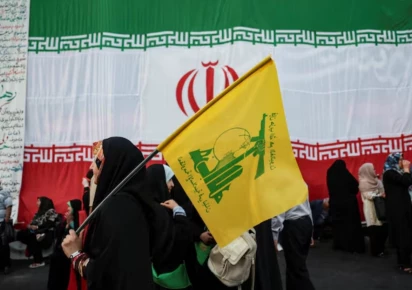
Iran has warned that its armed forces are prepared to deliver a severe response to any new threats, as tensions continue to rise between Tehran and the United States. Iranian military commander Abdollahi said the country’s forces would respond to hostile actions with what he described as “crushing” and “devastating” measures, according to Iranian media reports.

The warning comes as Iran faces the prospect of tougher economic restrictions from Washington. US Treasury Secretary Scott Bessent recently announced plans for what he described as the strongest sanctions ever imposed on Iran, with further details expected to be released soon.

Iranian Parliament Speaker Mohammed Bagher Ghalibaf has meanwhile called on the country to strengthen its economic resilience and develop strategies to deal with what he described as unjust sanctions. Speaking during a meeting with Iranian and Iraqi business representatives in Baghdad, Ghalibaf stressed that economic development and national security were closely connected.

According to Ghalibaf, the United States and Israel had turned to economic and so-called “cognitive” warfare after allegedly concluding that they could not achieve their objectives through direct military confrontation with Iran and Iraq. He argued that Muslim countries needed to protect their economic resources and become less vulnerable to external pressure.

Ghalibaf also urged Iran and Iraq to expand their economic cooperation. He suggested that the neighbouring countries could increase the use of their national currencies in bilateral trade in an effort to reduce their dependence on the US dollar.

His comments came amid growing uncertainty over Washington’s next steps toward Tehran. Bessent’s announcement followed US President Donald Trump’s warning of possible “economic warfare” against countries that provide any form of support or economic lifeline to Iran.

Bessent indicated that the new economic measures could potentially reduce the likelihood of another major military escalation. He said that if Washington pursued a policy of maximum economic pressure, there might be less need for a large-scale resumption of military operations.

His remarks suggested that the US administration could seek to increase pressure on Tehran through financial and economic restrictions rather than immediately pursuing further military action. However, Iran’s latest warnings indicate that Tehran remains prepared to respond forcefully if it believes its security is threatened.

Ghalibaf, who is considered one of Iran’s most influential political figures and has played a prominent role in negotiations with Washington, also emphasised the importance of closer relations between Iran and Iraq. He said the two countries should transform their longstanding political and security cooperation into practical economic partnerships that could benefit their populations.

A day earlier, Ghalibaf said Iran and Iraq had resisted attempts by Western powers led by the United States to influence their political future. He urged both countries to use their strategic relationship as a foundation for greater economic cooperation, development and shared prosperity.

The latest statements reflect the growing pressure surrounding Iran as Washington prepares additional sanctions while Tehran continues to emphasise its military readiness and economic independence. The situation remains closely watched as both sides weigh the possibility of further confrontation against diplomatic and economic alternatives.

While the United States appears focused on intensifying financial pressure, Iranian officials continue to warn that any new security threats could trigger a forceful response. The competing strategies have added another layer of uncertainty to an already tense relationship between Tehran and Washington.

Similar Posts

  • | |

    China accuses US of ‘AI hegemonism,’ threatens countermeasures over potential probes

    ‘For any action that causes substantive harm to Chinese interests, China will take all necessary measures to firmly safeguard its legitimate rights and interests,’ a Chinese commerce ministry spokesperson says

  • |

    Muslim student in Russia named in India protest case 

      A Muslim student from India’s Bihar state has claimed that he was named in a police case related to protests against the alleged NEET examination paper leak, despite having lived in Russia for the past four months. The student, identified as Mohammad Sadaqat, belongs to Kishanganj district in Bihar. He alleged that his name was included in a First Information Report (FIR) registered after demonstrations held on July 24 against the alleged NEET paper leak, even though he was not in India at the time of the protest. In a video message shared on social media, Sadaqat said he has been residing in Russia for the last four months for educational purposes and therefore could not have participated in the protest. According to him, the case relates to a demonstration that took place at LRP Chowk, where people gathered to protest against the alleged irregularities surrounding the NEET examination. The student maintained that he was shocked to learn that his name had been included among those accused in the case. He said his passport and travel records clearly show that he was outside India when the protest occurred. He urged the authorities to verify the facts and remove his name from the police case, arguing that it was impossible for him to have taken part in the demonstration while living abroad. Sadaqat appealed to the district administration and police officials to conduct a fair investigation and correct what he described as an error. He emphasized that he was not present in India during the protest and requested that the allegations against him be withdrawn after proper verification. Meanwhile, Kishanganj Superintendent of Police Hari Mohan Shukla neither confirmed nor denied whether the student had been named in the FIR. Responding to questions from the media, the police chief said that anyone who has concerns regarding the protest-related cases is welcome to approach the police. He stated that authorities would examine any complaint submitted by an affected individual and review the available evidence before taking an appropriate decision. However, he did not specifically address Sadaqat’s claim or comment on the contents of the FIR. The Bihar Police’s official account on X (formerly Twitter) initially responded to the student’s viral video by assuring the public that the matter would be investigated. The response suggested that the allegations raised in the video would be looked into by the relevant authorities. However, the police later deleted the post without providing any explanation, prompting further discussion on social media. The deletion has raised questions among users, although officials have not commented on why the statement was removed. The controversy comes amid widespread protests in Bihar over the alleged NEET paper leak, an issue that has sparked public outrage and demands for accountability. During a statewide strike organized in connection with the controversy, police reportedly detained 694 people for allegedly participating in protests and violating public order. According to reports, nearly half of those detained were minors. The incident involving Mohammad Sadaqat has drawn significant attention online, with many social media users calling for a transparent investigation into his claims. Authorities have not yet released further details regarding the case, and the matter remains under official review.

  • | | |

    Iran claims victory on military, political fronts

    Iranian Parliament Speaker Bagher Ghalibaf has claimed that Iran has emerged victorious on both the military and political fronts of the ongoing conflict. Speaking about the situation, Ghalibaf said Iran was facing what he described as an unjust war imposed by the United States and Israel. He said the Iranian nation was confronting the conflict with courage and determination. According to Ghalibaf, Iran had successfully resisted pressure on both the military and political fronts. Ghalibaf said the Iranian people had remained united despite the challenges created by the conflict. He praised their resistance and said the nation had shown that it could withstand pressure from powerful opponents. His remarks came after the General Staff of the Iranian Armed Forces said that Iran would not retreat until the United States and Israel were completely defeated. The Iranian military leadership said resistance had become part of the mindset of Iran’s younger generation. It claimed that the legacy of resistance had been passed from one generation to another. According to the Iranian Armed Forces, the country’s new generation had remained firm in the face of what it described as the world’s most powerful military forces. The military leadership also said Iran would continue its struggle to protect what it called its legitimate rights. It said Tehran would not abandon its position until the opposing side surrendered. The Iranian Armed Forces further accused the United States of continuing its aggression to expand its influence and establish dominance in the region. Iranian officials have repeatedly presented the conflict as a struggle against foreign aggression. They have also stressed the importance of national unity and resistance in facing military and political pressure.

  • |

    Trump cuts childhood vaccine recommendations as doctors warn of health risks

    US President Donald Trump signed an executive order on Monday calling for fewer childhood vaccinations, limiting core federal guidance to immunisations against 11 diseases. Trump stated the adjustments would offer children “gold-standard” protection while bringing US policies in line with foreign nations that recommend fewer routine shots. The executive directive advises breaking up the combined measles, mumps, and rubella (MMR) vaccine into three distinct doses administered across separate clinical visits. Health Secretary Robert F. Kennedy Jr. has long advocated for reductions in the pediatric vaccine schedule. Medical researchers and global health bodies have repeatedly debunked claims championed by Kennedy alleging a causal link between routine childhood vaccines and autism. The American Academy of Pediatrics and pharmaceutical manufacturer Merck sharply criticised the executive action. “We are evaluating our next steps,” stated Richard Hughes IV, lead legal counsel for the American Academy of Pediatrics. Merck noted there is no published scientific evidence demonstrating clinical advantages to unbundling the MMR vaccine, warning the mandate could induce delayed or skipped immunisations. Republican Senator Bill Cassidy, a practicing physician, publicly broke with the administration over the decree. “I’m a doctor. This executive order is wrong. The president does not have the expertise to make these changes,” Cassidy said. Cassidy cautioned that unbundling combination shots will force children to endure a higher volume of individual injections to secure identical protection.

  • |

    Ukrainian drone strike hits major Russian grain terminals in Black Sea port

    A massive Ukrainian drone and missile strike targeted the strategic Russian port of Novorossiysk overnight, damaging two major grain export terminals and striking key naval assets in the Black Sea. Local officials reported that three people, including an eight-year-old child, were killed and 24 others were injured in the attack, which prompted an emergency declaration in the city. Ukrainian President Volodymyr Zelensky described the assault as a unique operation utilizing rockets, jet drones, and naval drones. Military officials in Kyiv later confirmed that four Russian warships, including two frigates, were damaged during the strike. Novorossiysk became the primary hub for Russia’s Black Sea fleet after Ukrainian attacks previously forced Russian naval forces to relocate from Sevastopol in occupied Crimea. The damage to the export hubs led the Russian agriculture ministry to begin rerouting cargo flows toward alternative maritime routes in the Baltic and Caspian Seas. The barrage comes amid intensified military exchanges in the region, following overnight Russian missile and glide bomb attacks that killed at least 11 civilians in the Ukrainian city of Zaporizhzhia.

  • | | |

    Iran says Pakistan ties gaining greater importance

    TEHRAN: Iran has described its relationship with Pakistan as increasingly important, saying Islamabad has played a significant role as a mediator since the outbreak of the regional conflict. Iranian Foreign Ministry spokesperson Esmaeil Baghaei said the two neighbouring countries were maintaining close diplomatic contacts. He also confirmed that Iranian Foreign Minister Abbas Araghchi and Parliament Speaker Mohammad Bagher Ghalibaf had been invited to visit Islamabad. Baghaei said the two officials would travel to Pakistan at a suitable time. He did not announce a specific date for the visit. He described reciprocal visits between the two countries as a natural part of their growing bilateral relationship. The Iranian official also played down concerns that the recently signed defence agreement between Pakistan, Saudi Arabia and Turkiye was aimed at Tehran. Pakistan, Saudi Arabia and Turkiye signed the Makkah Joint Defence Agreement on August 7. The agreement seeks to strengthen collective defence cooperation and provides for a joint response if any member comes under attack. Baghaei said Tehran did not consider the agreement a direct threat to Iran. He said regional countries were increasingly seeking security arrangements based on their own regional realities rather than relying entirely on external powers. He maintained that regional cooperation could contribute to stability if such arrangements remained inclusive and focused on preventing conflict. Baghaei also said Iran was not prepared to resume direct negotiations with the United States while Tehran believed Washington was violating an interim agreement. The Iranian government has also linked the reopening of the Strait of Hormuz to a number of demands. These include compensation for damage caused during the conflict and an end to the US naval blockade of Iranian ports. Meanwhile, Iran and Oman are continuing discussions on arrangements for commercial shipping through the Strait of Hormuz. Baghaei said the talks were progressing in a constructive manner. He said the two sides had reached an understanding on a proposed map for shipping traffic and were working on several technical details. According to the Iranian official, the proposed arrangement would establish mechanisms for safer maritime movement. It would also address environmental protection and maritime crimes. He stressed that the discussions with Oman were focused on ensuring safe international shipping and were separate from broader political disputes. Baghaei nevertheless reiterated that Tehran would not allow the full reopening of the strategic waterway unless its conditions concerning Washington were addressed. In a separate development, Iran has appointed former Islamic Revolutionary Guard Corps commander Mohsen Rezaei to a senior position in the Supreme National Security Council. Rezaei has replaced Mohammad Baqer Zolqadr as secretary of the body responsible for coordinating Iran’s security and foreign policy. No official reason was immediately given for the change. It also remains unclear whether the appointment will lead to any major shift in Iran’s security policy. Rezaei, 71, commanded the Revolutionary Guards from 1981 to 1997. He later served for more than two decades as secretary of Iran’s Expediency Discernment Council and also held the position of vice president for economic affairs. Iran’s Supreme National Security Council brings together senior military, intelligence and government officials. It is formally chaired by the president, while the supreme leader retains ultimate authority over major state matters. A separate decree appointed Rezaei as the supreme leader’s representative on the council. Zolqadr was instead named as a political adviser. The developments come as Iran faces heightened regional tensions and continues efforts to manage its relations with neighbouring countries and major international powers.

Leave a Reply

Your email address will not be published. Required fields are marked *