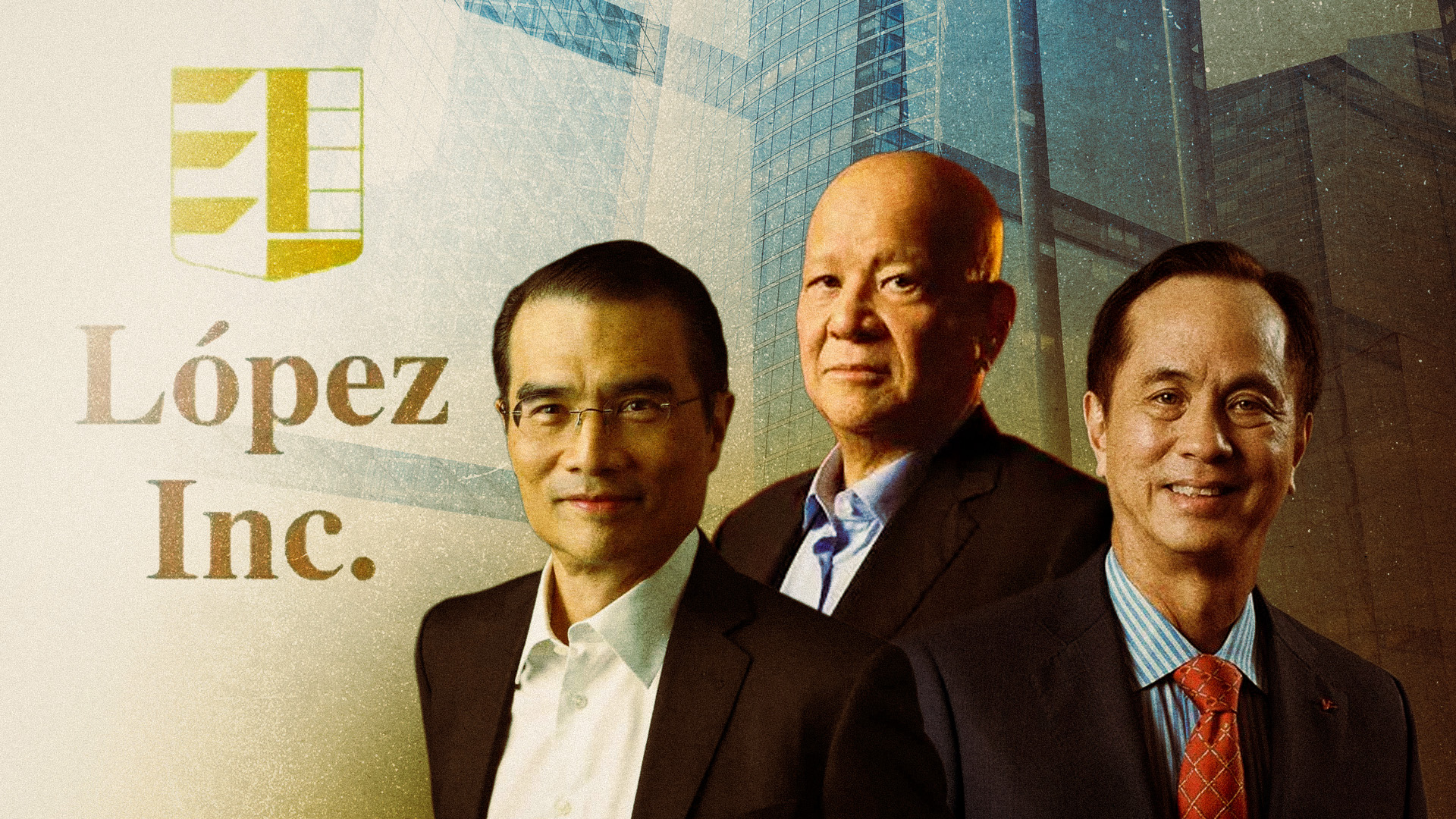
How to read what Gabby Lopez, Piki Lopez, and Ramon Ang actually said
On Monday, August 10, statements about the sale of a quarter of Lopez Inc. to businessman Ramon S. Ang landed one after another over roughly 7 hours, from a one-line board resignation filed at 8:03 am to a warmer statement past 3 pm. Something was being said all at once, by several people who do not normally coordinate, and the way it landed together says as much as any single document does on its own.
Read individually, each statement is a small piece of news. Read together, for the themes that repeat across them, they tell a reader what the people at the center of the Lopez family dispute actually want the public to take away from that day, and where the limits of what they’re willing to say sit.
Continuity is the message
The clearest theme is continuity.
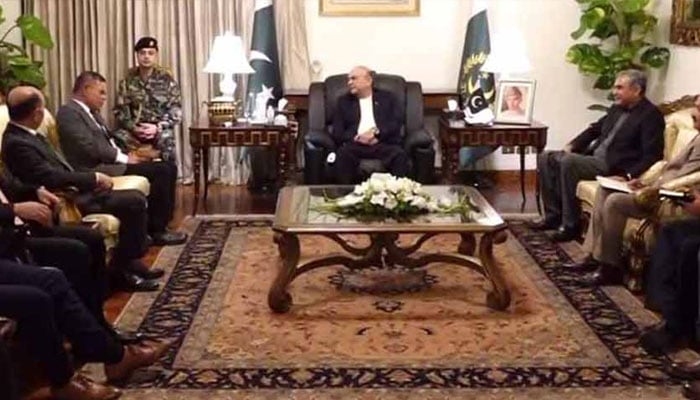
“The family branches that continue to hold the controlling majority of Lopez Inc., will continue to lead it,” said Ang, who bought the stake personally rather than through San Miguel Corporation, the conglomerate he runs.
Federico “Piki” Lopez, whom his majority cousins in Lopez Inc. board voted to remove as president in February 2026 but who has remained in the post under a court injunction blocking that removal, makes a version of the same reassurance in a different key. Welcoming Ang “with deep appreciation,” he frames the entry as consistent with “our history of partnering with recognized individuals and institutions to promote the growth of our businesses,” anchoring the deal to precedent rather than announcing anything new.
The plainest statement of the morning came first: a one-sentence disclosure First Philippine Holdings (FPH) filed with the Securities and Exchange Commission (SEC), confirming that Roberta L. Feliciano had resigned from its board, citing the sale of Crème Investment Corporation’s (Crème) shares in Lopez Inc. as her reason. Crème is the holding vehicle for the heirs of Eugenio “Geny” Lopez Jr., representing their branch’s 25.68% stake in Lopez, Inc., the private company that sits at the apex of the Lopez Group’s shareholder structure. Feliciano’s resignation confirmed what had circulated as rumor before that morning: a sale had happened at the very top of that structure. Its plain, procedural tone set up the warmer statements that followed from the rest of the family.
A deal described as friendship, not finance
A second theme is how personal and relational the language is, and how little of it is financial. None of the three men’s quotes mention a price, a valuation, or what the stake is worth. What they mention instead is how long they have known each other.
Gabby Lopez: “Our families have known Ramon a long time. I am confident he will be a good partner to Lopez, Inc.”
Piki Lopez: “We have been friends for a long time and so I do look forward to working together with him.”
Ramon Ang: “I have known the Lopez family for decades. Not one branch of it, but all of them. I am a friend to each, and I intend to stay that way.”
A transaction involving a quarter of one of the country’s largest, and most colorful, private holding companies is being described in the vocabulary of an old friendship rather than a deal.
San Miguel Corporation’s own letter to the stock exchange backs the same framing from the institutional side rather than the personal one, confirming that Ang bought the stake “in his personal capacity through Illumina Investment Holdings, Inc., a corporation wholly owned by Mr. Ang,” executed “upon the invitation of the ELopez Family,” and separate from San Miguel itself, whose board he would only brief on the purchase days later.
The press statements and disclosures to the exchange are making the identical point: this was not San Miguel’s move, and Ang did not go looking for it either. The family asked him in.

The vocabulary of progress, not an ending
A third theme runs through the choice of verbs. Peace, resolving, stronger, partner, growth. Every one of them points forward, and none of them points to a finish line.
Gabby put it plainly: “This dispute has not been good for any of us, or for the people who work in our companies. This allows us to take a step towards the restoration of family peace.” A step, not the restoration itself. Piki calls it “a great step toward resolving issues,” not the resolution. Ang says his interest is that the group “comes out of this stronger,” a phrase that assumes an ongoing process rather than a closed chapter. What none of the three men reaches for is reconciliation.
That distinction matters for those trying to make sense of a family dispute mostly through statements like these. Advisors who study conflicts at this stage draw a hard line between the two ideas: peace means there is no longer a shared stake left to fight over. As long as both branches held shares in the same company, every board vote, every capital decision, every disagreement about strategy gave the conflict a fresh trigger, because each side’s decisions affected the other’s investment whether they agreed with those decisions or not. Once one branch sells out entirely, that shared terrain disappears, and so does the machinery that kept generating new rounds of the fight.
Reconciliation means the relationship itself is repaired. A family branch can secure the first without achieving the second, and it does so by selling its way out of the shared stake. Everything in Gabby’s own statement suggests that is exactly the transaction he is describing. He is not saying the feud is over. He is saying his branch is no longer inside it.
An exit, not a rebalancing
That extends to the other half of Gabby’s statement, the line that could otherwise pass as an afterthought: the sale “allows me to channel our family’s resources into businesses aligned with our personal mission.” That sounds like portfolio housekeeping, one branch trimming an old holding to fund something new.
That housekeeping likely points toward ABS-CBN.
Lopez Inc. holds roughly 79% of the network’s voting rights against a smaller economic stake, closer to 56%, a gap that exists because of how the company’s preferred shares carry voting parity without matching cash-flow rights. ABS-CBN also sits closer to Gabby’s branch of the family than to Piki’s.
Gabby is the eldest of the current third generation descended from Eugenio “Geny” Lopez Jr., and that line has long been identified with the network, a news organization built on a reputation for reporting on the powerful, and has an entertainment content powerhouse alongside it. It is also the network that lost its congressional franchise in 2020, under the Duterte administration, which had repeatedly and publicly criticized both ABS-CBN and the Lopez family, a decision that forced the network off free-to-air broadcast.
But everything else in his statement points the same way: the talk of family peace, the years of dispute behind it, the fact that he is leaving rather than staying to negotiate a settlement with his cousins. A branch that walks away from a fight it no longer wants to win is not adjusting its portfolio. It is exiting the fight itself.
Put together, the five separate statements agree on four things: nothing structural changed, Ang was invited rather than the one who came looking, the relationships involved go back decades, and none of them call this an ending.
What remains unanswered
Four questions stand out.
The first is price. Lopez Inc. is private, so there is no market quote to check the sale against, no ticker that moved. Whatever Ang paid for 25.68% would say something none of the five statements do: what the underlying interests in the listed units — Lopez Holdings, ABS-CBN Corp, ABS-CBN Holdings Corp, First Philippine Holdings, First Gen, and Rockwell Land — are worth in someone’s actual accounting, and whether Ang negotiated a discount for buying into a company that has spent the better part of a year in public family litigation.
The second is what the shares Ramon Ang bought actually carry. Owning 25.68% of a company can mean almost nothing beyond a claim on dividends, or it can come with a board seat, a veto over major decisions, or a say in who runs the company next. Nothing in the five statements says which. Ang’s own line, that the branches holding the controlling majority “will continue to lead” Lopez Inc., answers only who runs the company day to day. It says nothing about whether Ang can block a decision, demand information from the company, or has a formal vote the next time Lopez Inc. makes a decision as big as this one.
The third is the ownership table itself. This dispute has been described for months as a 71-29 split between two cousin blocs, but that shorthand no longer describes Lopez Inc.: Créme’s 25.68%, once part of the 71% figure, now belongs to Ang. The two-bloc description this Lopez family feud series and others have used since the feud became public needs to be retired, or at least qualified, from here on.
The fourth question is simple to ask and hard to answer: will this trigger a mandatory tender offer?
Lopez Inc. itself is private, so the sale by itself needs no tender offer. But it sits above six listed companies: Lopez Holdings, ABS-CBN Corp, ABS-CBN Holdings Corp, First Philippine Holdings, First Gen, and Rockwell Land. Philippine securities rules can still require a tender offer when someone gains effective control of a listed company indirectly, through its parent, rather than by buying shares on the exchange itself. That is what “indirect acquisition” means here, and it’s worth explaining because it’s the only reason a private sale two levels up the chain could carry public consequences for six listed companies at all.
Whether that applies to Ang’s purchase depends on a distinction the five statements do not settle: has he bought only a minority stake in Lopez Inc., or has he gained something closer to control over the listed companies beneath it. The percentage alone cannot answer that. It requires the deed of assignment, whatever shareholders’ agreement exists, and whatever the Philippine Stock Exchange and SEC eventually require Lopez Inc. or its subsidiaries to disclose.
As of this writing, none of that documentation is public. There is no stock-and-transfer-book confirmation of the transfer, no disclosed purchase price, no disclosed exact Lopez Inc. share count, no disclosed shareholders’ agreement. No representative of the Manolo or Prescy Psinakis branches has resigned a board seat the way Feliciano did. No fresh SEC or court filing has altered the legal posture of the broader family dispute.
Here is what that gap means: every side is telling the public the same thing, that this is a stabilizing, peace-building move, not a takeover. Nothing filed so far proves or disproves that. What comes next will show whether it holds. Watch for a board-seat change at Lopez, Inc. itself, or a move in the pending litigation and SEC matters. Until one of those happens, August 10 was a day when five people and institutions, speaking in five different tones, worked with unusual care to say the same thing. The rest, we don’t know yet. – Rappler.com

Lala Rimando wrote about Philippine business, and managed newsrooms, including Newsbreak, ABS-CBN, Rappler, and Forbes, for over 25 years. She’s now based in La Union, taking care of her mom with dementia, and working on the multimedia biography of the late John Gokongwei.
Here are other recent articles by the author on the Lopez family business: